
Adirondack Flower Farming Businesses Are Cultivating Pollinators and Agritourism
By Tim Rowland | Contributing Writer
Don’t let those bright spring flowers waving in the breeze fool you. Behind the lovely, carefree blooms is a serious ecological and economic engine that powers everything from tourists to tomatoes and deserves more credit than they probably get.
Meghan Kirkpatrick, manager of the Bark Eater Inn located in Keene sees it every day. She lives at the crossroads of hospitality, aesthetics and agriculture, and flowers are an essential part of all three.
“The guests that we have are traveling from more metropolitan areas that don’t have a lot of access to garden spaces, and they are just really struck by the beauty of the flowers,” she said.
Flowers attract native pollinators, and humans, too
Bark Eater Inn’s colorful gardens produce flowers for weddings and food for guests, some of whom are from urban environments in which they have not been taught, for example, that the funny spike popping up from the ground is what will show up later on their plates as asparagus.
“It’s kind of a gateway for many of our guests to learn more about local food, and what is available here, and kind of making that connection,” she said.
Pretty as they might be, flowers don’t just sit around and preen. They have an outsized role in the food system, developing relationships with pollinating insects and other plants.
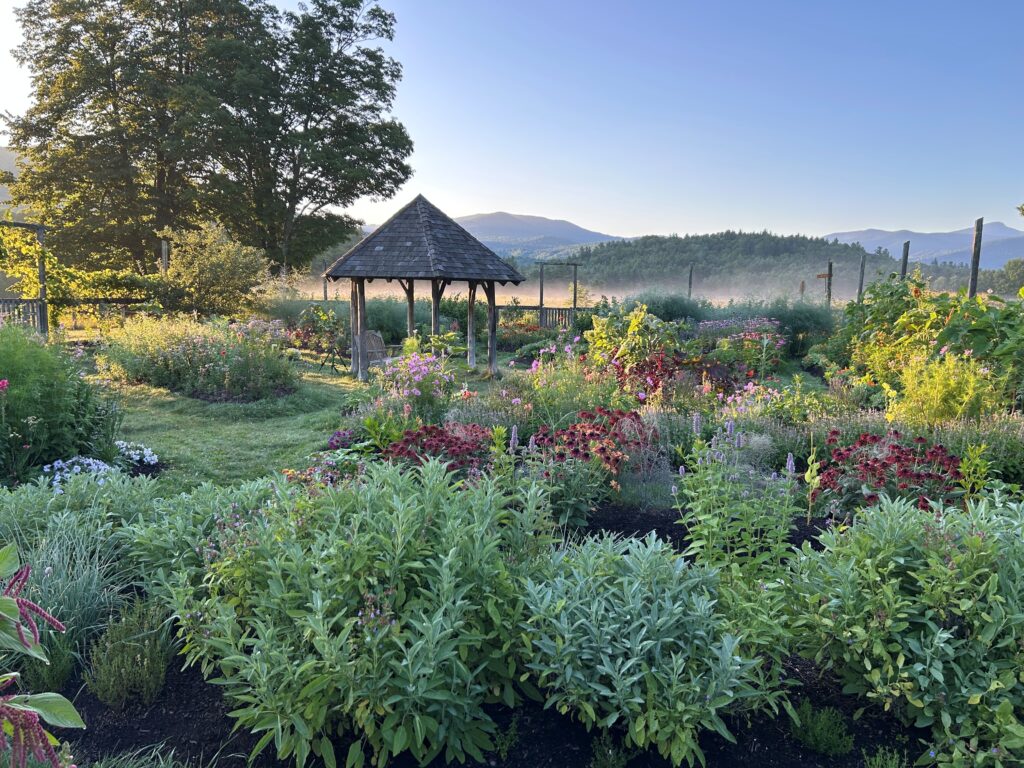
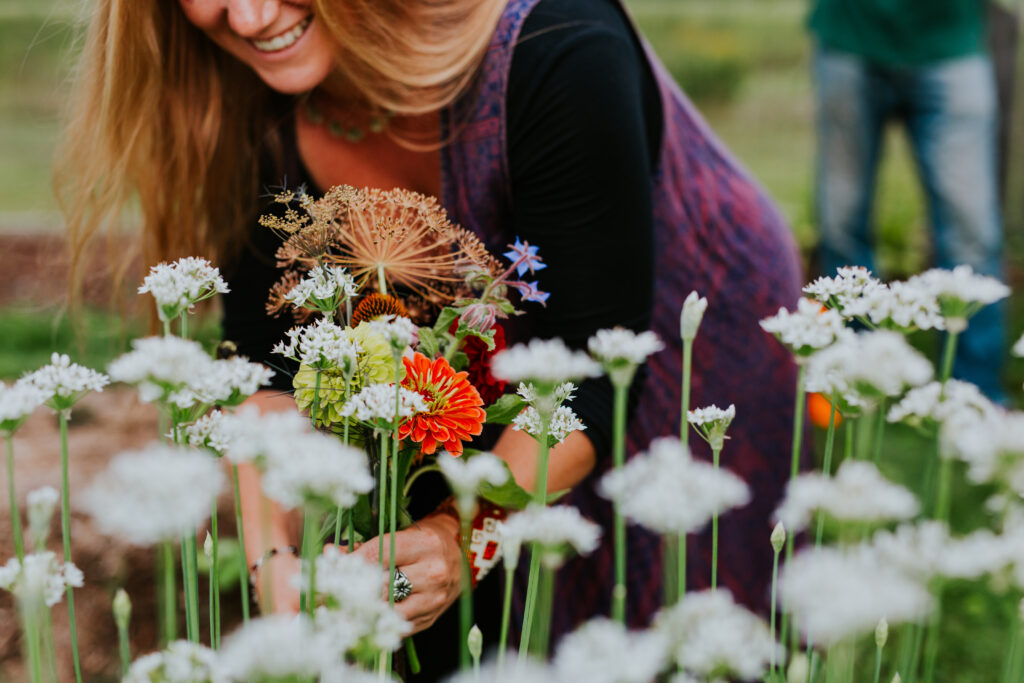
Kirkpatrick intentionally selects flowers that attract pollinators, but also uses them in companion planting based on their ability to discourage pests. She chooses sunflowers that produce pollen (hybrids intended for use as cut flowers have been engineered for reduced amounts of the yellow dust so that they won’t wind up pollinating table tops) and leans toward red flowers that are better at attracting pollinators. These insects, like us, do better with a varied diet, so she chooses a wide array of flowers to act as a pollinator buffet.
This pollinator friendly policy extends to Bark Eater Inn’s meadows as well, which are mowed strategically and infrequently, accommodating both flowers and birds.
Minding the pollinators is an attitude that is now reflexive in the North Country, as their value to the ecosystem has been widely recognized for more than a decade.
Sawyer Bailey, executive director of AdkAction, said the nonprofit’s foray into pollinators began with heightened awareness over the monarch butterfly, which the U.S. Fish and Wildlife Service estimates has lost 80% of its population since the 1980s due to a loss of habitat, insecticides and climate change.
Related Reading
Farming for the Future: Navigating Climate Resilience in the Adirondacks
Adirondack farmers are adapting to a changing climate through silvopasture, cover crops, and conservation practices. Discover how local farms are building resilience.
“We started by distributing milkweed seed packets exclusively with only a focus on monarchs, and then very quickly learned how integral all the pollinators that are native to this area are,” Bailey said. “And while milkweed is a keystone species for them, the interest then expanded to helping pollinators of all kinds, thinking about the types of specific habitat they would need, and the actions that we could promote to help them thrive.”
Adirondack farms boost agritourism with help from local beekeepers
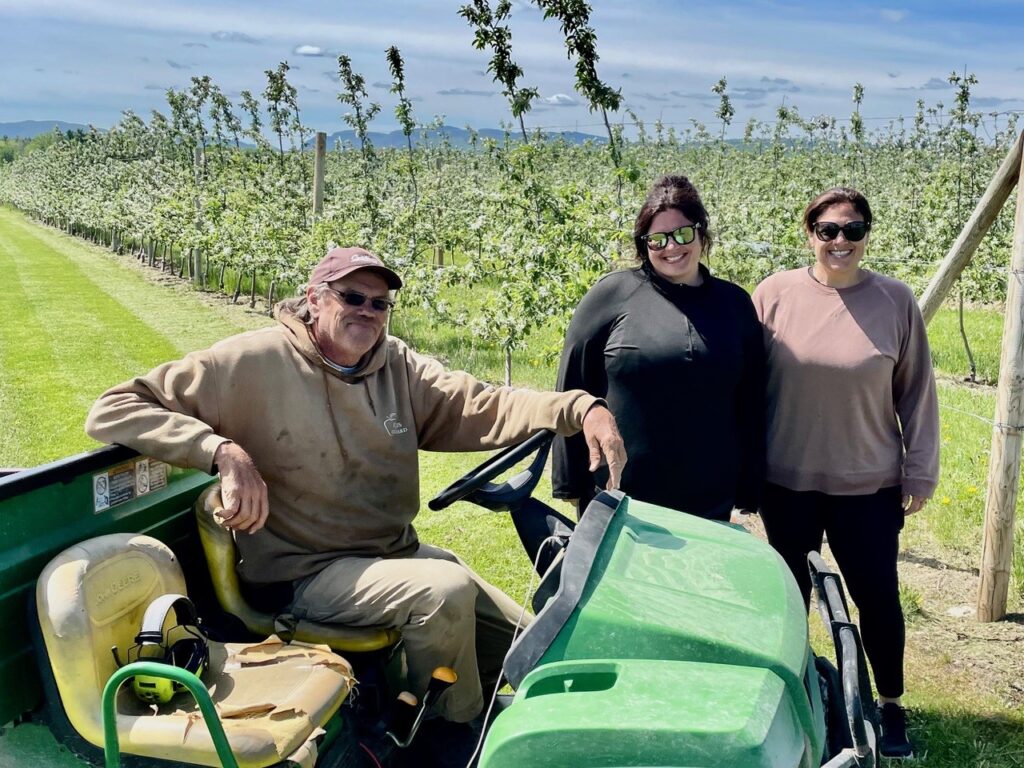
Larger farm operations, such as Rulfs Orchard in Peru, think in similar terms. Bees are the lifeblood of fruit trees, so considerable care is taken for their husbandry. The orchard contracts with local beekeepers who will move hives around in keeping with what trees are flowering.
As with Bark Eater Inn, Rulfs Orchard finds that beautiful flowers are good for business. When apples are in bloom, the North Country’s Champlain Valley is awash in a sheen of white frosting that attracts tourists and professional photographers alike.
“Everyone wants to take pictures,” said Rulfs Orchard Business Manager Shannon Wilkins. “And it’s such a short window when the trees are in bloom that photographers will be emailing, asking ‘how are the blossoms?’”
Rulfs Orchard, founded by Wilkins’ grandfather in 1952, began as a dairy. Then her grandfather began planting a few trees and basically never stopped. Today, the orchard has 35 acres of primarily apples, while also working to introduce trees to produce peaches, cherries and pears.
Although commercial apiaries do most of the heavy lifting, Farm Manager Richard Howard said the farm still depends on native pollinators as well. Due to the shape of the flower, blueberries rely on bumblebees, Howard said, and in the pumpkin patches native “ground bees” do much of the work.
“[Ground bees] actually look like a honeybee, but they’re not. When we cultivate the pumpkins we try not to disturb the ends of the field because they don’t really have hives, they live in all these little holes in the ground.”
More environmentally advanced pesticides, which Howard said “used to be pretty harsh,” have also been embraced by the orchard.
“It’s amazing, because sometimes you go down there and look at the pumpkin blossoms, and there will be 10 or 15 bees on a blossom,” he said. “So we’re very careful with our pesticides. We don’t want to hurt them, obviously, so we try to use stuff that’s bee-friendly.”
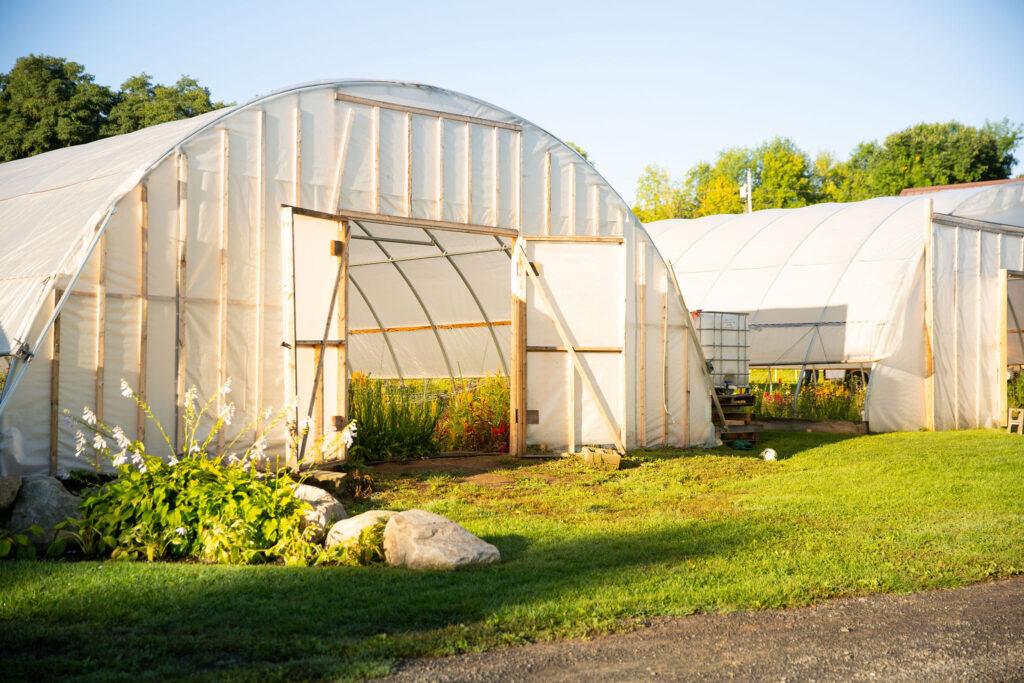
Photo by Katie Kearney.
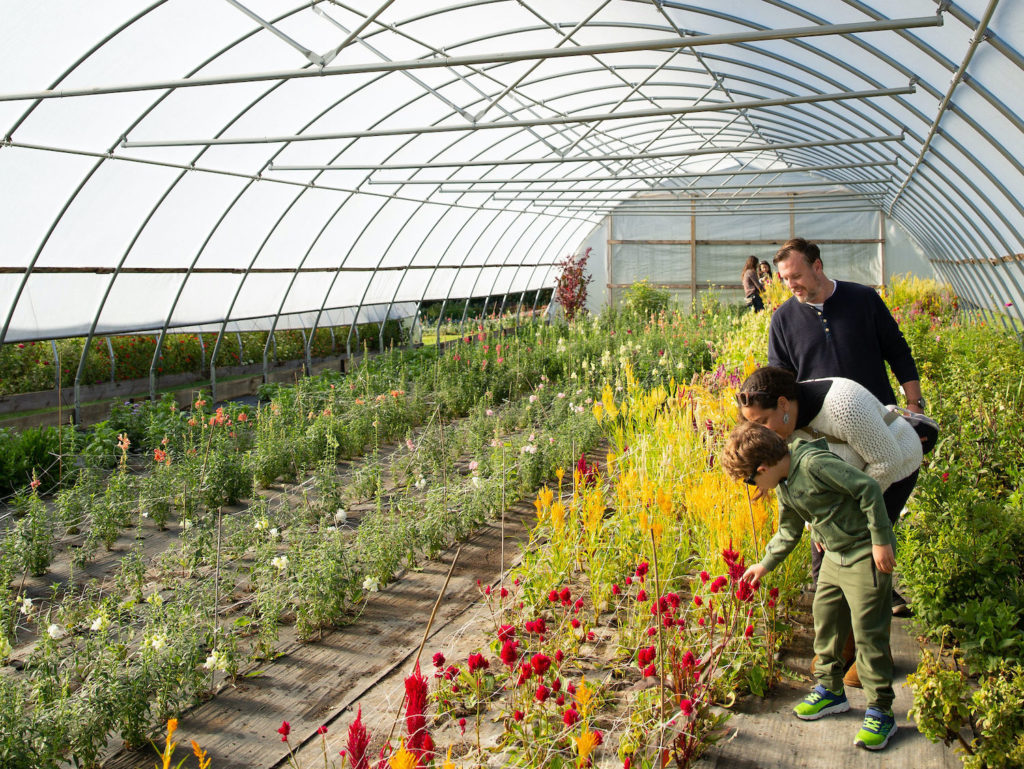
Photo by Katie Kearney. Photo by Katie Kearney.
Flower growing is a budding industry for Adirondack farms
Mossbrook Roots Flower Farm and Florist evolved from something else — the landscaping company owned by Jackie and Jim Wheelin wasn’t using all the land at its Keeseville location, so something had to fill the void.
“We were like, ‘well, we have all these great farm fields, what are we going to do with them?’” Jackie Wheelin said. “And I said, ‘well, let’s grow flowers,’ so that’s kind of how that all started. It was really that simple.”
Flowers proved to be good business for them. Wheelin’s operation has expanded its reach, from fresh-cut flowers at its farm store, to CSAs, farmers’ markets, weddings, and a floral shop in Plattsburgh.
Flower farms may have a different products than vegetable farms do, but Wheelin said she deals with a lot of the same issues. Such as constantly worrying about the weather and dealing with pests. Similarly to traditional farms, crops must be rotated, fertilizers managed and soils tested. Mossbrook Roots doesn’t sell to distributors, so their customers are the end-user, whether it’s a bride or someone wanting to fill a vase on a dining room table.
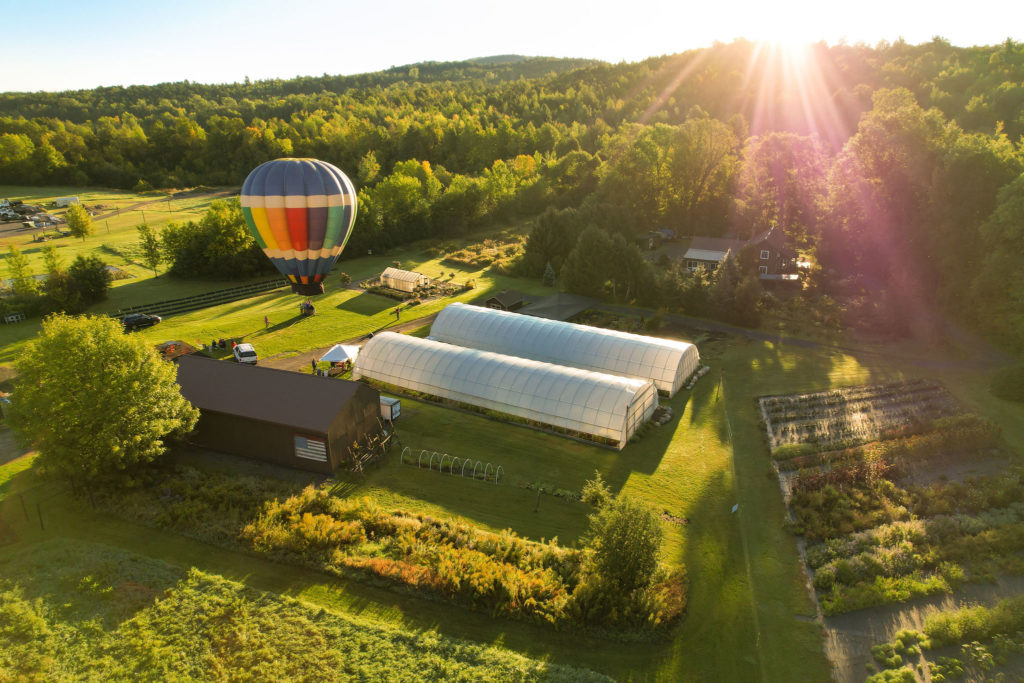
Flowers are also a year-round business. “We grow tulips hydroponically all winter, and we grow specialty tulips, so that is always a big hit for us,” Wheelin said. “We’re just kind of coming off the tail end of those, and then now we’re going to be switching into ranunculus. We grow those in our high tunnels because they’re pretty delicate.”
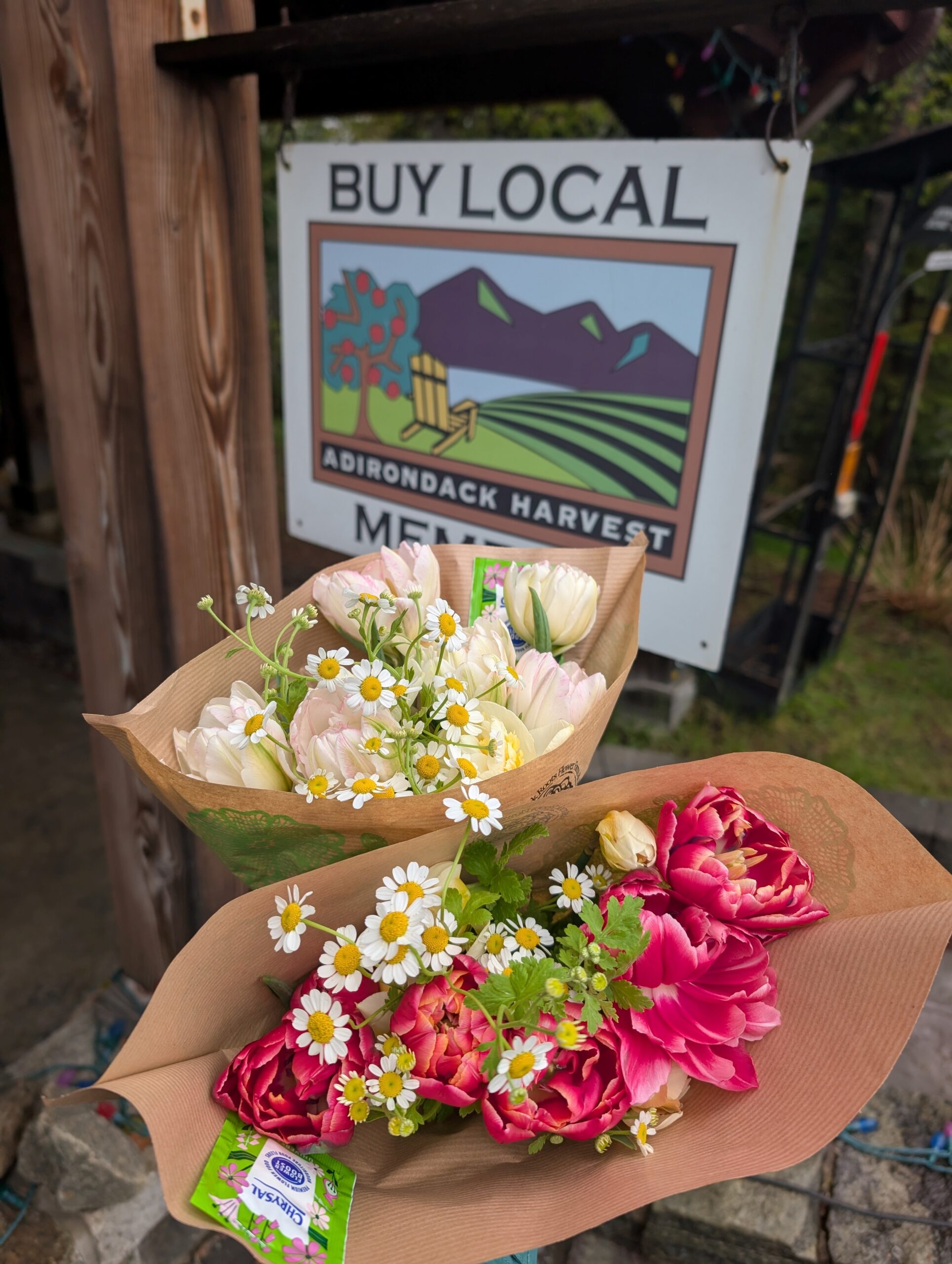
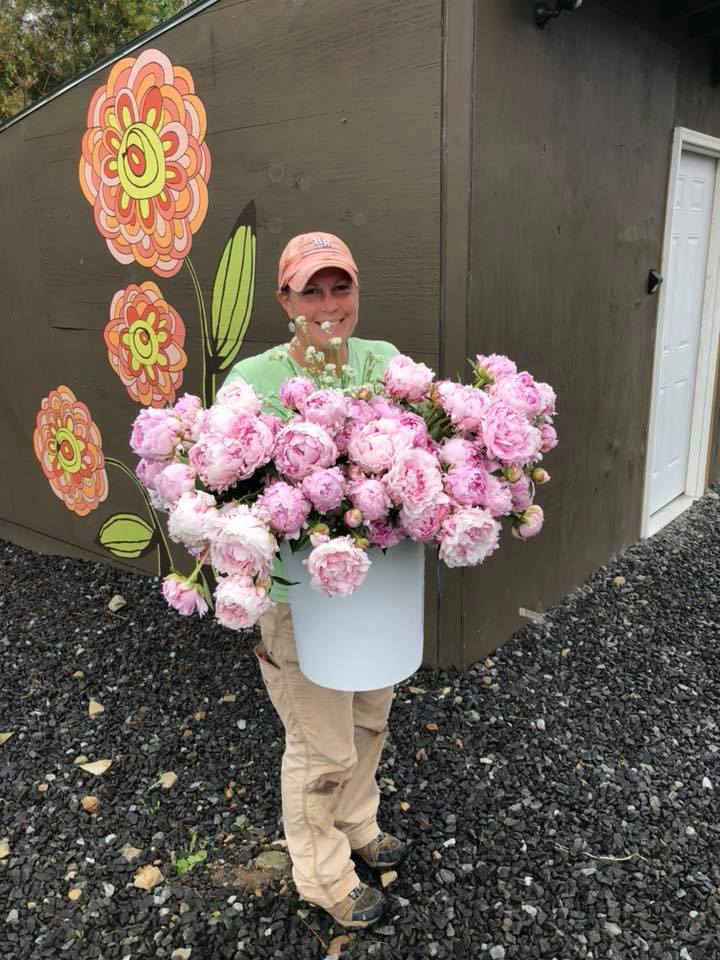
Then it will be on to peonies, lisianthus and dahlias as the season progresses. Successional plantings extend the season, and by December it will be time to plant seedlings, which means bachelor buttons and matricaria will be flowering up to six weeks earlier than with conventional planting.
In the north, local flowers are limited by the growing season, but they have distinct advantages as well. They last longer, have a more robust fragrance and do not have the environmental costs associated with being shipped in from another continent.
“They are as fresh as they possibly can be,” Wheelin said. “There are no preservatives, the smell is as true as it can get, and the colors are as true as they can get. It’s just raw natural beauty that will hopefully bring whoever you’re getting them for — or if you’re getting them for yourself — as much happiness as they can for the time that you have them.”
Of course, people aren’t the only ones invested in the blooms. A beekeeper maintains hives on the farm, and the honey has a bit of a floral taste, Wheelin said. The farm is managed for the bees’ wellbeing, too, “We leave a lot of things up for the pollinators,” she said. “We don’t cut things down right away. We have a lot of things planted specifically for them, keeping all the pollinators in mind.”
At Bark Eater Inn, introducing guests to beautiful flowers, and local food, means returning clientele and word of mouth advertising. Visitors get the benefit of a peaceful place to relax at their lodging. It’s a relationship that pays mutual dividends, Kirkpatrick said.
“I have guests that come back again and again during flower season just to simply sit out there and watch the hummingbirds and the butterflies flit from flower to flower,” she said. “And there’s a certain amount of awe and appreciation that we can experience when we slow down and sit in a place that has beauty and flowers and pollinators and food — and my garden is certainly an intersection of all of those things.”


