
School Cafeterias Present Opportunities for Everyday Nutrition-Based Learning
By Tim Rowland | Contributing Writer
On a chilly Monday morning, educators, administration, and school lunch staff at Boquet Valley Central School’s Lake View Campus came together to discuss how they could connect local food procurement with Agriculture in the Classroom lessons. This meant brainstorming ways the cafeteria could be a fun place for kids to learn about food and nutrition. Education doesn’t end at the classroom doors, children can learn on a trip through the cafeteria line, too.
Imagery is an important part of this education, said Cornell Cooperative Extension of Essex County (CCE Essex) Community Vitality Resource Educator Ellie Hoffman. Sugary, highly processed foods are presented to kids with bright, happy colors and a veritable army of grinning cartoon characters to catch their eyes. Fresh, local foods don’t often have that advantage, but they should.
“We see how ubiquitous junk food is — it’s everywhere,” Hoffman said. “We see it in pictures, in vending machines, and I like to imagine what could happen if we present healthy, local food the same way.”
This could mean putting up posters of, say, beets with a catchy slogan like “Beets, It’s What’s For Dinner!,” but it could also be along the lines of product placement in lessons and activities.
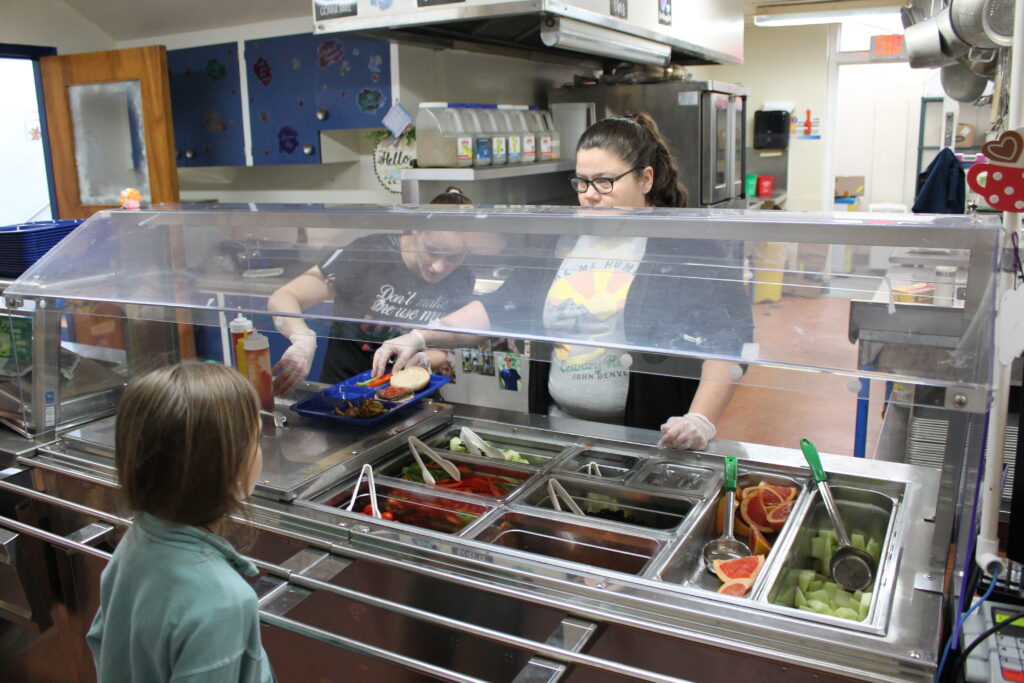
“If you’re seeing a picture of produce in an activity, or hearing it mentioned somewhere, then eating it in the cafeteria, ideas about fresh, local food start to sink in,” Hoffman said. “So I think the more we’re able to facilitate school-wide activities around food and connect food to student interests, the more we’ll continue to integrate healthy foods into their lives.”
Second-grade teacher Melissa Niquette noted that vegetables can be just as colorful as processed foods, a point that could be used to advantage in an Eat the Rainbow campaign. Foods of varied colors contain phytochemicals that can improve vision, decrease inflammation, strengthen the immune system and reduce the risk of cancers, heart disease and diabetes. With a rainbow as a visual aid, teachers and school lunch staff can equip students with the understanding and motivation that can eventually lead to lifelong healthy choices.
As they “eat the rainbow” and become more interested in healthy snacks and recipes prepared with fresh food, there are two keys to success: the foods need to be easy to prepare, and they have to be affordable, said Barrett Miller, Boquet Valley Lunch Manager. These two qualities encourage the recipes’ repetition at home and at school.
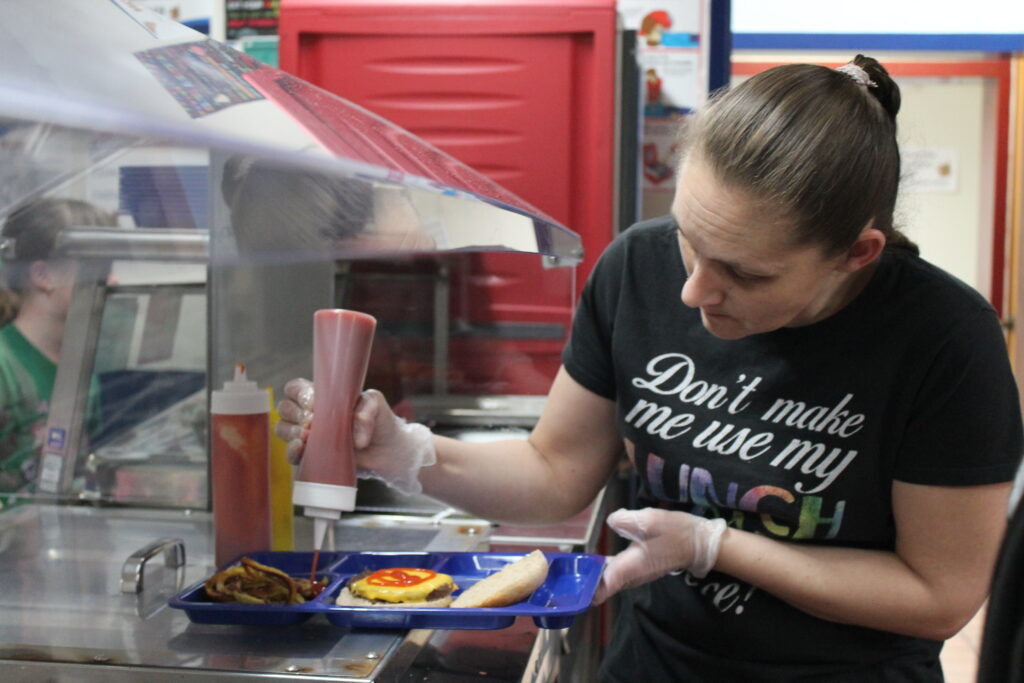
“Maybe once a month you have a vegetable side dish that you’re going to encourage kids to try,” said second-grade teacher Peggy Staats. “Some may love it, some may not, but whatever it is, if you sent the recipe home with the kids, there would be a connection between the cafeteria and home life. Students might say, ‘Oh, this came from a farm, and it’s so delicious, mom, can you make this?’”
Another idea that came up in the course of the conversation was having students go on a field trip to their own cafeterias, where they could see what goes into food preparation. Teachers and cafeteria staff agreed on the need to coordinate lessons with school lunches, too. For example, the cafeteria could serve a Harvest of the Month vegetable like carrots on the same day that students are learning about roots in science or a local food educator is visiting to teach about farm fresh products.
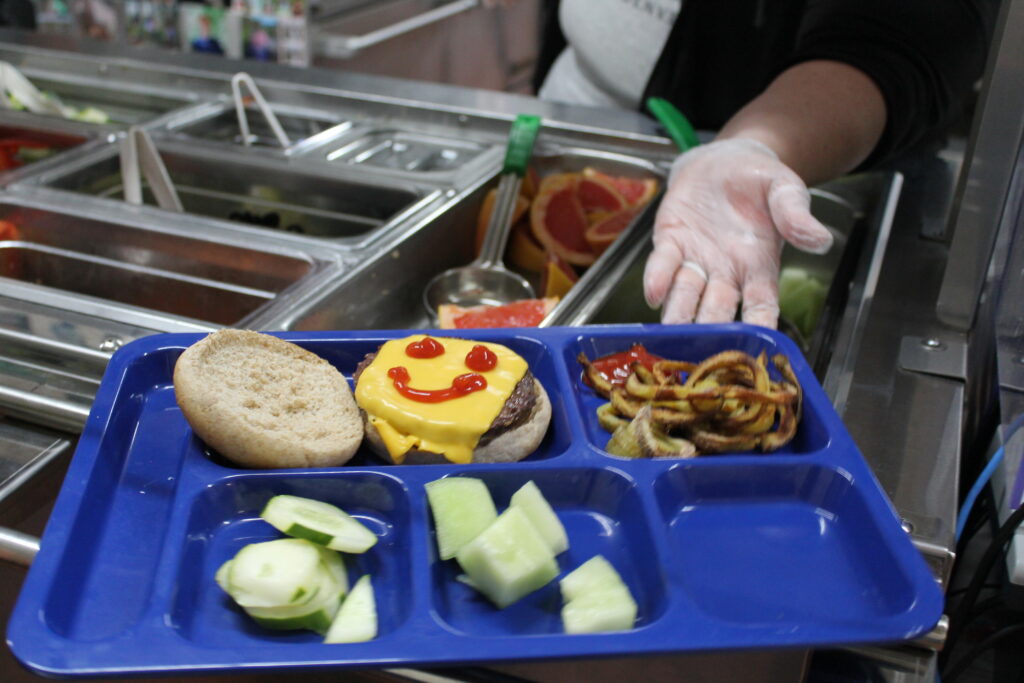
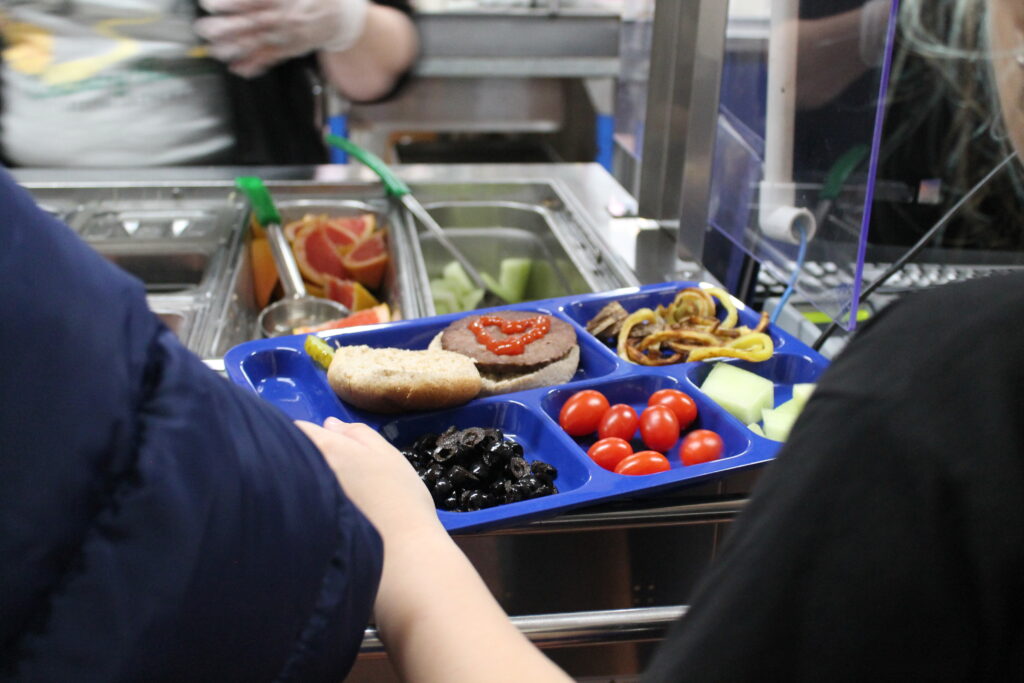
Of course, with all the other demands on educators and school lunch staff, there traditionally has been little time or energy for nutrition, even as it becomes more apparent how important it is for learning.
“I understand how hard it is,” Hoffman said. “But there are so many great things happening here. We just want to keep that momentum going, and we want to help you [Boquet Valley] keep it going. We’re not expecting you to do this by yourself.”
Bridging these gaps takes a village, one that is willing and ready to assist in making these transitions.
To connect with CCE Essex‘s Community Vitality Resource Educator Ellie Hoffman, reach out to her by email at emh257@cornell.edu; or by calling the CCE Essex Office at 518-962-4810.
Related Reading


