Adirondack Region Farmers Working in Harmony with Wildlife
By Tim Rowland |
Syncing farmland with wildlife habitat makes so much sense that Kia-Beth Bennet sometimes wonders how conventional farms can succeed without doing so.
At the Bittersweet-Milkweed Collaborative farm in Heuvelton, a small town near the St. Lawrence River and Canadian border, Bennett works with tubers, cattle and poultry, but also with birds, insects and native shrubs. Their farm is a sanctuary, and they will sing to attract beneficial species, if that’s what it takes. What some see as a weed Bennett sees as a diesel-free way of breaking up heavy soils; what some see as a thicket, Bennett sees as habitat for warblers that take the place of pesticides.
“The environment has really been my passion and my focus from Day 1,” Bennett said.
Bennett’s parents moved to the sparsely populated region at the top of New York State in the St. Lawrence Valley in 1999.


They started Milkweed Farm, raising rare seed potatoes and now manages both farms, which total more than 100 acres. Like other farmers in the region, Bennett is practicing agriculture with a growing awareness of the farm’s ecological surroundings.
Ground birds are given time to fledge before turning out cattle or mowing hay; by allowing any space that isn’t a garden or a pathway to completely grow up, providing micro-habitats and connectivity; and by researching every farmland species, so that they know how what they do impacts their food and habitat.
“Observation is so important,” Bennett said. “The more information we have the more we can improve the ecology and the more we improve the ecology the more it increases productivity.”
Bennett has used grants from Northern New York Audubon to encourage shrubland habitat, establish wildlife corridors along streams and build raptor perches.
This attention to habitat had an almost immediate impact. On the avian identification app Merlin, the number of bird species soared from 35 to 90.
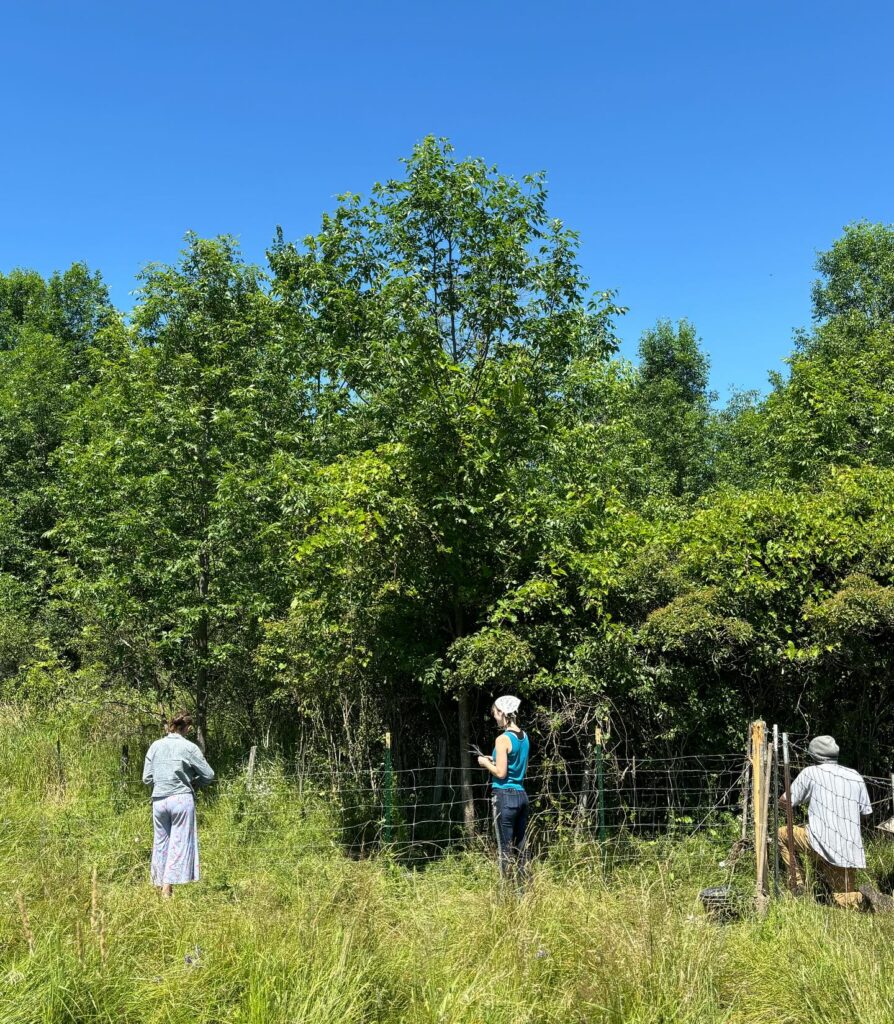

An increase in warblers and hawks have corresponding gains for agriculture in reduced insects, better pasture health and fewer rodents munching away at root crops. Even small grants can make big differences for farmers who can use it to cordon off thickets or streams, plant native species and facilitate rotational grazing. “We will have some of the most endangered birds on the property because we know how to use that money well,” Bennett said.
The grants were also important in a psychological sense. “They said, ‘We believe in you.’ Nobody had even said that to me before,” Bennett said. “Everyone’s farm is way more diversified than we realize; we just need to love it.”
Awareness of surroundings and observation of what is sustainable and what is not is a common theme among local farmers.
Growing Silvopasture Systems in the Champlain Valley
After founding Barred Owl Brook Farm in the Champlain Valley near Westport, Alex Caskey tried out multiple agricultural pursuits to see what would work. A realist, Caskey began scratching things off the list one by one — hogs would require too much investment in grain-related feed costs and storage; driving 40 miles to deliver $40 worth of duck eggs didn’t make a lot of sense either.
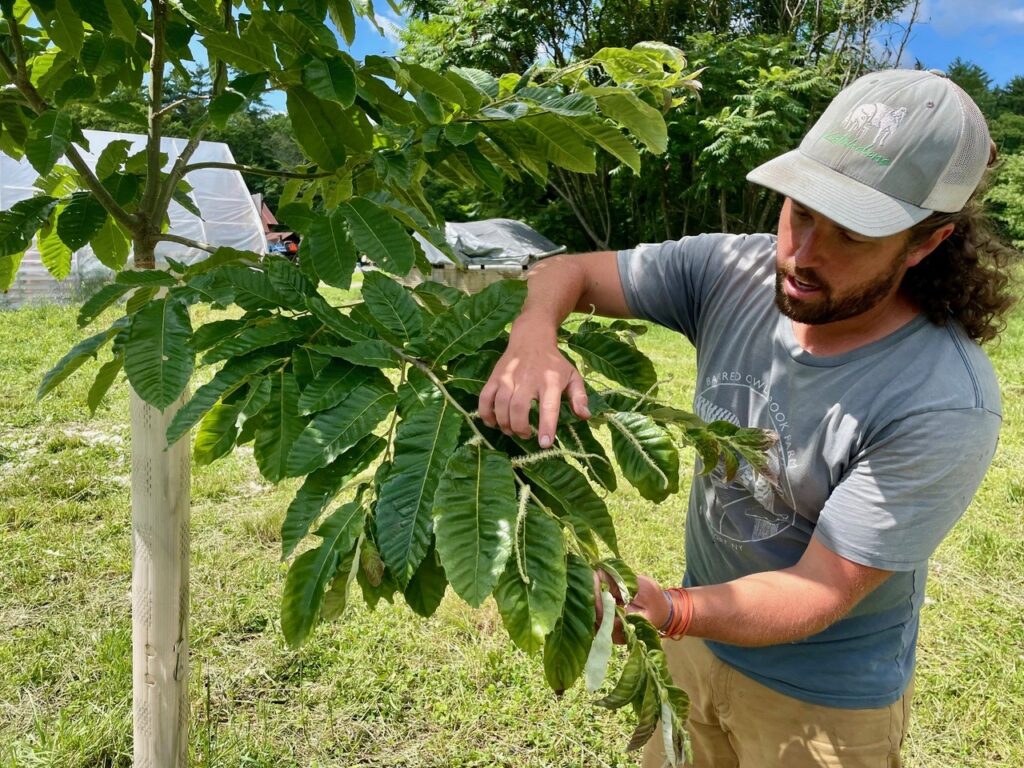
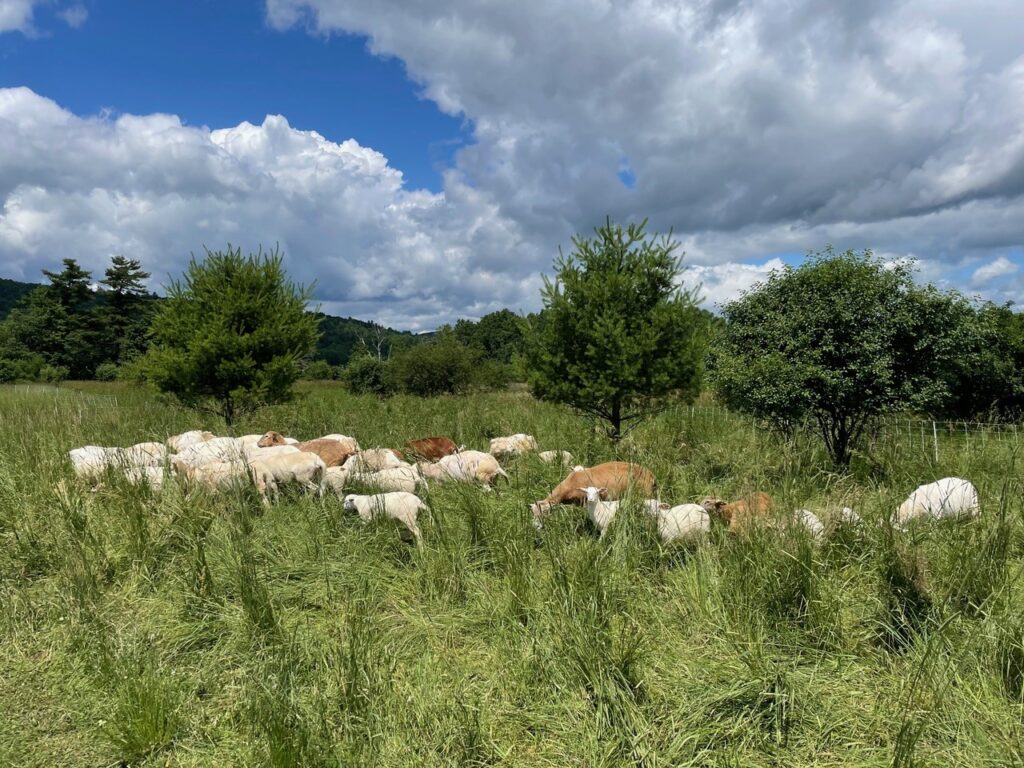
There are still vestiges of these pursuits at Barred Owl Brook, where ducks are now on tick and slug patrol, and some remaining hogs provide tractor-free tillage.
Agriculture that did make the cut includes Katahdin sheep and tree and shrub nursery stock, both of which fit into a broader picture of ecological symmetry.
Silviculture, a blend of forestry and agriculture, benefits both the planet and the animals. Willow and poplar provide fodder (and sheep love nothing better than the invasive buckthorn), while larger trees lend shade, shelter and mast — all while sequestering carbon and improving soil saturation rates. “It’s a new name for an ancient practice,” Caskey said.
Usually considered a nuisance and a blight on rolling green pasturelands, for the sheep, “trash trees are exactly what you want,” Caskey said.
With degrees in conservation biology and sustainable food systems, he shares Bennett’s belief that there is no bright line between ecology and agriculture. “Those two are tied together, whether you lean into them or not,” he said. “We should be managing the landscape to enhance wildlife habitat.”
Wildlands, forest and grassland ecology all interact, “but as a society we really don’t value those things,” Caskey said. Government conservation guidelines tend to be voluntary, “putting the burden on the farmer” who often has more pressing costs to consider.
Yet balancing ecology with agriculture has natural efficiencies.
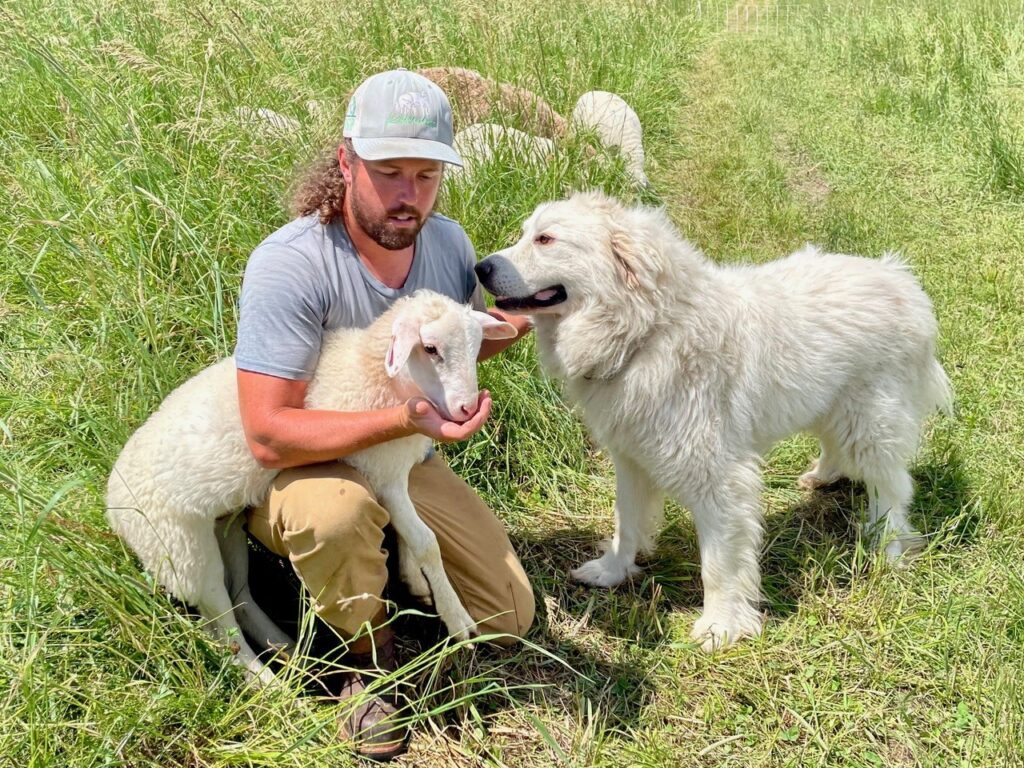
With pastures surrounded by forestland, Caskey knew sheep would be vulnerable to coyotes, bobcats, foxes and bears, so he uses electric netting and guard dogs that now enjoy the duck eggs that no longer have to be delivered.
Even when the power went out one day, including the sheep’s electric fencing the coyotes made no demonstration toward the sheep and instead made themselves useful by eating voles.
For years, American agriculture has sought to eliminate insects, weeds, shrubs and trees. That could be changing as more young farmers are building businesses that enlist nature to play on their own team from the ground up.
This article was written with grant funding through CVNHP and NEIWPCC.