
World-Class Chef Daniel Humm To Visit Adirondacks for Day of Conversation on Sustainable Agriculture Future in the Region
By T.J. Brearton | Contributing Writer
Biodiversity starts on our plates. That’s the philosophy of renowned chef Daniel Humm, a Relais & Châteaux member and UNESCO Goodwill Ambassador for Food Education, and why he’ll be in the Adirondack Park on October 6, 2026.
“Humm is a rock star in the culinary world,” said James Brangan, co-chair of the Champlain-Adirondack Biosphere Network. “We hope his visit will put a spotlight on the agricultural opportunities in the Adirondacks, while highlighting our rich cultural and natural heritage.”
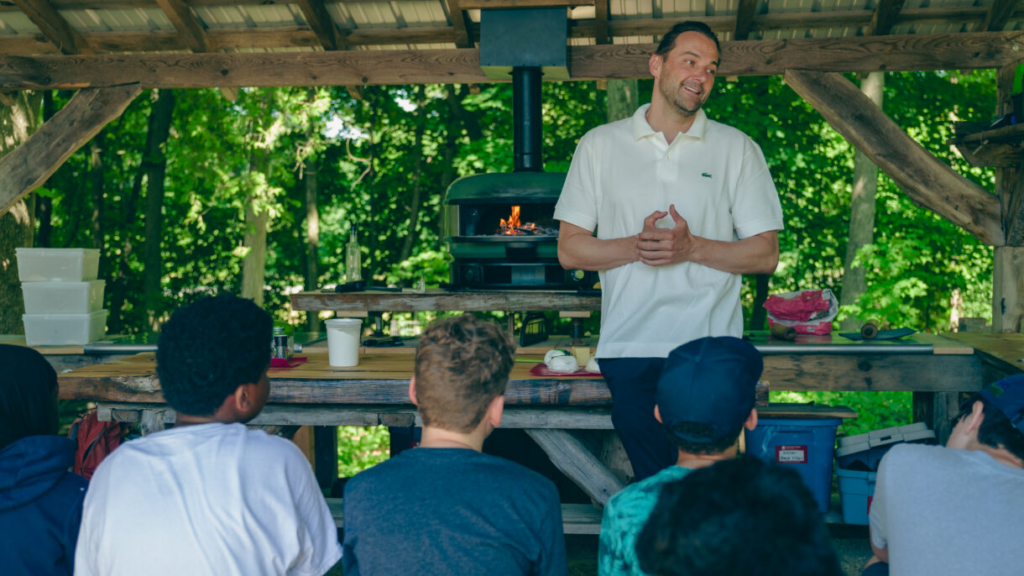
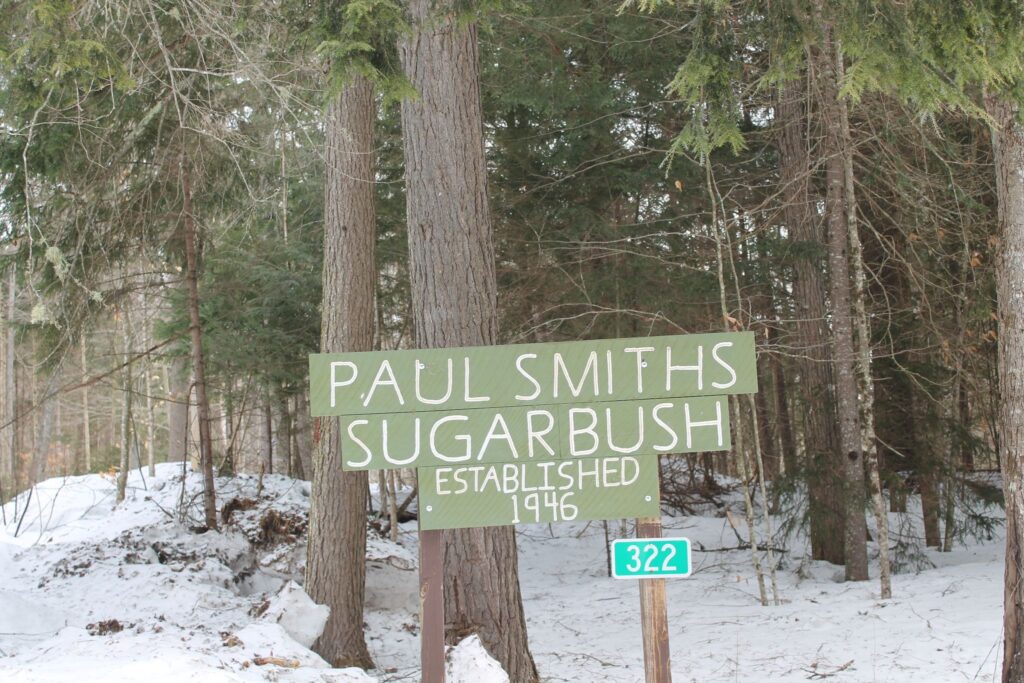
Chef Humm will be part of an exciting, unique event curated by Paul Smith’s College – a food “tasting” at Tucker Farms, followed by a robust panel discussion at Paul Smith’s Visitors Interpretive Center, and finally to a sugarbush forest for a conversation with “Maple Mike” Rechlin and some sweet treats.
The event will highlight the dynamism between food service professionals – chefs, bakers, hospitality professionals, other food system stakeholders – and food producers.
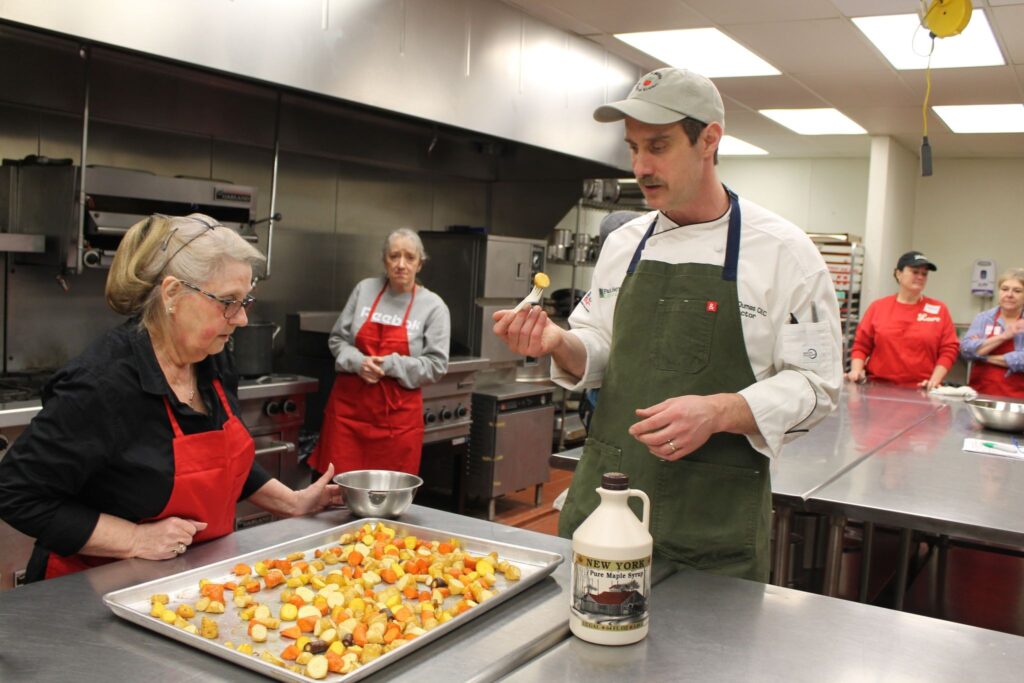
“Chefs focus on seasonal, local cooking,” said Robert Dumas, Director of the Paul Smith’s College Institute of Adventure Hospitality and Food. Daniel Humm – one of the best chefs of his generation – is no exception. Humm earned his first Michelin star at age 24, and during the Covid-19 Pandemic, turned his fine-dining Manhattan restaurant, Eleven Madison Park, into a commissary kitchen that prepared more than a million meals for frontline workers and underserved communities. Humm made history when he reopened with a fully plant-based menu, and the restaurant went on to be the first and only plant-based restaurant to earn three Michelin stars. Today, he partners with Magic Farms in Hoosick, NY, where produce is grown exclusively for his seasonal menus.
This seasonal, local cooking, Dumas says, is the key to a more sustainable food system. It’s not about getting tomatoes any time of year, but working with nature and the local environment.
Defining a “sustainable and equitable food system”
The Adirondacks are part of the Champlain-Adirondack Biosphere Reserve, one of only 28 such reserves in the United States.
The United Nations Educational, Scientific and Cultural Organization (UNESCO) works closely with the Champlain-Adirondack Biosphere Network (CABN) which covers over seven million acres—including the Lake Champlain watershed, Adirondack Park, and Green Mountain National Forest. Combining a massive protected wilderness with a large human population, the Champlain-Adirondack Biosphere Reserve is a model for balancing nature and communities. At over seven million acres, it’s the largest protected area in the eastern United States, supporting roughly 200 bird species, 58 mammals, 1,400 plants, and thousands of aquatic and terrestrial life forms.
Unlike remote wilderness areas, over 400,000 to 650,000 people live inside the reserve across small towns, villages, and working farms, making it a living laboratory for sustainability. And, sitting within a single day’s drive for roughly 60 million people in the U.S. and Canada, it’s an accessible hub for conservation education. The region, too, holds deep cultural roots for original native stewards, including the Mohawk, Abenaki, and Huron-Wendat nations.
CABN works to connect local communities, agencies, and scientists. It focuses on sustainable development and environmental conservation, and it does so in collaboration with the Champlain Valley National Heritage Partnership, to promote sustainable futures across the shared landscape.
One of the ways to do this is through food.
“Humans relate to their environment through agriculture and food,” said Benjamin Brosseau, Director of Communications at Paul Smiths College.
Or to put it another way – “Everybody eats,” Chef Dumas said with a laugh.
Bottom line, our relationship to food is fundamental. And so, an event of this nature truly impacts everyone in the region. Fine-dining in New York City that shifts focus to more sustainable plant-based, local, and seasonal food sources is just one lens. As global food systems endure shocks from a changing climate and geopolitical activity, locality and seasonality are shifting from preference to necessity. It’s a profound opportunity to reconnect with our rich culinary history, and to move forward together – a world-class chef coming together with local expertise at a UNESCO event.
The event: a day of good food, deep conversation, and our Champlain-Adirondack heritage
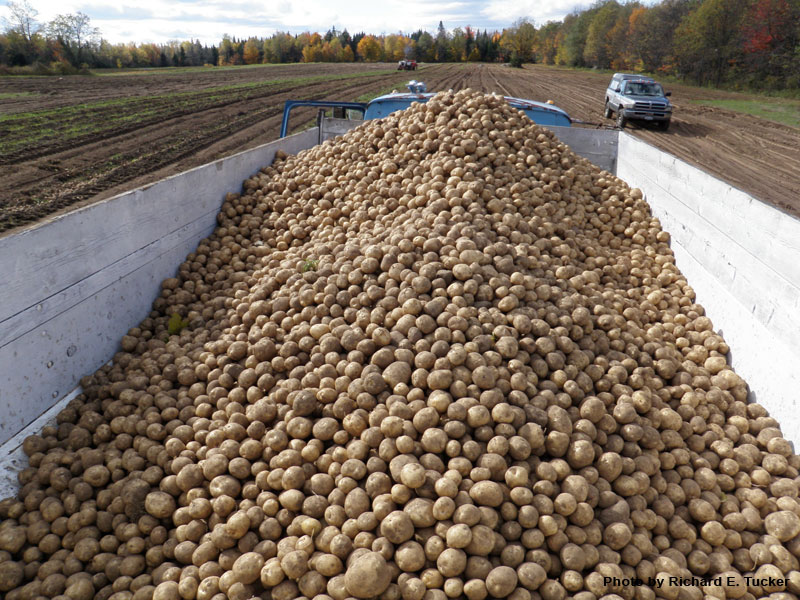
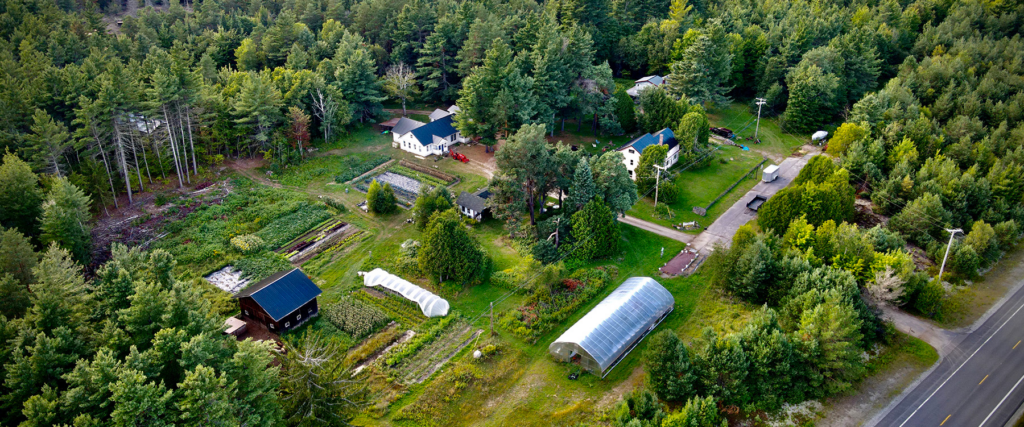
Chef Humm’s Adirondack tour will begin at Tucker Farms, one of the oldest farms in the region. Started in Gabriels, NY in the mid-1800s, the farm’s high elevation makes it ideal for growing vigorous, top-quality, disease-free seed potatoes. On October 6, 2026, Chef Humm will meet the Tucker family in their historic barn to break bread, with Paul Smiths culinary students and faculty joining in for a “potato-centric” meal.
The afternoon panel discussion, open to the public and taking place from 1-3 PM at the Paul Smiths College Visitor Interpretive Center, will explore the challenges, achievements, and future opportunities of the Champlain-Adirondack Biosphere Network, including details about the Food Futures Lab, the latest in a network of “living laboratories” where people work with nature to conserve biodiversity and advance sustainable development.
That evening, Humm will visit Paul Smiths College’s Sugarbush and the on-campus “Sugarshack” for a tasting of Paul Smith College’s maple syrup. The tour will be hosted by “Maple Mike” Rechlin, a Paul Smith’s lecturer on maple sap and syrup production.
The main course: A conversation with Chef Daniel Humm & the Champlain-Adirondack Biosphere Network
Four panelists will join Humm for the discussion moderated by Dumas: SUNY Potsdam professor and archaeologist Dr. Hadley Kruczek, small-farmer Aaron Caiazza of Kate Mountain Farm, Jim Brangan of CABN, and Cornell Cooperative Extension of Essex County Executive Director Elizabeth Lee.
The conversation will range, with questions abounding. What did our indigenous peoples focus on culinarily? What do our 19th-century communities have to teach us about modern farms, foodways, and the relationships between people and land in the Adirondacks and beyond?
What about today’s small farmers? Or anyone who wants to get growing? Caiazza transformed his family property from timber harvest into livestock and vegetable production. CABN’s “Biosphere in Your Backyard” initiative highlights local projects, people and places supporting sustainable development, and Lee’s role with Cornell Cooperative Extension of Essex County helps identify new agricultural opportunities for the region and potential funding sources for sustainability projects. Humm has spoken at global forums, including the UN Climate Change Conference and Global Citizen Summit, alongside world leaders, advocating for sustainable and equitable food systems, so he’ll be right at home here.
Dumas sees it as a chance for food service professionals to dialog with food producers, chefs, bakers, hospitality professionals, together with agricultural producers, economic development professionals, all mixing with Adirondack community members interested in great food, local agriculture, and a resilient future.
“We’re building upon a partnership that started in 2024 with Humm’s visit,” Brangan said, “where we’ll discuss food systems, biodiversity, and opportunities for collaboration.”
In-person registration for the panel discussion is currently full, but a live stream of the event will also be broadcasted via the Paul Smith’s College YouTube channel.
What is biodiversity and why does it matter?
Biodiversity is the wide variety of all living things on Earth, including animals, plants, fungi, and tiny microorganisms. The word comes from “bio” (life) and “diversity” (variety). It covers everything from tiny bacteria to massive trees and whales, and how they all work together in nature.
The rich mix of life gives us the air we breathe, clean water, and fertile soil for food.
Human activities such as monocropping, deforestation, pollution, and overfishing put intense pressure on Earth’s variety of life.
There is no one solution; there are many. Growing in our relationship to food, understanding the relationship between the land, its animals and plants, and our plates, is one of those ways. It is also perhaps the most delicious.


