• Skip to main content
  • Skip to footer

Adirondack Harvest

Farm Fresh Foods, Local Producers and Adirondack Farmers' Markets

  • Browse
  • Farmers’ Markets
  • Wholesale
    • Buy Wholesale
    • Local Food Wholesale Database
    • Sell Wholesale
    • Join the Wholesale Database
  • Learn More
    • Explore the Adirondack Cuisine Trails
      • About the Adirondack Cuisine Trails
    • Benefits of Buying Local Food
    • What’s in Season When
    • Farming in the Adirondacks
    • Meet the Makers
    • Decoding Food Labels
    • Food Assistance Benefits & Local Food
    • Food Assistance Benefit FAQ
    • Blog
  • Events
    • About the Adirondack Harvest Festival
    • 2025 Adirondack Harvest Festival
    • Event Calendar
  • Email Sign-Up

Education

AuSable Forks Elementary Students Get A Sweet Introduction At The Uihlein Maple Research Forest

04/15/2026

By Tim Rowland | Contributing Writer

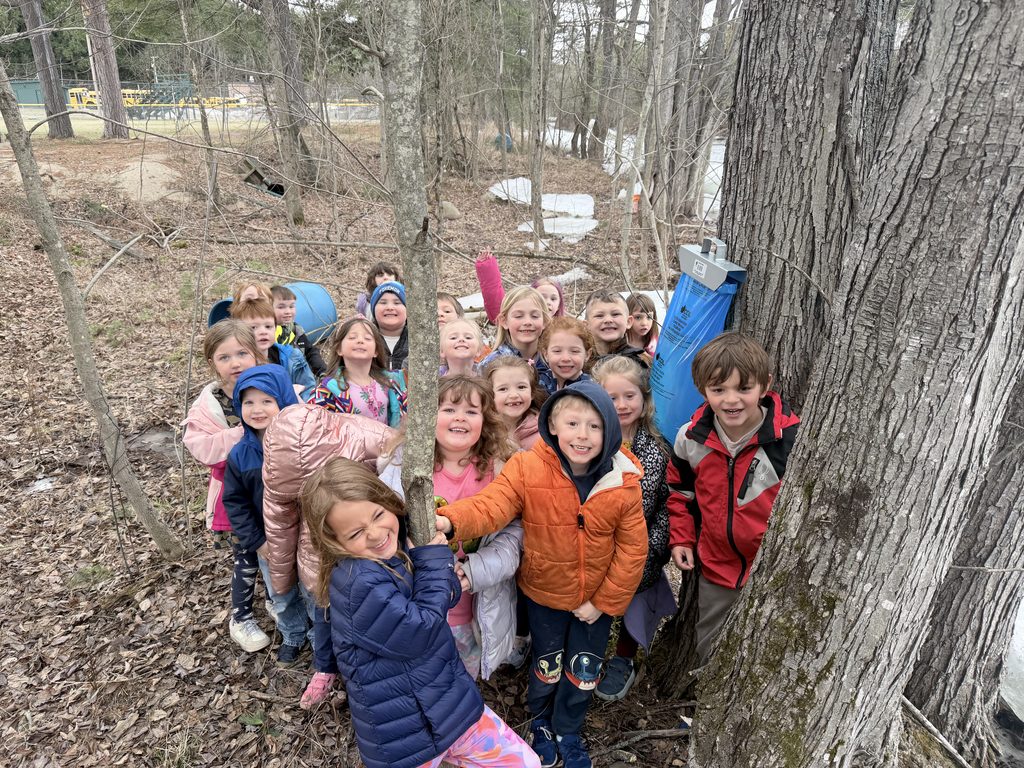
Freed of the walled confines of AuSable Forks Elementary School, 19 second graders sprinted up a snowy hill to explore the sugarbush where 6,500 maple trees are tapped each year by Cornell University’s Uihlein Maple Research Forest in Lake Placid.

Cornell University Uihlein Maple Research Forest. Photo by Isabella Susino.

The class was there as part of Cornell Cooperative Extension of Essex County’s (CCE Essex) Rooted in Learning program, which explores local farms and foods, increasing students’ awareness of where their food comes from, and how positive food choices will help them lead healthy lives.

Second-grade teacher Liz Donahue said exploration of Adirondack forests also expands the children’s connection to the land and culture.

Thanks to a previous maple tree-tapping demonstration by CCE Essex Community Vitality Resource Educator Ellie Hoffman, the second graders understood the fundamentals of sugaring already. At the Uihlein Forest, they learned that it can be a long way from tree to pancake, with a lot of pipelines and big machinery in between.

“Farm field trips are where Farm to School programs come full circle,” Hoffman said. “Students might learn about agriculture in the classroom through hands-on activities and taste the products of that agriculture in their school cafeterias, but the farm or forest is where they discover how those products got to the cafeteria, and why knowing that matters.”

Adam Wild with AuSable Forks second grade students in the sugarbush. Photo by Liz Donahue.
Director Adam Wild with AuSable Forks second grade students in the sugarbush. Photo by Liz Donahue.

Adam Wild, Director of the Uihlein Maple Research Forest, began by explaining how maple trees are identified in the forest by the color and texture of the bark. Maples were also identifiable by the blue piping affixed to their trunks, but that was cheating.

“These are natural, native forests,” Wild said. “These trees weren’t planted, so maple’s kind of cool in that we’re working in these natural forests in our Adirondack Mountains, and that’s where we get the sap from.”

These maples grow alongside other trees, such as fir and birch, and this diversity is good, he said, because it protects the forest as a whole against attacks from pests or disease that affects one particular species.

Uihlein Research Forest sap tubing. Photo by Adam Wild.
A tap in the maple tree filled with sap. Photo by Adam Wild.

Thirsting for action, the kids cheered when the sap was clearly visible flowing from the tree through the tubing — 100 miles of it in the Uihlein forest — that would send it to the sugar shack below.

If this tubing looks fragile, though, it’s because it is, and leaks can develop by way of a falling tree or a critter gnawing through the plastic. Wild encouraged the students to consider what animals might do the most damage, and they took turns guessing: 

Bears? (They probably would, but they’re still hibernating). Bobcats? (Not so much.) Snake? (Haven’t seen one, but you never know.) Werewolves? (Nice try. Squirrels are the correct answer.

Electronics are used to detect these leaks and pinpoint their locations, saving maple technicians hours of walking and guesswork.

Maple trees are tapped when they are about 40 years old or at least 10 inches in diameter. The weather is an important ingredient in the process, with nights below freezing and gentle warmups during the day being ideal.

Maple forest with buckets attached to trees in winter. Photo by Matt Barnard.

While a bucket hanging from a tree with a wooden tap might be a picturesque icon of the past, it’s not practical at today’s scale. “You tapped one tree, right? Imagine doing that 6,499 more times,” Wild said. “And imagine having to walk up and down this hill in the snow, carrying all those buckets of sap, would that be fun?”

There was firm and universal consensus that it would not.

Noting that he is a maple tree scientist – at which point a student wanted to know if he’s the “mad” kind – Wild said he’s always involved in research projects. 

“I’m investigating and trying to find answers from the trees, so I’m measuring the amount of sap that comes from those trees; measuring the temperature using different probes in the trees; measuring the pressure [of the sap inside the trees]; and soil temperatures [surrounding the trees]. Collecting all this data is to get those answers.”

Those answers will help producers improve their yields.

“We’re a little unique here in that we do research to improve maple production, and then we share that with other maple producers, so they can be better maple producers,” Wild said. “Kind of neat, right?”

The AuSable second graders demonstrated a good classroom knowledge of science, understanding things like DNA and how trees are able to produce oxygen. The Rooted in Learning field trip with CCE Essex showed them how these concepts might be put to practical use.

They also offered up some burning questions for Adam about being a scientist:
● Second grader: “Do you create stuff when you’re a scientist?”
● Adam Wild: “Yes, sometimes.”
● Second Grader: “Like monsters?”
● Adam Wild: “No, no monsters yet. But maybe one day we’ll make a Maple Monster.” (General affirmation among the second graders that a Maple Monster would be a laudatory scientific pursuit.)

Uihlein processes up to 12,000 gallons of sap a day. The sap arrives at the sap house downhill from the forest, where separators create a vacuum effect by separating the sap from the air in the tubing.

Sap separators at Uihlein Maple Research Forest. Photo by Isabella Susino.
Students watching raw sap flowing into the collection tanks. Photo by Liz Donahue.

The sap then transfers and collects in two enormous tanks, appropriately named Percy and Thomas. Wild watched the flow coming into the holding tanks and noted that it was good, but not as good as it could be. As the day warmed he hoped for an increase in sap volume. A good day will yield 150 gallons of syrup at Uihlein Maple Research Forest.

Percy and Thomas the sap collection tanks. Photo by Isabella Susino.

For the kids, it was a bit mind-bending to think that the droplets they saw seeping from the trees in the forest could add up to the gushers of sap filling Thomas and Percy.

They were also interested to learn about new terms, such as “reverse osmosis,” which has superseded much of the old process of boiling away the excess water. Sap now passes through filters that allow water molecules to flow through, while catching larger molecules of sugar and minerals.

Such sights make an impression, Donahue said, but students may also remember small, random details, like picking up a leaf, that will create a pleasant association with the forest.

“It’s nice for them to just get out and be outside for the day, doing something different,” she said. “Some of these kids may have family connections [to maple production] but some may not even go out on the weekends whatsoever — this lets them see what’s all around them in a different way.”

Tree tapping practice with Trever Sheehan, Technician II at Uihlein Maple Research Forest. Photo by Kim Chamberlain.
Director Adam Wild serving sugar on snow at Uihlein Maple Research Forest. Photo by Liz Donahue.

After practice tapping trees with a drill and a hammer, the students followed the process to the sugar shack, where a gleaming, stainless steel machine awaited to finish off the concentrating process.

“This machine is called an evaporator,” Wild said. “It’s basically a big, fancy stove, and the maple syrup is cooking down inside there.” 

The sap evaporator at Uihlein Maple Research Forest. Photo by Isabella Susino.

The evaporator can make a gallon a minute, and by the end of the season, Wild hopes to have produced 3,000 gallons of syrup. And just to make sure it’s good, he had 19 quality control volunteers at his disposal, willing to give his latest batch a try. It was a sweet way to end an educational morning.

“By supporting schools in bringing kids to a farm for the day, we give students a chance to engage with the places where their food was grown, raised, or produced, and meet the farmers who made it possible,” Hoffman said. “It’s a place-based educational experience that connects the three C’s of Farm to School — classroom, cafeteria, and community — in a memorably adventurous way.”

Power Through National Nutrition Month with Cornell Cooperative Extension of Essex County

03/27/2026

By Kate Graziano | Public Health Corps Fellow, Cornell Cooperative Extension of Essex County

National Nutrition Month, established in 1973 by the National Academy of Nutrition and Dietetics, is upon us! The campaign invites people to celebrate nutritious foods by learning how to make informed food choices and develop healthy habits. This year’s theme is “Discover the Power of Nutrition,” with weekly activities relating to healthy choices and nutrition on a budget. Nutrition powers individuals and communities, and building nutritious habits into your day through this campaign can empower you to improve your health and well-being now and in the future.

Photo shows kids assembling POP Club owls
Kids at POP Club create apple owls. Photo by Ellie Hoffman.

Discovering the power of nutrition can be done at any age, but Cornell Cooperative Extension of Essex County (CCE Essex) will soon be debuting a way for kids in particular to do this via a nutrition superhero game. Through the support of the Hannaford 2024 Childhood Obesity Prevention Project, Ellie Hoffman, Jake Yambor, and Kate Graziano created a deck of cards that features 13 fruits, vegetables, and legumes – all of which grow locally in Northern New York – depicted as superheroes. Each food will have specific, nutrition-based powers to show kids what healthy foods can do for their bodies. For example, the Carrot Superhero will have Vitamin A Vision Powers to keep eyesight sharp, and the Spinach Superhero will have Iron and Calcium Powers for energy and strong bones. 

In addition to superhero cards, the game will also include “villains” such as germs, fatigue, hunger, and broken bones. To play the game, kids will have to use the combined powers of the different foods in their hand to fight the villains that appear throughout gameplay. So, if they’re fighting germs, they will need foods with Vitamins C and E powers to strengthen their immune systems. If they’re fighting hunger, they’ll need to find foods with carbohydrate, protein, fiber, and/or lipid powers to decrease hunger and keep them full.

The nutrition superheroes game will go beyond the lesson that fruits and vegetables are healthy to get kids excited about the specific ways that local produce can improve their health and power their bodies. By turning fruits and veggies into superheroes, the game puts nutrition into terms that many kids already know and love, making it more approachable and fun. The nutrition superheroes game is still in development, but keep an eye out for it at CCE-led Power of Produce Club (POP Club) events at local farmers’ markets this summer! 

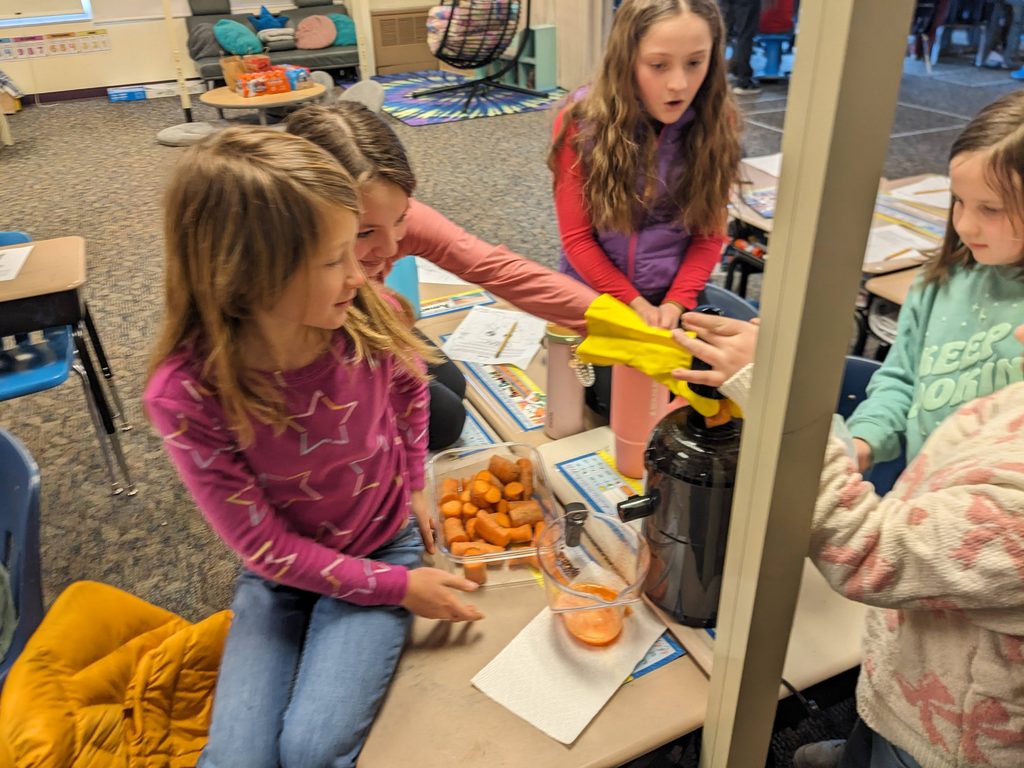
In the meantime, CCE Essex is focused on local food and nutrition in many other ways, too. Ellie Hoffman, Kate Graziano, and Mina Weymouth-Little teach Agriculture in the Classroom lessons to over 400 K through 5 students throughout Essex County. Each month, participating classes learn about local, in-season foods with a fun activity and a taste test from a farm in the Adirondacks. 

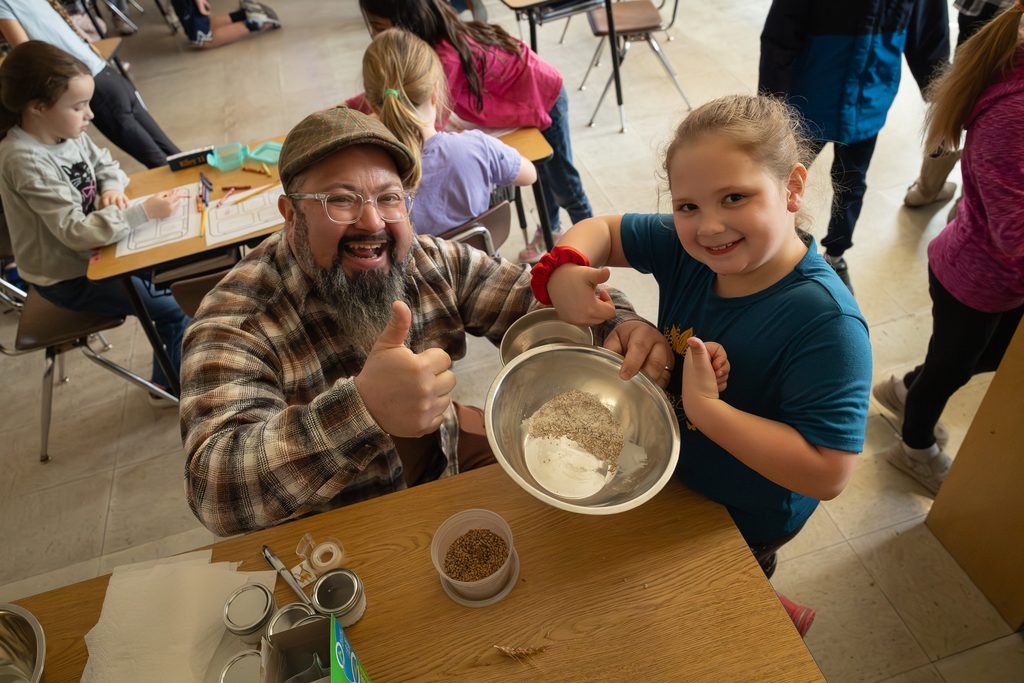
The photo depicts children sitting at their school table. Ellie Hoffman, local food educater through cornell cooperative extension of essex county, is shown planting seeds in cups.
Ellie Hoffman portioning microgreens for an Ag in the Classroom taste test.
Photo by Tim Rowland

Additionally, Samantha Davis and Kate Graziano lead senior health and wellness classes to older adults throughout the county and provide monthly healthy recipes and nutrition-based gatherings. Any questions or interest in setting up future events can be directed to Kate at kmg324@cornell.edu.

CCE Essex also collaborates with the Essex County Well Fed Collaborative to provide Essex County residents with information about places to source affordable healthy food. The Well Fed Collaborative website includes an interactive Food Resources Map with filters showing food pantries, stores accepting food assistance benefits, and locations offering free and low-cost meals (including Adirondack Community Action Programs, Inc.’s Aging Adults Nutrition Sites).

Furthermore, Alisha Thapa at Cornell Cooperative Extension of Clinton County (CCE Clinton) provides SNAP-Ed resources and workshops for residents of Clinton and Essex counties. SNAP-Ed workshops are designed to help participants learn how to make affordable nutritious choices. Any questions or interest in future events can be sent to Alisha at at996@cornell.edu. For more information about ongoing programs, visit the CCE Clinton SNAP-Ed page.

The North Country Fruit and Vegetable Prescription Program (FVRx) through Cornell Cooperative Extension of St. Lawrence County (CCE St. Lawrence) is another resource for residents of Clinton, Essex, Franklin, Jefferson, and St. Lawrence Counties. The FVRx program works with healthcare providers in the North Country to refer patients with chronic diseases or food insecurity to virtual and in-person nutrition workshops in which patients receive nutrition information and $25 in vouchers for healthy food purchased at select North Country businesses. Patients referred to the program can attend up to six nutrition workshops, where they receive $25 in vouchers at each workshop. If you live in Clinton, Essex, Franklin, Jefferson, or St. Lawrence County and are interested in participating in this program, ask your healthcare provider if they can refer you. If you are a healthcare provider and/or have any questions about the program, please contact Sarah Bentley-Garfinkel at sb2742@cornell.edu for more information.

Information about healthy, local, in-season food at Adirondack farmers’ markets and businesses is always accessible on the Adirondack Harvest website. Join us in celebrating National Nutrition Month by Discovering the Power of Nutrition in our community today!

Maple Season Marks the First Harvest of the Year for North Country Sugar Shacks

03/20/2026

By Tim Rowland | Contributing Writer

In northeastern agriculture, maple is the first harvest of the year. And even if some mushy snow is still hanging onto the hillsides, maple syrup revelers know in their sweet, sticky souls that if the sap’s on its way in, winter is on its way out.

This time of year can be celebrated during New York’s Maple Weekends, which are scheduled for March 21–22 and March 28–29, 2026. During these weekends, hundreds of maple producers across the state open their sugarhouses from 10 am to 4 pm for public tours, demonstrations, and pancake breakfasts. Find Adirondack Harvest member events here.

Image shows Brandy Brook Maple and Olde Thyme Winery's sugar house in winter. There's snow all around and a dog looking longingly at its owner, who is taking the photo.
Image by Brandy Brook Maple and Olde Thyme Winery.

For those who do not hail from these parts, they may be introduced to maple goodness for the first time. “I get so many people who have never tried maple syrup before in their life,” said Joy Herfurth, owner of Olde Tyme Winery at Brandy Brook Maple Farm in Ellenburg Center. “All they’ve had is corn syrup or something, and it’s amazing to see their faces when they try the pure product, because this is so good.”

But syrup as a pancake appliqué is not the only way it can be enjoyed, nor are maples the only trees that can be tapped.

“The forest has all these resources for us; we just have to take advantage of it,” Herfurth said. “We are innovative in that we’re making our wine using maple syrup as a fermenting sugar. So not only are we growing the fruit and the grapes, but we’re producing our own sugar, fermenting with it, start to finish. So basically, everything is made right here on site.”

Uihlein Sugarhouse with steam rising from their maple flume.
Uihlein Sugarhouse 2025. Photo by Adam Wild.

Producers are also tapping other trees besides maple, including birch, aspen, beech and walnut. This adds interest and new flavors for the consumer, and helps producers diversify, said Adam Wild, director of Cornell University’s Uihlein Maple Research Forest in Lake Placid.

A birch tree with a sap tap inserted into the cambium through the outside bark.
Birch tap and sap line. Photo by Cornell University Uihlein Maple Research Forest.

Maple became the gold standard not just for its high sugar content, but it’s also its strong flow of sap. Sap will flow out of a maple, but has to be suctioned out of a birch, Wild said. And it takes about three times the sap to make a gallon of birch syrup as it does maple.

“The traditional method of drilling a hole and putting a bucket on those trees doesn’t give you any sap,” Wild said. “You actually have to put a vacuum on and suck the sap from those trees.”

Despite it being harder to get the sap and needing more of it, advances in sap reduction using reverse osmosis have made the process efficient enough to be productive.

From a forestry aspect, a diverse sugarbush with multiple species is better than a monoculture represented only by maple. Birch sap doesn’t start running until the tail end of the maple season, extending this early spring harvest season for producers.

“Why bother tapping these trees? One thing is that the flavors are different and unique,” Wild said. “Birch flavor can vary quite a bit. Early in the season you can get birch syrup that is fairly close to maple syrup, and is pretty sweet and not too far off from maple syrup — but most birch syrup tends to be what I like to compare as a balsamic vinegar reduction.”

Which can be an unwelcome surprise for someone putting it on their waffles.

“If you think about balsamic vinegar, you probably don’t want to put it in your yogurt or on your pancakes like you would with maple syrup,” Wild said. “But it’s great pairing it with salmon or roasted vegetables, or drizzling over fresh tomato, fresh mozzarella, goat cheese, or one of my favorites, using it with a white pizza.”

Thin, tall bottles of dark syrup. The bottle is labeled as Birch Syrup.
Birch Syrup bottles for sale at Uihlein Maple Research Forest.

To help people understand the difference, Uihlein’s sugarbush bottles birch syrup in tall, slim bottles that resemble vinegar and olive oil vessels rather than the typical maple casks and jugs.

For producers, it can be interesting to experiment with other trees because of the variety. “Each is different,” Wild said. “Aspen and beech, I find, are kind of between the birch and the maple in that the beech flavors are closer to maple than the birch, so they’re not as strong. They’re more on the sweeter side, and have notes like raisin, dried pear or plums.”

Birch sap has also found its way into beverages, marketed as a health drink, and spirits. 

“People are willing to give it a try, and it’s actually been selling fairly well,” Wild said. “We certainly don’t sell as much as we do maple syrup, or produce as much, but the last couple of years, we’ve actually been selling out of what we’ve made.”

Chef Robert Dumas stands in one of the culinary labs at Paul Smith's College.
Chef Robert Dumas. Photo by Isabella Susino.

Chef Robert Dumas, Director of the Institute of Adventure Hospitality and Food at Paul Smith’s College, said he appreciates maple as an ingredient, but also as an anchor to the North Country that is thousands of years old, according to American Indian Magazine.

“I think that the tradition of tapping and reducing sap to make a sweetener predates any kind of cooking that we would recognize as modern, which is largely a European influence,” he said. “As an Adirondack chef, or as a modern Adirondack chef, I think that maple syrup is a wonderful opportunity to give your food a sense of terroir — a French cooking term that refers to a sense of place.”

And unlike other sugars, the sweetener derived from trees does not disturb the soil or ecosystem, nor does it require fertilizers or pesticides. It’s minimally invasive to the land that the grove stands on.

Using maple in cooking is very approachable, from a quick sauce for a chicken breast – to salad dressing – to a glaze for grilling or chicken wings. “Alternatively, you could do a soft cheese, like brie or camembert, drizzle maple syrup over that and have that sweet and salty kind of combination, along with some crackers or bread,” Dumas said. “It’s a really lovely way to highlight maple syrup in a way that’s kind of unique.”

Maple, of course, has also found its way into creams and candies, seltzers, bacon and hot dogs and even peanut butter — giving producers plenty of ideas for product diversity.

An outdoor sign that is green reads Paul Smith's Sugarbush, Established 1946.
Paul Smith’s Sugarbush sign on White Pine Road. Photo by Isabella Susino.
The outside of Paul Smith's College Sugarbush.
The outside of Paul Smith’s College Sugarbush. Photo by Isabella Susino.
Mike Richelin speaking to people outside of the photo frame. He's pointing to the grove of maple trees that surrounds the sugar bush.
Mike Rechlin at Paul Smith’s College Sugarbush. Photo by Isabella Susino.

While maples and a handful of other trees can be tapped, that’s not true of all tree species. Maples, birch and the like are “diffuse porous,” with uniform pores throughout the growth period that facilitate tapping, said Michael “Maple Mike” Rechlin, a lecturer and syrup producer at Paul Smith’s College, Research Professor at the Future Generations University Appalachian Program, and expert on tree physiology. “Ring-porous” trees like oak ash and hickory, on the other hand, have pores that decrease in size during the growing season, cutting off the flow of sap.

This tidbit of tree physiology can lead to some curious discoveries.

“Sycamore is a diffuse-porous hardwood, so in theory, it will give sap, and in the spring you can boil it down and make syrup,” Rechlin said. “So I’m giving a talk down in West-by-God Virginia, the folk art capital of the east, and I said, you know, sycamore is a tree that should also make a syrup, but I’ve never heard of anybody doing it. Two ladies in that audience independently raise their hands and say, ‘we grew up on sycamore syrup.’” The flavor is like butterscotch.

Rechlin spent 15 years in West Virginia, where walnut makes a popular syrup, one with a rich flavor that draws admiration even in the north. Sycamore and walnut are not prevalent in the north, but as the climate changes walnut is a particularly attractive possibility, considering its syrup sells for $360 a gallon, five or six times that of maple.

Of course maple season in itself is pretty hectic as producers greet the public and process the sap from tens of thousands of trees. Instead of tapping more trees, Herfurth said, “sometimes you just want to take a nap.”

An icon that is a green outlined circle with a purple maple leaf in the center.

Adirondack Harvest members with Maple Weekend events

Bechard’s Sugarhouse pancake breakfasts on March 21 & 22, March 28 & 29.

Brandy Brook Maple Farm offers open house weekends, March 21 and 22 and March 28-29, where they’ll offer Adirondack maple syrup tours.

Uilhein Maple Research Farm open houses on March 21 & 22, March 28 & 29 will include maple syrup tasting, tours of the Adirondack maple research forest, waffles for purchase, educational conversations on the maple sugaring process and how local producers can start their Adirondack sugarbush. Be sure to stop by to say hello to Adirondack Harvest!

Parker Family Maple Farm‘s Maple Celebration with Fireworks in on March 21; their Maple Open Houses on the designated Maple Weekends, March 21 & 22, March 28 & 29; and Pancake Breakfasts both weekends March 21 & 22, March 28 & 29.

Paul Smith’s Sugarbush will have a pancake breakfast on April 18th from 9-11am, please register and grab your ticket here. The Forestry and Culinary students work together to put on this event at the college’s sugarbush.


Other Adirondack Harvest members that produce maple

  • Black Rooster Maple
  • Hunter French’s Liquid Gold
  • Mousseau Family Maple
  • Reber Rock Farm
  • Saratoga Maple
  • Souza’s Farmstand & Maple House
  • Whitney’s Maple Spring Farm

To find stores or retail locations near you that carry maple syrup and other products, please click the button below.

Find Local Food and Products

For more information on maple weekend events, please visit New York State Maple Association.


Related reading

Parker Family Maple Farm Recipient of 2026 New York State Agricultural Society Business of the Year Award

Celebrating International Women’s Day: North Country Women Farmers Share Their Experience in Agriculture

03/08/2026

By Tim Rowland | Contributing Writer

Courtney Grimes-Sutton’s grandfather was quite proud that he had clawed his way out of farming to become a dignified, suit-and-tie insurance salesman. So he was understandably nonplussed when she broke the news that she was desirous of a career in agriculture. “Dirt to dirt in three generations,” he sighed.

A woman kneeling next to grafted apple trees.
Courtney Grimes-Sutton of Mace Chasm Farm, kneeling next to grafted apple trees. Photo by Adirondack Harvest.

But like many Adirondack women who have chosen a career in agriculture, Grimes-Sutton, co-owner of Mace Chasm Farm, believes it’s people in office cubicles who deserve our pity. “Sitting is the new smoking,” she said.

In this, the UN’s International Year of the Female Farmer, the North Country is a role model. According to the USDA, there are 1.2 million women farmers in the US, representing about a third of producers. 

But in Essex County, that percentage is closer to half. There are 513 producers in Essex, and 229 are women.

“The northeastern small AG scene is quite female,” Grimes-Sutton said. “These are relatively new and smaller scale businesses — maybe they’re socially comfortable workplaces for women in addition to meeting needs for those who like the varied, physical work of agriculture.”

Grimes-Sutton began her career in arts school before learning how to butcher a steer and run a welding rig. She also propagates antique fruit trees, grafting favored roadside wild apples onto hardy root stock so local families could have one of these special trees of their own.

Grimes-Sutton shown grafting apple trees.
Grimes-Sutton shown grafting apple trees. Photo by Adirondack Harvest.

“Women have been socialized to multi-task at a superhuman capacity, and that alone brings a lot to the table in any field,” she said. “We’re also socialized to care and be attuned to the nuances of needs around us. These skills go a long way in managing the life systems and social systems that sustain a farm business.”

A woman holds a bouquet of curly kale.
Becca Burke, of The Meadow Farmstand, holds a bouquet of curly kale. Photo provided by Becca Burke.

Growing up in the sprawling city of Columbus, Ohio, Becca Burke, owner of The Meadow Farmstead in the town of Jay, did not appear to be a candidate for growing vegetables in the Adirondacks. “There was an aspect of wanting to be healthy and eating a certain way and respecting the Earth, but didn’t really make that connection to farming until later on,” she said.

She caught the bug in 2012, visiting friends on a homestead in Northern California where they were “planting pomegranate trees and digging ponds and growing weird things.” Burke enrolled in Chico State University, which has a strong organic vegetable program, but more typically attracted male scions of big California farmers with commodity-scale olive orchards and dairies. 

“It was pretty evident from the beginning that I was in a small group of people that were focused on a different type of agriculture,” she said. “I was really drawn to the small, diversified farms raising vegetables; I wasn’t really interested in commodities or tree production.”

Burke hadn’t heard of the Adirondacks, but a friend connected her with an internship at North Country School in Lake Placid, which cemented her love of the land. But, after that, as she bounced around from small farms in California to Oregon and then all the way back to Vermont, the same problem kept materializing. These small farms could scarcely pay a living wage, and their owners weren’t going anywhere, so there was no room for advancement. Burke decided she wanted her own farm.

Her path to Jay helps explain why the North Country is such fertile ground for female producers. As opposed to sitting in the cab of a tractor all day, these small, curated farms require a wide arc of activities and problem-solving.

“I would say that women in general tend to be more detail oriented and really great multi-taskers,” she said. “With this type of farming there are a  hundred different things going on at any given time. You have so many things in your head and, especially at the scale I’m at, everything needs to be meticulously organized. And it’s not to say that there are no male farmers that are like that, but I do think that there is more space for men in that more industrial world where they’re getting to use their big machines.”

The ability to multi-task — the term comes up often in discussions with female farmers — has value to the farm, but also to the communities in which they live. When the small Ausable River Valley Business Association needed a grant, it was Burke who knew how to write one. 

A family stands in front of an outdoor kitchen.
Brandon & Laura Cook, and their son, owners of The Cook Farm. Photo by Katie Kearney, 2024.

Laura Cook, co-owner of The Cook Farm in Franklin County, grew up in one of these small agricultural communities in New Hampshire, but farming was the last thing on her mind when she went to school in Athens, GA, with an eye on a career in finance in Atlanta. The city and the culture changed her mind in about a week.

“I had a meltdown, and I was like, I’m not cut out for this, and I’m gonna quit school,” she said. “I cried and called all my friends at home, and told them I wanted to move back. And my best friend from home grew up showing through 4-H and she worked on a dairy farm. She said, ‘No, you just need to meet more people like me.’”

So Cook switched her studies from finance to cows. “I joined the Dairy Science Club and the dairy show team and got my first taste of the dairy industry,” she said. “And just immediately it clicked for me, like, this is what I want to do with the rest of my life.”

She went to work on a dairy farm before moving to Owls Head to raise goats, make goat-milk soap and raise just about everything else except, ironically enough, cows. In that time, Cook has seen more women enter the field, particularly in smaller farms.

“When I worked on the dairy farm, there were a lot of days where I was the only woman on the property, and that was on a crew of 20,” Cook said. “I had a mentality of, like, oh well, I’m gonna pick up this 100 pound calf and put it over my shoulder and carry it to the other barn over there, and that’s not a problem, even though there are smarter ways to do it — but when you’re 19 and you’re the only woman, you gotta prove yourself.”

Marisa Lenetsky (left) and Mike Champagne (right), co-owners of
North Point Community Farm.

When Marisa Lenetsky, co-owner of North Point Community Farm in Plattsburgh, walks into the auto parts store now, she’s treated with respect. But it’s taken some time. “The North Country is in some ways a pretty traditional place culturally, so some people aren’t used to, like, seeing a woman drive a tractor,” she says.

She and her business partner, Mike Champagne, prioritize an atmosphere among their employees where it’s assumed that men and women are equally adept at all tasks. Sometimes they still have to explain that they are partners in business, only to those who assume a woman would only farm in support of her husband. “He’s great about being extremely supportive and making it clear to people I actually have more tractor experience than he does,” Lenetsky said.

Lanetsky using a weeder accessory.

It helped when they began to farm fields along the busy stretch of Military Turnpike. “So for the first time, people driving by could see us in the field and on the tractor,” she said. “And I think that we definitely have gotten a huge response — people just like watching us work and quietly observe what we’re doing. Around here, respect just needs to be earned, which is legitimate. But four years in, I think people are starting to figure it out.”

If earning the respect of others is important, so is maintaining personal equilibrium. Farming can be socially, emotionally and financially taxing too. Some of the support in more mainstream professions can be lacking. Health care, for example, can be unaffordable, although as Grimes-Sutton notes, good exercise and good food is probably the best health care policy of all. “I like the steady, urgent work, which keeps my mind present,” she said. “In a society with too much clutter, in a mind with too much clutter, I’m grateful for a job that isn’t generating more clutter. The work is inherently hopeful, the crops and seasons successive, and it all adds up to a long game worth thinking about.”

Lifestyles are both rewarding and challenging. “I don’t have to go anywhere, and it’s wonderful, but it’s also extremely isolating,” Burke said. Particularly in-season there is little time to communicate with the outside world, and to talk about perhaps better coordinating production or transportation.

But at the end of the day, long as it might be, the connection between women and the land is embedded from time immemorial. “I think that in many ways, farming is about nurturing the land or the crops or the livestock, and I think that’s just something that comes really naturally to a lot of women,” Burke said. “And really, who wouldn’t want to work outside and have a meaningful job instead of being stuck in an office?”

Agriculture in the Classroom Grows Roots in Essex County

12/01/2025

Sometimes all it takes to start a revolution is a cherry tomato. 

By Tim Rowland | Contributing Writer

As agricultural educators with Cornell Cooperative Extension of Essex County (CCE Essex) visit classrooms throughout the county, they’re aware that what may seem commonplace to an adult has the potential to wow a second grader — and get them to think about nutrition, our food supply and the value of local farmers.

So Ellie Hoffman, Local Food Educator, and Kate Graziano, Public Health Corps Fellow, are using a Cornell Cooperative Extension Harvest NY grant to spend time with classrooms in AuSable Valley, Boquet Valley and Ticonderoga. Through this “Rooted in Learning” grant, they are engaging elementary students in food-related discussions, tastings, farm visits and fun activities throughout the 2025-2026 school year.

“One of the main ideas behind this program is that there’s a disconnect between the food on your plate and where the food actually comes from,” Hoffman said. “So we’re trying to address that in different sorts of ways.” 

Children are sitting on the floor, trying apple slices.
Apple taste testing with Ag in the Classroom.

The program patches in to national and state initiatives that feature a “harvest of the month,” an opportunity for kids to taste something that might be new to them. “And since CCE is so focused on local foods, we really try to bring those into Essex County schools specifically,” Hoffman said.

For example, taste tests featuring different varieties of apples relied on fruit from Northern Orchards in Peru. That opens up the possibility of a future field trip to the orchard so kids can actually see where those apples came from.

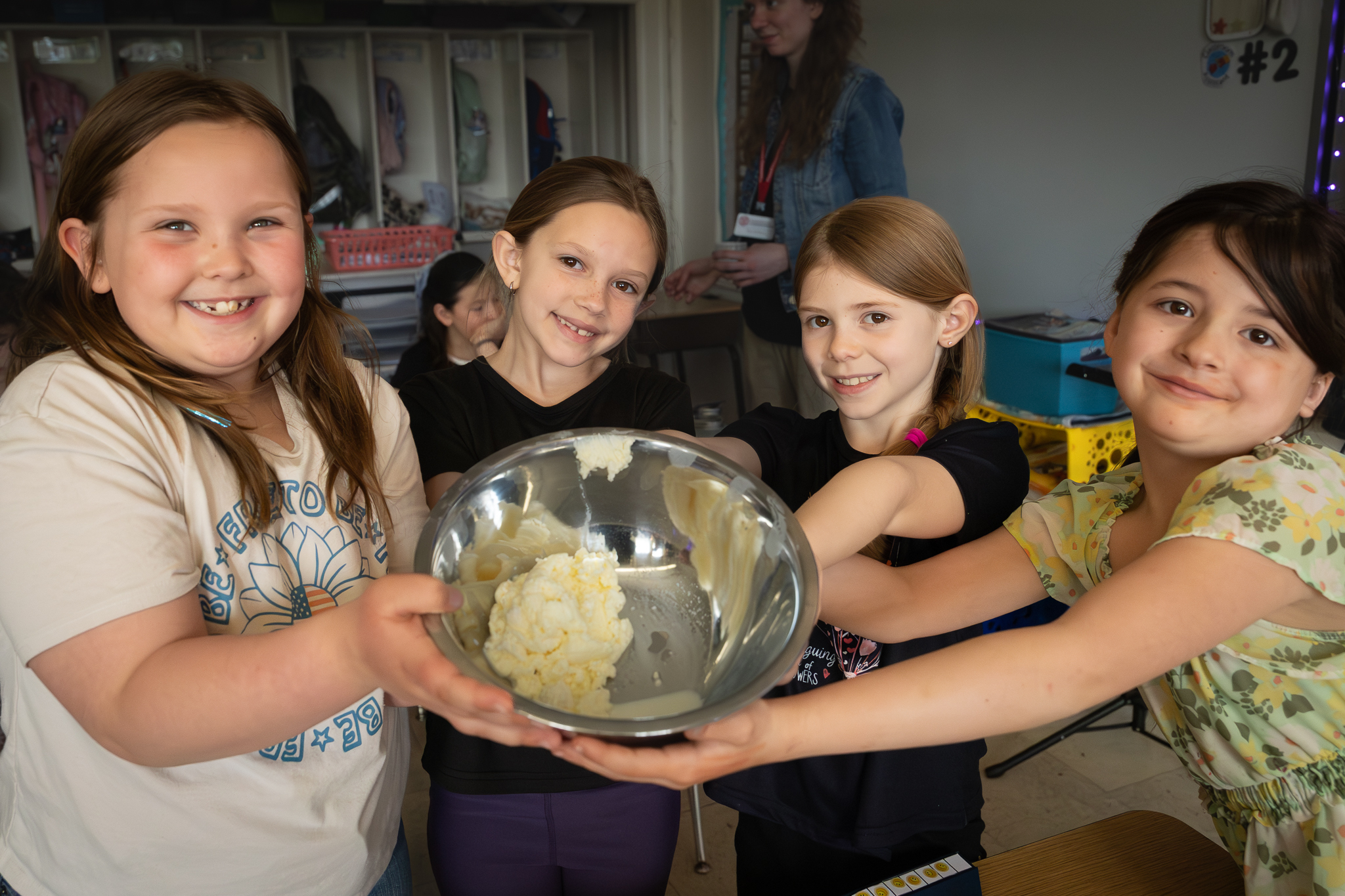
Each kid has a different level of knowledge about farms, food, and nutrition. There are a lot of foods many haven’t tried, like tomatoes. Other foods, like apples, they might know more about, so the program introduces kids to new varieties of apples and ways of thinking about their place in the food system. Some activities, such as churning butter, engage kids in preparing their own taste test. 

“The butter lesson was a lot of fun, because a lot of the kids knew a little bit about the process of making butter, but they were so excited to see it happen in real time,” Graziano said. “I can tell that the kids are really excited to learn and cook with local food as much as they can. I have found it really interesting to see the different knowledge levels that the kids have going into the program, and I am looking forward to building on what they have learned in the past through similar experiences at home and at school.” 

The lessons are 45 minutes once a month, but are designed so that teachers can use the lesson concepts to teach other subjects through the lens of agriculture. This can mean activities such as measuring the circumference of a pumpkin while studying geometry, writing about different parts of an apple during spelling and vocabulary lessons, and discussing local fruits and vegetables when learning about the life cycle of a plant.

Students are writing on a piece of paper, they are seated at their desks.

And while one class a month might not seem like much, it’s surprising how much of an impression even just one lesson can make. Part of that is because it’s so different from other things kids are learning in school. And that imprinting allows educators to build on the lessons in ensuing years. Making butter one year can lead to a discussion of how dairies work the next.

Hoffman says progress is measured by evaluations before and after the instructional year, but also by judging the students’ level of engagement. “When I’m teaching, I really try to tune in to how much the kids are paying attention and participating in the activities,” she said. “If I say something and they ask questions about it, that tells me I’m on the right track.”

Of course, kids being kids, they aren’t always thrilled about trying something new, especially a vegetable. No one forces them to try it, but they are encouraged to use other senses, like touching and smelling, to engage. If they smell it and it’s not too bad, they may end up taking a nibble. Then if they see that same food in the cafeteria they’re less likely to reject it out of hand.

And what’s really magical is when the kids can grow the food themselves. When they plant microgreens in the classroom, for instance, they learn about a new food, but also about what goes into its production. They’re delighted to see the seeds they plant unveil their stems and leaves – miniature produce that becomes a snack time harvest. 

Children gather around desks to look at a paper that outlines different apple varieties.

“I’ve seen the same reaction in an apple orchard,” Hoffman said. “You know that’s where apples come from, but I really think there is a sense of wonder from actually seeing it on the tree and picking it.”

Food, then, becomes not just something to eat, but something to experience and learn from. That makes it valuable, not just from a nutritional standpoint, but from being a part of the economy, a part of society and a part of the neighborhood.

“There’s a connection to the community, to the farmers, to the land, to the place, along with nature and the environment,” Hoffman said. “These connections all come together, and they’re not just theoretical. They’re something you can go out and see, and that’s really cool.”

You might say, revolutionary.


For more information on POP Club, and the Farm to School program, please contact Ellie Hoffman at emh257@cornell.edu or 518-962-4810 ext. 405.

Photographs provided by Ellie Hoffman.

Successful summer programming with the Power of Produce Club

11/18/2025

POP Club gives kids a chance to engage with local producers and growers within Essex County.

By Ellie Hoffman | Local Food Educator

Kids gather around the POP Club booth's table to assemble apple owls.
Kids gather around the POP Club table.

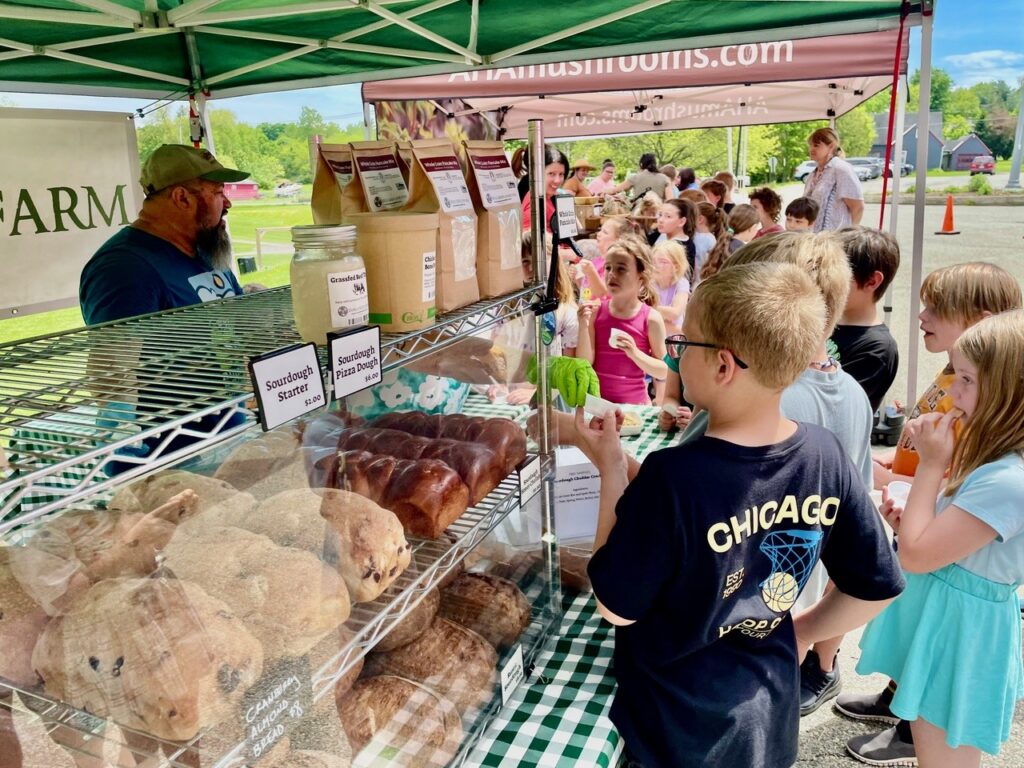
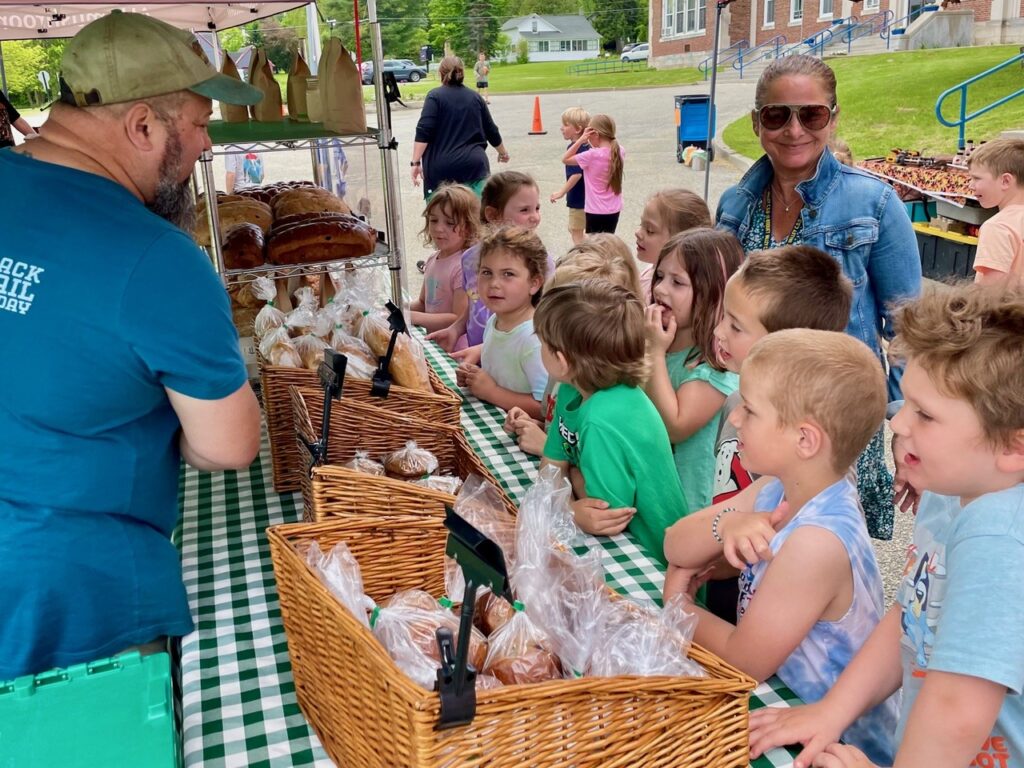
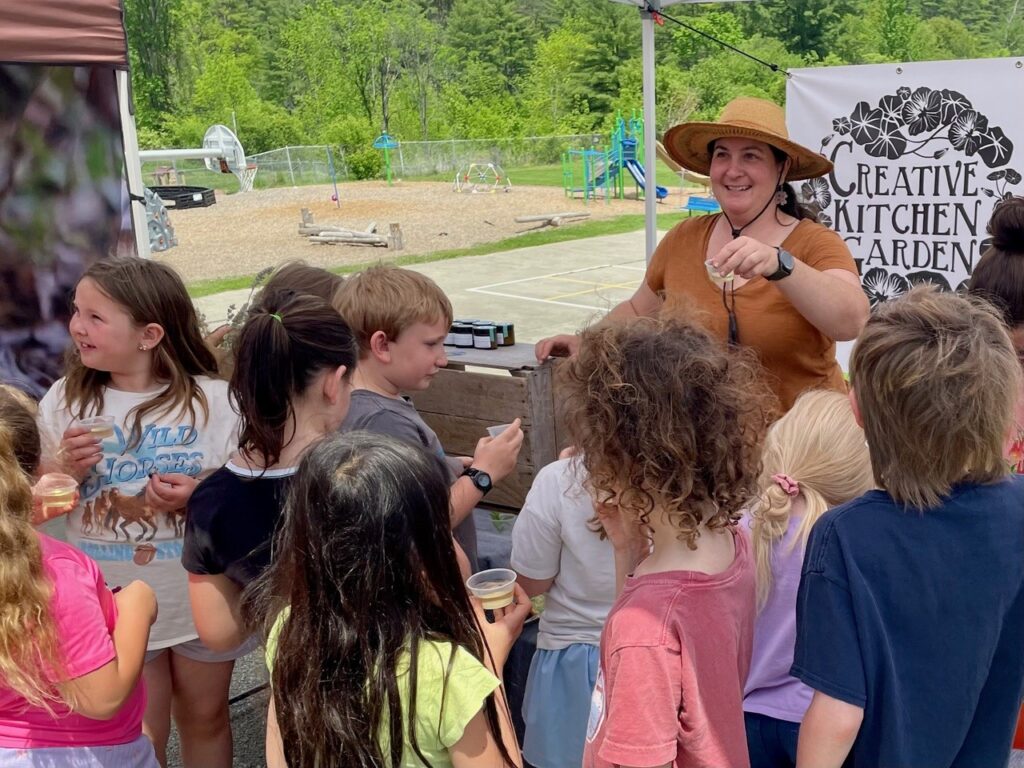
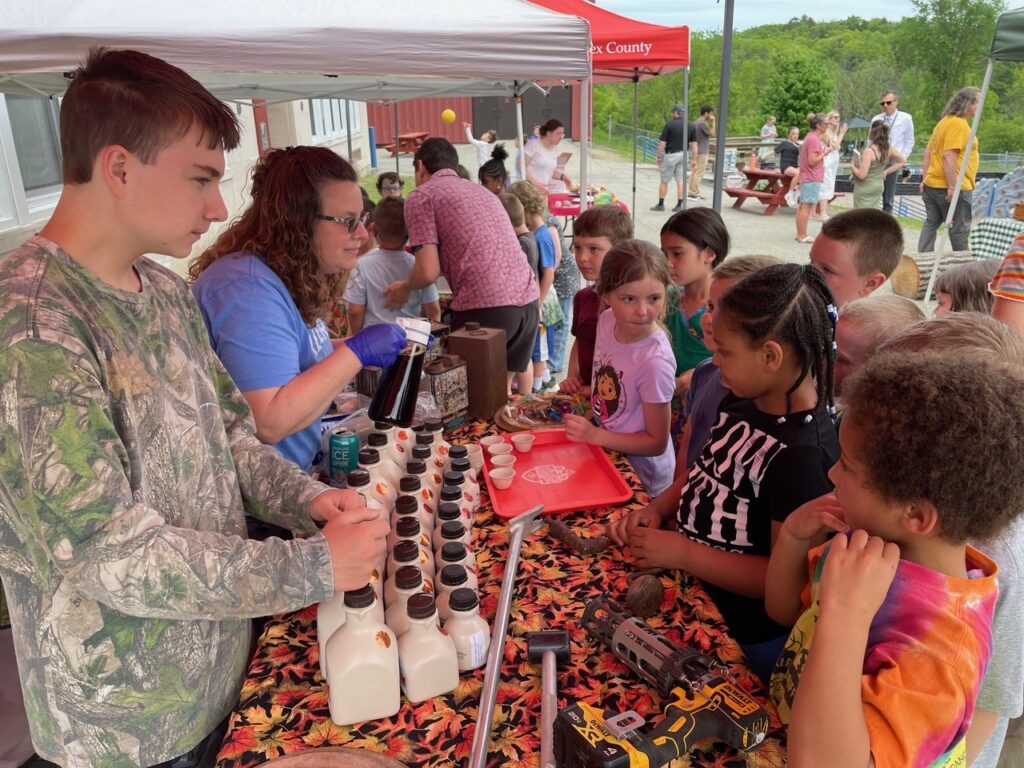
The Power of Produce Club, Cornell Cooperative Extension of Essex County’s flagship youth program, offers a hands-on opportunity for free activities and a chance to engage with local produce. The program has wrapped up another successful year, expanding its number of locations, participants, and types of featured produce. In total, educators logged 600+ interactions with youth, a 20% increase from the 2024 season. 

Essex County is home to nine summer farmers’ markets, and POP Club was proud to make an appearance at all of them. Elizabethtown, Lake Placid, and Saranac Lake Farmers’ Markets all welcomed POP Club back for another consecutive year, while markets that hosted POP Club for the first time included Schroon Lake, Willsboro, Crown Point, Ticonderoga, Keene Valley, and Port Henry. At all markets, POP Club’s mission was to spread excitement for farm fresh produce and expand kids’ knowledge of and access to locally grown foods.

Each week, the POP Club table featured ways to learn about farms and food through hands-on activities, scavenger hunts, and veggie-themed jokes and trivia. After completing an activity, the participating kids received $5 to purchase any local produce item of their choice from a vendor at the market that day. 

“My five year old son was thrilled to receive a $5 bill after he completed the activity. It was a nice surprise! He enjoyed buying peaches from a local farm,” said one Schroon Lake Farmers’ Market attendee.

An owl made from apple pieces and chocolate.
Apple owl model for POP Club.

Thanks to produce donated from local growers such as Northern Orchard and Harvest Hill Farm, POP Club was also able to pilot new activities such as sculpting apple critters and carving zucchini boats. The latter proved attractive not just to kids, but to market shoppers of all ages, as kids, parents, and grandparents stopped to try their hands at creating a seaworthy squash. Many adults also came over to hear from CCE Essex’s Master Gardener Volunteers, who teamed up with POP Club on several occasions to give up-to-date and on-the-spot horticulture advice to budding gardeners.

Photo shows kids assembling POP Club owls
A child named Nolan is posing next to his zucchini boat afloat in the tub of water.
Nolan’s zucchini boat is staying afloat!

Tourists and locals alike remarked on the influence that POP Club had on their experience at the market, with one grandparent noting that “[the kids] were so proud of their Farmers Market purchases…the activities at the market were among their favorite things from [our time in Lake Placid].” POP Club’s role in establishing connections between families and farmers was also mentioned.

“[POP Club] always gives my kids a fun activity that gets them to directly interact with merchants at the farmers market,” said one attendee. Another agreed, saying that “[POP Club scavenger hunts] made them go over to vendors they might not have otherwise.” And with the $5 they received from POP Club activities, kids were empowered to participate in the local food network by buying directly from the market vendors.

“We love seeing kids use their POP money to buy blueberries from us. Often, they walk over with their $5 bills in their hands and make the purchase mostly on their own. POP is not only promoting healthy foods, but also life skills for our young people: the future generation of consumers,” said Laura Cook from The Cook Farm

Connecting families to food and farmers is ultimately what POP Club is all about, and we’re proud to work with so many dedicated growers, producers, and community members to make that happen. We’ll be back in 2026 with fresh ideas and ingredients; stay tuned for a schedule in the spring!

For more information on POP Club, and the Farm to School program, please contact Ellie Hoffman at emh257@cornell.edu or 518-962-4810 ext. 405.

Photographs taken by Ellie Hoffman.

Farmstands, Local Food Retailers, Farmers’ Markets and Grocery Co-Ops Open During the Winter

Wood Fired Pizza Party

02/25/2024

Learn how to make authentic wood-fired pizzas from scratch using fresh ingredients sourced right from local farms. We will guide you through the process of making the perfect pizza dough, selecting toppings, and cooking your pizza in a traditional wood-fired oven.

Plan or Improve Your Food Business Series

01/23/2024

Registration is open for the Plan or Improve Your Food Business 4-part series that kicks off February 13th. This includes a session dedicated to getting recipes approved (who, when, where, how) which is a popular topic. Once registered, folks can attend one or more of the 4 online sessions. There’s also an optional in-person meal and tour at the close of the series.

Each webinar focuses on a particular facet of managing a food business. While it’s impossible to cover every unique circumstance, these sessions tackle the most common questions Extension fields from entrepreneurs considering value-added production. Sessions are held online 6:00-7:30 pm and each includes a presentation, activity for the group, plus resources to learn more after each session including recorded conversations with other small NYS food entrepreneurs. The course is led by M. Flip Filippi, who is the Harvest Kitchen Manager and Local Foods Program Leader at Extension. Her focus is offering custom advice to entrepreneurs looking to create value-added products. Flip strives to create a welcoming learning environment while simplifying the multi-layered regulatory and financial planning aspects of food entrepreneurship. She has completed Food Safety Manager’s Training, Better Process Control School for Acidified Products, Holistic Financial Planning, FSMA Regulations for Small Food Producers, Produce Safety Alliance Grower Training, and Master Food Preserver trainings.

The series kicks off on February 13 and finishes March 6. The topics for each session are:
1. Understanding Food Business Types
2. Estimating Costs of Starting a Food Business
3. Recipe Approvals, Record Keeping, and Food Safety
4. Creating Effective and Legal Product Labels.
5. Plus, all participants are invited to an in-person closing event at the Harvest Kitchen at the Extension Learning Farm in Canton on March 13th to enjoy a meal together, connect with other food entrepreneurs, and experience a mock kitchen inspection.

An entrepreneur who took part in last year’s program shared, “The course was well-balanced in terms of presentation, group discussion, and shared resources for further work. I loved getting to meet the different producers and hear their plans. Having real life examples made all of the licensing requirements, etc. make more sense. The class was an appropriate amount of time to get everyone going in the right direction. Also, the interviews with the producers and NYS food authorities were such an awesome resource and really brought all the information down to earth in an easy, understandable way.”

The registration fee is $25 for the entire online course.
Learn more and register here: http://stlawrence.cce.cornell.edu/.

Adirondack Culinary Weekend

04/24/2023

Spring 2023 Lake Placid & Adirondack Culinary Getaway

MAY 5, 6 & 7 2023 | THE MEXICAN EXPERIENCE

The Carriage House Cooking School has once again teamed up with The Mirror Lake Inn to offer select getaway packages celebrating the bounty of the Adirondack Park’s vibrant farm to table landscape.

Getaway registrants will enjoy the comforts and luxury of the Mirror Lake Inn, which is the epitome of Adirondack hospitality, along with multiple demonstration style cooking classes, each designed so that participants can return home, confident to replicate and share their learning experiences.

Chef Curtiss, the former Dean of Culinary Arts at the prestigious New England Culinary Institute, has long considered the Mirror Lake Inn the perfect venue for cooking classes and a focused culinary weekend.

He has been a guest chef and instructor with the Inn’s numerous Food & Wine Festivals and several special events and now serves as The View Restaurant’s Executive Chef and Food & Beverage Director.

This weekend is all about celebrating the comfort and cuisine of the Mexican house table while tasting the terroir of the Adirondacks and surrounding farmland.

Check out the schedule and class menu below.

MAY 5, 2023

Welcome Reception

5:30 to 6:30 PM

Gather for a meet and greet with Chef Curtiss of the Carriage House and the Mirror Lake Inn Culinary team. Hors d’oeuvres are provided and there will be a cash bar available.

SATURDAY MAY 6, 2023

Cooking Demonstration | Tamales

12:30 to 3:30 PM

Mexican food, like others cuisines in equatorial regions, is full flavored, quick to prepare and delicious. It is important for me to identify and expand the home repertoire in ways that are both traditional and contemporary. It is the goal of this class to share the joy for life that Mexico is famous for and to make it’s cuisine accessible, understandable and actionable.

“The simplicity of preparation and the flavors of home style Mexican food make for meals that are more socially engaging, delicious and enjoyable.”

Chef Curtiss

Saturday’s demonstration style class will showcase the simplicity, accessibility, comfort and flavors of Mexican cuisine with the sense and sensibility of seasonal influences on our palates and tastes. In this class chef Curtiss will showcase how you can replicate a Mexican inspired menu at home with the confidence of a chef.

Demonstrated Recipes

Tamales
masa, lard, cheese, onion | masa, lard, chorizo, onion
*chorizo recipe will be demonstrated in class

Quacamole
avocado, onion, tomato, lime, cilantro, cumin, salt, pepper, jalapeno, olive oil

Pico
tomato, onion, jalapeno, lime juice, olive oil, cumin, salt

Tres Leches Cake
sponge cake, tres leches, whipped cream, cinnamon sugar

While the foods used in this class will be primarily sourced and inspired from the Adirondacks and its surrounding farmland, Chef Curtiss will be discussing how to source products local to you that will yield you the same results.

Registration for the class includes:

printed recipe packet
bottled water
tasting plate

SUNDAY MAY 7, 2023

Cooking Demonstration | A Mexican Inspired Brunch

9:30 AM to 12:00 PM

Chef Curtiss will pull from the Adirondacks and its surrounding farms, rivers and forests to showcase recipes for a delicious Mexican style brunch of sharable platters and plates, typical of a Mexican meal.

“The concept of sharing a table is deeply rooted in traditional and contemporary Mexican culture. When you order food in a restaurant you order it for the table, not yourself. This approach binds those at the table to one another and makes for more memorable experiences.”

Chef Curtiss Hemm

Demonstrated Recipes

Chicken Posole Verde
chicken, hominy, beans, stock, salsa verde, onion, lime juice, cilantro

Elotes Salad
shoepeg corn, mayonnaise, sour cream, cojita, jalapeño, onion, lime juice, cilantro

Albondigas
pork, masa, milk, onion, breadcrumbs, egg, chipotle, cumin, coriander

Churros
milk, butter, sugar, eggs, salt, flour, cinnamon

While the foods used in this class will be primarily sourced and inspired from the Adirondacks and its surrounding farmland, Chef Curtiss will be discussing how to source products local to you that will yield you the same results.

Registration for the class includes:

printed recipe packet
bottled water
tasting plate

For more information about booking please call one of the Mirror Lake Inn’s reservation specialists at (518)523-2544 or info@mirrorlakeinn.com.

Earth Day 2023 -Support the Planet: What’s Your Food Print?

04/11/2023

Learn how you & your family can reduce your “Food Print” at the Ticonderoga Natural Foods Co-Op this Earth Day!

Workshops & Activities include: * What’s Your Food Print? * Seed Starts for Kids * Worm Composting Demo * Local Farms Scavenger Hunt * Flower Starts for Adults * Story Hour & Up-cycling Craft * The Connection Between Food Waste & Climate Change

Sample Food from your Local Farmers: * Lillie Valley Farm * Crown Point Dairy * Crown Point Bakery * Daughters Five * Juniper Hill * North Country Creamery

  • Page 1
  • Page 2
  • Go to Next Page »

Footer

  • Facebook
  • Instagram
  • Twitter
  • YouTube
alt-text

8487 U.S.Route 9, Lewis, NY 12950

Phone: (518) 962-4810

cornell-cooperative-logo

If you have a disability and are having trouble accessing information on this website or need materials in an alternate format, please contact the Cornell Cooperative Extension of Essex County office for assistance (518) 962-4810 or email essex@cornell.edu.

  • Browse
  • Markets
  • Events
  • Festival
  • Blog
  • Trails
  • Login | Join
  • Home
  • About Us
  • Harvest News
  • Local Food Guides
  • Contact Us
  • Get Listed or Renew
  • Make a Donation
  • Friends

Copyright© 2026 · Adirondack Harvest. All images to their original owners. adk-chair