By Tim Rowland | Contributing Writer
Freed of the walled confines of AuSable Forks Elementary School, 19 second graders sprinted up a snowy hill to explore the sugarbush where 6,500 maple trees are tapped each year by Cornell University’s Uihlein Maple Research Forest in Lake Placid.
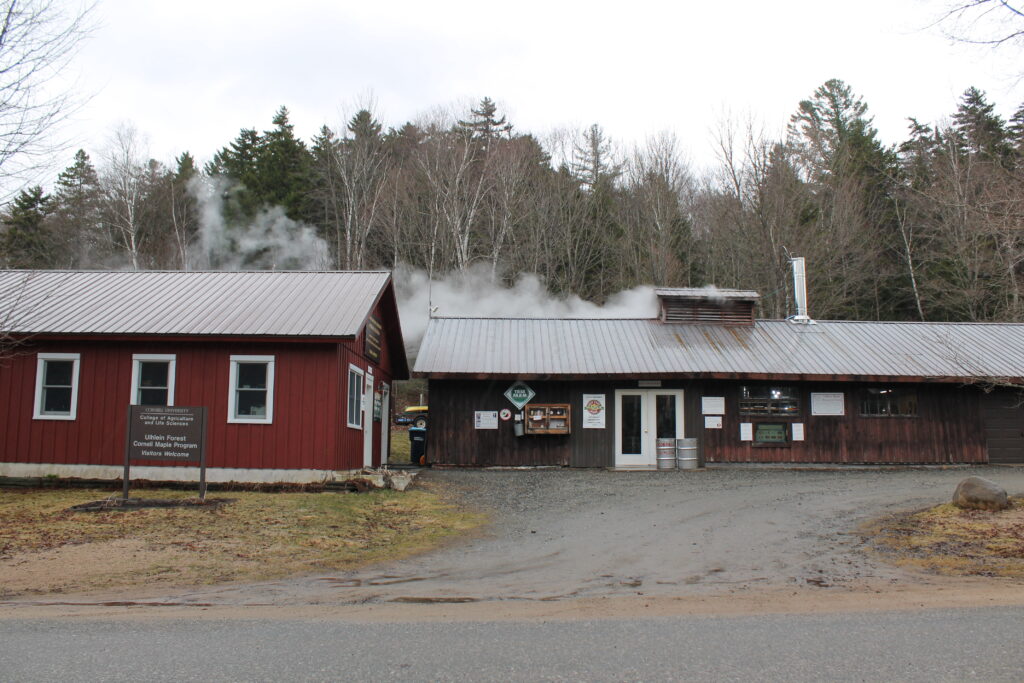
The class was there as part of Cornell Cooperative Extension of Essex County’s (CCE Essex) Rooted in Learning program, which explores local farms and foods, increasing students’ awareness of where their food comes from, and how positive food choices will help them lead healthy lives.
Second-grade teacher Liz Donahue said exploration of Adirondack forests also expands the children’s connection to the land and culture.
Thanks to a previous maple tree-tapping demonstration by CCE Essex Community Vitality Resource Educator Ellie Hoffman, the second graders understood the fundamentals of sugaring already. At the Uihlein Forest, they learned that it can be a long way from tree to pancake, with a lot of pipelines and big machinery in between.
“Farm field trips are where Farm to School programs come full circle,” Hoffman said. “Students might learn about agriculture in the classroom through hands-on activities and taste the products of that agriculture in their school cafeterias, but the farm or forest is where they discover how those products got to the cafeteria, and why knowing that matters.”
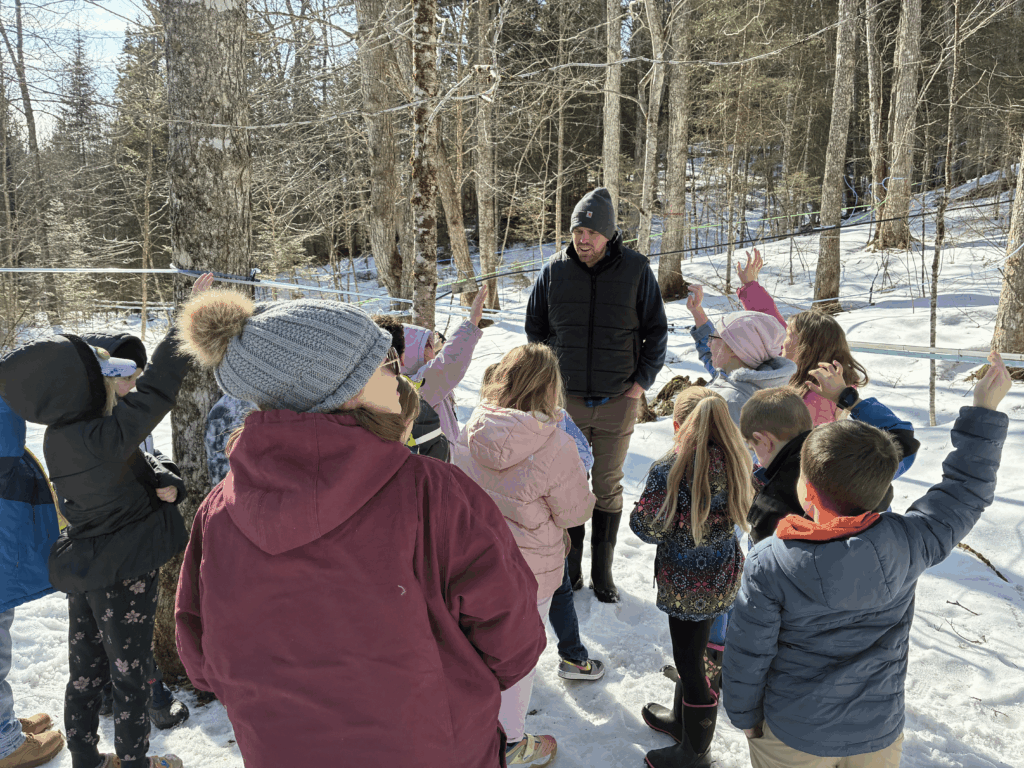
Adam Wild, Director of the Uihlein Maple Research Forest, began by explaining how maple trees are identified in the forest by the color and texture of the bark. Maples were also identifiable by the blue piping affixed to their trunks, but that was cheating.
“These are natural, native forests,” Wild said. “These trees weren’t planted, so maple’s kind of cool in that we’re working in these natural forests in our Adirondack Mountains, and that’s where we get the sap from.”
These maples grow alongside other trees, such as fir and birch, and this diversity is good, he said, because it protects the forest as a whole against attacks from pests or disease that affects one particular species.
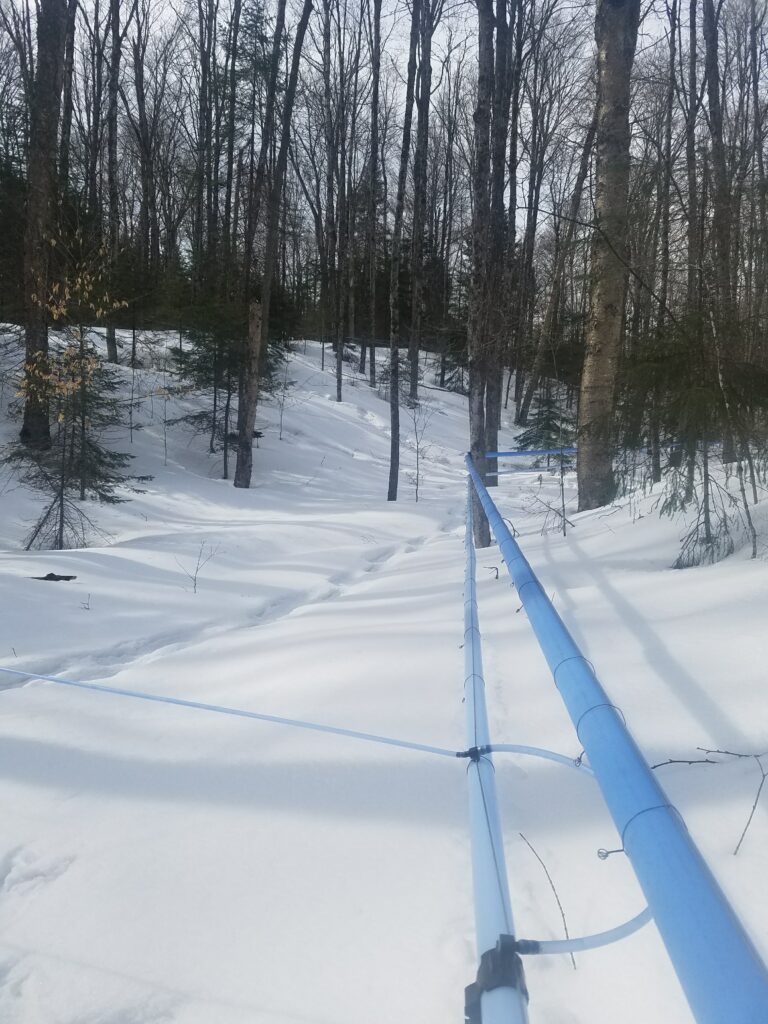
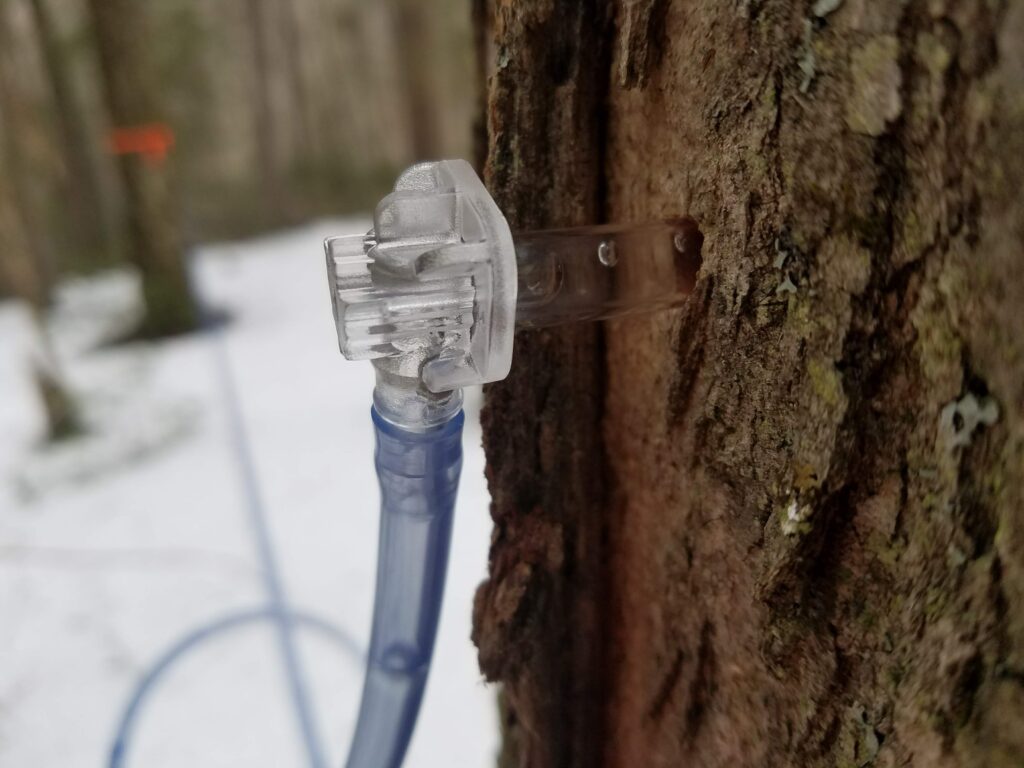
Thirsting for action, the kids cheered when the sap was clearly visible flowing from the tree through the tubing — 100 miles of it in the Uihlein forest — that would send it to the sugar shack below.
If this tubing looks fragile, though, it’s because it is, and leaks can develop by way of a falling tree or a critter gnawing through the plastic. Wild encouraged the students to consider what animals might do the most damage, and they took turns guessing:
Bears? (They probably would, but they’re still hibernating). Bobcats? (Not so much.) Snake? (Haven’t seen one, but you never know.) Werewolves? (Nice try. Squirrels are the correct answer.
Electronics are used to detect these leaks and pinpoint their locations, saving maple technicians hours of walking and guesswork.
Maple trees are tapped when they are about 40 years old or at least 10 inches in diameter. The weather is an important ingredient in the process, with nights below freezing and gentle warmups during the day being ideal.
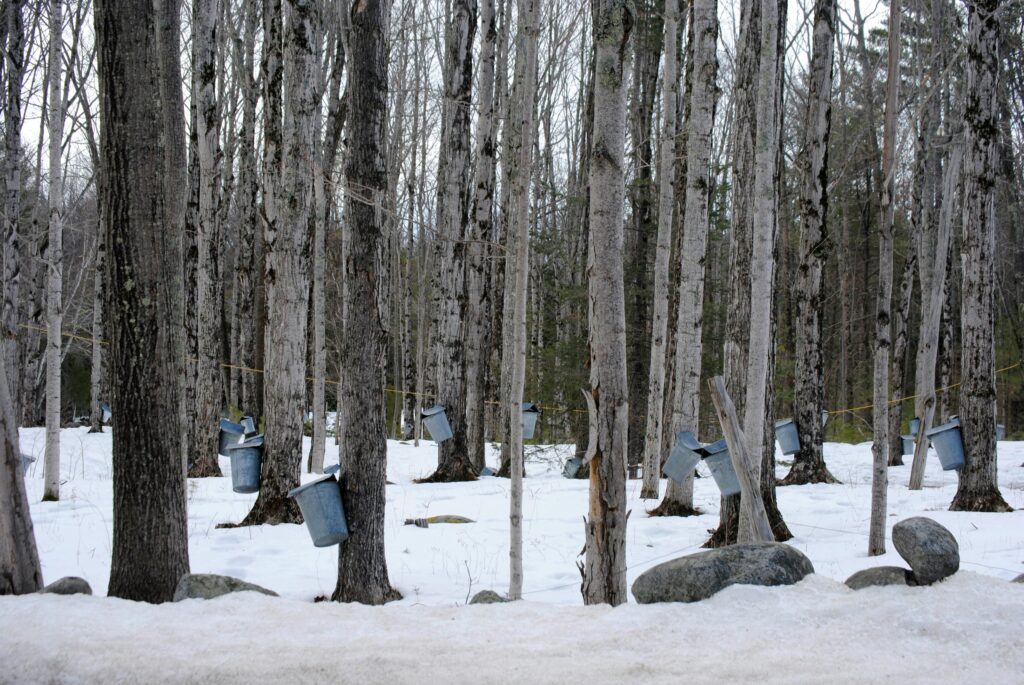
While a bucket hanging from a tree with a wooden tap might be a picturesque icon of the past, it’s not practical at today’s scale. “You tapped one tree, right? Imagine doing that 6,499 more times,” Wild said. “And imagine having to walk up and down this hill in the snow, carrying all those buckets of sap, would that be fun?”
There was firm and universal consensus that it would not.
Noting that he is a maple tree scientist – at which point a student wanted to know if he’s the “mad” kind – Wild said he’s always involved in research projects.
“I’m investigating and trying to find answers from the trees, so I’m measuring the amount of sap that comes from those trees; measuring the temperature using different probes in the trees; measuring the pressure [of the sap inside the trees]; and soil temperatures [surrounding the trees]. Collecting all this data is to get those answers.”
Those answers will help producers improve their yields.
“We’re a little unique here in that we do research to improve maple production, and then we share that with other maple producers, so they can be better maple producers,” Wild said. “Kind of neat, right?”
The AuSable second graders demonstrated a good classroom knowledge of science, understanding things like DNA and how trees are able to produce oxygen. The Rooted in Learning field trip with CCE Essex showed them how these concepts might be put to practical use.
They also offered up some burning questions for Adam about being a scientist:
● Second grader: “Do you create stuff when you’re a scientist?”
● Adam Wild: “Yes, sometimes.”
● Second Grader: “Like monsters?”
● Adam Wild: “No, no monsters yet. But maybe one day we’ll make a Maple Monster.” (General affirmation among the second graders that a Maple Monster would be a laudatory scientific pursuit.)
Uihlein processes up to 12,000 gallons of sap a day. The sap arrives at the sap house downhill from the forest, where separators create a vacuum effect by separating the sap from the air in the tubing.
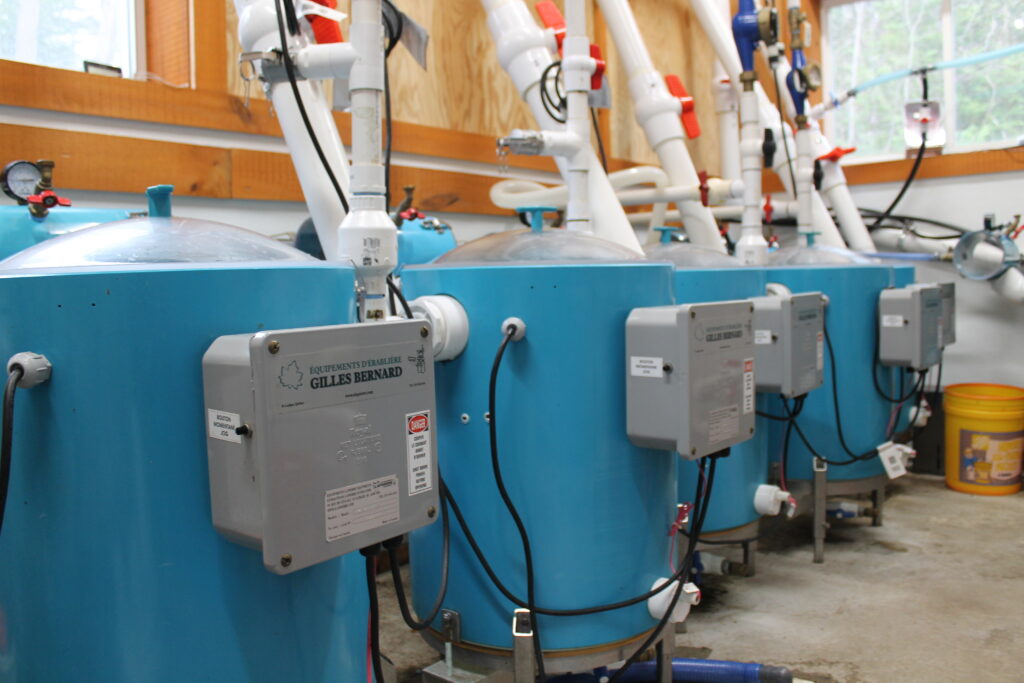
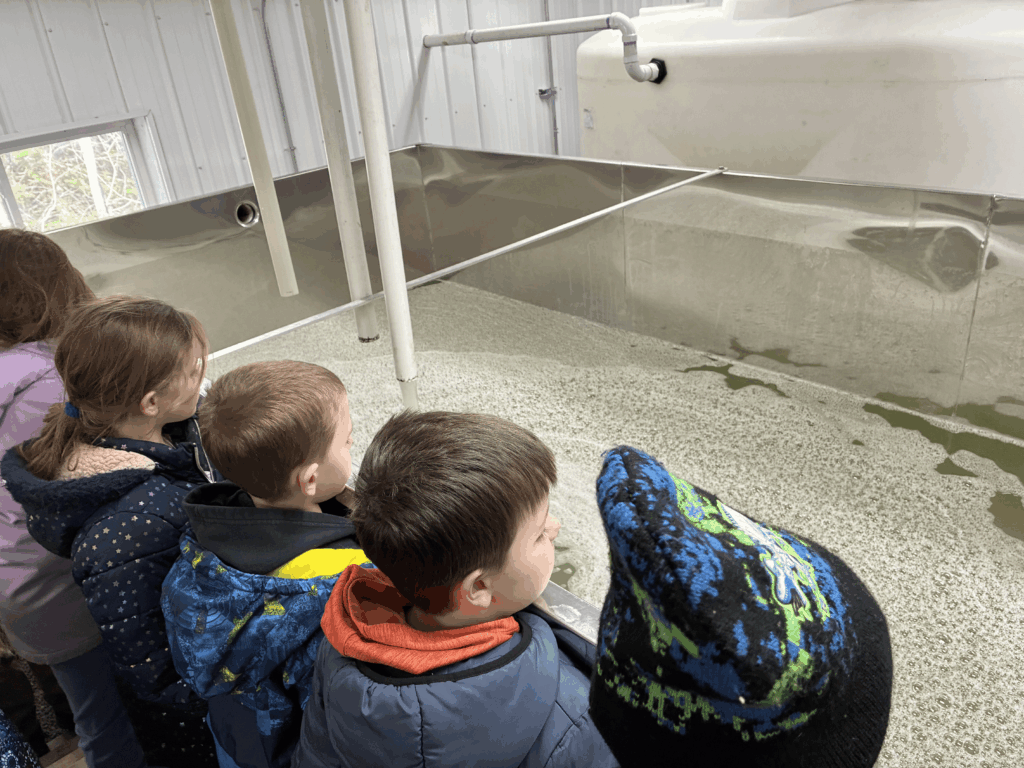
The sap then transfers and collects in two enormous tanks, appropriately named Percy and Thomas. Wild watched the flow coming into the holding tanks and noted that it was good, but not as good as it could be. As the day warmed he hoped for an increase in sap volume. A good day will yield 150 gallons of syrup at Uihlein Maple Research Forest.
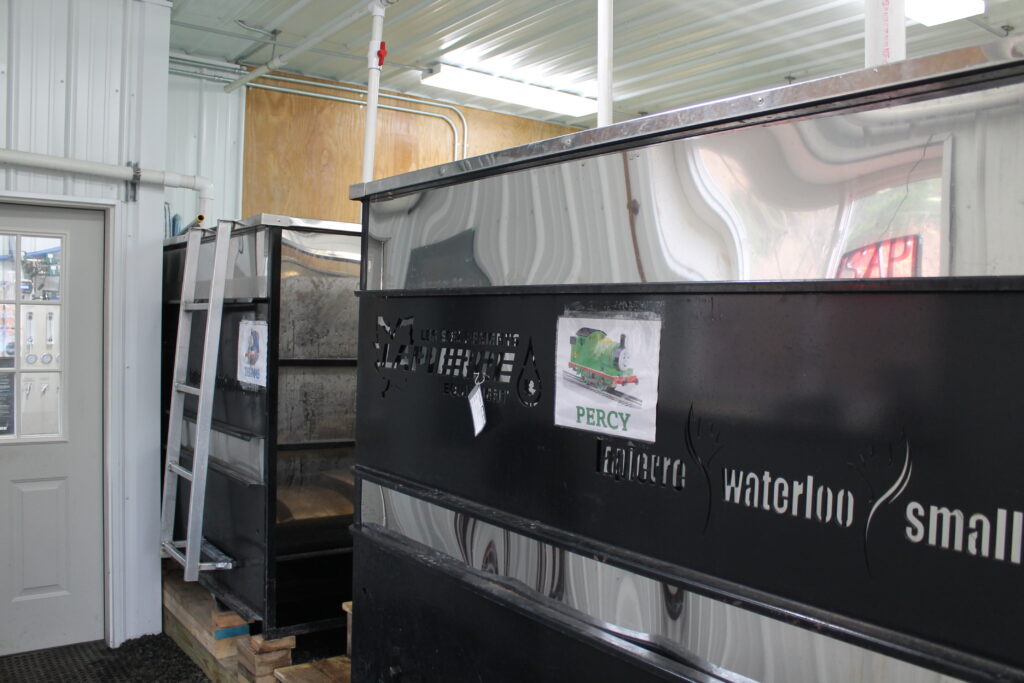
For the kids, it was a bit mind-bending to think that the droplets they saw seeping from the trees in the forest could add up to the gushers of sap filling Thomas and Percy.
They were also interested to learn about new terms, such as “reverse osmosis,” which has superseded much of the old process of boiling away the excess water. Sap now passes through filters that allow water molecules to flow through, while catching larger molecules of sugar and minerals.
Such sights make an impression, Donahue said, but students may also remember small, random details, like picking up a leaf, that will create a pleasant association with the forest.
“It’s nice for them to just get out and be outside for the day, doing something different,” she said. “Some of these kids may have family connections [to maple production] but some may not even go out on the weekends whatsoever — this lets them see what’s all around them in a different way.”
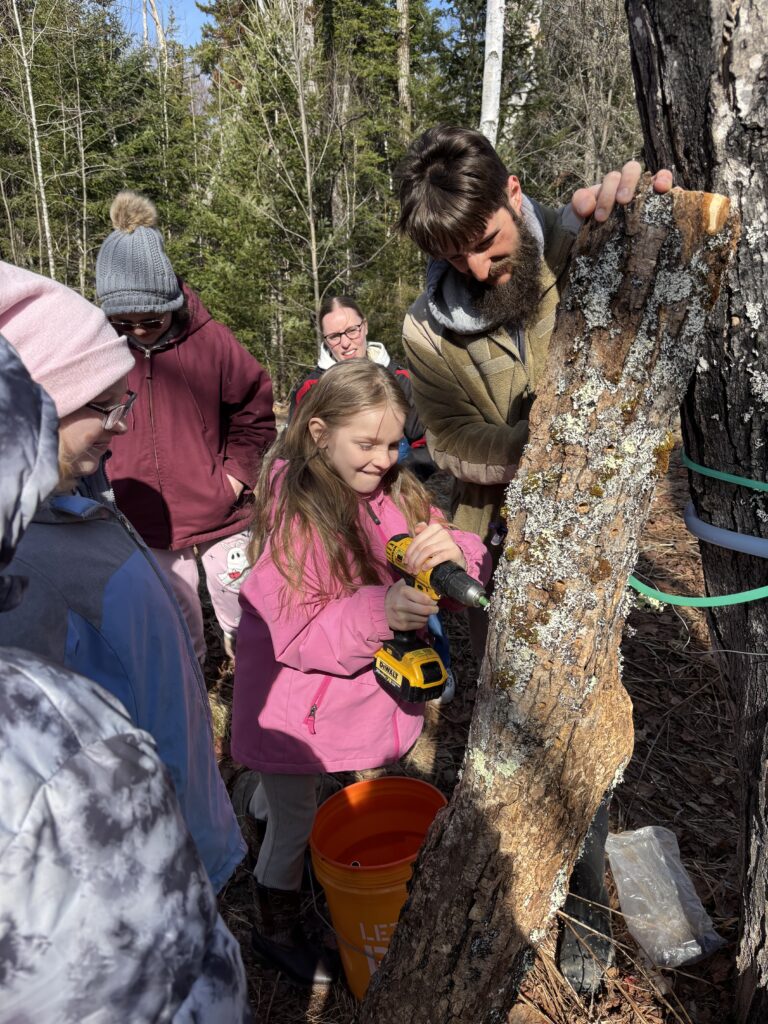
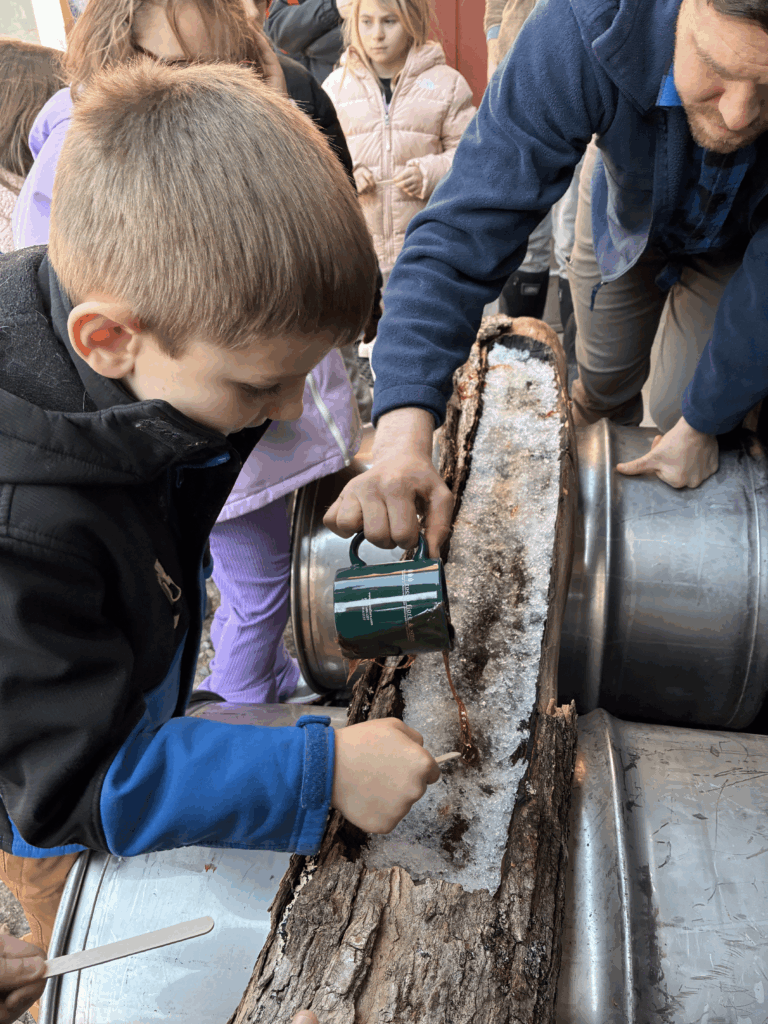
After practice tapping trees with a drill and a hammer, the students followed the process to the sugar shack, where a gleaming, stainless steel machine awaited to finish off the concentrating process.
“This machine is called an evaporator,” Wild said. “It’s basically a big, fancy stove, and the maple syrup is cooking down inside there.”
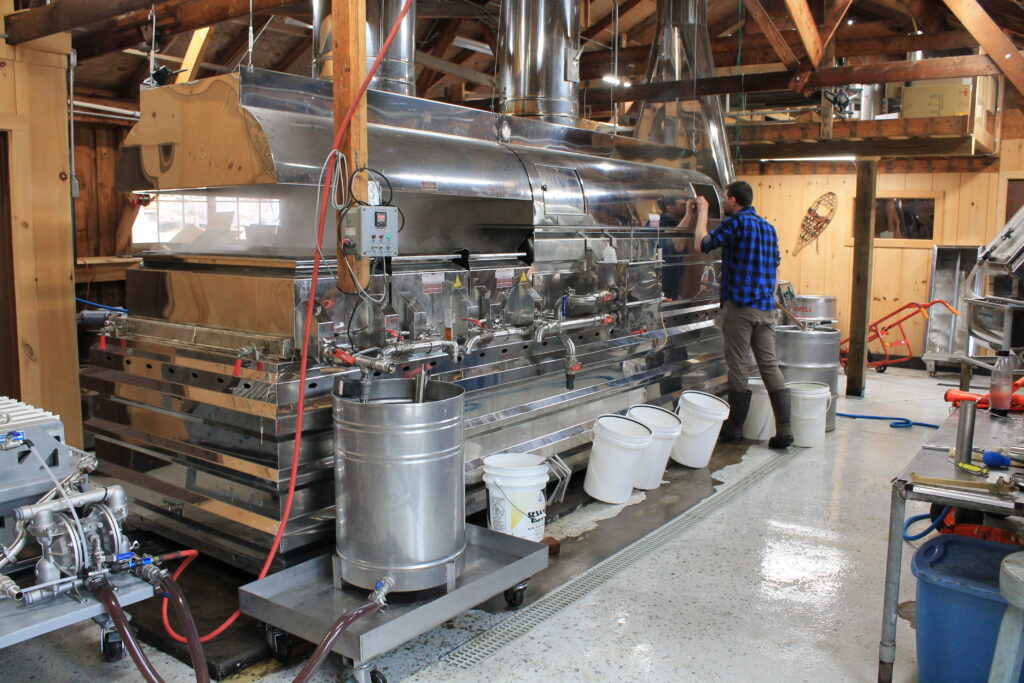
The evaporator can make a gallon a minute, and by the end of the season, Wild hopes to have produced 3,000 gallons of syrup. And just to make sure it’s good, he had 19 quality control volunteers at his disposal, willing to give his latest batch a try. It was a sweet way to end an educational morning.
“By supporting schools in bringing kids to a farm for the day, we give students a chance to engage with the places where their food was grown, raised, or produced, and meet the farmers who made it possible,” Hoffman said. “It’s a place-based educational experience that connects the three C’s of Farm to School — classroom, cafeteria, and community — in a memorably adventurous way.”