






Farm Fresh Foods and Local Producers
There is no sugarcoating it: a locally raised turkey will cost more money than the big birds at the grocery store. So why spend more on something you can get so cheaply?
The average grocery store turkey cost around $1.27 per pound last year, according to the American Farm Bureau. The unbelievably cheap turkeys sold at big box grocery stores are often injected with a solution that includes water, salt, and other additives. This process, known as “enhancement” or “plumping,” is done to improve the flavor and juiciness of the meat, and to increase its weight, which can make the turkey appear larger. You may be paying much less per pound on these birds, but you’re paying for a lot of salt water.
The sticker price of a “cheaper” bird is reflective of an industrialized system where profits are prioritized over the quality and taste of product, health and happiness of the birds and the workers who raise them, and the future health of our ecosystems and communities. However, buying a locally raised bird is not feasible for everyone. If you can afford a local bird, go for it this year!
Buying a locally raised turkey can offer more transparency into the living conditions of the bird and farming practices of the farm that raised it. If you have questions, many local farmers are more than happy to talk with you about how the birds are raised, and why.
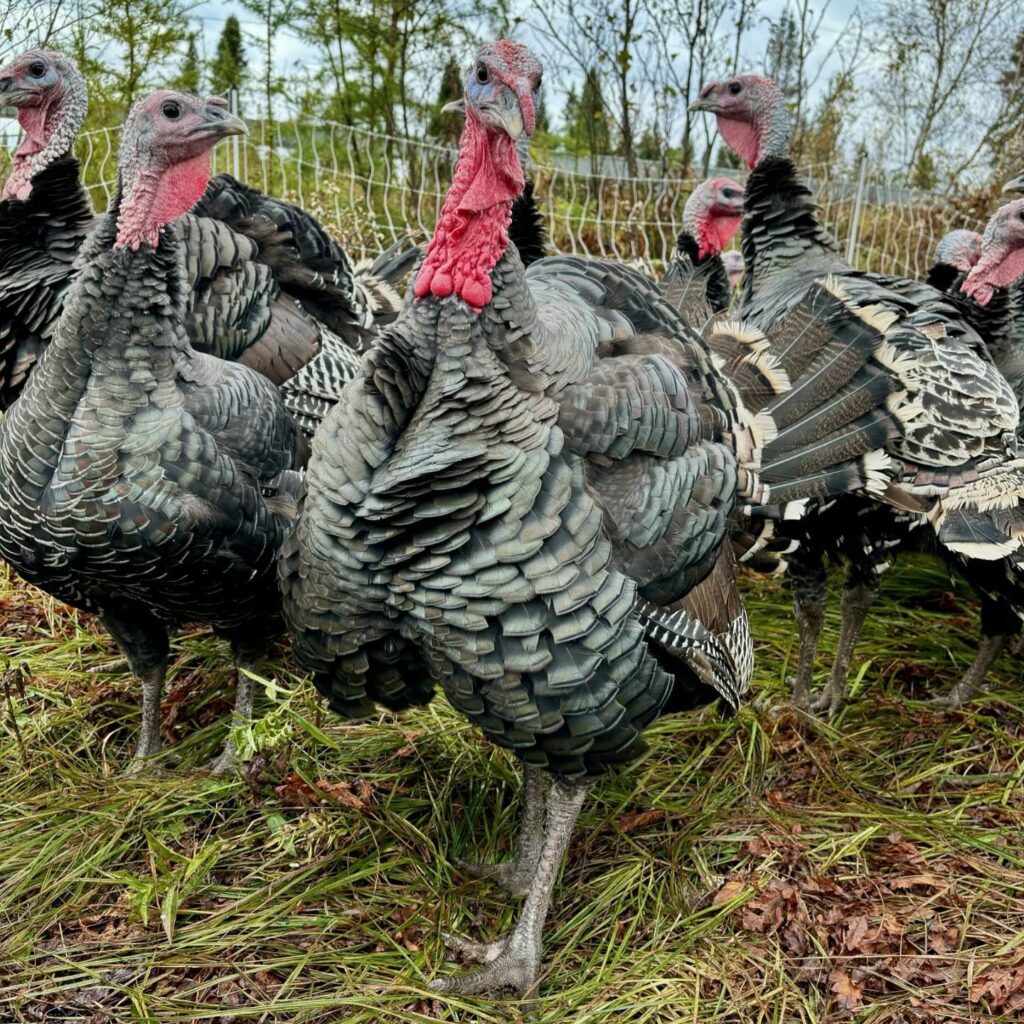
Turkeys that are able to forage in grass, eat bugs, and move around outdoors are generally smaller but are much more flavorful. Make the most of your bird and make a stock for soup with the carcass after the holiday.
Opting for a local bird also means that the farmers receive fair pay for their work. The average farmer only makes $0.17 for every $1.00 spent on the food they grew sold at a grocery store. Buying directly from a farmer means they will receive 100% of the profits they earned.
Buying a local Thanksgiving turkey is a choice that goes beyond a single meal, it’s a very simple, tangible way to support the small farms in your larger community.
Most local farms and retailers require customers to pre-order and place a deposit on their turkeys in advance, generally from September to early November.
Browse the list below or contact a farm near you to reserve a local turkey for your Thanksgiving table.
“Whole frozen turkeys, raised on pasture and processed humanely on our farm.”
“Our turkeys are not given antibiotics or growth hormones as they are naturally healthier and disease-free living on our chemical-free pasture instead of being condemned to the usual poultry confinement housing. Because our turkeys have constant access to the outdoors and their traditional diet of greens and insects, they are higher in essential omega-3 fatty acids and lower in saturated fat. We process our own turkeys on our farm ensuring the best quality that we can give to our customers.”
“These pastured beauties will be ready for pick-up the week of Thanksgiving! Your Turkey and giblets will be fresh upon pick-up – ready to prepare for your Harvest Celebration!”
“We are offering either a fresh or frozen option for turkeys again this year. Fresh turkeys will be harvested on Wednesday, November 27th and ready for pick up after 5pm. Frozen will be available for pickup beginning Monday, November 25th.”
“All naturally raised beef, chicken and turkeys. No growth hormones, pesticides or herbicides.”
“Woven Meadows raises free-range, pastured, organic-fed turkeys, perfectly timed for your Thanksgiving feast… by free-ranging turkeys receive more exercise, which seems to make for a denser meat which better retains moister while cooking, and overall is more flavorful…Like our chickens, we process our turkeys here on the farm… We aim to butcher on the Sunday before Thanksgiving, to allow pick-up of fresh turkeys for your holiday meals.”
“Our Pasture Raised Turkeys are raised on pasture with daily moves by our friends at Wrong Direction Farm in Canajoharie, NY. They live their life as a turkey should, pecking the ground for grass and grubs and chasing grasshoppers. And they are juicy and flavorful! For more information on how Wrong Direction Farm raises their turkeys check out this video. A note about Organic. Wrong Direction Turkeys will not be labeled as organic in 2023. Dave let us know a few weeks ago that his processor lost their organic certification due to some paperwork issues. Wrong Direction Farm is still certified organic, the turkeys are certified organic, but the frozen, processed bird cannot be called organic since the processor is not certified.”
Food labels and certifications such as “natural,” “organic,” “cage-free” and “pasture-raised” are time-consuming for the producer and confusing for the consumer — so are they worth it?
Like the labels themselves, the answer is confusing.
It was 85 years ago that J.I. Rodale, building on a British theory of farms as living “organisms,” founded the Rodale Organic Gardening Experimental Farm. Two years later he began publishing what became known as Organic Gardening magazine, a periodical of biblical import to a small but emphatic band of farmers who built the soil with compost instead of chemicals.
A surge in the popularity of organically produced foods through the 1960s and ’70s caught the attention of big business and, according to the National Agricultural Law Center, “evolved from a small-scale and localized system into a highly organized and global production and marketing system.”
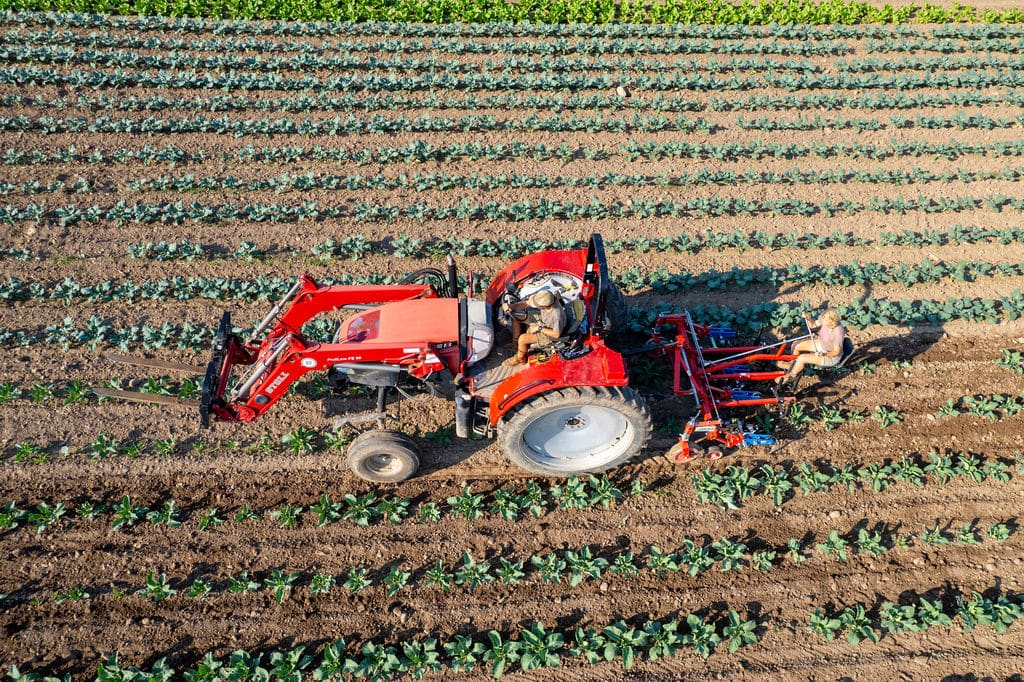
Fraudulent claims of “organically” grown foods led Congress to pass the Organic Foods Production Act of 1990 prohibiting, among other things, chemical pesticides and fertilizers and raising livestock on feeds containing manure, urine or “plastic pellets for roughage.”
Today, the organic designation is the most familiar food label, but it is far from the only one. Nor can it be easy to understand what these labels mean. “It’s deliberately confusing,” said Cole Trager, Agriculture & Local Food Team Leader for the Cornell Cooperative Extension service in Essex County. It’s more about capturing premium price points in the market place than it is about improving consumer awareness.”
Some words and phrases are regulated, some are not. And some are easy to manipulate. For example, an animal that spends most of its days in a feed pen might be turned out on grass for a few hours and thus be “pasture-raised.” A chicken raised with thousands of others might have access to a little door with a few square feet to roam and thus be, technically, “free range.”
If no legal government definition exists, third-party special interest or advocacy groups might step in to fill the void with their own definitions, their own inspectors and their own labels.
For the public, Trager said, it’s hard to know what’s going on behind the curtain or what their labels really mean. “Behind every label is 40-100 pages of fine print requiring substantial knowledge of the industry to properly digest,” he said.
For small producers, who have little in the way of spare time, these labels can be a burden.
Becca Burke, who owns The Meadow, a certified organic vegetables farm in the Town of Jay, said it’s certainly worth it to grow organically, but the time, cost and frustration involved in maintaining a government seal of approval are taxing.
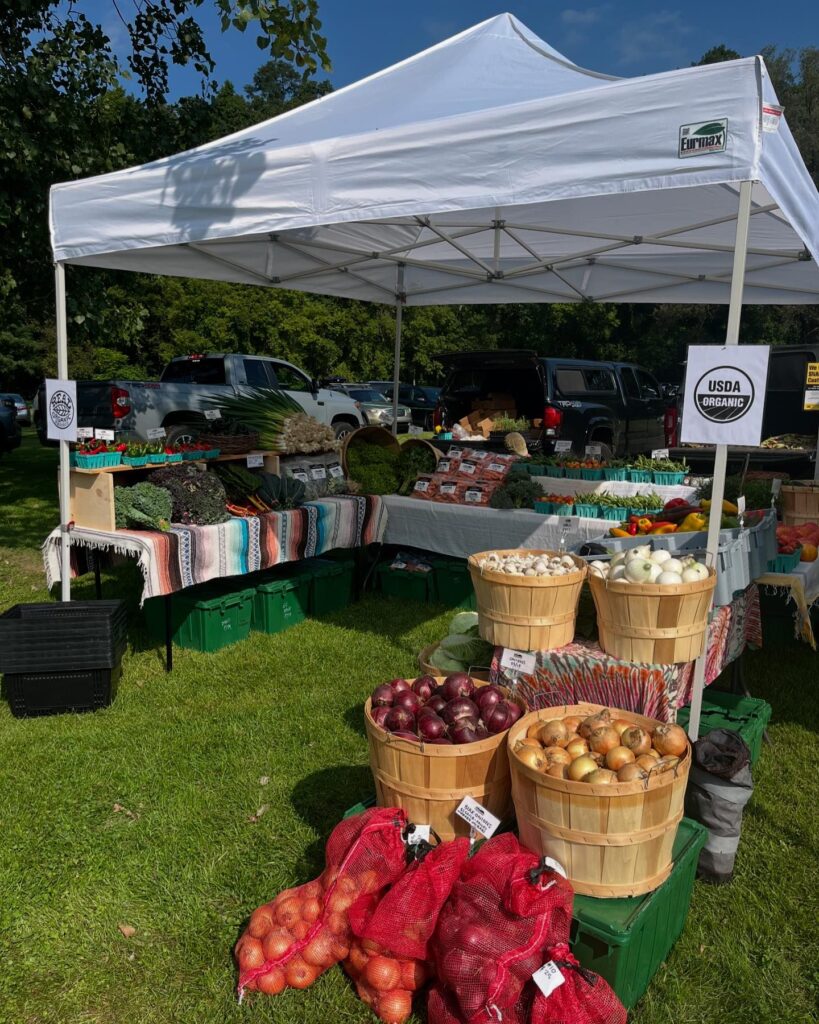
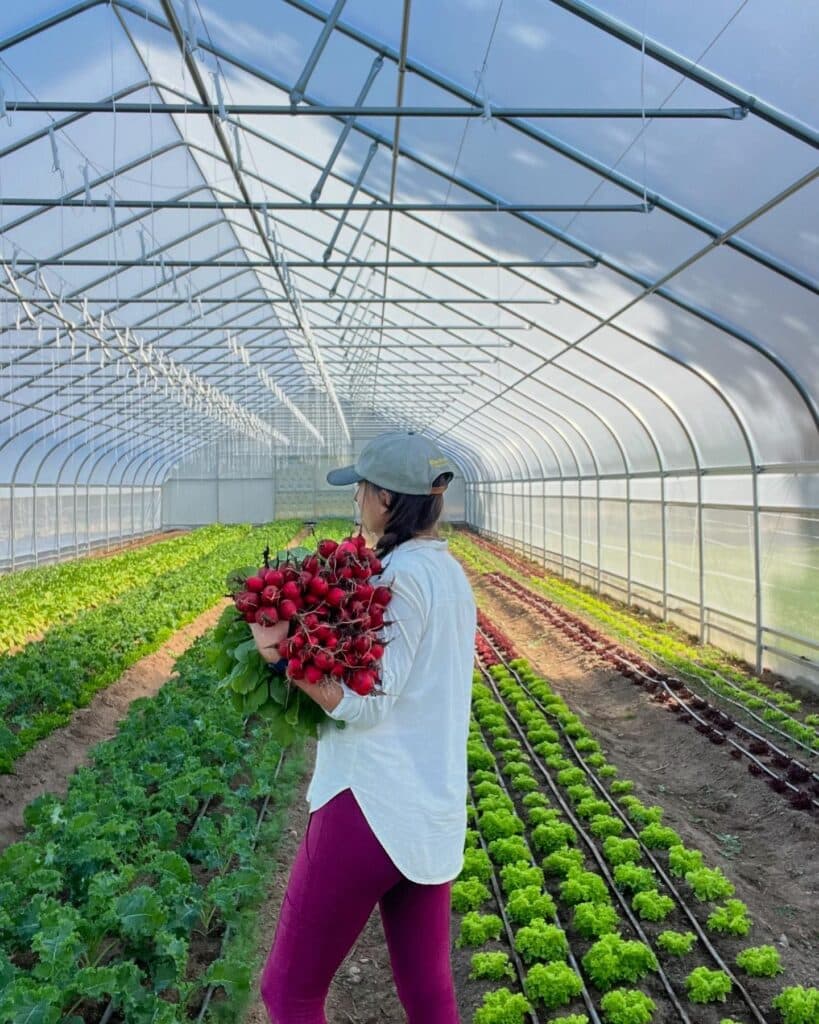
“It feels like a tax audit more than a review on farming practices,” she wrote of the inspection process in a summer newsletter to her customers. At a former farm, inspectors latched onto her radish sales records, which indicated she had sold one more bunch than she had harvested.
“The implication was that I purchased inorganic/ cheaper radishes and resold them as organic,” she wrote. “Not that I simply miscounted my farmers market harvest by a single $3 bunch of radishes. It felt really beside the point of organic certification.”
Burke said she sells primarily through CSAs and a few farmers markets. While organic products are assumed to bring a higher price, she said that’s not really the case, at least for the producer, whose products must be competitive with what other sellers are charging.
Nor does the labeling come up in casual conversations with farmers market consumers, who are more interested in learning about the farmers themselves than in the machinations of production.
That’s similar to the experience of North Country Creamery, according to co-owner Ashlee Kleinhammer, where the imagery of shorthorn and Jersey dairy cows contentedly grazing on Champlain Valley grass resonates more than government labeling.
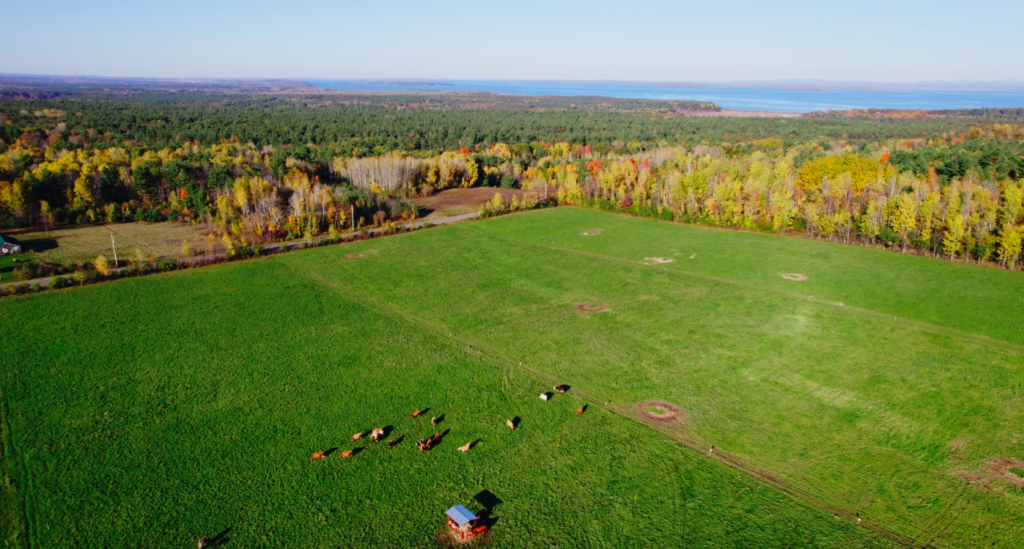
According to a Facebook poll by North Country Creamery, the quality consumers value most for their dairy products was that it be locally produced. Second was grass-fed cattle and third was organic.
Kleinhammer said North Country Creamery is a 100% grass-fed, non-GMO and Animal Welfare Approved farm, but not organic for a couple of reasons. One, “It’s very hard to find certified organic hay,” she said, “and it costs twice as much.”
Second, if a milk cow gets sick, she is not destroyed, she is given an antibiotic and taken out of the milking rotation until well after the drug has cleared her system. Antibiotics are given rarely and only as a last resort, she said.
But more important than labeling, Kleinhammer said, is that “people trust us.”
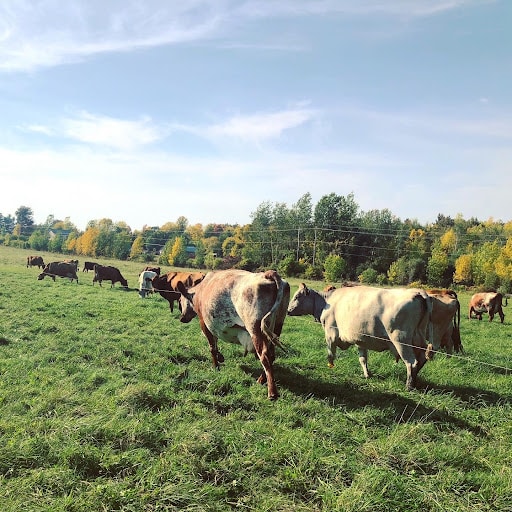
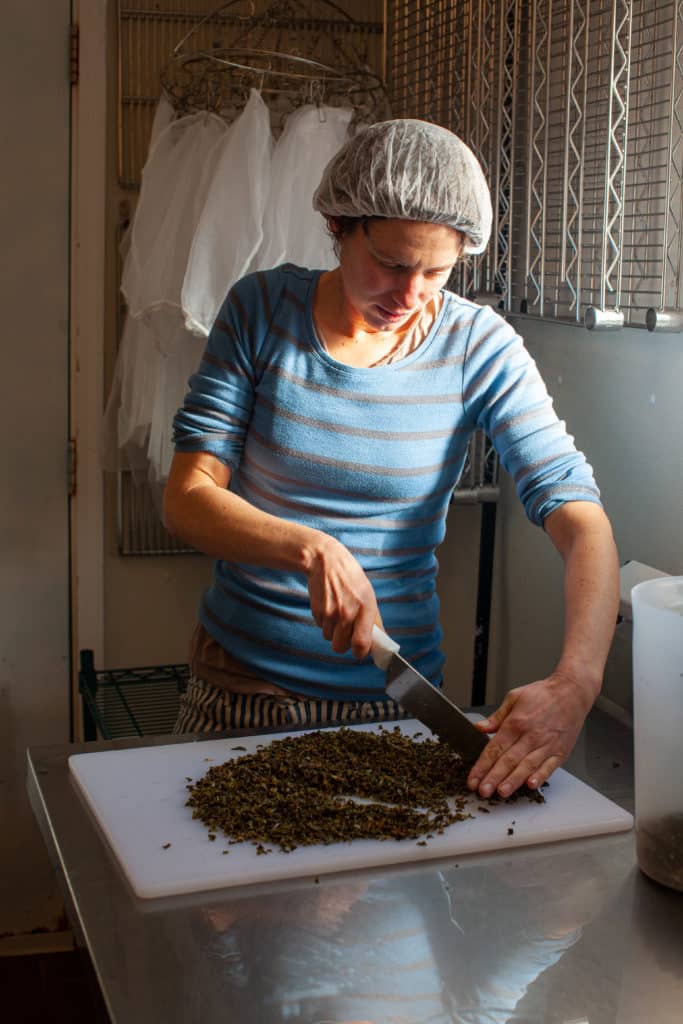
In a large supermarket chain the organic certification might have value for customers, but in the Eastern Adirondacks consumers are fortunate to be close to their producers, which is more important than labeling.
“There’s no substitute to knowing the farmer,” Trager said. “Most of these farms have open-door policies — no labeling can replace that.”
At The Meadow, Burke said customers are welcome to visit her fields but few do because they already know her commitment to natural, wholesome foods.
Ideally, she said, organic would be the standard, and it would be the non-organic producers who were forced to answer to government inspectors, pay the added costs.
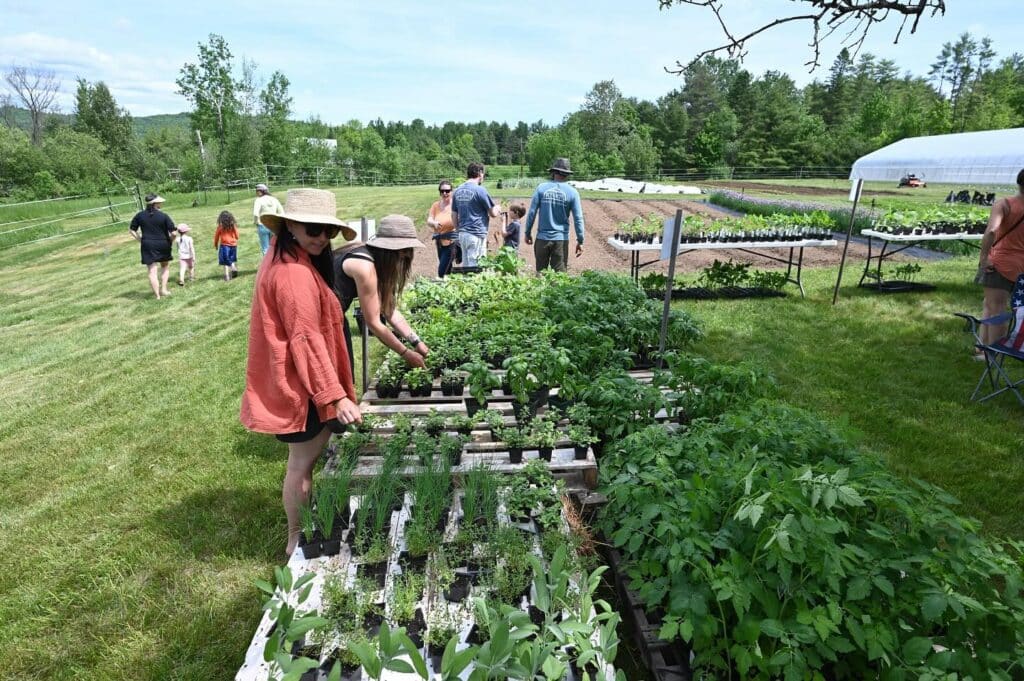
Trager encourages consumers to “take your education into your own hands,” and treat food literacy as you would financial literacy. When you do, he said, you will find that our local farmers are already going above and beyond to produce the healthiest, tastiest food possible — and no label can top that.
You can see what kinds of certifications and growing practices Adirondack Harvest farms implement by using filters on the AdirondackHarvest.com/browse webpage.
By Tim Rowland
There is the taste of savory chicken salad, the sound of chattering customers, the smell of freshly roasted coffee, the feel of smooth, artisanal soaps, and all of it is good — but on walking into Nori’s Village Market in Saranac Lake, what’s really striking is the color.
Vibrant, emerald green lettuces complement ruby red berries. Scarlett apples, purple cabbage and a rainbow of fresh-cut flowers all but vibrate with intensity. And much of the color is supplied by local producers — bouquets from Little Farmhouse Flowers in Jay, greens from Wild Work Farm in Keene Valley, vegetables from Juniper Hill Farm in Wadhams.
“I think produce is so beautiful, and it is so much fun to make it look beautiful,” said Nori’s produce manager Presley Ransom.
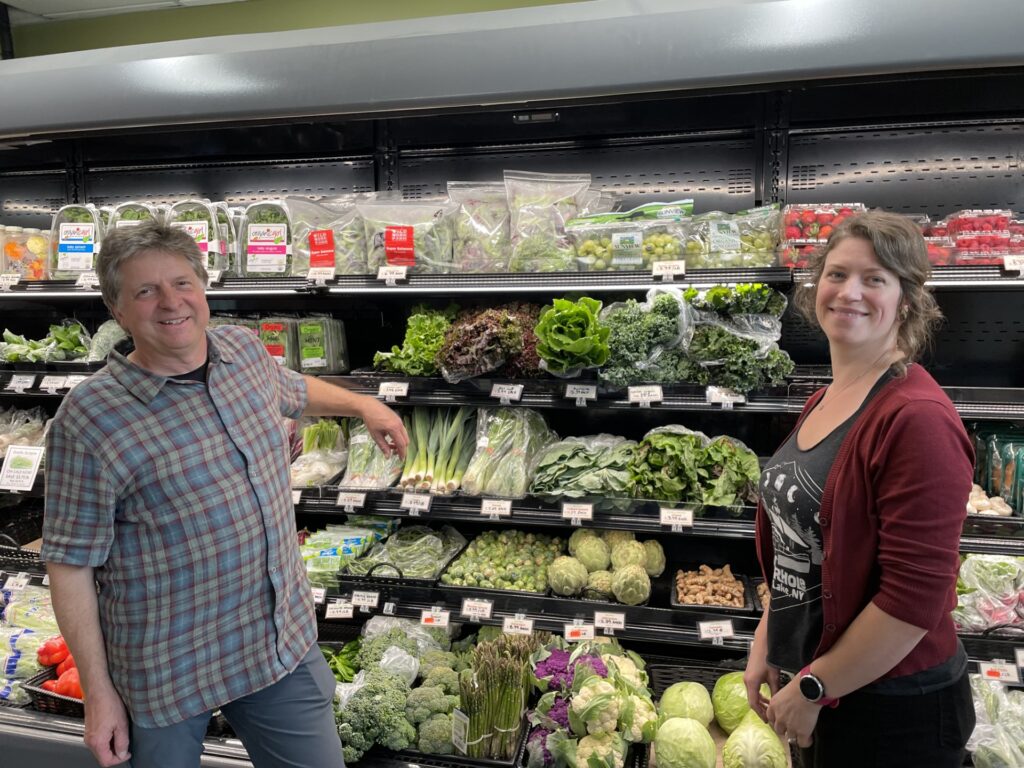
It’s also inspiring to customers who delight not just in the fresh organic products, but also the playful touch of cheddar-colored cauliflower, purple beans or vast varieties of cabbage. “Our produce team gets just as excited as the customers,” Ransom said. “It makes cooking fun instead of a chore.
It’s also scarcely hyperbole to say you could add up every mile every agricultural product on the shelves of Nori’s has traveled and it wouldn’t be a fraction of one transcontinental flight from a Central Valley carrot farm in California.
Not to mention, said Andy Keal, who co-owns Nori’s with Ashley Murray, “Those carrots from Juniper Hill taste so much better than a California carrot.”
Nori’s is both a social and nutritional nerve center for Saranac Lake, part grocery store, part restaurant, part cafe, which arose like an organic phoenix from the site of an old filling station and auto repair shop on the banks of the Saranac River. Its origins date to 1989 when it was born as a small storefront in the Masonic Lodge building on Broadway. It later moved to the former Sears building on Main Street and settled into its current location in 2015. Through the years it’s expanded and upgraded, most recently adding an attractive outdoor seating hardscape and plantings designed and built by landscape architect Clifford Smalley.
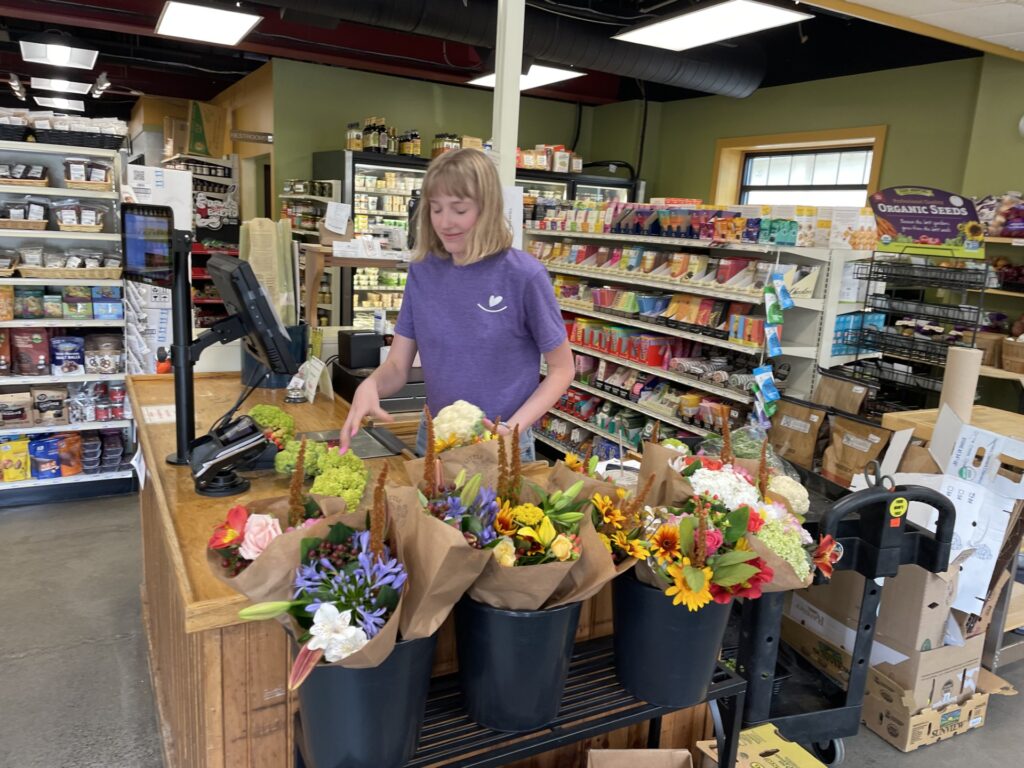
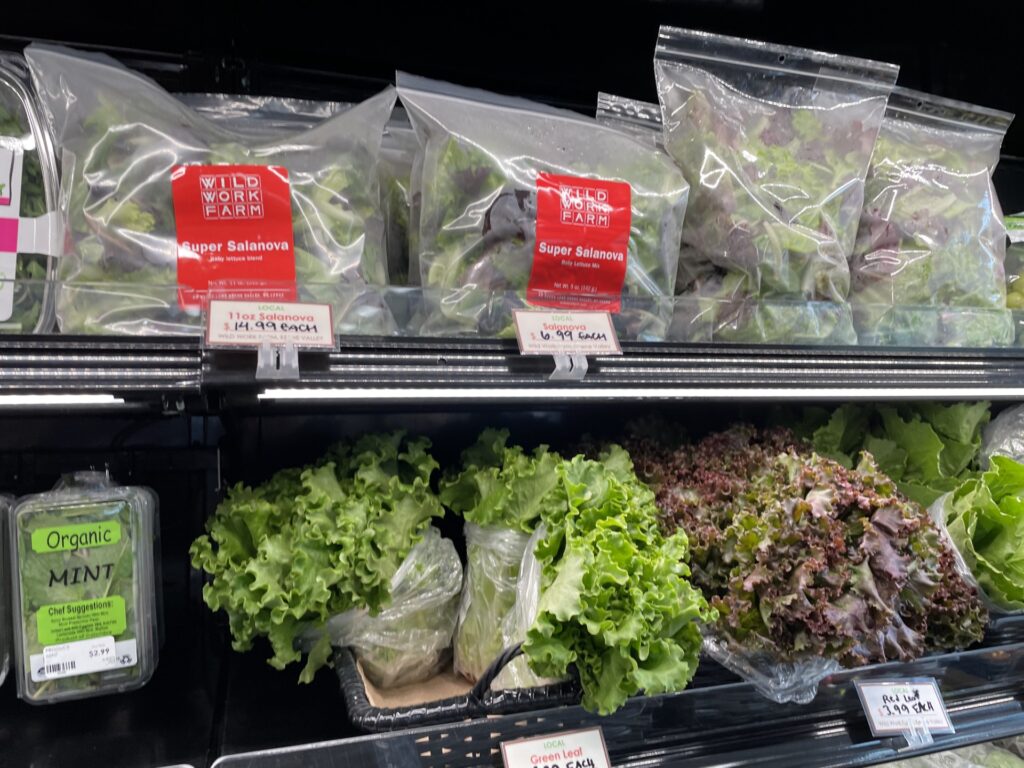
As Nori’s has grown, so has the number of local farms that it can draw from, Murray said.
“We try to spread the wealth,” she said, mostly sticking with established producers, but also giving new producers a chance. Each week store and farm exchange emails, the store what they need, the farm with what they have. “The food is all so fresh when it comes to us,” Murray said. “You can buy organic (at a chain supermarket) but not local organic.”
Locals might be used to the quality of Nori’s produce, but tourists are “amazed,” Keal said. Both groups, as well as second-home owners, are represented in a diverse clientele that appreciate quality produce, meats, cheeses and other local and regional products.
“We spend a lot of time and energy maintaining the produce department,” Murray said. “We have a dedicated produce team that works hard.”
From a producer’s perspective, Nori’s is a godsend. It currently works with seven local farms, along with a distributor who works with many New York State farms year-round, “so we have access to dozens more throughout the season,” Ransom said. “Our cafe uses local produce, such as apples from Rulf’s, and our kitchen uses salad mix, tomatoes, onions, eggs and various herbs on a regular basis.”
“They move through a lot of volume for us,” said Lissa Goldstein, operator of Wild Work Farm in Keene Valley. Wild Work produces fresh fruits and vegetables for sale at farmers’ markets, through a market share program and to restaurants and wholesale accounts.
Much of its product, including its signature fresh greens, are sold direct to the consumer, increasing the importance of strategically located markets. “Nori’s is really important for us, because we don’t sell in that (Saranac Lake) area and have no other way of reaching customers.”
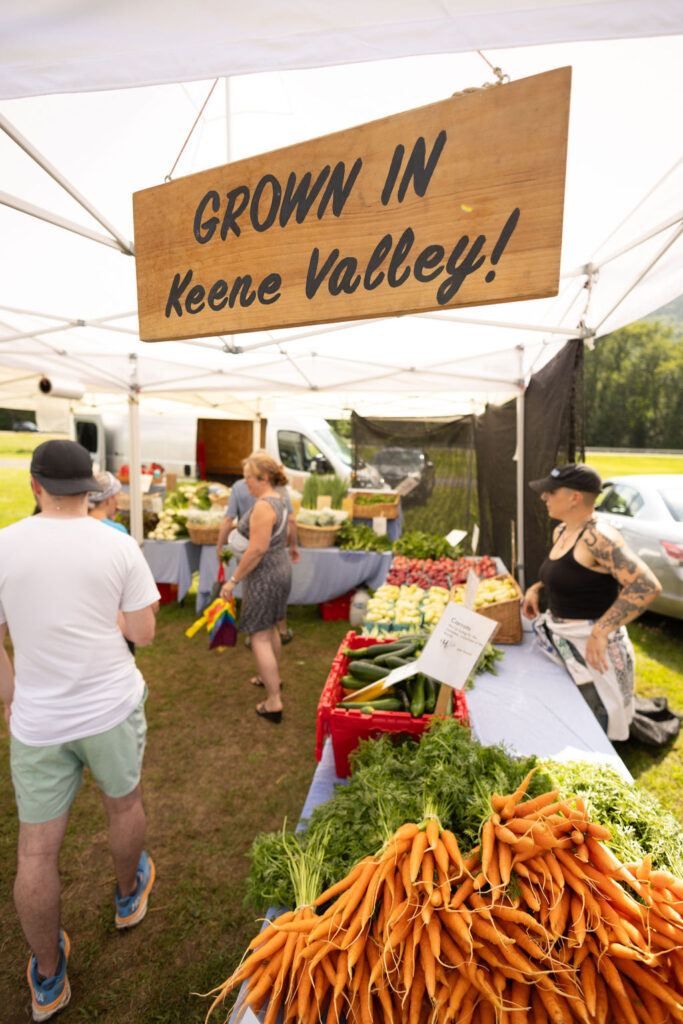
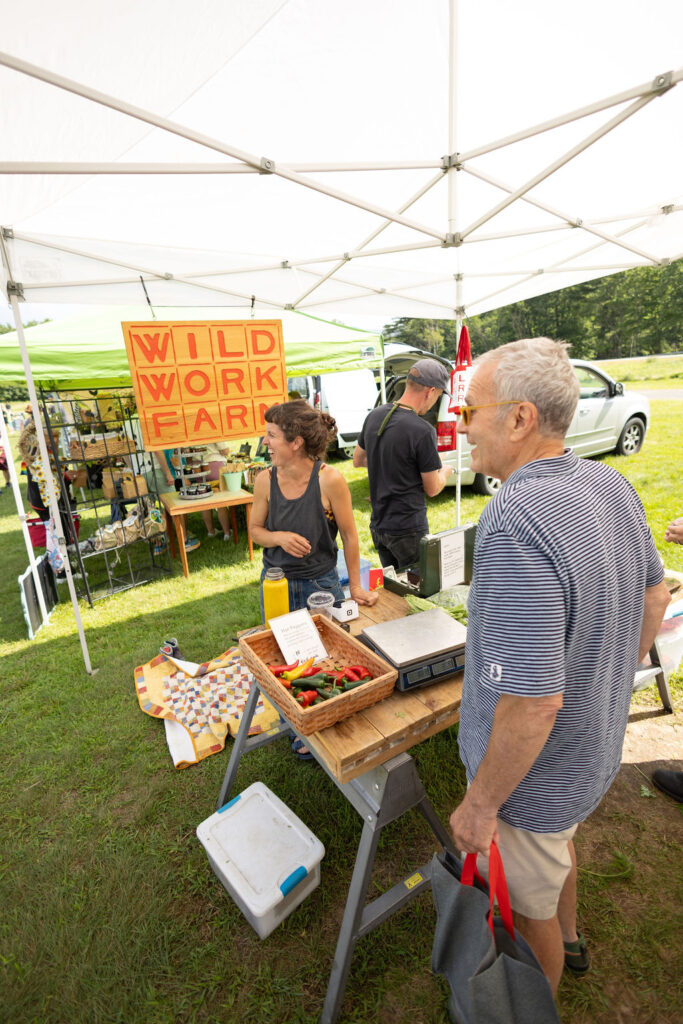
Noris doesn’t just buy locally grown produce, they also buy local meat, eggs, dairy products, maple, honey, fresh flowers, herbal products, and breads. They buy and sell locally grown products year-round, which is a major benefit for local farms during the slower seasons.
“Markets like Nori’s can have a big effect,” said Tyler Eaton, owner of Blue Pepper Farm in Jay.
“It’s important to have that support.” Collectively, retail outlets like Nori’s, Cedar Run and Sugar House Creamery can make up a meaningful chunk of sales, Eaton said.
Blue Pepper, which Eaton runs with his wife Shannon, delivers to Nori’s on Saranac Farmer’ Market days, making the trip more cost effective — and feeding the personal relationship that Nori’s likes to maintain with its producers.
“We know our delivery drivers and producers and it’s such a friendly relationship,” Ransom said. “We’re going back and forth with them all the time, telling them what we’re making and hearing what they have.”
Small retailers like Noris also play an important role in providing year-round access to locally grown food for people who live and visit in rural Adirondack communities. Nori’s accepts SNAP benefits and is also open 7 days a week year-round.
Resources such as the Adirondack Harvest Wholesale Database can help grocers and retailers connect with local farms that sell wholesale.
This article was written with grant funding through CVNHP and NEIWPCC.
An overriding theme of the 2020-21 Covid-19 pandemic is that it might not by itself have created permanent change, but it speeded up trends that were already in motion.
In the years leading up to Covid, Nathan and Racey Henderson, owners of Reber Rock Farm in Willsboro, had been poring over the numbers looking for a path to financial viability. On hearing the news that the coronavirus had landed on American shores, Nathan remembers asking, “Is this going to be a big deal?”
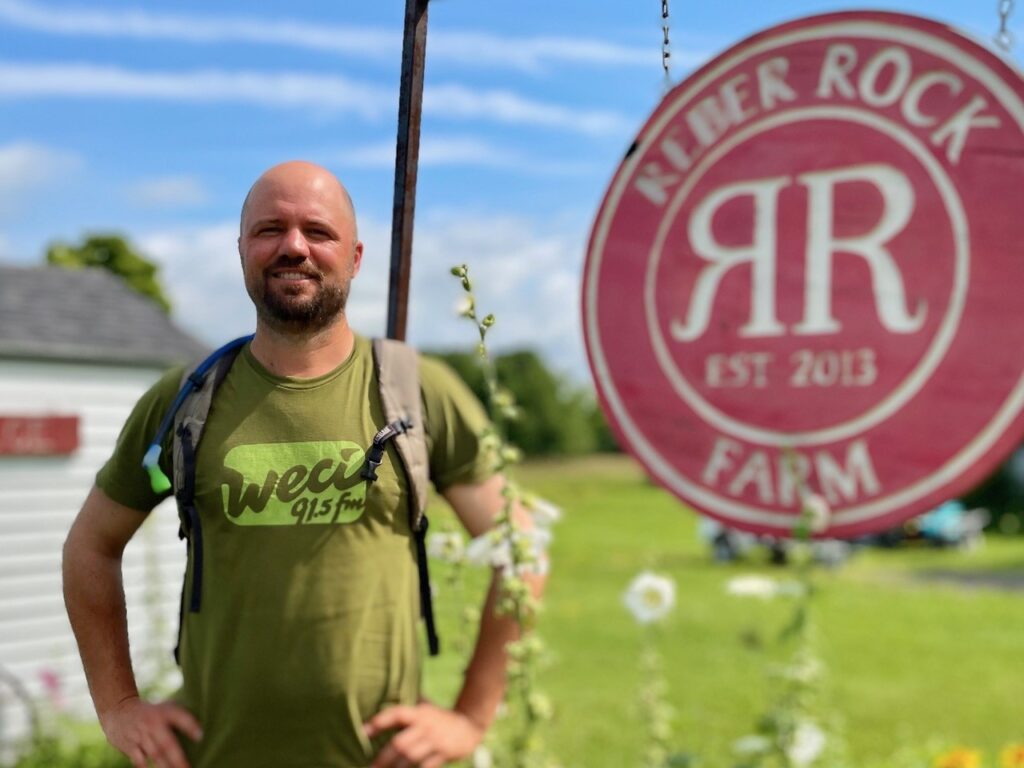
Of course it did turn out to be a big deal, and the effects on local farms would be profound. Much of the effect was positive, as people reconnected with their food sources. But the big processing houses would reopen, food items would return to supermarket shelves and there was always the fear that a Covid bump to small agriculture would melt away.
To some degree it has, but it has also brought about lasting, structural changes that have brought positive results to the local agricultural scene.
The Hendersons, known for their unvarnished assessments of farm finances, had, pre-Covid, determined that their model wasn’t working. They had dabbled in e-commerce, but mainly sold whole or sides of beef, pork and the chickens to a local market.
“It just felt unsustainable,” Nathan said. “The revenue was just not covering overhead.”
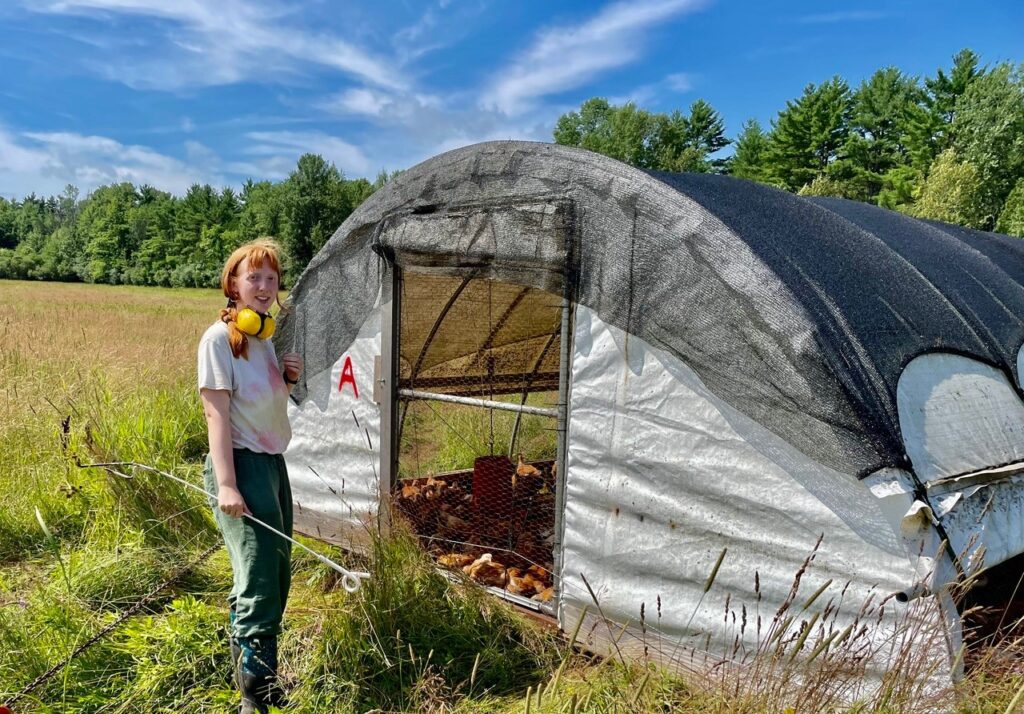
So, Reber Rock was leaning toward change when the pandemic forced its hand. Farm stores and markets had loyal but limited followings, so Reber Rock was looking at a model that began with Omaha Steaks and was expanded by Amazon: shipping.
The pandemic’s role was that it “totally changed customers’ perception of ordering food online,” Nathan said. As consumers shied away from crowded stores, they became accustomed to food arriving on their doorstep, and no longer worried that perishable foods might not hold up. “We don’t get any of those questions anymore,” Nathan said.
The benefits were obvious. FedEx and UPS became their delivery system, and from a county with fewer than 35,000 people, Reber now has access to 50 million potential customers who live within a one-day delivery radius of their farm.
With a bigger market came the demand for more products. Whole beefs being impossible to ship, Reber Rock focused instead on pasture-raised organic chickens and small cuts of beef and pork. Nathan built larger coops to move around the pastures, and bought a 40-foot freezer to handle production, which went from 1,000 birds pre-pandemic to 8,000 today.
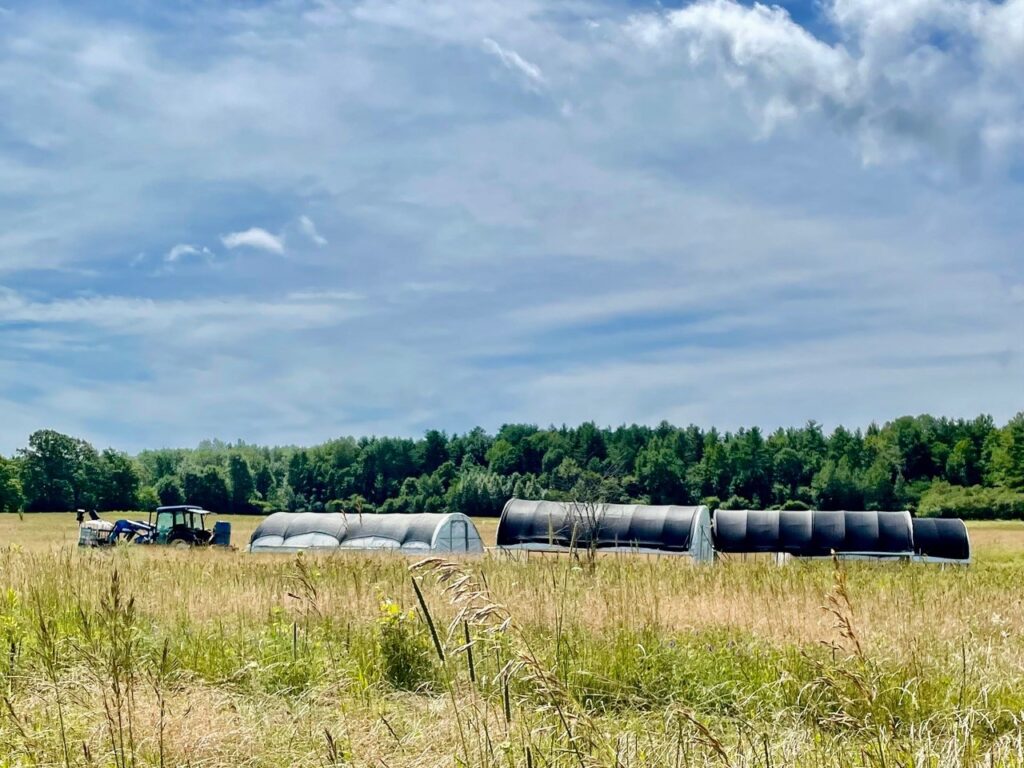
Mail-order chicken is shipped to adjoining states and also to adjoining towns. While Reber Rock still attends farmers markets, the numbers are stark. The farm might make $3,000 spending 12 hours driving to, and sitting at, a market, but packing chicken for mail order can bring in $15,000 in four hours.
Reber Rock has added employees as it has scaled up, but even so, Nathan said that factoring out capital costs, the cash flow has taken a turn in a positive direction. And the model helps make their core values more sustainable. “Racey and I are both committed to the production of local food,” Nathan said.
The online delivery system appears to have legs, and includes organizations such as Farm to People, an online distributor that sells fresh farm products in and around New York City. It draws from 150 farms selling 800 products with same-day delivery.
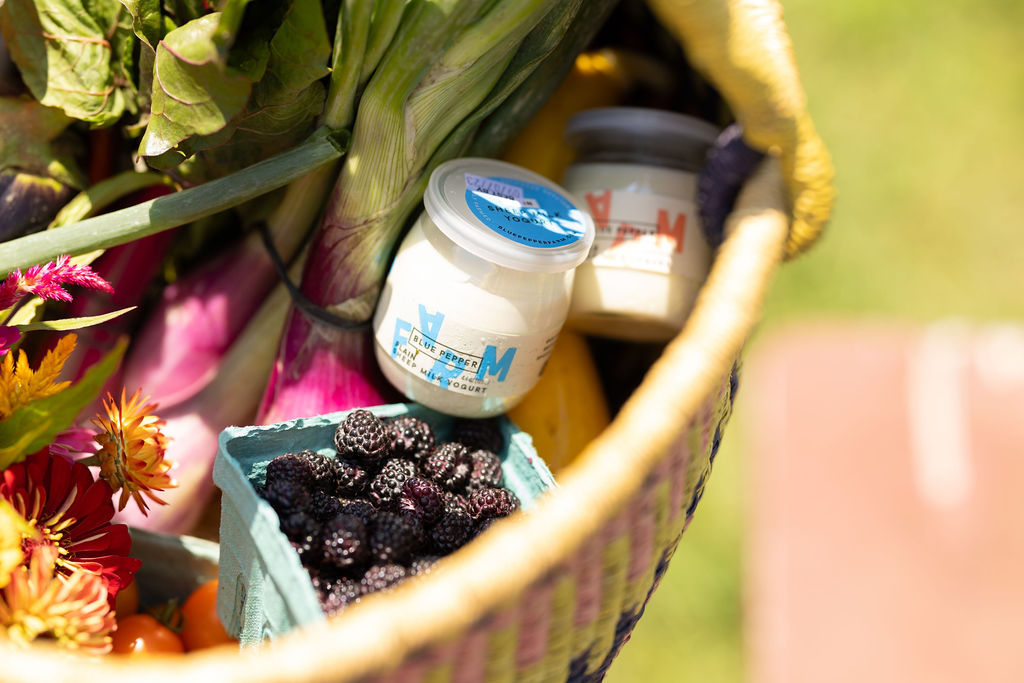
“They have a lot of customers and they’ve been buying a lot of our yogurt,” said Tyler Eaton, who with his wife Shannon raises sheep in Jay at Blue Pepper Farm.
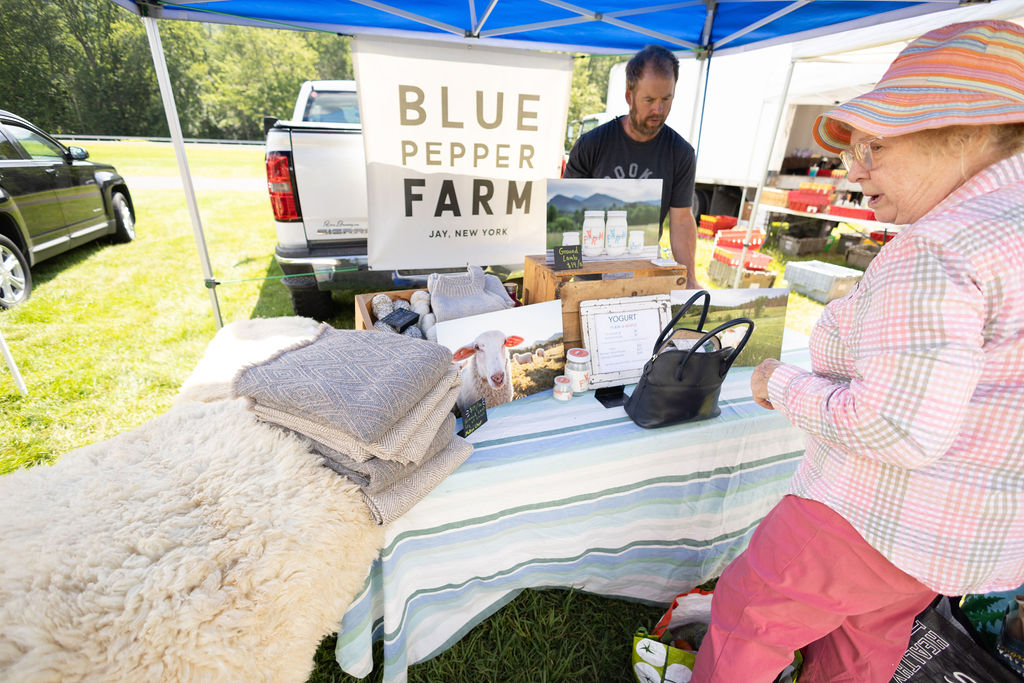
The pandemic has left other lasting changes as well. Online ordering and curbside pickup became so popular at what was called the Saranac Lake Farmers Park-It that the program was continued. In Keene Valley, Eaton said the “distanced” farm stands gave the Marcy Field market a more open and less congested feel. He added that WiFi became critical after the public made a noticeable switch from cash to cards during Covid — making card-reading technology an essential tool, while the fees charged by card companies are a down side.
Covid even nudged some producers into the business. Greg Rowe was substitute teaching when Covid hit, and having a long-standing affinity for microorganisms from his bread-baking days, he founded Cornucopia Gourmet Mushrooms in the basement of the Keeseville Community Center.
With health on everyone’s mind — and mushrooms having newly discovered health properties — his product was a hit among chefs and retail customers alike. At a farmers market in late July, Rowe dutifully manned his mushroom and honey booth, even though the mushrooms had long since sold out. “Good thing I have this honey, or I wouldn’t have anything else to sell,” he said.
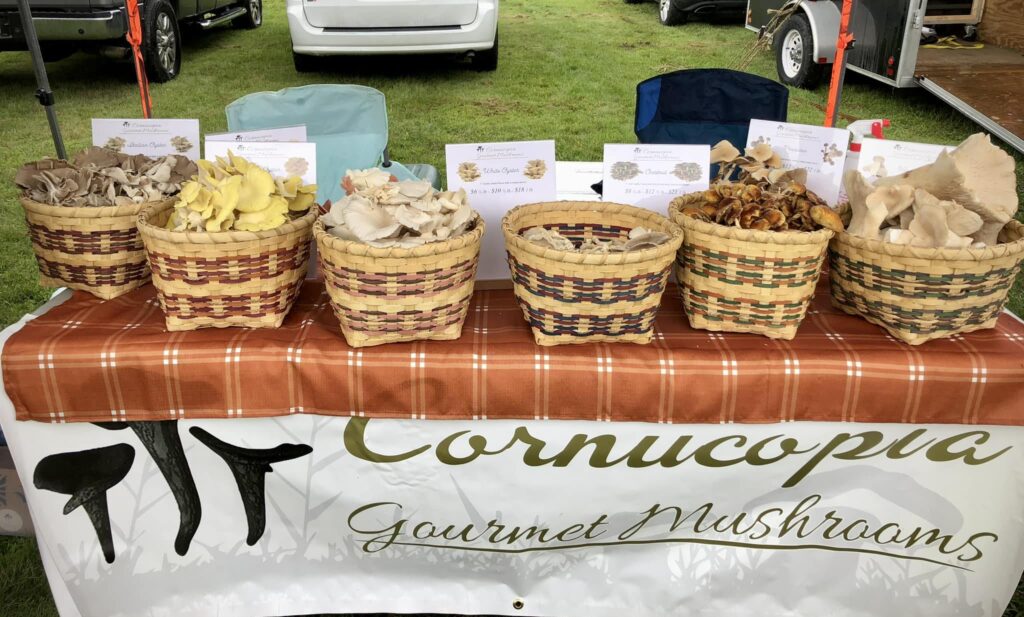
The post Covid markets demonstrate the importance of patronizing local producers. When consumers pay attention to what they’re eating, the playing field tips in favor of conscientious farmers who are dedicated to producing good food. And with online ordering, buying that high-quality, healthy food is just a click away. To find local farms, farmers’ markets, CSA programs, and local food retailers, visit adirondackharvest.com/browse.
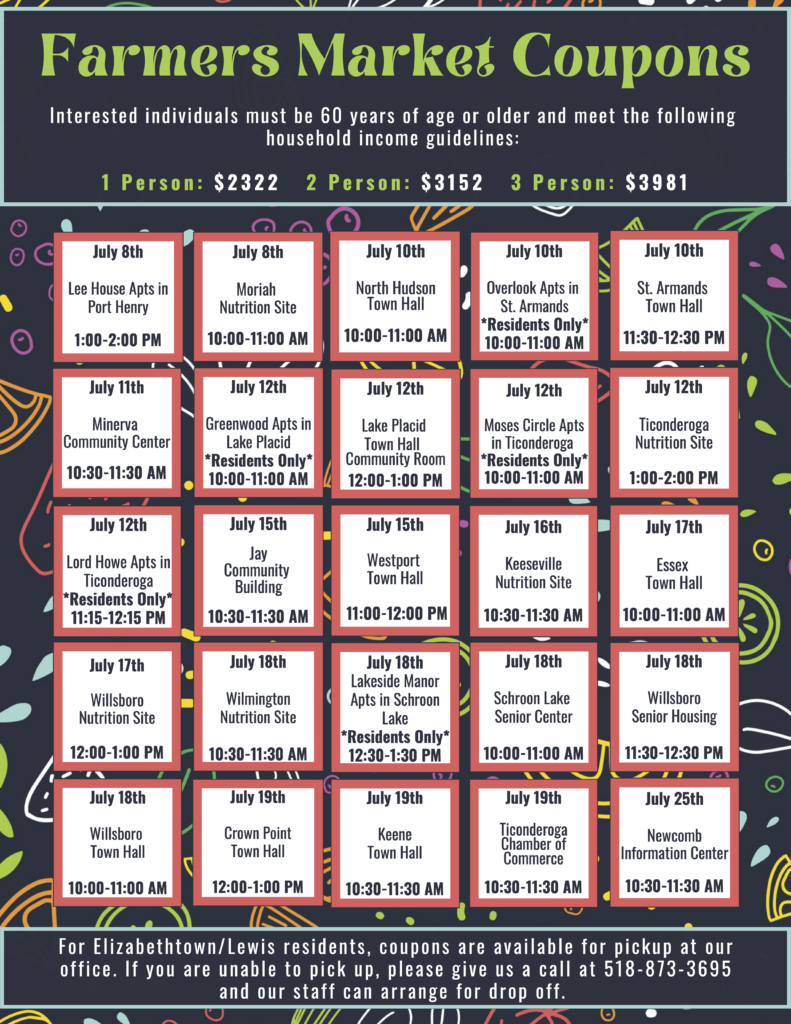
Through the FMNP Program, each eligible senior can receive five $5.00 coupons to total $25.00 that are valid through November 30, 2024.
To be eligible, the senior’s income must be at or below 185% of the federal poverty level, which is:
FMNP coupons are also available to families enrolled in the WIC program. More info about WIC can be found on our Food Assistance Benefits FAQ page here.
These coupons can be used to purchase fruits and vegetables at farmers’ markets and farmstands throughout the region. Find farmers’ markets and farmstands in the Adirondack region that accept FMPP Coupons here.
Contact your county’s Office for the Aging for more info about their distribution. Information on the Essex County coupon distribution schedule below:
This material is based upon work supported by USDA/NIFA under Award Number 2021‐70027‐34693.



By Tim Rowland |
Syncing farmland with wildlife habitat makes so much sense that Kia-Beth Bennet sometimes wonders how conventional farms can succeed without doing so.
At the Bittersweet-Milkweed Collaborative farm in Heuvelton, a small town near the St. Lawrence River and Canadian border, Bennett works with tubers, cattle and poultry, but also with birds, insects and native shrubs. Their farm is a sanctuary, and they will sing to attract beneficial species, if that’s what it takes. What some see as a weed Bennett sees as a diesel-free way of breaking up heavy soils; what some see as a thicket, Bennett sees as habitat for warblers that take the place of pesticides.
“The environment has really been my passion and my focus from Day 1,” Bennett said.
Bennett’s parents moved to the sparsely populated region at the top of New York State in the St. Lawrence Valley in 1999.


They started Milkweed Farm, raising rare seed potatoes and now manages both farms, which total more than 100 acres. Like other farmers in the region, Bennett is practicing agriculture with a growing awareness of the farm’s ecological surroundings.
Ground birds are given time to fledge before turning out cattle or mowing hay; by allowing any space that isn’t a garden or a pathway to completely grow up, providing micro-habitats and connectivity; and by researching every farmland species, so that they know how what they do impacts their food and habitat.
“Observation is so important,” Bennett said. “The more information we have the more we can improve the ecology and the more we improve the ecology the more it increases productivity.”
Bennett has used grants from Northern New York Audubon to encourage shrubland habitat, establish wildlife corridors along streams and build raptor perches.
This attention to habitat had an almost immediate impact. On the avian identification app Merlin, the number of bird species soared from 35 to 90.
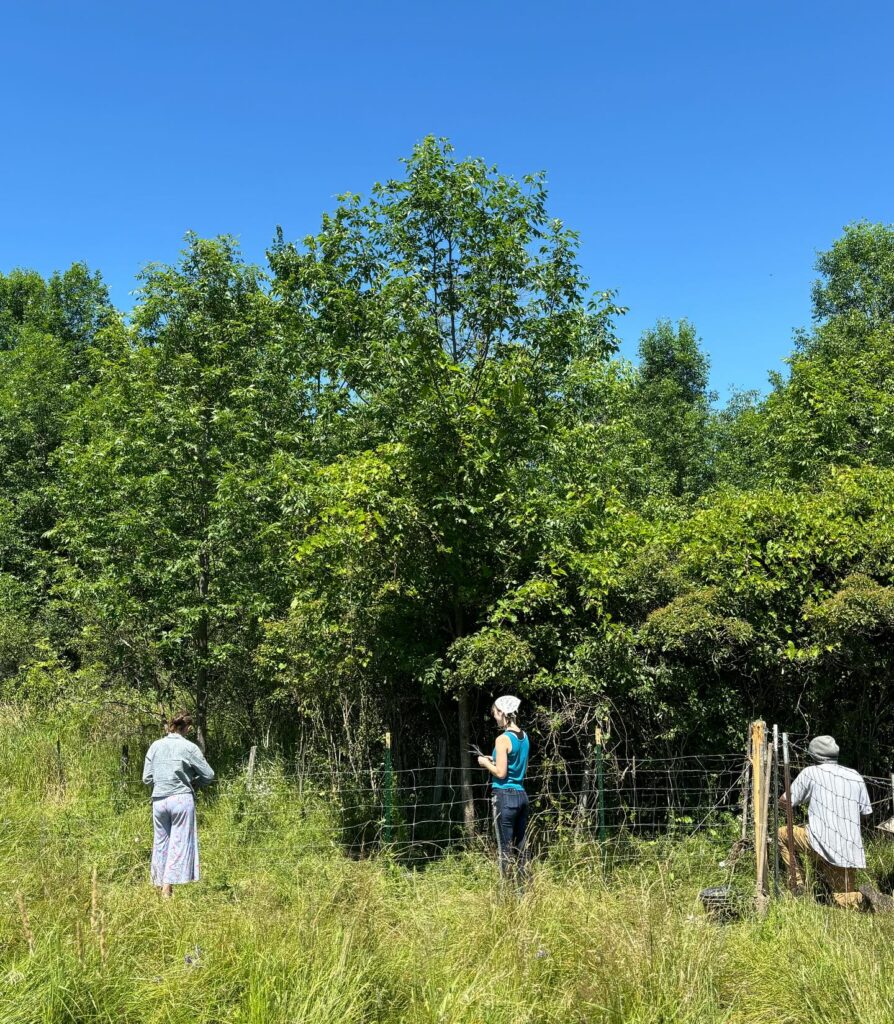

An increase in warblers and hawks have corresponding gains for agriculture in reduced insects, better pasture health and fewer rodents munching away at root crops. Even small grants can make big differences for farmers who can use it to cordon off thickets or streams, plant native species and facilitate rotational grazing. “We will have some of the most endangered birds on the property because we know how to use that money well,” Bennett said.
The grants were also important in a psychological sense. “They said, ‘We believe in you.’ Nobody had even said that to me before,” Bennett said. “Everyone’s farm is way more diversified than we realize; we just need to love it.”
Awareness of surroundings and observation of what is sustainable and what is not is a common theme among local farmers.
Growing Silvopasture Systems in the Champlain Valley
After founding Barred Owl Brook Farm in the Champlain Valley near Westport, Alex Caskey tried out multiple agricultural pursuits to see what would work. A realist, Caskey began scratching things off the list one by one — hogs would require too much investment in grain-related feed costs and storage; driving 40 miles to deliver $40 worth of duck eggs didn’t make a lot of sense either.
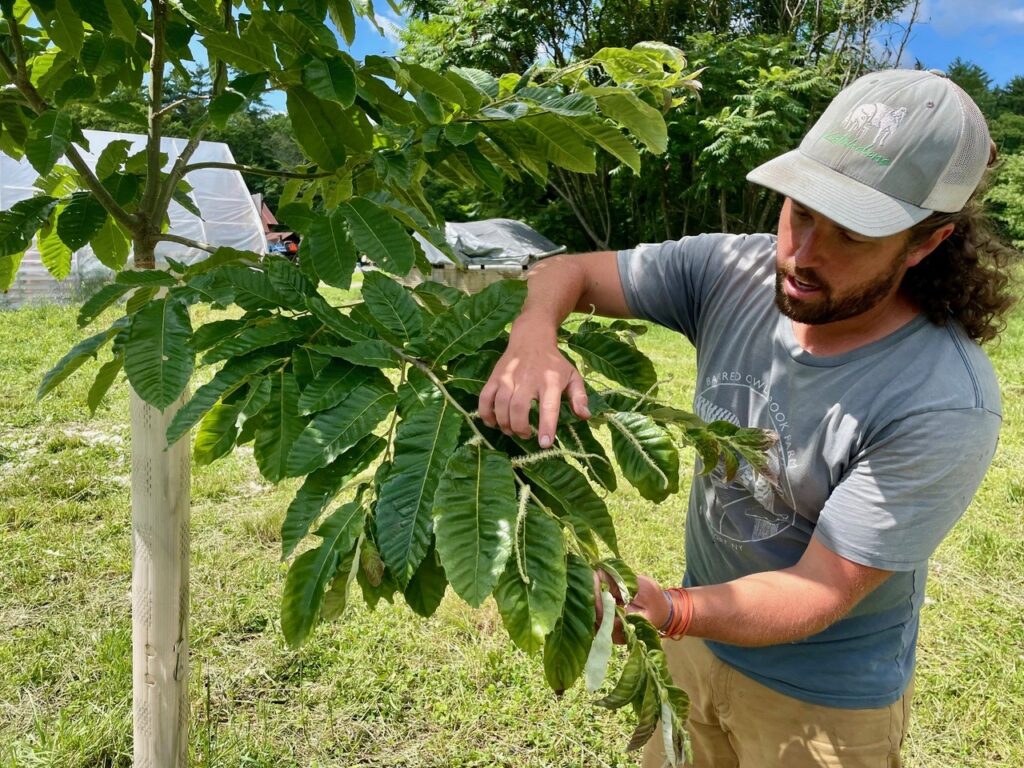
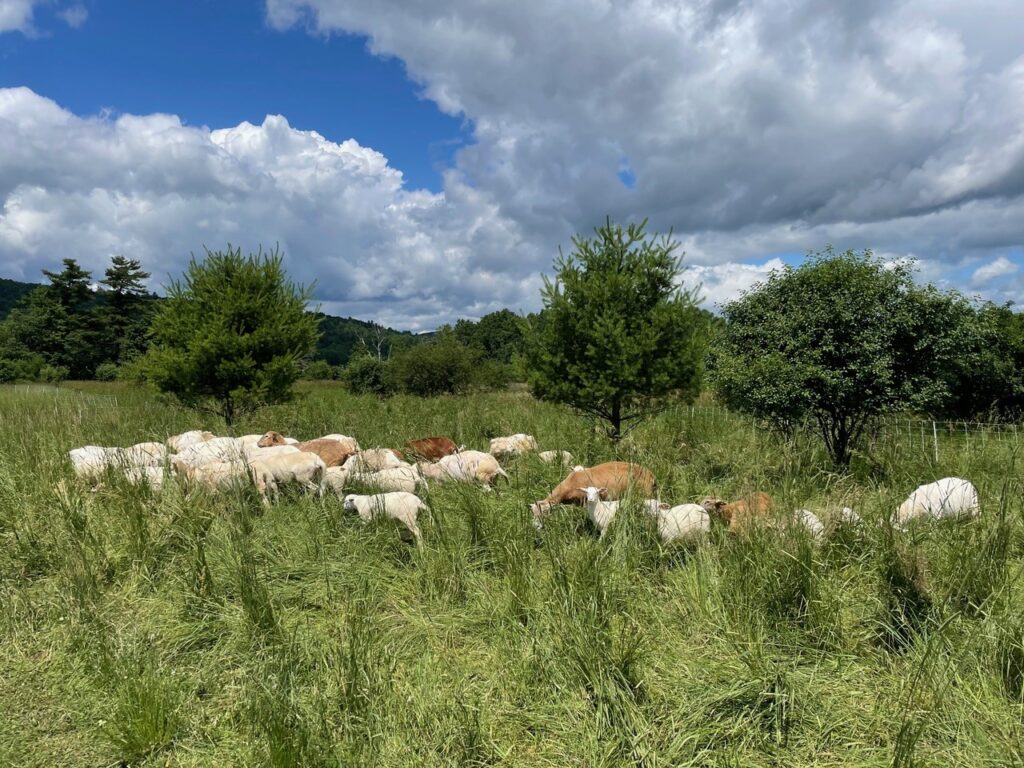
There are still vestiges of these pursuits at Barred Owl Brook, where ducks are now on tick and slug patrol, and some remaining hogs provide tractor-free tillage.
Agriculture that did make the cut includes Katahdin sheep and tree and shrub nursery stock, both of which fit into a broader picture of ecological symmetry.
Silviculture, a blend of forestry and agriculture, benefits both the planet and the animals. Willow and poplar provide fodder (and sheep love nothing better than the invasive buckthorn), while larger trees lend shade, shelter and mast — all while sequestering carbon and improving soil saturation rates. “It’s a new name for an ancient practice,” Caskey said.
Usually considered a nuisance and a blight on rolling green pasturelands, for the sheep, “trash trees are exactly what you want,” Caskey said.
With degrees in conservation biology and sustainable food systems, he shares Bennett’s belief that there is no bright line between ecology and agriculture. “Those two are tied together, whether you lean into them or not,” he said. “We should be managing the landscape to enhance wildlife habitat.”
Wildlands, forest and grassland ecology all interact, “but as a society we really don’t value those things,” Caskey said. Government conservation guidelines tend to be voluntary, “putting the burden on the farmer” who often has more pressing costs to consider.
Yet balancing ecology with agriculture has natural efficiencies.
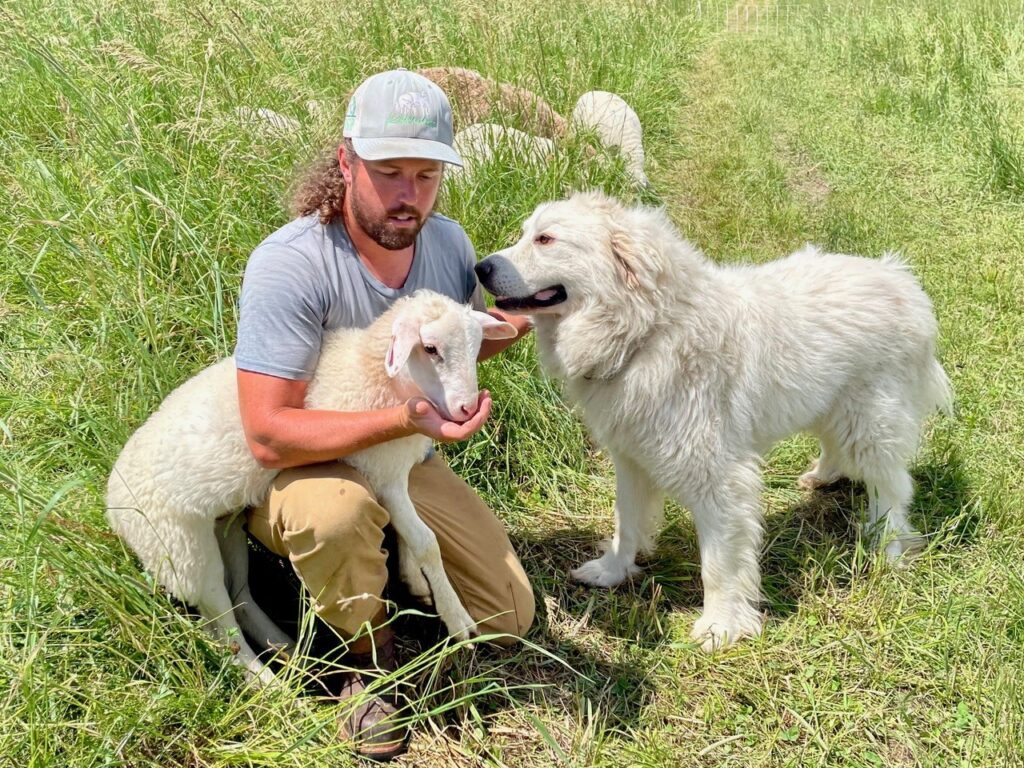
With pastures surrounded by forestland, Caskey knew sheep would be vulnerable to coyotes, bobcats, foxes and bears, so he uses electric netting and guard dogs that now enjoy the duck eggs that no longer have to be delivered.
Even when the power went out one day, including the sheep’s electric fencing the coyotes made no demonstration toward the sheep and instead made themselves useful by eating voles.
For years, American agriculture has sought to eliminate insects, weeds, shrubs and trees. That could be changing as more young farmers are building businesses that enlist nature to play on their own team from the ground up.
This article was written with grant funding through CVNHP and NEIWPCC.
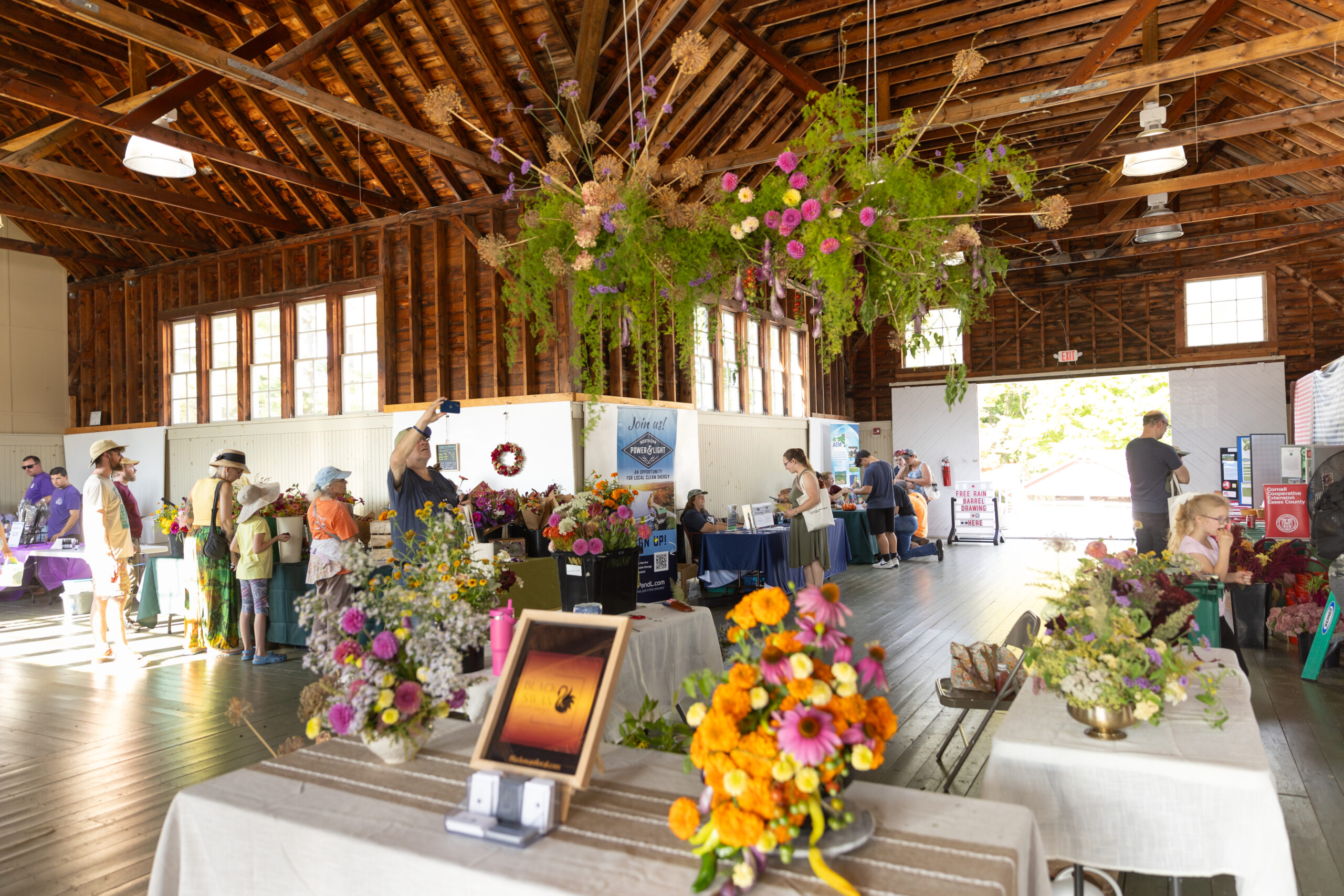
On a bright summer day when the sun catches it just right, few scenes are as idyllic as a bountiful farmers market, with mounds of scarlet radishes, cascades of saffron summer squash and heaps of green lettuces, sweet corn and more beans than you could ever imagine picking.
Yet get under the hood of the average market and you’ll find a lot more going on than a simple transaction for fresh produce. Behind the scenes, difficult issues present themselves relating not just to food, but to labor, class, economics and even the basic machinations of the markets themselves.
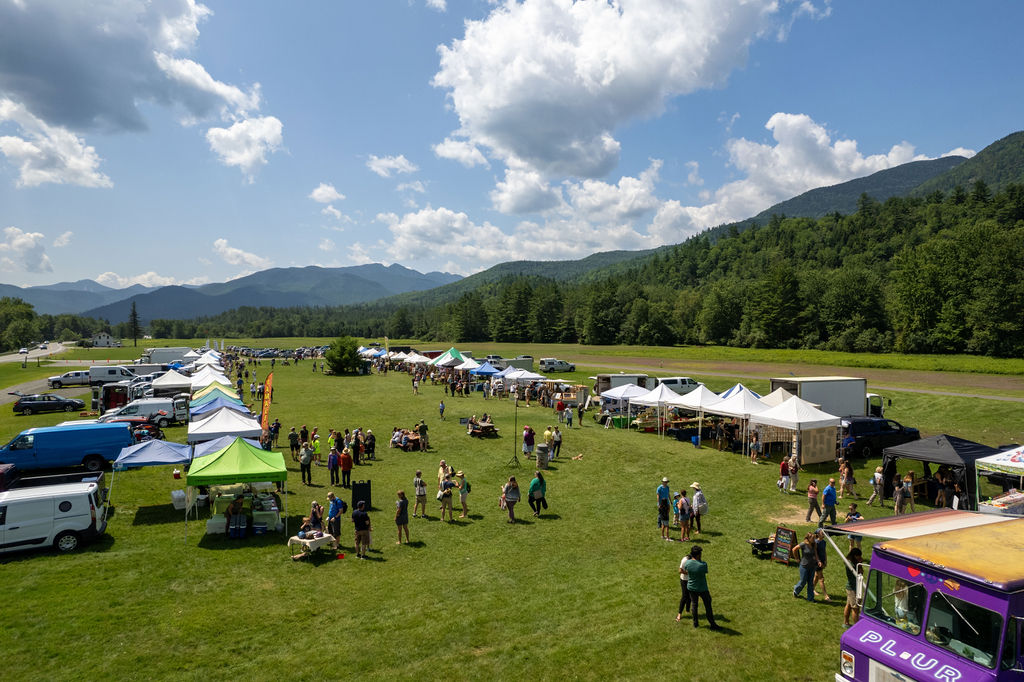
The markets are often run by volunteers who perform every imaginal task from crowd management to budgeting to figuring out an angle that will make their market different from the others.
All businesses scramble to find buyers, but farmers markets have to scramble to find sellers as well, which has led to the existential question of whether there are more markets than the market will bear. It can seem that there are more farmers’ markets than there are farmers, said Teresa Whalen, manager of the Warrensburgh Riverfront Farmers’ Market.
“Along with a shortage of farms, we have a shortage of employees,” Whalen said. The well-documented labor shortage in the Adirondacks has made it hard for farms to staff booths at multiple markets with overlapping time slots. Farms have to calculate whether it will be worth driving 50 miles or more and then sitting at a booth for several hours.
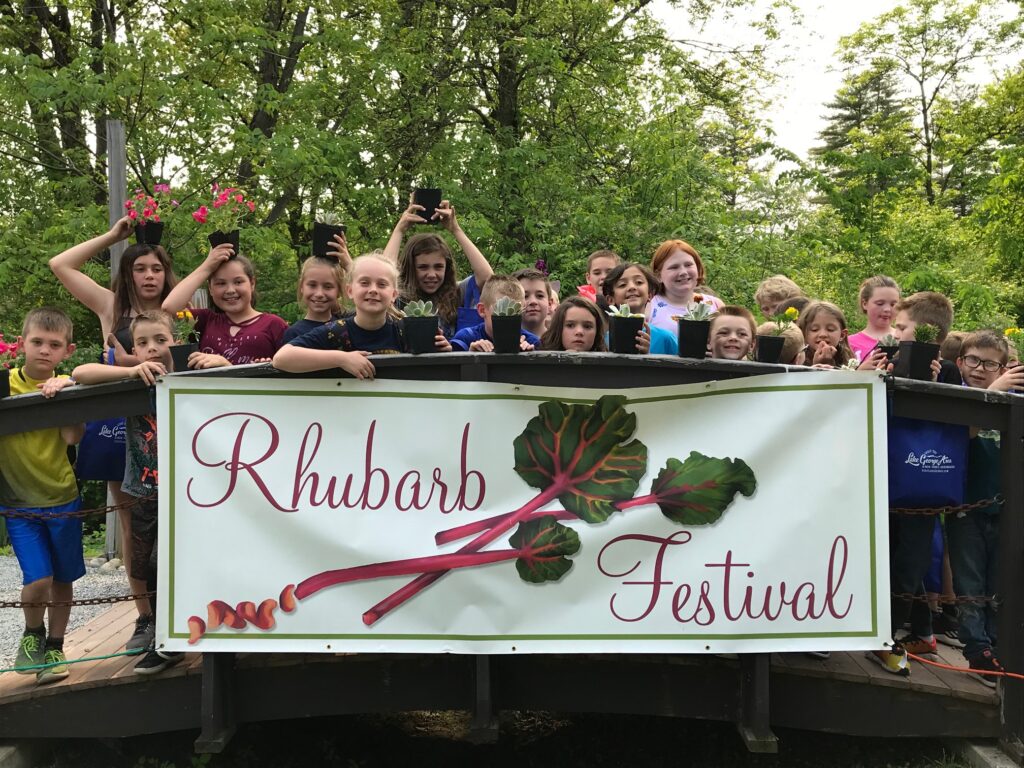
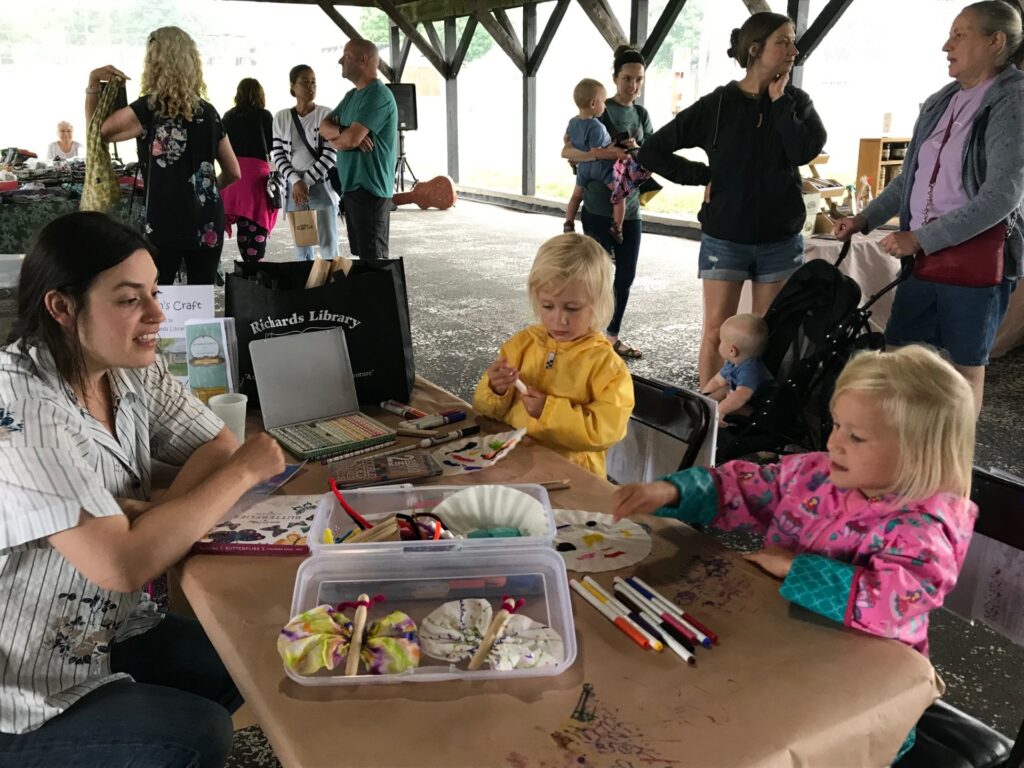
Whalen said some savvy farmers will scout out a community’s restaurants, meaning they can potentially fill a wholesale order and staff a farmers’ market on the same trip. At the same time, Whalen said, markets can do their part to attract more customers. In Warrensburg, that’s meant promoting festivals celebrating berries, rhubarb and such that tend to be popular and are held in concert with the market.
Calculating a time for the market is also an art — a community with many retired second-home owners, for example, might do better holding their market on a Wednesday morning when this demographic is typically looking for something to do. By contrast, a community where vacationers are staying primarily in hotels without cooking facilities might be better off playing for working local residents who can only come on the weekend.
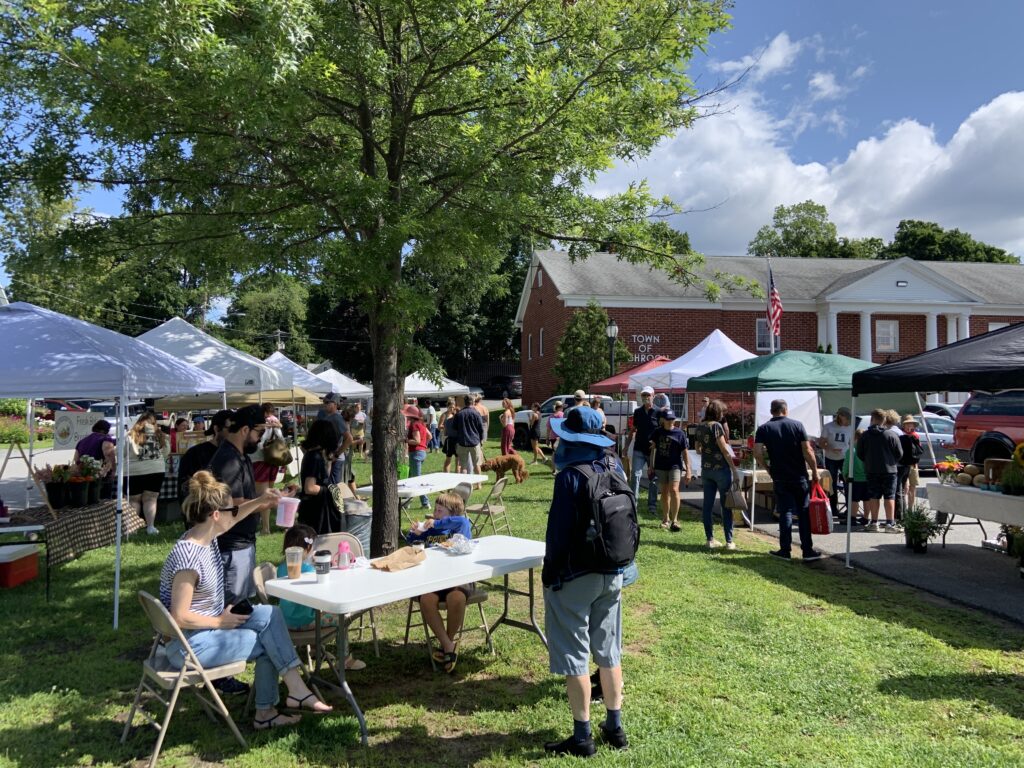
And, as in real estate, location is everything. Last year, Alexis Conners wondered why her new home of Schroon Lake didn’t have its own market, particularly since there were no competing markets in nearby communities. So she decided to start one. Now, she coordinates the Schroon Lake Farmers’ Market, a Saturday market that runs June through September.
“I went to the town board and no one said ‘no,’ so for me that was good enough,” said Conners, who, growing up in Western New York, came to appreciate the value of fresh food visiting farmers markets with her family.
Finding vendors was a little harder. Once she realized that farmers often lacked time to respond to emails or calls, Conners began showing up on their doorsteps.
Beyond that, she said, “A market is more than just a space for commerce.” It is a place that can inspire important discussions about the stewardship of land, the environment and food systems.
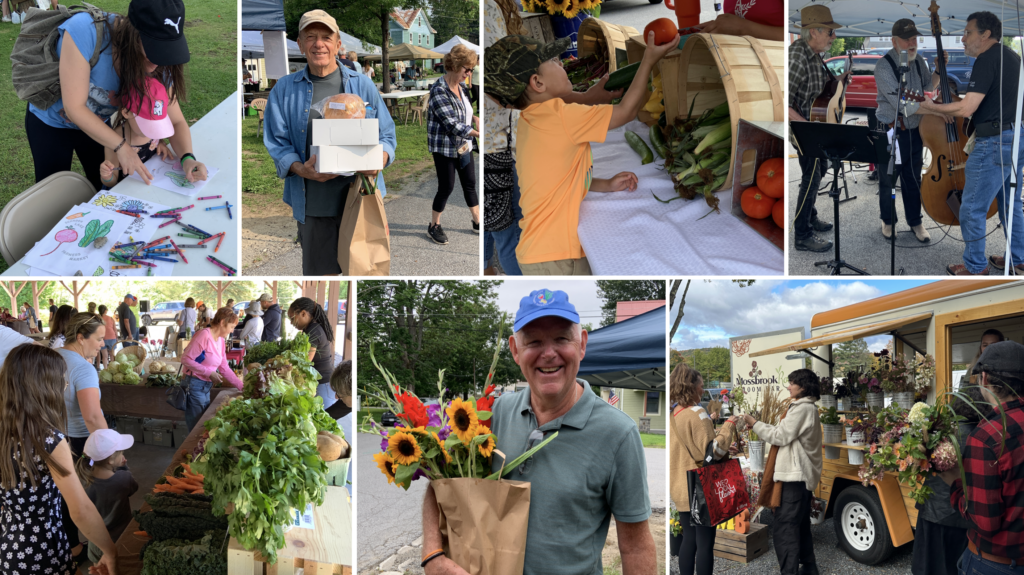
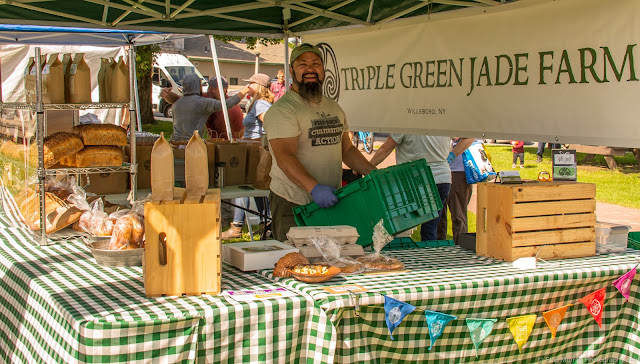
Dan Rivera, who mills flour and bakes bread with his wife Kimmy for Triple Green Jade Farm in Willsboro, agreed the sense of community is among the markets’ most important attributes. “The reward is customers and the smiling faces we see each week,” he said. “We’ve seen families whose kids have grown up on our breads.”
The markets are invaluable for producers who are just starting out and trying to make a name for themselves. Triple Green Jade attended seven in the beginning but has since scaled back to just one in Saranac, focusing instead on its two retail spaces in Westport and Essex. They miss the people, but not the demands of travel and scheduling.
“Farmers markets are a lot of work, but they can be very profitable too,” Rivera said. “For us starting out, it was the only way.”
Market managers said It is important, too, that everyone in the community be included. The reality is that food produced with care and conscience by small farmers costs more than what’s available at the supermarket. That’s created a more affluent clientele and a price structure that might not feel accessible to everyone.
Conners had worked with the Adirondack Foundation to provide $20 certificates that will be distributed at the local food pantry for people with lower incomes. These shoppers can bring the certificate to the market and exchange it for tokens that they can spend for whatever they choose. Conners wants children to become involved in the process too, so they will feel they have an interest and control of their food choices.
As a community gathering place, markets can be “not just a space where people feel obligated to shop.” That translates into games and educational programs for kids, and bringing in the Cornell Cooperative Extension Service to show how to make pickles or can tomatoes.
The response has been enthusiastic — 6,000 people in its first year. This year the market will move to a better location in the town pavilion overlooking Schroon Lake. Like Whalen, Conners says the endeavor has been challenging, but rewarding. “I just wanted to give back to a community that has given so much to me,” she said.
What can you do to make sure that farmers’ markets continue to be a summer tradition in your community? Make visiting your local farmers’ market part of your weekly grocery shopping routine, volunteer, and help spread the word about the important role local farmers’ markets play in supporting Adirondack communities.
Find a farmers’ market near you in the updated 2024 Adirondack Summer Farmers’ Market Guide at adirondackharvest.com/markets.
Funding for this blog post was made possible by a grant/cooperative agreement from the U.S. Department of Agriculture (USDA) Agricultural Marketing Service. Its contents are solely the responsibility of the authors and do not necessarily represent the official views of the USDA.
By Tim Rowland
Armed with pruners and a clipboard, Courtney Grimes-Sutton surveys row upon row of young apple trees, none of which are named Red Delicious or McIntosh. The varieties in her nursery at Mace Chasm Farm have names average consumers have never heard of, and rich, complex flavors they have never tasted. Once they get a bite, Grimes-Sutton believes, they might never go back.
These are antique apples (she also grafts other fruit trees, including cherries, quince, plums and Asian pears) that hail to the pre-monoculture days when farm catalogs brimmed with hundreds of varieties, some tart, some sweet, some specifically for cider and some admittedly weird by today’s standards — shaped like an egg, for example.
Many of these trees were almost lost to time, saved only by a small but dedicated band of antique apple sleuths and propagators. “In some cases, there was only one tree left,” Courtney said.
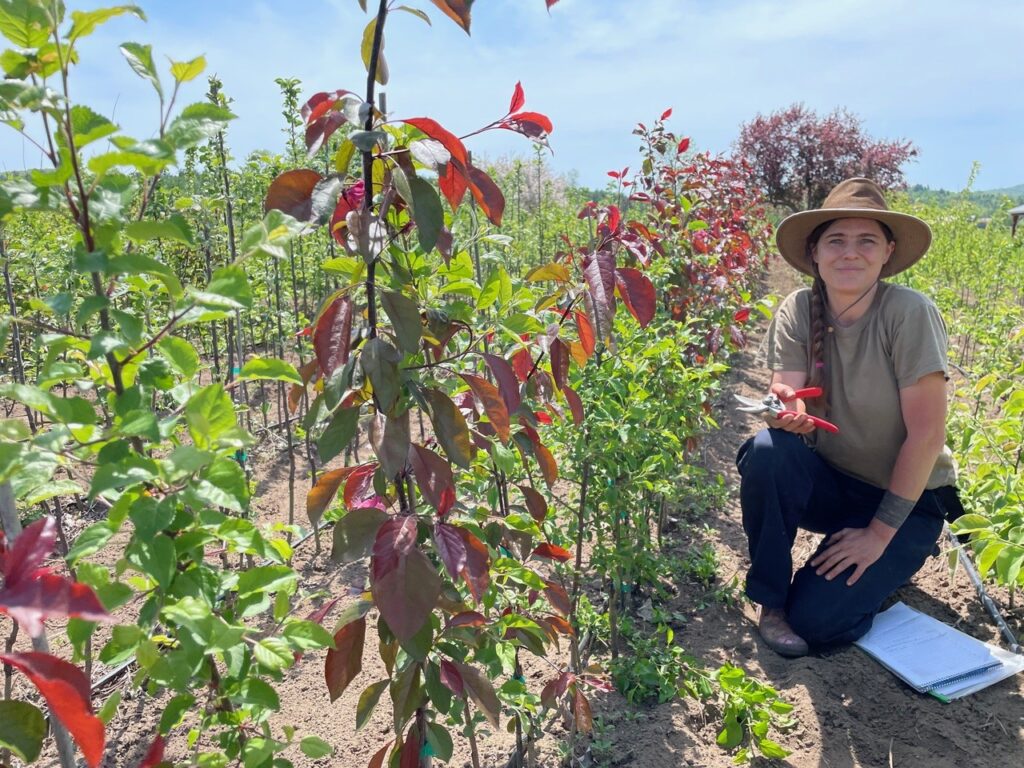
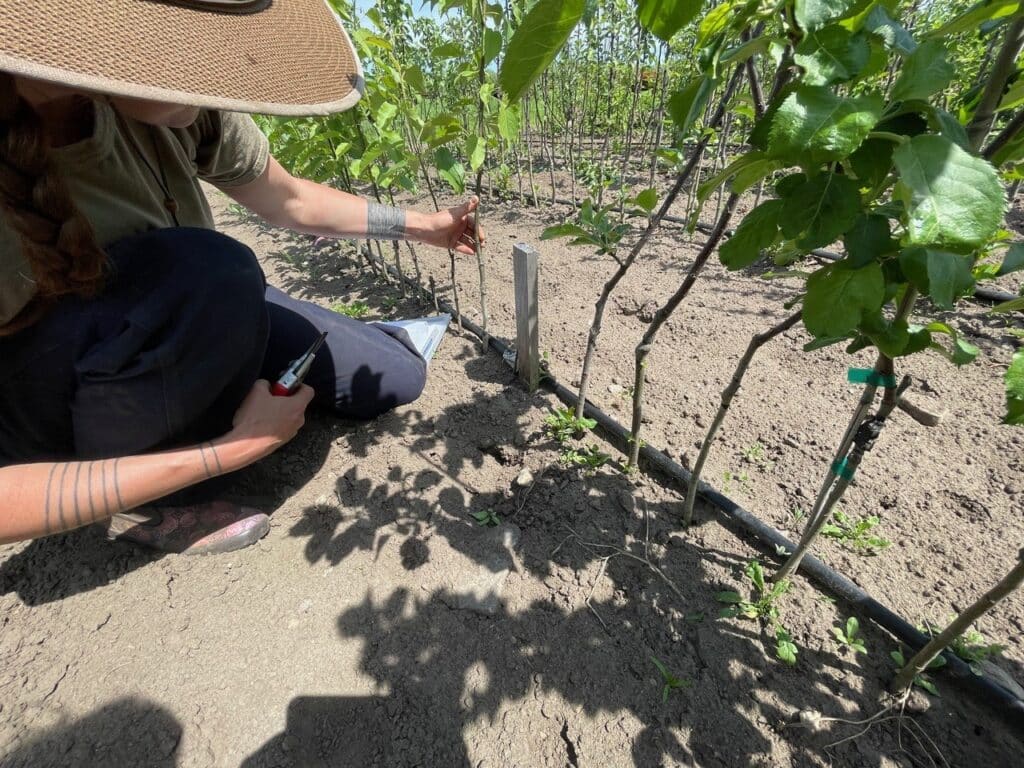
But bringing these fruit trees back from the brink is not as simple as gathering fruit and saving seeds. Because of cross-pollination, apple seeds do not produce true copies of their varieties. So varieties are replicated by taking scions or buds and splicing them onto a suitable rootstock, in this case the Antonovka stock from Russia that’s suitable to the North Country. The grafted scion will determine the variety, while the rootstock will dictate the tree’s mature size and hardiness.
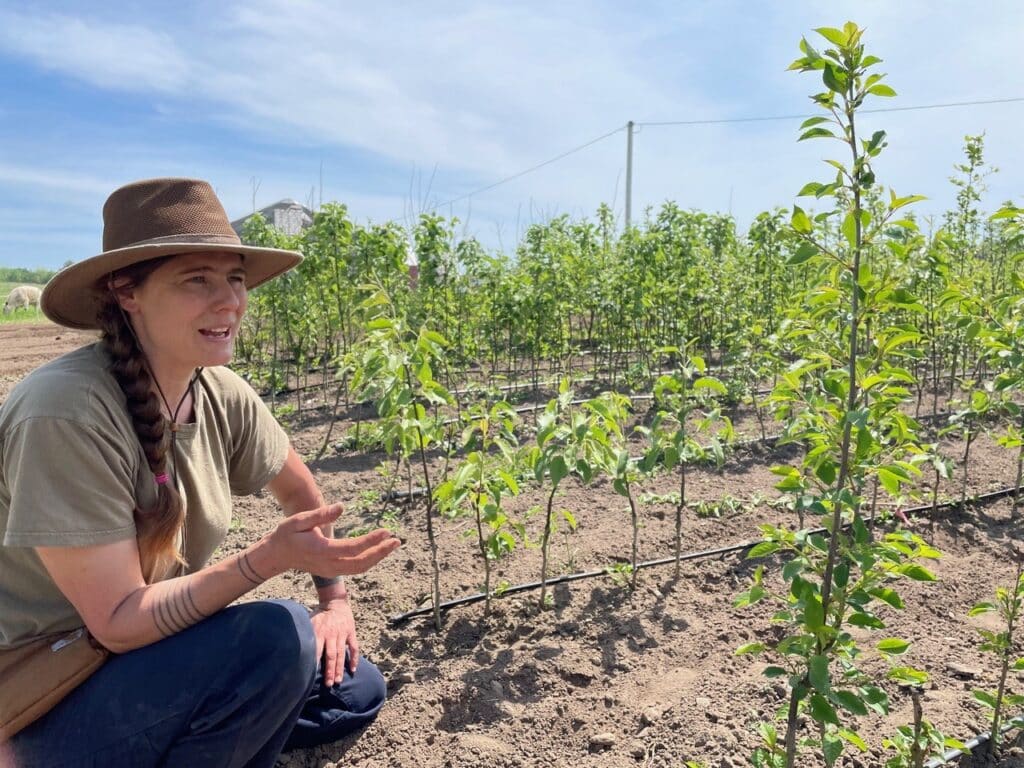
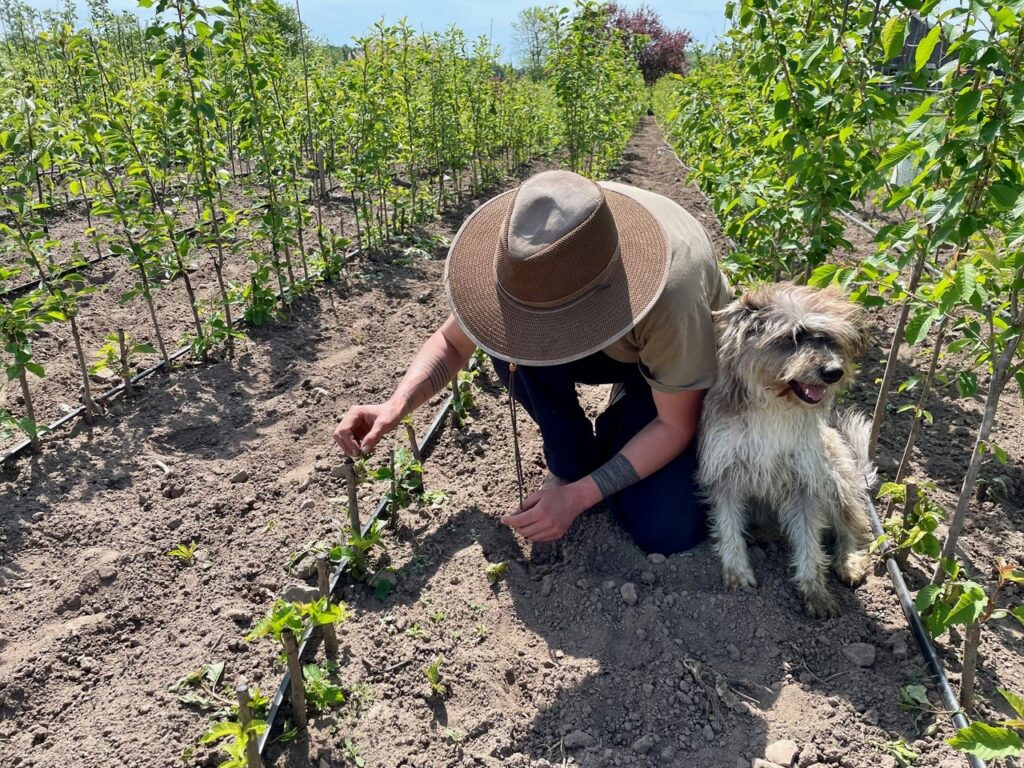
Grimes-Sutton grafts the trees and grows them for 18 months before they are dug and shipped to the national retailer Fedco Seeds of Maine. From there, Fedco sells the trees through their website and catalog and sends them by mail to customers across the US. At certain times during the year, Mace Chasm also offers these antique fruit trees for sale locally.
Mace Chasm, which Courtney owns with her husband Asa Thomas-Train, is best known for high-quality meats, including its signature sausages that Grimes-Sutton creates based on seasonal herbs and flavorings.
Without the ability to greatly expand capacity, however, small farms often concentrate on diverse or value-added sidelines. But in taking on heritage fruit trees, Courtney had another goal in mind as well.
“The butchery work is interesting and satisfying to me, but I needed to be out in the fields as well in the elements for balance,” she said. Her farm work occupies her time six days a week, but her off-day is now spent in the nursery caring for 3,000 trees.
Jacob Mentlik, Scionwood Coordinator for Fedco, said these apples have a broad set of characteristics (not just for eating) and have piqued the curiosity of people who are hungry to learn more.
“There is a growing interest in heirloom cider apples for bittersweet and sharp flavors, storage apples that can be kept through the winter, and cooking apples that hold their shapes for pies and tarts,” Jacob said. “We like to offer a balance of varieties, both modern and heirloom as well as notable wild apple discoveries that our network of fruit explorers and cider makers have found to be well adapted to our local conditions.”
Antique apples aren’t the most attractive of fruits, sometimes mottled or misshapen, which explains how they fell out of favor. “In general, heirloom apple varieties have a much larger range of flavors and uses than modern apples, which are mostly bred for disease resistance and commercial production, uniformity and such,” Jacob said.
At Mace Chasm, the nursery work fills an important time slot. In the North Country, the high season for sales lasts 20 weeks through the summer, before dropping off precipitously in October. That’s about the time the saplings are dug and placed in cold storage in anticipation of spring sales. Those sales come at just the right time — when farm employment begins to ramp up, but income is typically at its lowest point.
“We have had challenging seasons in recent years when it felt like we needed to diversify the farm income or change our model,” Courtney said, “mostly due to inflation and rising costs that we don’t feel can be fully reflected in the prices of our goods; so small margins shrink further.”
Fedco pays $14 a tree, and trees that are sold locally bring double that price. It’s a land-efficient crop — an eighth of an acre is sufficient for a nursery. There are periods of intense labor, but unlike a squash that can rot if not attended to, the trees are more forgiving.
Skill is needed to graft, but for Courtney — a talented welder, among other things — the process of fusing two pieces of wood comes naturally. By herself she can graft 250 trees a day, although it should go without saying that for most people it’s not that easy.
Courtney also does custom grafting. If there’s a “wild” or unidentifiable apple you love, she can replicate it. Just down the road from her farm was a tree along the road whose fruit was enjoyed by the whole community as being out of the ordinary. No one can quite identify the fruit, but whatever it is, the variety has now been revitalized thanks to Courtney’s grafts.
Antique fruit trees, Courtney said, represent more than cider and pies. They also stand as an allegory for small farms that themselves are in danger of being lost. “Small-town America died when small agriculture died,” she said. Monocultures and megafarms have damaged the flavor not just of crops, but communities.
And these unique communities are perhaps like the apples themselves, of which Courtney said, “They’re like nothing you’ve ever tasted.”
You can buy Mace Chasm’s fruit trees along with their pasture-raised meats and other local food items at their self-serve farmstore in Keeseville. Learn more about Mace Chasm and other local producers, farmers markets and local food retailers at adirondackharvest.com/browse.
Funding for this blog post was made possible by a grant/cooperative agreement from the U.S. Department of Agriculture (USDA) Agricultural Marketing Service. Its contents are solely the responsibility of the authors and do not necessarily represent the official views of the USDA.
By Mary Godnick, Adirondack Harvest Program Leader |
Eggs are an integral part of traditions, celebratory dishes, and the everyday diet around the globe. Historians estimate that humans have been eating eggs for roughly 6 million years. Originally, people foraged eggs from wild bird nests until they were domesticated around 1500 BCE in Ancient Egypt. Throughout history, eggs have been a symbol of life, rebirth, renewal, and fertility for many cultures.
Today, humans eat about 88 million tons of eggs each year worldwide. China is the top producer of eggs (roughly 34 million tons), then the United States (roughly 6.9 million tons), and then Mexico (roughly 4 million tons). While we may think of them as a staple of the American diet, countries like Japan, Paraguay, China, and Mexico consume more eggs per person each year.
You may have noticed the association between eggs and the warmer weather of spring.. If chickens lay eggs year-round, why are eggs associated with spring?

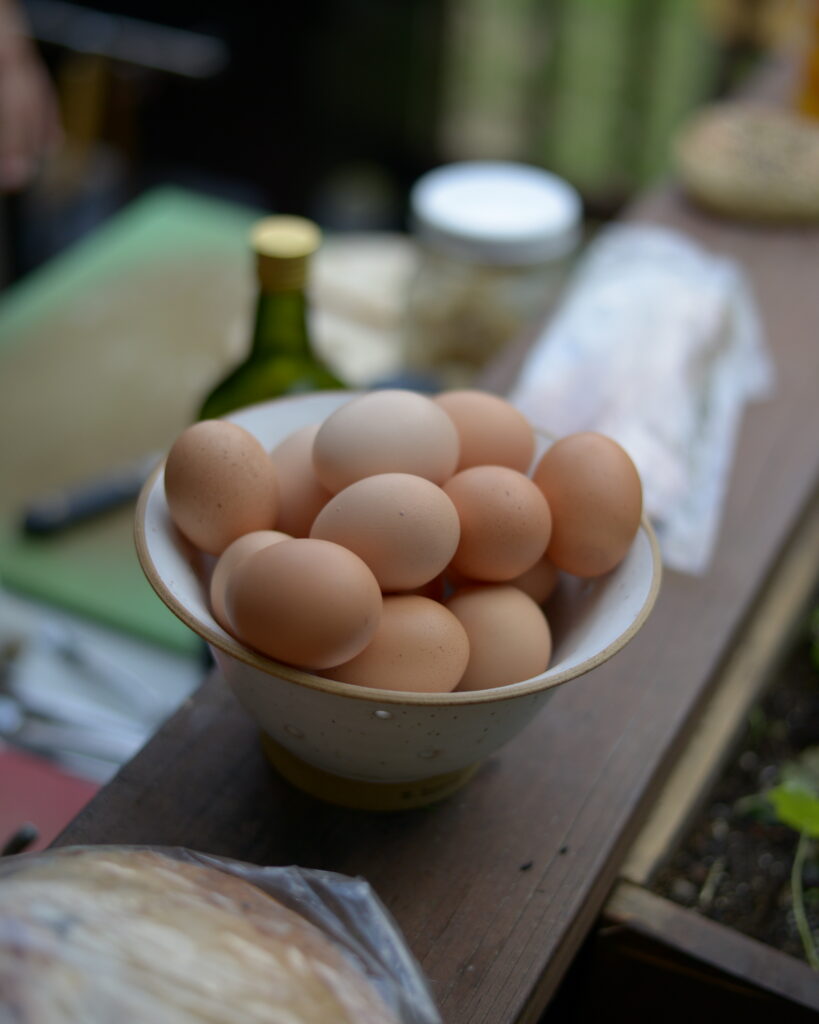
On average, each female chicken (hen) lays one egg every 24 hours. This frequency fluctuates based on factors like weather, age, health, and daylight. To produce an egg a day, chickens require about 14 hours of daylight. Farmers can use artificial lights to keep chickens producing eggs, this is what the big commercial operations do. But for many small farms, egg production simply slows down during the dark winter months. As daylight starts to lengthen in the spring, hens are put into high drive and begin producing an abundance of eggs again throughout the spring and summer.
Chickens have been a backyard fixture in the Adirondacks since the earliest European colonists and settlers moved in. Chickens were historically raised on subsistence farms for both eggs and meat. An interest in keeping backyard chickens exploded during the early days of the COVID-19 pandemic. In the Adirondacks, you can find many farmstands (from co-ops to coolers on the side of the road) with eggs for sale.
Some of the large egg operations in the area produce their eggs in facilities similar to what you’d see in a commercial operation- indoor spaces, lots of birds. Many smaller farms in the Adirondacks keep their egg layers outdoors, in a coop with access to pasture usually in a fenced-in area.
So why buy locally-raised eggs? How a chicken is raised and what it is fed are the biggest determinants in the flavor and nutrition of the eggs they make. According to a 2010 study from Penn State’s College of Agricultural Sciences, eggs from pastured chickens had up to twice the amount of Omega 3 Fatty Acids and Vitamin E than eggs from conventionally raised chickens. Chickens that have the opportunity to forage in grassy open spaces will also create eggs with deeper yellow yolks and more flavor.
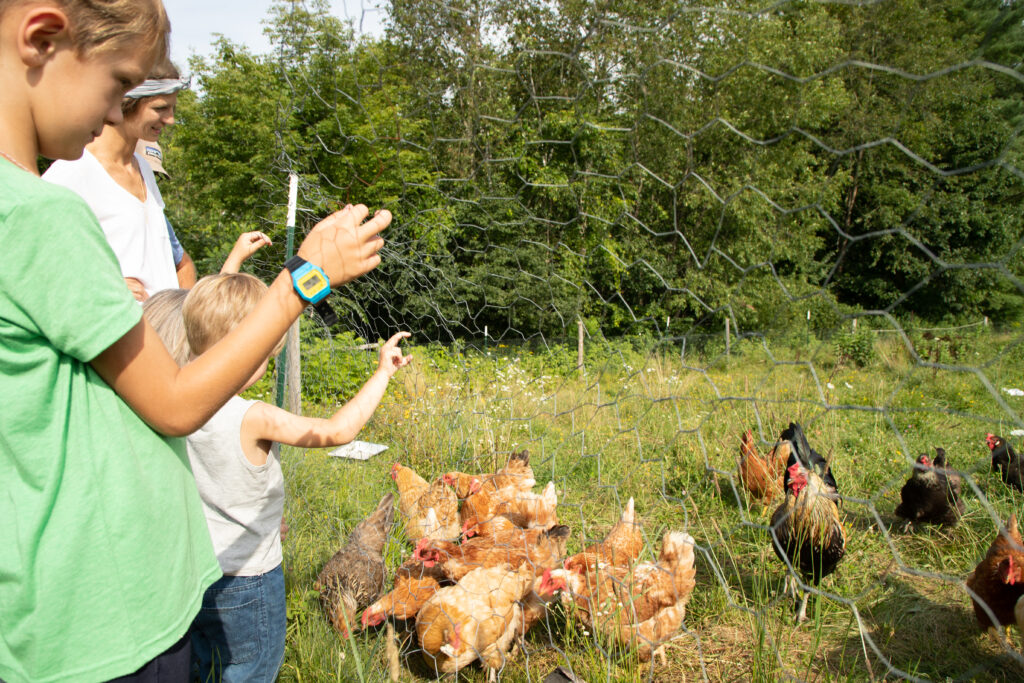
The majority of eggs sold at grocery stores and commercially are made in large-scale egg operations, where chickens are confined, crowded, and live in generally miserable conditions. They are not a healthy place for animals or workers to be. They are notorious for causing dangerous levels of pollution in surrounding communities. If you’re curious about how eggs are produced on a local farm, just ask! Most farmers will be happy to tell you how their animals are raised, and may even offer to give you a tour so you can see for yourself.
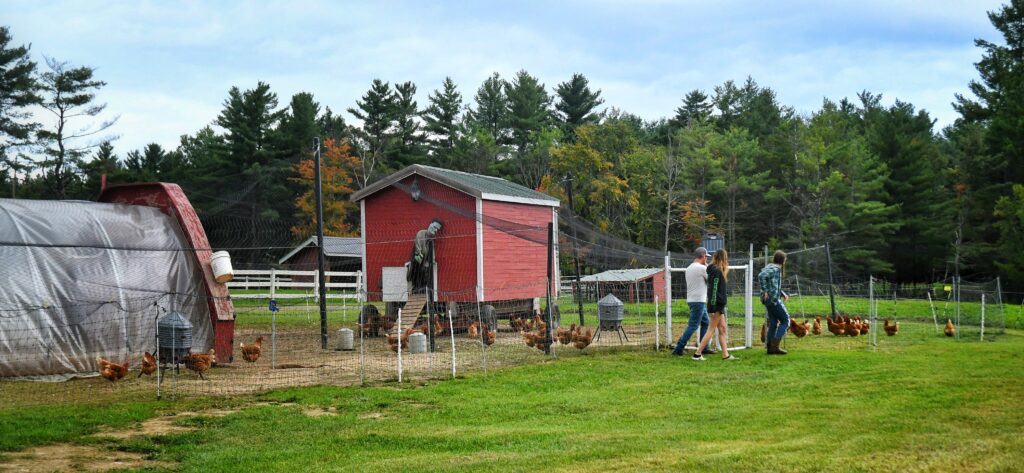
Because consumers are becoming more aware of the importance of healthier living and growing conditions for farms, and are becoming more discerning about the products they purchase, large companies have used this as a way to charge a premium for their products. There has been a large increase in the sale of “pastured” eggs in the United States in the past three years.
However, “pasture-raised” or “pastured” eggs just means that birds have access to the outdoors for 120 days of the year. This definition does not specify how big, or what kind of space the birds have access to. Additionally, “Cage Free” only means that a bird isn’t kept in a cage, usually, this means they are still kept indoors in cramped conditions, just not in a wire cage.
So how do you know that the qualities that are most important to you are more than just a label slapped on a package?
The only way to truly know how a bird is raised, fed, and treated before you buy her eggs is to talk to the farmer, and better yet, visit their farm and see how they are raised yourself! Our small farms in the Adirondacks are stewarded by dedicated farmers who deliberate tough decisions about what their animals eat, how they’re housed, and how they’re cared for. They know that the health and well-being of their animals is directly linked to the quality of their products.
Many locally raised eggs also come in fun a rainbow of colors and sizes. From pure white, deep brown and shades of blue and green. The color of an eggshell is determined by the breed of chicken that lays it. As an egg travels through the chicken’s oviduct, the shell starts forming and becomes white. This takes approximately 26 hours. Different breed chickens will release different pigments in their oviduct during this phase, which are absorbed by the forming eggshell, thus creating different colored eggshells.
The color diversity of local eggs is beautiful, but there is no difference in nutrition or flavor between different colored shell eggs. The biggest determinant of egg quality, nutrition and flavor is how the hens were raised and how fresh the eggs are.

Many local farms are starting to offer not only chicken eggs, but duck eggs. Duck eggs are larger and richer than chicken eggs, their whites are less watery, and they have bigger yolks. Some people also find duck eggs to be creamier and more flavorful than chicken eggs, and are especially good for baking. When baking, simply use 2oz of duck eggs for every egg called for.
You may be thinking, this all sounds well and good but I just can’t justify spending $7 a dozen on eggs when I can buy them at the grocery store for $4 a dozen. While this is true, it’s not a comparison of apples to apples. The cost difference is actually pretty minimal- Market 32 sells their brand of large free-range organic eggs for $7.58 a dozen, and most local farms sell their eggs for about $4-7 a dozen, and they are generally higher quality, give their hens better living conditions, and utilize more sustainable farming practices.
Where you choose to buy your groceries from also has a bigger picture ripple effect than just the money saved in your pocket. Reducing the number of miles your food travels from field to the shelf directly shrinks your grocery carbon footprint. It’s been estimated that locally grown food creates 5 to 17 times less CO2 than nationally wholesale distributed food. It also is an investment in the farms that provide jobs, feed your neighbors and steward the land in your community. The more local food we add to our plate, the more we can realize many economic, environmental, and social benefits.
From the Saratoga Farmers’ Market
INGREDIENTS
*Ingredients currently in season locally
INSTRUCTIONS
Almost every farmstore, co-op, and farmers’ market will have local eggs for sale. Many local bakeries and restaurants also use local eggs in their dishes. Visit adirondackharvest.com/browse to find local eggs near you.
Spring is also a great time to travel along the Adirondack Cuisine Trails and get a taste of the Adirondacks. This time of year, the blackflies and mosquitoes are out in full force deep in the forests and on the lakes of the Adirondacks, so you may want to opt to spend a day visiting some farmstores, markets, wineries, breweries, and restaurants along the Adirondack Cuisine Trails instead of hiking and paddling. Find out more about the Adirondack Cuisine Trails at adirondackharvest.com/adirondack-cuisine-trails.
Mary Godnick is the program coordinator for the Adirondack Harvest program at Cornell Cooperative Extension of Essex County. This article was written with grant funding through CVNHP and NEIWPCC.
This article originally appeared in the June issue of Northern HGL Magazine.


8487 U.S.Route 9, Lewis, NY 12950
Phone: (518) 962-4810

If you have a disability and are having trouble accessing information on this website or need materials in an alternate format, please contact the Cornell Cooperative Extension of Essex County office for assistance (518) 962-4810 or email essex@cornell.edu.