
During Pandemic, North Country Food Co-op Offers Both Comfort and Food
An attentive grocer can tell a lot about the public psyche by glancing into their customers’ shopping carts. If people are buying pinto beans by the case and rice by the 25-pound sack, something is definitely wrong.
Which is exactly what employees of the North Country Food Co-op were seeing in the early days of the coronavirus pandemic when people were scared, or at least taking no chances over potential supply chain interruptions. And consumer behavior is nothing if not contagious.
“We sold more 25-pound bags of rice than we ever had before, and for a second I thought, should I be stocking up too?” said co-op General Manager Ryan Demers. “I actually set aside a bag of rice for my wife and I, but then a woman came along looking for one and I sold it to her.”
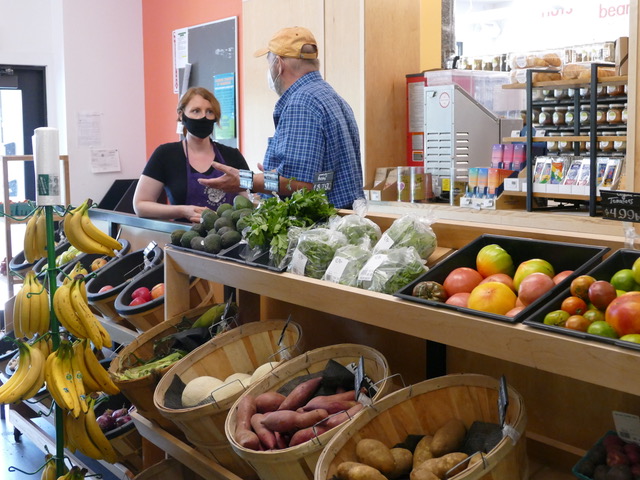
The co-op, where a quarter of sales are from locally produced products, was founded in 1974 and it has not survived all these years by being inflexible. But even so, there have been many challenges, as well as opportunities, presented by the current state of affairs.
Co-op cofounder Carol Czaja said the current crisis has probably affected more people across the board than anything in the past.
With many businesses and institutions closed, and even friends and extended family off limits, the co-op offered more than food, it offered comfort and support to its clients. They might have lost a job, or had people in their lives fall sick or die, or suffered from plain loneliness. For them, the co-op was well stocked not just with food, but with sympathetic ears. Some people were just very lonely and needed somebody to talk to,” Czaja said. “In the past we would have given them a hug.”
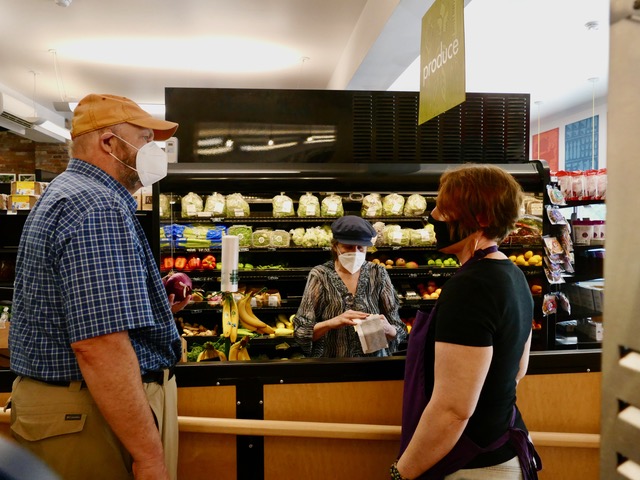
Conversations between clerks and customers in the co-op last well beyond a brief query about club cards that one gets in the big grocery stores — banter can sprawl from aisle to aisle as one stocks and the other shops, covering everything from the best remedy for sleeplessness to the current situation in Portland, Ore.
The co-op was an essential business that did not have to close during the economic shutdown this spring, giving it a keen insight into consumer mindsets and habits. Deli sales plunged 50%, as fewer people were out eating lunch.
With no office to dress up for, sales of beauty products fell, as did gift items. “People weren’t buying anything optional,” Demers said.
But what they were buying, they were buying more of. The average sale at the register went from $23 to $48, and by May, grocery sales were up 6%. “For grocery, that’s a lot,” Demers said. “Sales were up by more than at any time in the five years I’ve been here.” One customer came in, bought $800 worth of product and announced that the staff wouldn’t be seeing him around again for a while.
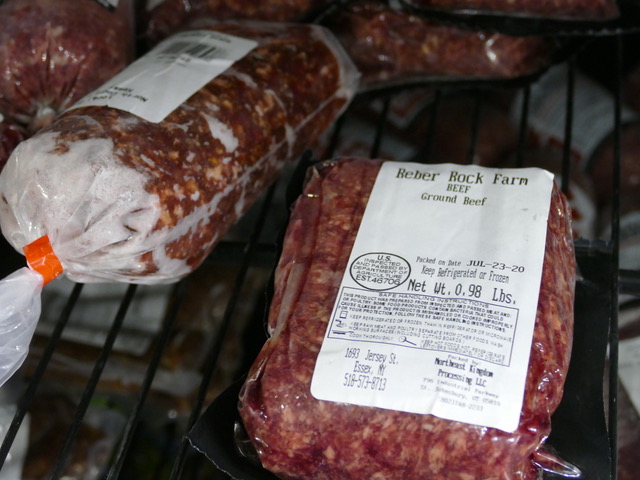
“It wasn’t necessarily that they were scared, but they were worried about the supply chain,” Demers said. The co-op saw a lot of new faces of people who were on a hunter-gatherer-like quest for toilet paper, ground beef or other staples that the big stores had run out of. By being small, flexible and to a significant degree locally sourced, the co-op had a better shot at staying stocked while the big stores were failing.
Still, with its wide range of remedies and can’t-be-found-anywhere-else extracts, tinctures and teas, Czaja said the co-op had its own shortages to deal with, from elderberry to Vitamin C.
Anxiety and sleeplessness have been common, and the co-op is uniquely stocked with treatments such as CBD oils, eucalyptus, lavender and holy basil. And vegetables. Czaja said often the best “treatment” is a little more in the way of complex carbohydrates and a little (or lot) less in sugars and simple carbs.
As the pandemic progressed, so did public acceptance, and they began to experiment with new products and cooking techniques. “As things stabilized and they got used to being home they thought, ‘What can I bake?’” Demers said. “Yeast that had been on the shelf for four months vanished overnight.”
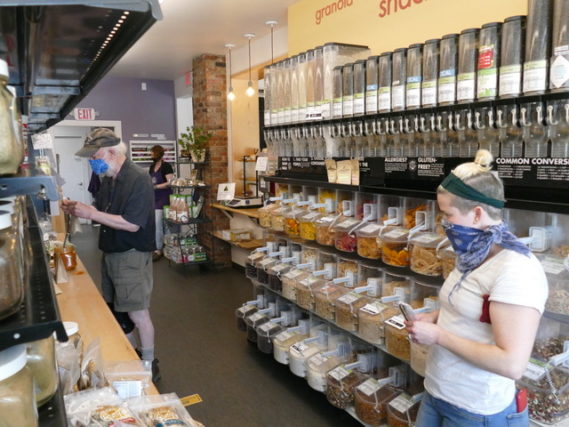
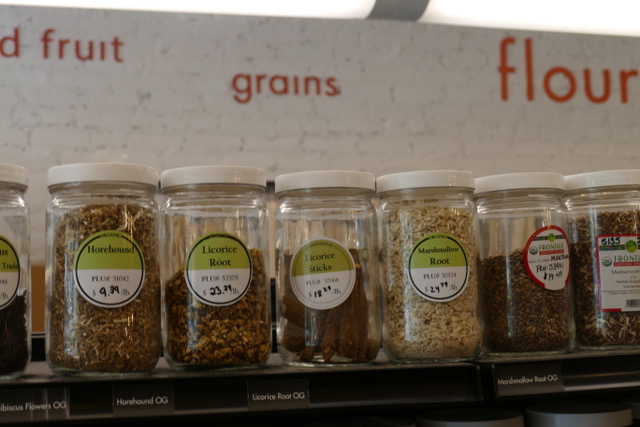
Shoppers are getting creative in their new cooking ventures exploring the wide range of unique flavors that the Co-Op offers.
Store behavior has gone through phases as well, as customers became more targeted in their shopping, and began to take advantage of online ordering. Demers said the co-op is advancing from a rudimentary ordering system into a more sophisticated shopping app, something he anticipates will remain once the virus is gone.
But as the virus lingers, North Country Co-op will continue to offer wholesome foods, soothing remedies and of course, when needed, a shoulder and open ear. In return, “People want to support local business,” Czaja said. “And they look at the co-op as a source they can trust.”
About the author: Tim Rowland is a freelance writer raising belted Galloway beef cattle in Jay, New York.
You can find North Country’s Food Co-Op online ordering system on their Adirondack Harvest profile. You can also use SNAP/EBT/P-EBT dollars at the Co-Op to access local food.
By Tim Rowland


