• Skip to main content
  • Skip to footer

Adirondack Harvest

Farm Fresh Foods and Local Producers

  • Browse
  • Farmers’ Markets
  • Wholesale
    • Buy Wholesale
    • Local Food Wholesale Database
    • Sell Wholesale
    • Join the Wholesale Database
  • Learn More
    • Explore the Adirondack Cuisine Trails
      • About the Adirondack Cuisine Trails
    • Benefits of Buying Local Food
    • What’s in Season When
    • Farming in the Adirondacks
    • Meet the Makers
    • Decoding Food Labels
    • Food Assistance Benefits & Local Food
    • Food Assistance Benefit FAQ
    • Blog
  • Events
    • About the Adirondack Harvest Festival
    • 2025 Adirondack Harvest Festival
    • Event Calendar
  • Email Sign-Up

Harvest Blog

Agriculture in the Classroom Grows Roots in Essex County

12/01/2025

Sometimes all it takes to start a revolution is a cherry tomato. 

By Tim Rowland | Contributing Writer

As agricultural educators with Cornell Cooperative Extension of Essex County (CCE Essex) visit classrooms throughout the county, they’re aware that what may seem commonplace to an adult has the potential to wow a second grader — and get them to think about nutrition, our food supply and the value of local farmers.

So Ellie Hoffman, Local Food Educator, and Kate Graziano, Public Health Corps Fellow, are using a Cornell Cooperative Extension Harvest NY grant to spend time with classrooms in AuSable Valley, Boquet Valley and Ticonderoga. Through this “Rooted in Learning” grant, they are engaging elementary students in food-related discussions, tastings, farm visits and fun activities throughout the 2025-2026 school year.

“One of the main ideas behind this program is that there’s a disconnect between the food on your plate and where the food actually comes from,” Hoffman said. “So we’re trying to address that in different sorts of ways.” 

Children are sitting on the floor, trying apple slices.
Apple taste testing with Ag in the Classroom.

The program patches in to national and state initiatives that feature a “harvest of the month,” an opportunity for kids to taste something that might be new to them. “And since CCE is so focused on local foods, we really try to bring those into Essex County schools specifically,” Hoffman said.

For example, taste tests featuring different varieties of apples relied on fruit from Northern Orchards in Peru. That opens up the possibility of a future field trip to the orchard so kids can actually see where those apples came from.

Each kid has a different level of knowledge about farms, food, and nutrition. There are a lot of foods many haven’t tried, like tomatoes. Other foods, like apples, they might know more about, so the program introduces kids to new varieties of apples and ways of thinking about their place in the food system. Some activities, such as churning butter, engage kids in preparing their own taste test. 

“The butter lesson was a lot of fun, because a lot of the kids knew a little bit about the process of making butter, but they were so excited to see it happen in real time,” Graziano said. “I can tell that the kids are really excited to learn and cook with local food as much as they can. I have found it really interesting to see the different knowledge levels that the kids have going into the program, and I am looking forward to building on what they have learned in the past through similar experiences at home and at school.” 

The lessons are 45 minutes once a month, but are designed so that teachers can use the lesson concepts to teach other subjects through the lens of agriculture. This can mean activities such as measuring the circumference of a pumpkin while studying geometry, writing about different parts of an apple during spelling and vocabulary lessons, and discussing local fruits and vegetables when learning about the life cycle of a plant.

Students are writing on a piece of paper, they are seated at their desks.

And while one class a month might not seem like much, it’s surprising how much of an impression even just one lesson can make. Part of that is because it’s so different from other things kids are learning in school. And that imprinting allows educators to build on the lessons in ensuing years. Making butter one year can lead to a discussion of how dairies work the next.

Hoffman says progress is measured by evaluations before and after the instructional year, but also by judging the students’ level of engagement. “When I’m teaching, I really try to tune in to how much the kids are paying attention and participating in the activities,” she said. “If I say something and they ask questions about it, that tells me I’m on the right track.”

Of course, kids being kids, they aren’t always thrilled about trying something new, especially a vegetable. No one forces them to try it, but they are encouraged to use other senses, like touching and smelling, to engage. If they smell it and it’s not too bad, they may end up taking a nibble. Then if they see that same food in the cafeteria they’re less likely to reject it out of hand.

And what’s really magical is when the kids can grow the food themselves. When they plant microgreens in the classroom, for instance, they learn about a new food, but also about what goes into its production. They’re delighted to see the seeds they plant unveil their stems and leaves – miniature produce that becomes a snack time harvest. 

Children gather around desks to look at a paper that outlines different apple varieties.

“I’ve seen the same reaction in an apple orchard,” Hoffman said. “You know that’s where apples come from, but I really think there is a sense of wonder from actually seeing it on the tree and picking it.”

Food, then, becomes not just something to eat, but something to experience and learn from. That makes it valuable, not just from a nutritional standpoint, but from being a part of the economy, a part of society and a part of the neighborhood.

“There’s a connection to the community, to the farmers, to the land, to the place, along with nature and the environment,” Hoffman said. “These connections all come together, and they’re not just theoretical. They’re something you can go out and see, and that’s really cool.”

You might say, revolutionary.


For more information on POP Club, and the Farm to School program, please contact Ellie Hoffman at emh257@cornell.edu or 518-962-4810 ext. 405.

Photographs provided by Ellie Hoffman.

Successful summer programming with the Power of Produce Club

11/18/2025

POP Club gives kids a chance to engage with local producers and growers within Essex County.

By Ellie Hoffman | Local Food Educator

Kids gather around the POP Club booth's table to assemble apple owls.
Kids gather around the POP Club table.

The Power of Produce Club, Cornell Cooperative Extension of Essex County’s flagship youth program, offers a hands-on opportunity for free activities and a chance to engage with local produce. The program has wrapped up another successful year, expanding its number of locations, participants, and types of featured produce. In total, educators logged 600+ interactions with youth, a 20% increase from the 2024 season. 

Essex County is home to nine summer farmers’ markets, and POP Club was proud to make an appearance at all of them. Elizabethtown, Lake Placid, and Saranac Lake Farmers’ Markets all welcomed POP Club back for another consecutive year, while markets that hosted POP Club for the first time included Schroon Lake, Willsboro, Crown Point, Ticonderoga, Keene Valley, and Port Henry. At all markets, POP Club’s mission was to spread excitement for farm fresh produce and expand kids’ knowledge of and access to locally grown foods.

Each week, the POP Club table featured ways to learn about farms and food through hands-on activities, scavenger hunts, and veggie-themed jokes and trivia. After completing an activity, the participating kids received $5 to purchase any local produce item of their choice from a vendor at the market that day. 

“My five year old son was thrilled to receive a $5 bill after he completed the activity. It was a nice surprise! He enjoyed buying peaches from a local farm,” said one Schroon Lake Farmers’ Market attendee.

An owl made from apple pieces and chocolate.
Apple owl model for POP Club.

Thanks to produce donated from local growers such as Northern Orchard and Harvest Hill Farm, POP Club was also able to pilot new activities such as sculpting apple critters and carving zucchini boats. The latter proved attractive not just to kids, but to market shoppers of all ages, as kids, parents, and grandparents stopped to try their hands at creating a seaworthy squash. Many adults also came over to hear from CCE Essex’s Master Gardener Volunteers, who teamed up with POP Club on several occasions to give up-to-date and on-the-spot horticulture advice to budding gardeners.

Photo shows kids assembling POP Club owls
A child named Nolan is posing next to his zucchini boat afloat in the tub of water.
Nolan’s zucchini boat is staying afloat!

Tourists and locals alike remarked on the influence that POP Club had on their experience at the market, with one grandparent noting that “[the kids] were so proud of their Farmers Market purchases…the activities at the market were among their favorite things from [our time in Lake Placid].” POP Club’s role in establishing connections between families and farmers was also mentioned.

“[POP Club] always gives my kids a fun activity that gets them to directly interact with merchants at the farmers market,” said one attendee. Another agreed, saying that “[POP Club scavenger hunts] made them go over to vendors they might not have otherwise.” And with the $5 they received from POP Club activities, kids were empowered to participate in the local food network by buying directly from the market vendors.

“We love seeing kids use their POP money to buy blueberries from us. Often, they walk over with their $5 bills in their hands and make the purchase mostly on their own. POP is not only promoting healthy foods, but also life skills for our young people: the future generation of consumers,” said Laura Cook from The Cook Farm

Connecting families to food and farmers is ultimately what POP Club is all about, and we’re proud to work with so many dedicated growers, producers, and community members to make that happen. We’ll be back in 2026 with fresh ideas and ingredients; stay tuned for a schedule in the spring!

For more information on POP Club, and the Farm to School program, please contact Ellie Hoffman at emh257@cornell.edu or 518-962-4810 ext. 405.

Photographs taken by Ellie Hoffman.

Farmstands, Local Food Retailers, Farmers’ Markets and Grocery Co-Ops Open During the Winter

Farewell to summer: Thank you for supporting Adirondack farmers’ markets

10/08/2025

By Isabella Susino | Adirondack Harvest Program Lead

Taken by Isabella Susino.

As autumn colors are painted across the Adirondack Park, we say goodbye to another amazing season of the summer farmers’ markets. Each week, our markets have been more than a place to buy food – they’ve been community hubs where neighbors connect, farmers share their stories on the growing season, and visitors discover the freshest local foods.

This summer, dozens of local farms and small businesses filled market tables with seasonal produce, farm-fresh meats, artisan cheeses, maple products, baked goods, and other local products. So many hamlets and townships gather together for outdoor market season: Lake Placid, Old Forge, Bloomingdale, Saranac Lake, Ticonderoga, Plattsburgh, Glens Falls, Schroon Lake, and more. We’re sure the farmers markets near you were alive with energy and local pride for their farmers, and we are so thankful for your support.

Now, as the summer market season ends, we want to let you know that some markets transfer inside for the wintertime. Every purchase you made supported farms in Upstate New York, helping preserve the region’s agricultural traditions and strengthen our local food system. Let’s keep the ball rolling and ensure we’re giving back to our local producers through holiday season and into the colder months.

Find winter markets and producers near you

The local food system in the winter continues through farm stands, winter markets, and CSA programs. Be sure to find year-round opportunities to shop local and to stay connected to the Adirondack food community.

Thank you for making this season special by supporting your local farms, celebrating the locally produced foods, and keeping the Adirondack Harvest mission in mind while shopping. We can’t wait to see you at the markets next summer!

Find winter markets near you

Thank you for a successful 2025 Adirondack Harvest Festival

09/30/2025

By Isabella Susino | Adirondack Harvest Program Lead

The 2025 Adirondack Harvest Festival was a great success, bringing together farms, food producers, and community members from across the region. We are grateful to everyone who joined us to celebrate local agriculture and connect with the people who grow and make our food.
We saw over 3,000 visitors this year, getting back to beating the previous festival attendance records. The event was made incredible by the 80 vendors, local businesses and organizations, the 56 volunteers we had on-site, and 10 CCE staff members. We want to recognize Laurie Davis – who took over as the Adirondack Harvest Festival planning team and coordinated the 2025 event! Also, a big thank you to the rest of the CCE Essex Team for their many days of hard work and support.

From first years to many more

This year’s event was a few of our staff’s first Adirondack Harvest Festival. New additions that were made included unique workshops like “From Milling Grain To Cooking It,” to “Growing Wild Rice in Essex County,” new vendors and food trucks, and a hands-on tomato seed harvesting demonstration.

A new mural was also added, where attendees could write down where they came from for the festival. We had people from all over the U.S. and visitors from our Northern neighbor’s largest province, Quebec. Some of the farthest reaches were from Kauai, Hawaii; Irvine and Los Angeles, California; Seattle, Washington; Yarmouth, Maine; New Haven, Vermont; Hartford, Connecticut; Boston, Massachusetts; and even Cuba! 

Most of the hand-written hellos were from our beloved Adirondack Park, where people from rural and small towns came together in celebration of Adirondack agriculture: Schroon Lake, Lake Luzerne, Lake Placid, Saranac Lake, Johnsburg, Brown Tract Pond, Paul Smith’s, Elizabethtown, North Hudson, Ticonderoga, Minerva, and of course, Westport. Even some folks from around New York State were able to enjoy the festival: Troy, Albany, Ballston Spa, Glens Falls, Berlin, Schenectady, Lewiston, Rochester, NYC, Long Island (on bicycle!), and Buffalo.

Feedback and photo submissions

Did you have a great time at the Adirondack Harvest Festival? Do you have funny stories to share? Fill out our 2025 feedback survey! If you found our 2025 photo challenge, or you just took a lot of pictures, we’d love to see them!

Give your feedback here
Submit your photos

Cornell Cooperative Extension of Essex County would like to extend a huge THANK YOU to all of the farmers, producers, volunteers, and community organizations who made this event possible. Your contributions created an event that highlighted the diversity and strength of our local food system.
To our sponsors: we appreciate your support in making the 2025 festival happen.

Much appreciation to Essex County DPW, Buildings & Grounds, and especially fairgrounds manager Glenn Williams for his excellent troubleshooting capabilities.

Special thanks to Jacob and his bucket truck from Chazy Westport Communications.

We look forward to building on this year’s success and hope you’ll join us again in 2026. In the meantime, please continue to support local farms, markets, and producers across the Adirondacks.

Hunger Action Month
Food Vendors
Food Vendors
Food Vendors
Food Vendors
Market Vendors
Market Vendors
Market Vendors

Farmland Access and Affordable Housing – Feeding Two Birds With One Scone

06/04/2025

by Tim Rowland |

Dan and Kimmy Rivera started out to solve a problem. If all goes according to plan, they may wind up solving several. In middle age and feeling the effects of a decade of farm labor, the owners of Triple Green Jade farm in Willsboro began shopping around for a succession plan that would protect their 80 acres and their successful baking business while using its value to support their retirement somewhere down the road.

Typically an easement would be the answer, but the Riveras wanted something a bit less restrictive. Something that would allow more people to live on and work the land, and be flexible enough to factor in future unknowns, notably climate change.

Following leads provided by Cornell Cooperative Extension’s in-depth succession planning resources and other New England agencies, Dan Rivera said he finally was connected with the Food & Farm Business Law Clinic at Pace University, which offers legal services and advocacy projects in support of the transition to a just and sustainable food system. 

Farmer Dan in farm field feeding his cows carrots. Construction in background
Dan Rivera of Triple Green Jade Farm. Photo Credit: Katie Kearney

When Dan contacted the center, which was founded in 2017, they told him that other farmers were starting to ask the same sorts of questions. “They said they were getting a lot of requests from people who own land and are trying to figure out a way to share it more equitably,” he said.

Meanwhile, the Riveras had come across a solution that seemed to make the most sense: cooperatives. 

Cooperatives in the North Country are not entirely new, and there have been successes and failures. A planned affordable housing co-op in Lake Placid failed to launch, but Ward Lumber in Jay successfully transitioned to a worker-owned model.The first job was to find out if the multiple-housing model would work from a legal standpoint, particularly in the Adirondacks, which has strict limits on housing density.

Triple Green Jade Farm sign
Photo Credit: Katie Kearney

Pace University assigned Triple Green Jade a student who looked at farm cooperatives through a legal lens and indicated the plan was workable. This is because of a preexisting exemption to APA zoning for clustered farm housing inside the park. Thus, the Triple Green Jade farm cooperative project was born.

As envisioned, it exists at the intersection of three struggling Adirondack sectors: agriculture, labor and housing. About six families or individuals would each buy a share of the farm and baking business for $70,000. That would entitle them to build a home and work on the farm, and share in the company profits. It would be designed as an intentional community, with participants sharing common values of food equity, communal work and resource conservation.

Homes might be similar to a small community in Keene developed by the housing advocacy group Adirondack Roots, which have been made more affordable through shared land and utilities. And cooperative shareholders might also help build each others’ homes.

The business, over time, would help them recoup their costs.

“People would join this cooperative, and they would all own everything — not only the barns and the land, they would also own the business,” Dan said. “So the wood-fired bread oven would also be theirs. My stone mill would be theirs. They would have a whole commercial kitchen on a farm to make use of.”

Rivera said he expects the farm production would grow beyond what two people are currently able to produce. Owners might grow vegetables, raise more animals and make value-added products like cheese and charcuterie . More local food would be available to local supper tables.

“There are definitely ways we can grow it, and the (commercial) kitchen helps center all that, and becomes like a nice hub of activity for all those value added things,” Rivera said. “The idea is to kind of grow a community around that, and have people live here, hopefully affordably. The idea behind the affordable aspect is that we would try to help build together in kind of an eco village setting.”

Ryan Demers, cooperative business developer for the Cooperative Development Institute, said that while business co-ops are more established, farm co-ops have been shown to work elsewhere in New England. The cooperative structure offers support and stability, both for the occupants and for the farm. “People support what they help create,” Demers said. Cooperatives are also a stepping stone for people who might otherwise face headwinds when trying to start a business based on income, race or gender. 

According to the U.S. Department of Agriculture, there are at least 30,000 co-ops in the country, pumping an annual $700 billion into the economy. While co-ops sometimes have the reputation for “sandals and candles,” Demers said it in fact takes hard work, social flexibility, and business acumen to make it all work.

Investors in Triple Green Jade would not necessarily have to farm. For example, someone with accounting skills would have something of value to contribute to the overall enterprise.

Those new to farming would have another advantage that others might not: Since the Riveras will continue to own a share, they can tap into Dan and Kimmy’s expertise in sales, marketing, production, and negotiating government programs.

“One of the challenges for intentional communities is that when a bunch of like-minded folks get together and find land, that’s the utopia moment; but after that, OK, what do we do to pay the bills?,” Rivera said. “So with the value that we offer, you can join a successful business right now. I’m not saying you’re gonna get rich here, but you can pay the bills and be gainfully employed by the fruits of your labor.”

A shared agricultural co-op would have another significant benefit that most farmers do not enjoy: time off. With other people to care for animals or mind the store, families would be able to take vacations and find it easier to schedule appointments. And tasks such as child care, which can be expensive if it can be found at all, is much easier in a cooperative setting.

Some communities have taken the sharing to another level, owning two or three cars that could be signed out as needed — and saving individuals a considerable transportation expense.

homemade crackers in a bowl
Kimmy’s Krakkers. Photo Credit: Katie Kearney

With such interdependence, participants are carefully vetted to help ensure they will thrive in an intentional community. “Communication is the key,” Rivera said.

There are other challenges, such as lining up nontraditional housing financing and finding places for shareholders to live while their homes are being built. But early interest has been promising, Rivera said. So promising, in fact, that for the Riveras themselves retirement might not mean leaving the farm.

“After we’re gone, the cooperative hopefully has a life of its own, and it’s really going to be up to them to decide what it can be,” Rivera said. “We had been talking about this as a farm succession plan, like we’re going to leave and retire. But the more folks I talk to about this, I start to think like, maybe we would stay — maybe we can age in place and be that retired couple that helps out with little tasks here and there.”

Egg Price Volatility Makes a Strong Case for Local Food

06/04/2025

by Tim Rowland |


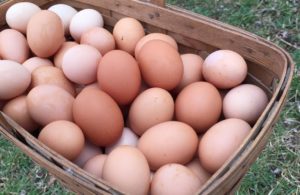
multi-colored eggs in a basket on a shelf with plants by a window
Photo credit: Hudson River Hen House


Farm supply stores are normally noisy places in the early spring, filled with the chirps and cheeps of layer chicks bound for backyard coops. But often today the galvanized tubs where the peeps reside were empty, as the steep price of eggs put a premium on the little birds.

“We were going through hundreds (of chicks),” said a spokesperson for Runnings in Plattsburgh. “Every retailer in the area was noticing the same thing.” And local egg producers were noticing something too: For the first time in the collective memory, a local farm product retailed for less than the commercial counterpart, not only leveling the agricultural playing field, but also providing a blueprint as to how a locally sustainable food chain might work.

Unlike cattle or hogs, a small laying flock is attainable for many people in the rural North Country. And attain they did, as stores sold out or pushed spring delivery times back into the summer. These chicks will not begin to lay until late fall at the earliest, but when they do they will almost certainly produce more than one family can use.

That’s good news for North Country egg-eaters and for retailers such as North Country Co-op in Plattsburgh which buys eggs from local producers. “I had someone call the store and see if they could drop off 24 dozen eggs. And then I’ve had a couple other people bring in, like 10,” said grocery manager Aleah Tanriverdi-Klein. “The only large egg seller place that we’ve ever really gotten anything  from is Harmony Hill Farms. The rest is a network of hobby farmers with chickens, who have very, very small farms.” 

Inside of a henhouse with laying hens and a white bucket of freshly collected eggs
Harmony Hills Farm laying hens and eggs. Photo credit: Katie Kearney

These backyard flocks producing surplus eggs — even a coop with just 10-20 hens in top production months will leave the owner with dozens of more eggs a week than they can use — are an antidote to an industry where the five largest producers provide nearly 40% of the nation’s eggs, according to Egg Industry magazine. 

This monoculture was rocked in 2022 when avian flu began to infect commercial flocks, eventually leading to the culling of more than 145 million laying hens. These hens were not immediately replaceable, as new chicks had to be hatched and raised to a laying age of about six months. (Meat birds were not similarly affected because they suffered fewer infections, and reach market age in just six weeks.)

So the price of large Grade A eggs, which according to the Federal Reserve were $2 a dozen in September 2023 spiked to well over $6 a dozen this past March, with some localized prices as high as $10 or more. Suddenly, local farm-fresh eggs were underselling the 60 commercial producers that supply almost 90% of the nation’s eggs — an unheard of phenomenon in the world of small-scale sustainable agriculture.

Given the chance to raise prices by a dollar or two from their typical $5 to $6.50 a dozen, most small producers and retailers in the North Country did not. Rob Hastings, owner of Rivermede farm and farm store in Keene Valley, said he is adding another 30 layers to his flock of 80 this year, but the price hasn’t budged.

“We don’t really care about the national price,” he said.

For local producers, the price is generally driven by the cost of feed, and if that cost doesn’t go up neither does the price of the eggs. Consumers noticed, and appreciated, that unlike mega-corporations, when the opportunity for price gouging presented itself, local producers refrained.

And they noticed something else, too. “They saw the color of that yolk,” said Hastings, referring to the plump orange of a hen raised on pasture or produce trimmings, in comparison with the runny, pale yellow of a commercial egg.

Hastings said his business tripled due to Covid and to a smaller degree, consumers responded to locally produced eggs, which were both cheaper and better.

Aleah Tanriverdi-Klein said the co-op had a similar experience. It posted its egg prices on social media, which drove customers to the store, motivated by the price but also their perception that big producers were taking advantage of the shortage to price-gouge.

Consumers might not realize it, but when they buy commercial eggs they are paying twice — once for the eggs, and again through taxpayer subsidies compensating agribusiness for infected hens and eggs. According to Sentient media, big producers have received $1.46 billion in government payouts compensating them for culled poultry and prevention measures. 

Stock of Cal-Maine Foods, Inc., the nation’s largest egg producer, reached an all-time high this year as the price it received rose by nearly 60%, according to Investing.com.

Cal-Maine’s second-quarter profits for fiscal 2025 soared 82% over the previous year, even as it received $44 million in taxpayer bailouts. Critics say compensation for poultry that has to be destroyed is intended to encourage companies to report infected flocks, but has in actuality given them little incentive to do anything about it.

“The way we do these things is unfortunate,” said Sue McGarry, who with her husband Tim produces eggs and honey at the Boquet Valley Farm & Apiary. “Our (national) agricultural model doesn’t make a lot of sense.” The McGarry’s have 53 “happy hens,” she said, that eat organic food and can grow old in peace without risk of getting culled when their production flags. McGarry said she knows she could get more than the $5 to $5.50 she charges per dozen, selling at roadside and through a pipeline to some families in New York City.


front9farm fresh eggs 1

But she and her husband are retired, so, like many other small producers, the price reflects little more than compensating for feed costs. The recent egg shortage, she said, gave consumers a taste of what it really costs to produce food. The big producers “have always been subsidized, and the price of food has been artificially low,” she said.

As farms in the region add hens and more people invest in a backyard flock, more eggs will enter the local food supply, sold at roadside stands, given to friends and family or dropped off at local food banks. 

“These small farms are really important,” McGarry said. These producers, like herself, want a wholesome food from birds that are treated with respect.

As the big producers’ flocks return to normal, the price, already off its highs, is likely to come down more. But after trying a dozen farm-fresh eggs, producers hope local consumers will never go back.

The Quest for Food Justice in the Adirondacks

04/07/2025

by Tim Rowland |

On their way to the dollar store to buy cheap, easily consumed and ultra processed foods such as instant noodles, hot dogs, sweet rolls, and mac and cheese, financially challenged North Country people might just pass gardens, farm fields and orchards teeming with vegetables, fruits and berries, along with sun-splashed fields grazed by sheep, cattle and goats. Hoop houses shelter pastured chickens pecking at leaves and bugs outside, while inside, producers are making cheese and yogurt, baking bread and growing mushrooms.

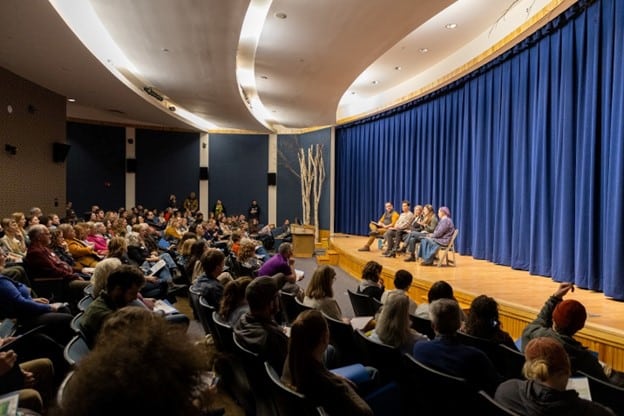
Yet, among this bounty, people are going hungry, said Cameron Burke, Cornell Cooperative Extension in Herkimer County. The New York State food insecurity rate is currently hovering around 11.5% with rates of 15% or higher in much of the North Country. “Food insecurity is roughly defined as the inability to regularly access food that is able to support your health,” said Burke at the 2025 Food Justice Summit in Tupper Lake. Matching healthy local food with at-risk communities is the goal of multiple North Country agencies, and it’s being done in ways that might be expected and ways that might not.

Governments and nonprofits are administering financial aid programming while also packing food boxes and teaching people — some who have never used a paring knife — how to cook. 

The Keeseville Public Library has plans to lend out canners for putting up vegetables and meat grinders for processing deer. In Herkimer, Burke said CCE delivers produce to underserved neighborhoods where busy moms might not have the time to shop at farm stores and markets. “The Veggie Van is a way for us to drive into food deserts and create dynamic points of access within tiny communities,” she said.

Photo credit: Cornell Cooperative Extension Herkimer County

The nonprofit Keeseville-based ADK Action is among the organizations working to match fresh and healthy farm products with people in need, while also advocating for local producers.

Kim Trombly, project manager for ADK Action, said it’s not just those living below the poverty line who risk being shut out of the local food scene, where prices are higher and food takes more time to prepare.

Food injustice also affects what are known as ALICE, or “Asset Limited, Income Constrained, Employed” households — calculated by United Way as making up 30% to 40% of the North Country population. These are people who work and are technically not impoverished, but have no assets, little savings and live paycheck to paycheck. “In that ALICE threshold where you’re making too much money to access public funding for food security, I think that’s where a lot of our community members are falling through the cracks,” Trombly said. 

To help, ADK Action has a Fair Share program offering free Community Supported Agriculture baskets to lower income people, and a Fair Food program, which provides targeted debit-style cards to low income individuals that can be used at local farm stands, local farm stores and  farmers’ markets.

Photo credit: Jack Moulton and the Adirondack Food System Network

Those programs will put healthy food on the table for about 2,000 people this year, while benefiting local producers at the same time. “Not only are they meeting basic needs, but they also are infusing about $200,000 back into our local food system through direct payments to our local farms and the CSA shares and other local food retail outlets,” Trombly said.

The CSA shares are particularly valuable to local farmers from a cash-flow standpoint, because they’re paid up-front in the spring, when farms are ramping up with extra farmhands, but funds from the previous year’s sales are running low.

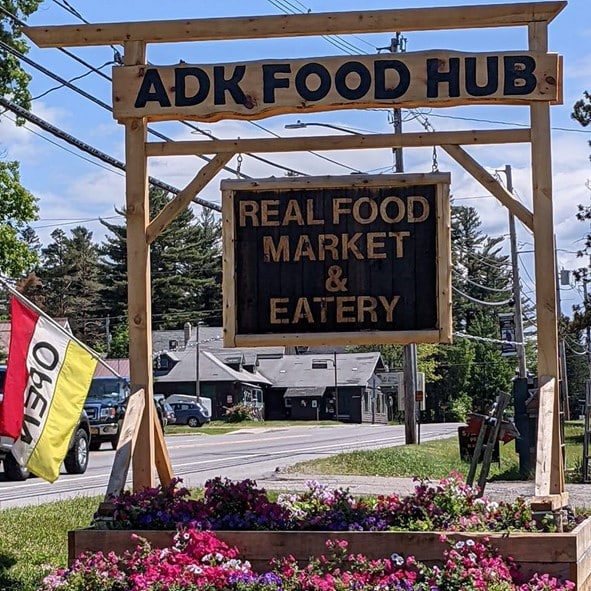
Cherie Whitten, owner of Whitten Family Farm in St. Lawrence County and the ADK Food Hub in Tupper Lake, also helps farmers and consumers by making affordable, grab-and-go meals from surplus crops — this year it was butternut squash — that might otherwise go to waste. “I’m very focused on health, so I like to provide healthy, local food that is affordable,” Whitten said. “And I have found that convenience is very important to customers.”

Photo credit: Adirondack Food Hub

Whitten said the co-op is “barely profitable,” but for her, the value is in the mission. “In the summer, you can come in and have food as fast as you can at McDonald’s, and not for a lot different price,” she said. “We’re like a farm-to-table restaurant, but we don’t provide service, and it doesn’t cost $100 to eat there. You can get a decent meal for $12 that’s organic, local, and fresh. I want to make this model work, and I want people to have affordable food that’s good for them.”

Local governments too have a role in putting good food on the table of lower-income families, said Jessica Darney Buehler, director of health planning and promotion for the Essex County Health Department. “The Well Fed Essex County Collaborative serves as the networking space for food system agencies in Essex County to identify gaps and work through mutually reinforcing initiatives to increase access to healthy, nutritious foods in Essex County,” she said.

Because of its work in underserved communities, the health department directly knows what’s needed and can quickly react to emerging problems as they arise, distributing nutritious food during natural disasters or after house fires. 

The health department works with 600 eligible WIC (Special Supplemental Nutrition Program for Women, Infants, and Children) participants in Essex County. Along with providing supplemental nutrition, county employees have unique insight to the barriers that prevent families from eating healthy foods, Buehler said.  Those barriers include “a lack of transportation, knowing what to do with raw foods, and even having the tools needed to prepare foods,” she said. 

Along with the Essex Food Hub, the health department wrote a Mother Cabrini Health Foundation grant that pays for food boxes, food-preparation demonstrations at local food banks and allows WIC families to choose an appliance to support their home-cooking needs such as a microwave, instant pot or air fryer, along with mixing bowls, measuring cups/spoons, knives and cutting boards. 

As federal cuts begin to impact food delivery networks and programs, food advocates believe it is worth asking whether the North can ultimately sustain itself and its at-risk people without outside help. “We are so fortunate in the Champlain Valley, where we have a rich agricultural history, and also a very large diversification of farms,” Trombly said. “We have everything we need. I think one of the really strong benefits of our program is we are really investing directly into our local food system. The more we can sustainably invest into our local farms, the greater the food resiliency across our region would be. So can we feed ourselves? We should sure try.”

Agritourism, Buzzword or Bust? 

01/02/2025

By Mary Godnick, Adirondack Harvest Program Leader |

Agritourism can be considered a dirty word to farmers who really just want to care for their animals, grow their crops, make their products, and make a living. Most farmers are farmers because they love farming- the day-to-day operations of growing and selling products, managing a business, and working with a team to bring food, fiber, and flowers to life to share with their community. 

In some instances, agritourism has been viewed as merely a marketing strategy by enterprises that don’t genuinely engage in agricultural practices. For example, there are many “farms” being built and purchased to be used as full-time wedding venues with a certain aestheticbut without any real farming activities. Some working farmers see this as diluting the value of genuine agricultural practices and creating a false narrative that farmers are simply entertainment providers rather than skilled caretakers of the land and animals.

The concept of “Agritourism” has been a part of the Adirondack Harvest program since its beginning in 2001, but we have reinvested in learning more about the opportunities it can offer our members in 2020 when we took on the administration of the Adirondack Cuisine Trails, joined an international effort to build an agritourism network connecting the Adirondacks to Quebec, Ontario and Vermont, and began making more meaningful partnerships with regional and statewide tourism organizations. 

Through interactions with farmers and various partners, it became clear that supporting growth in agritourism could support local working farms and bring the Adirondacks closer to a more equitable food system. However, we heard a healthy amount of skepticism about the idea that local farms should shift their focus toward visitor management, marketing, and concierge services.

The feedback we gathered clearly showed that if we were to invest more time, resources and effort into supporting growth in agritourism in the Adirondack region, the primary goal should be to sustain and support working farms in their core operations, farming, rather than diverting their efforts into the tourism sector. We found that the emphasis should remain on agricultural practices that ensure the production of locally grown and harvested food and products rather than on creating off-brand tourist experiences.

The USDA defines agritourism as: “a form of commercial enterprise that links agricultural production and/or processing with tourism to attract visitors onto a farm, ranch, or other agricultural business for the purposes of entertaining or educating the visitors while generating income for the farm, ranch, or business owner.”

While not legally considered agritourism, off-farm activities, like farm-to-table dining and farmers’ markets can also be considered agritourism. 

Local, small farms diversify their income in many ways to remain agile and resilient in the face of economic and environmental challenges. Givenshrinking year-round populations, seasonal tourism is a major sector in the Adirondacks. With roughly 7-10 million visitors each year, tourism offers local farms a larger customer base to sell to.

Some agritourism offerings can support local working farms by extending their season and providing cash flow during times of the year that are usually quite slow. For example, farms near popular ski destinations may choose to offer special experiences, farm tours, and dinners to take advantage of the out-of-town traffic.

Agritourism also increases awareness and appreciation of local agriculture. People seeing how things are grown, raised, and processed offers a deeper appreciation of local farms and their products, and of the Adirondacks themselves. People travel from all over the world to experience the natural landscape of the Adirondacks, and the food that grows from itssoil, waters, and climate.  The Adirondacks has its own terroir that is ripe for appreciation along with High Peak’s views. 

So, how do we collectively tap into this?

Because the tourism part of agri-tourism can be lucrative, there is a chance that businesses with a farm aesthetic can co-opt the concept and dilute opportunities for working farms to offer authentic agritourism experiences. Is a lake house rented on Airbnb with three horses in a meadow a farm stay? Does it matter what they call themselves?

Some farmers and small business owners LOVE agritourism. They love to host on-farm events, tours, and welcome visitors to the Adirondacks to get a taste of the landscape and their life. Agritourism can be a solid retirement plan, a resource to turn to during hard financial times, and a way for farms to market their products to a larger audience.

Our view is that we will continue to support our local farms in ways that help keep them farming. And, more people having exposure to small, sustainable, working farms supports the long-term goal of rebuilding a global food system that prioritizes local producers.

If having an Airbnb rental on their property supports farmers’ income, allowing them to afford to keep farming, that is a good thing. We want to keep farms in the Adirondack region farming and cultivating food, fiber, flowers and wood products for their communities.

Agritourism in the Adirondacks Looks Like:

Farm-Focused Markets and Festivals 

Farmers’ markets and events that emphasize locally grown products are primary retail outlets for many small farms and producers. Tourists and seasonal second-home owners are the primary customers for many small farms, and farmers’ markets help remote farms connect with these higher-income customers in a centralized location. Efforts to keep the farmers in farmers’ markets are becoming increasingly important in maintaining them as an important part of the local food system, as well as an authentic and high-quality experience for visitors to buy locally grown food and products.

Wholesale Sales

Some farms indirectly participate in agritourism by selling their products wholesale to businesses that directly serve tourists such as restaurants, co-ops, and resorts. By sourcing locally, businesses can attract conscious customers looking to enjoy local and seasonal cuisine. Large regular orders from repeat wholesale customers also help the farmers’ bottom line so they can invest in things like sustainable farming practices and improving conditions and wages for employees.

On-Farm Lodging, Farm Stores & Experiences

Research shows that most tourists want to travel “like a local”. They seek authentic experiences that give them a connection to the landscape and culture of the people who live here. Farms are uniquely positioned to offer such experiences to tourists through on-farm lodging, tours, and special events. These experiences also offer education about sustainable agriculture and eating local. 

3 Ways the Adirondack Harvest Program at CCE Essex is Currently Supporting Sustainable Agritourism:

  1. Boosting awareness of agriculture and sustainable agritourism across the Adirondack region, fostering stronger support for sustainable farming and forest practices.
  2. Working with collaborators to increase the visibility of agritourism and agricultural producers in existing tourism promotions. Working with the Regional Office of Sustainable Tourism, many local chambers of commerce, I Love NY, and other partners encourage friendly partnerships that enhance resource sharing and collaborative marketing efforts.
  3. Using events, communications and outreach we bolster agricultural literacy among youth and adults alike, nurturing an appreciation for the region’s natural resources.

If you’d like to stay connected to our work on this topic, check out the Adirondack Cuisine Trails, and sign up for the Adirondack Harvest Weekly email newsletter here. 

Funding for this project came from a 2024 Special Programs Grant from the Champlain Valley National Heritage Partnership

Farm to Festivity: Buy Local This Holiday Season

12/05/2024

Christmas shopping doesn’t have to be a dutiful trudge to the mall or a soulless lonely crawl through endless shopping websites promising that if you just spend another $10 you’ll be eligible for free shipping.

The North Country has dozens of local producers that can be found in all manner of unlikely places, from farm stores on country roads to hamlet storefronts to, yes, online sites where you can order by mail or in some cases arrange to meet producers who don’t have regular store hours for a personalized visit.

When shopping for locally produced products it also pays to remember the eternal truth: In more ways than one, food is a gift.

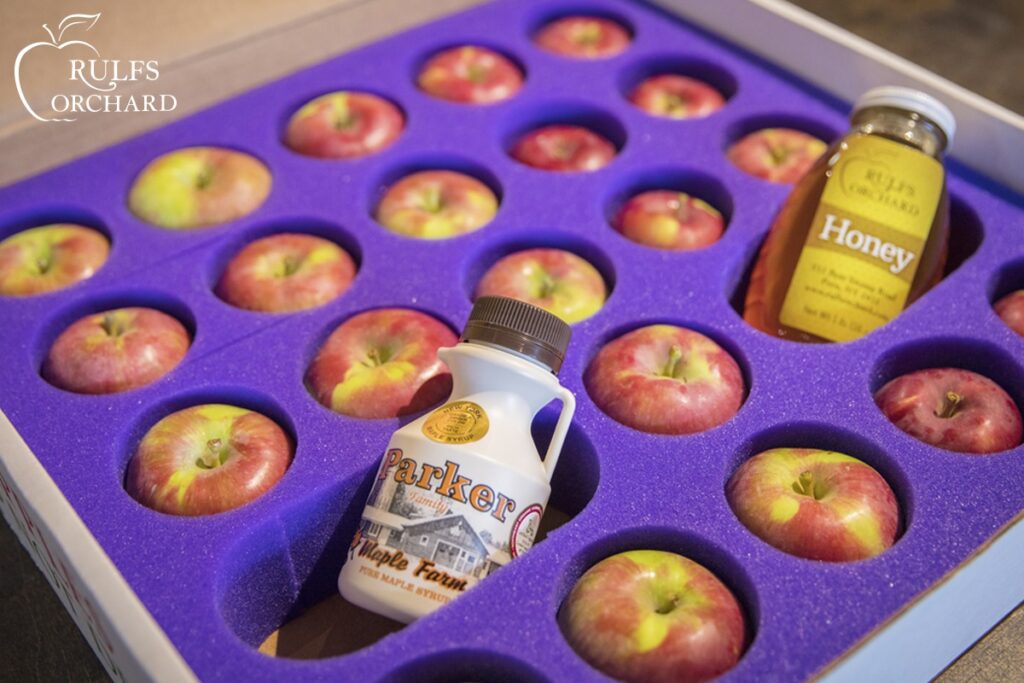
“Jams and jellies sell well for stocking stuffers, apple crumb pie is a favorite and our pumpkin pie is top-notch,” said David Conway, a jack of all trades at Rulfs Orchard in Peru. 

Orchards are typically thought of in the season of ripening apples and autumn leaves, and that is indeed their busiest time of year. But they also ramp up for the holidays, not just with gifts but with trees and wreaths, along with decorated Christmas cookies for holiday parties.

Conway said it’s a good venue for shoppers, but also a chance for producers to connect with old friends. “We have a lot of tourists, but we definitely have our regulars,” he said.

Rulfs sells gift boxes and baskets available for purchase in store and online.

Some communities have winter farmers markets and others have farm stores open even when the snow flies.

A challenge, said Cherie Whitten, owner of the Whitten Family Farm in Winthrop and the Adirondack Food Hub in Tupper Lake (open Thursday through Saturday in winter), is that people tend to stop thinking about locally produced foods when summer wanes, even though greenhouses and a warming climate have extended the season. 

In mid-November Whitten was still selling cauliflower and home-grown tomatoes, but the enthusiasm was nothing like the first days of July when people would walk over hot coals to get a fresh juicy heirloom tomato in lieu of the rock-hard supermarket version.

“As soon as the season gets cold, people stop thinking about local food,” she said.

Changing that mindset would be a boon not just to producers but the seven-county North Country economy, which the Whitten farm website says loses $1 billion in wealth a year because of food choices. And local food doesn’t end on Labor Day.

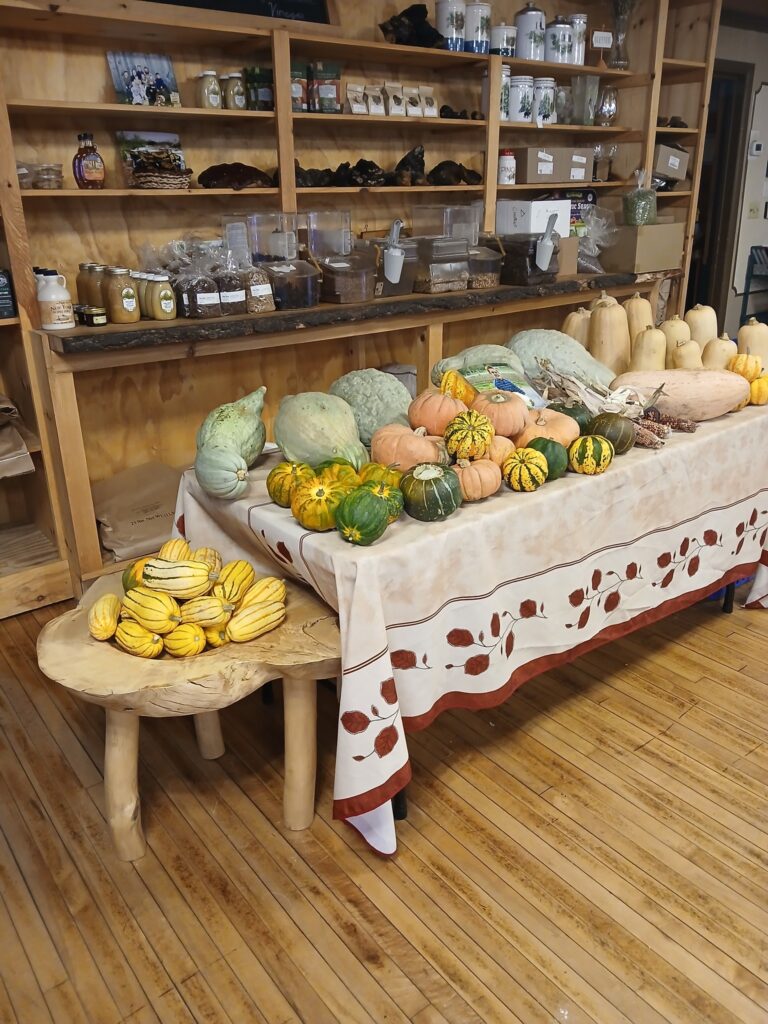
Products for sale at the Adk Food Hub

Whitten said a pork loin with winter vegetables like squash and carrots is an excellent holiday meal, and of course pumpkins are at the ready for pie duty. For under the tree, the Food Hob sells products from local makers, including mittens that are handmade with recycled materials, wooden bowls, painted vases, maple products, honey and tea.

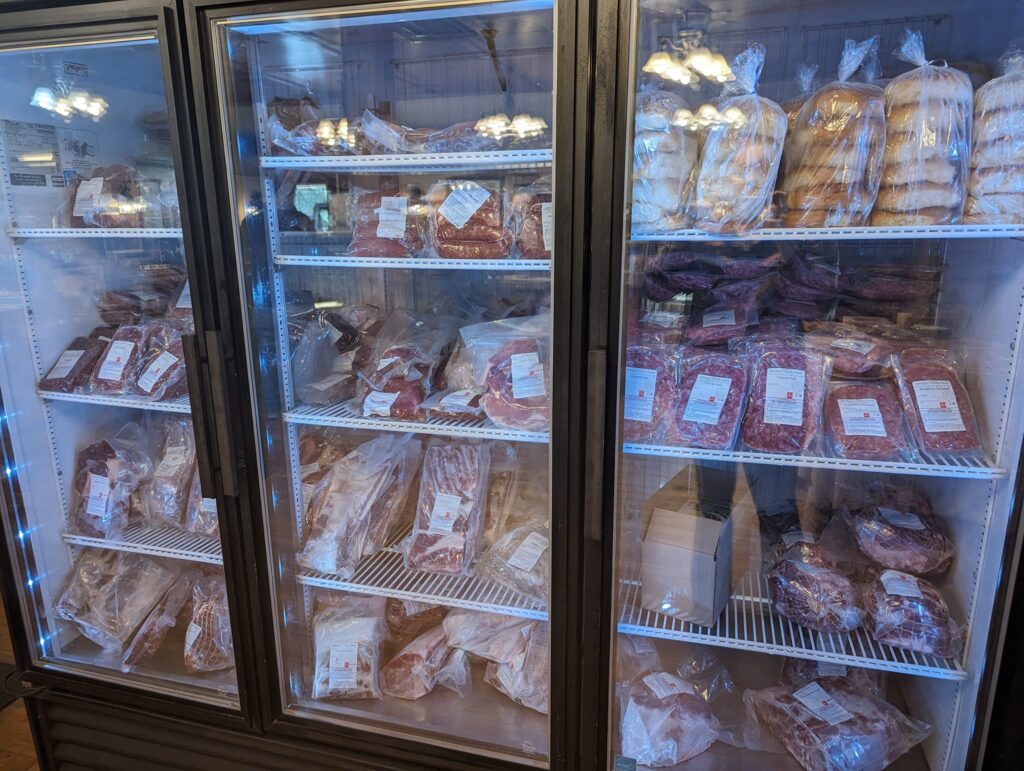
The holiday table can also feature local pork, beef, lamb or poultry from producers across the region, many of whom can be found on the Adirondack Harvest directory. 

Gifts can also include some that you might think of, such as maple syrup, specialty cheeses and locally crafted beers, spirits and wine. But digging around can turn up some great but lesser-known gift ideas.

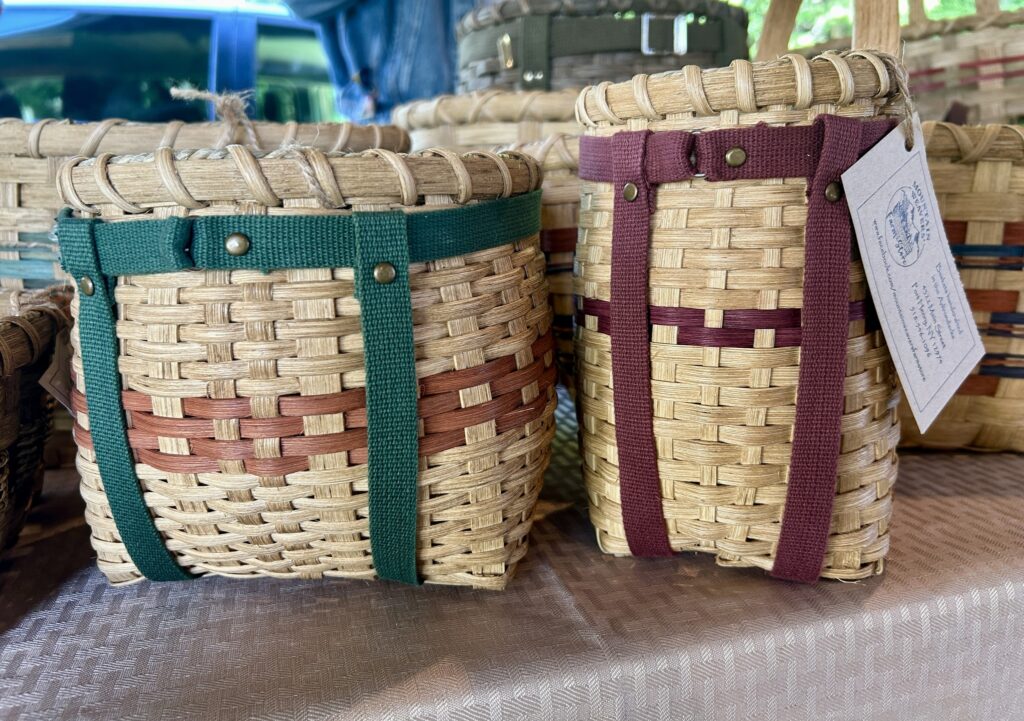
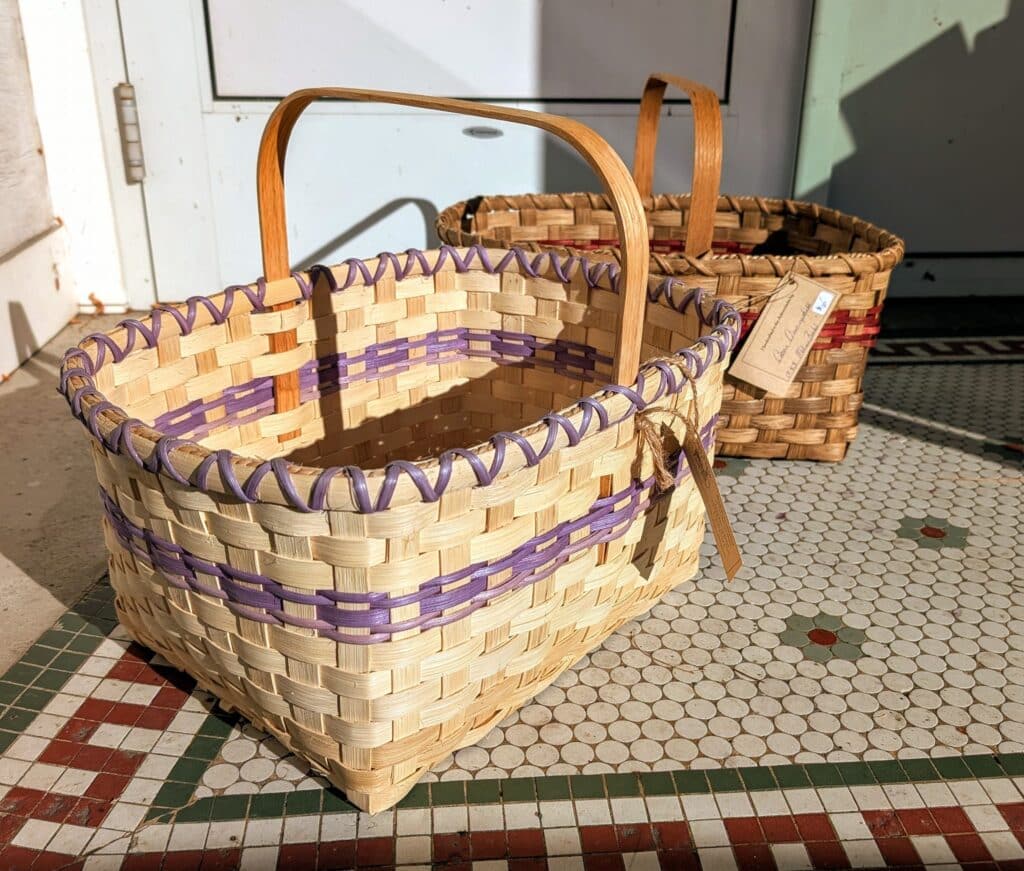
At the Mountain Weavers’ Farm Store in Port Henry, clients of Mountain Lake Services make beautiful reed baskets that can be purchased from the shelf or even custom-crafted. The Weavers’ Guild was started in 2008 and currently includes 14 weavers. The program is used to teach job readiness skills to individuals with intellectual and developmental disabilities.

Baskets made by The Weavers’ Guild

The farm store also sells interesting products from other producers in the community, including the Dorr Homestead Creations, including Alisha Dorr’s popular line of Christmas jewelry, herbal muscle rubs and ointment and tallow soaps. “The soaps fly off the shelf and they smell amazing,” said Steve Lewis, senior director of Community Services for Mountain Lake. “People do a healthy amount of Christmas shopping here.”

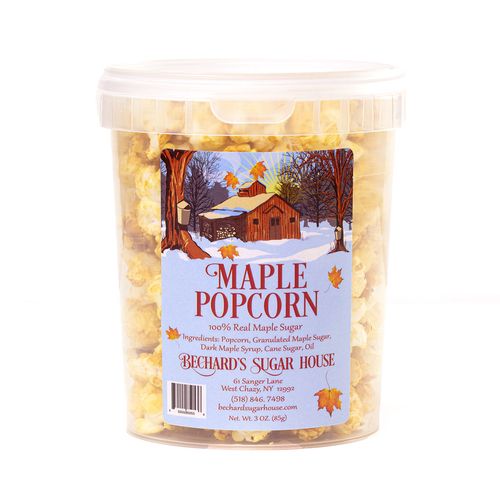
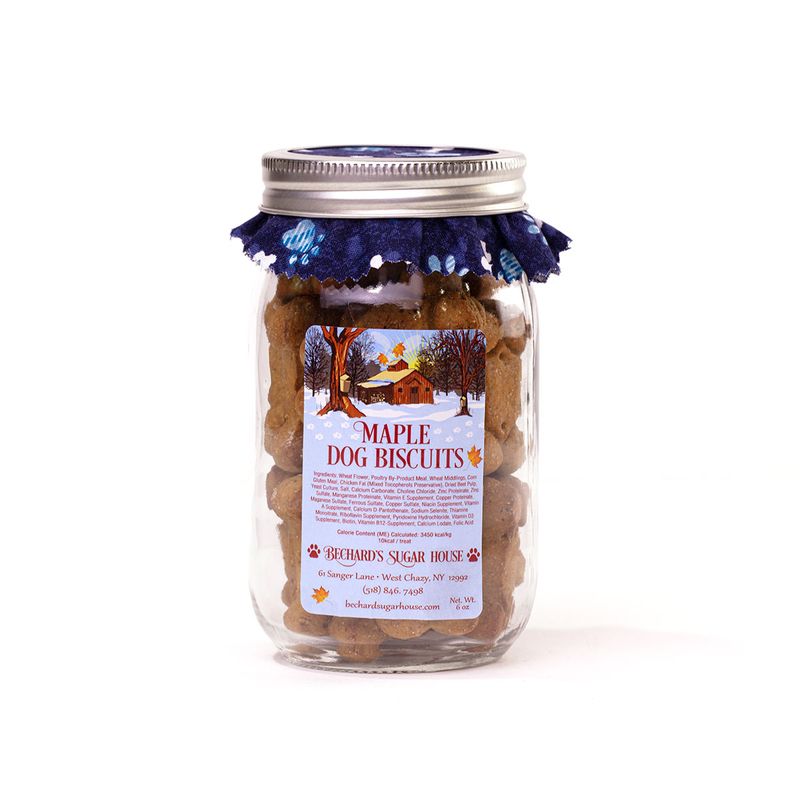
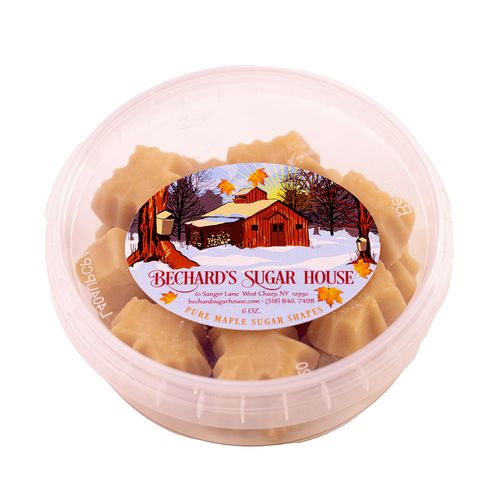
And if a four-footed friend is on your list, you might want to check out Bechard’s Sugar House and Farm Store in West Chazy where, said Tammy Bechard, “I can’t tell you how many maple dog biscuits I’ve made.”

Popular items include maple candies, maple-glazed nuts, maple cream and coffee, as well as, of course syrup, some in holiday bottles and even vintage, “cute little tins that take you back to the day,” Bechard said.

Maybe best of all is the Christmas vibe present at the gayly decorated stores of small, North Country producers.

Products for sale online and in the farmstore at Bechards’ Sugar House

“It’s a busy time,” Bechard said, as she decorated a large order of gift baskets. “It’s not going to slow up until right before Christmas.”

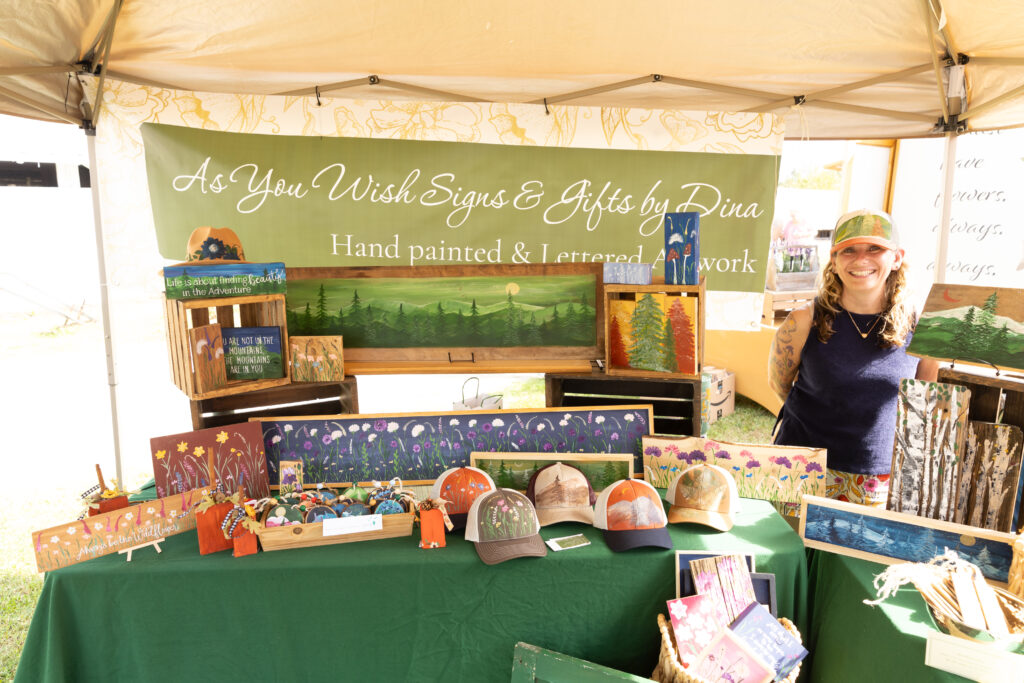
Not all North Country producers will have busy storefronts. Some operate exclusively through websites and social media, and have gifts that are unique and worth hunting around for. “All my products are one of a kind,” said Dina Garvey, owner of As You Wish Signs and Gifts. Garvey paints on locally harvested timber and reclaimed barnwood, gifts that “offer a touch of the Adirondacks all year round.” 

Dina Garvey at the Adirondack Harvest Festival

Dina says that one lasting effect of the pandemic is that people feel more comfortable buying local, and perceive more value in hand-crafted products. That makes it fun to have personal connections with her customers, particularly at Christmas. “It’s humbling and joyful that people want to buy something I created,” Garvey said. “And when the holiday season comes and the snow is flying it’s just magical.”

Make a festive day trip of it and visit many of the farmstores, producers and retailers that sell locally grown and made products year-round! Do a little shopping and have a nice farm-to-table lunch. Visit the Adirondack Cuisine Trails directory to plan a festival weekend in the Adirondacks.

Note: Many farm stores have different winter hours, so be sure to check before visiting.

Funding for this project came from a 2024 Special Programs Grant from the Champlain Valley National Heritage Partnership

Farming for the Future: Navigating Climate Resilience in the Adirondacks

10/24/2024

By Tim Rowland |

A genre of 20th century agrarian artists loved nothing better than a pastoral scene with a stream tranquilly meandering through a neatly clipped meadow. But today, with the onset of a changing climate, farmers are understanding that the ideal was not ideal.

Streams need the shade of trees to protect cold-water fisheries. They need tough, shrubbery roots to hold sediment, floodplains to handle stormwater and buffers to filter animal manure that feeds algal blooms in warming waters.

Extreme storm events need to be mitigated, but so too do extreme heat and droughts. Animals need more shade, and soils need more water-holding structure. In all, climate change gives farmers a lot to think about, both in the form of challenges and opportunities.

“Climate resiliency is always a consideration as we work with agricultural producers through our Agricultural Environmental Management program to plan and implement best practices,” said Alice Halloran, district manager for the Essex County Soil and Water Conservation District. “Participating farms have completed a lot of water management projects in the past few years.  They’ve installed a variety of practices to hold water on the landscape for irrigation, as well as to prevent erosion and manage excessive water from heavy rain events.”

So too has funding opened up for climate resilience. New York allocated $33 million through its Climate Resilient Farming Grant Program to help farms increase sustainability efforts and resilience to extreme weather events. The programming aims to reduce greenhouse gas emissions, protect water resources, and improve soil health. Through the Inflation Reduction Act, the federal government is spending $110 million on conservation and climate resiliency.

Farmers are taking a look at better management or pasture, forestry and animals to make their farms more harmonious with nature and able to better withstand climate change. “There has been an increased interest in silvopasture as farms try to improve livestock access to shelter, sequester carbon, better manage their landscapes, and diversify their operations,” Halloran said.

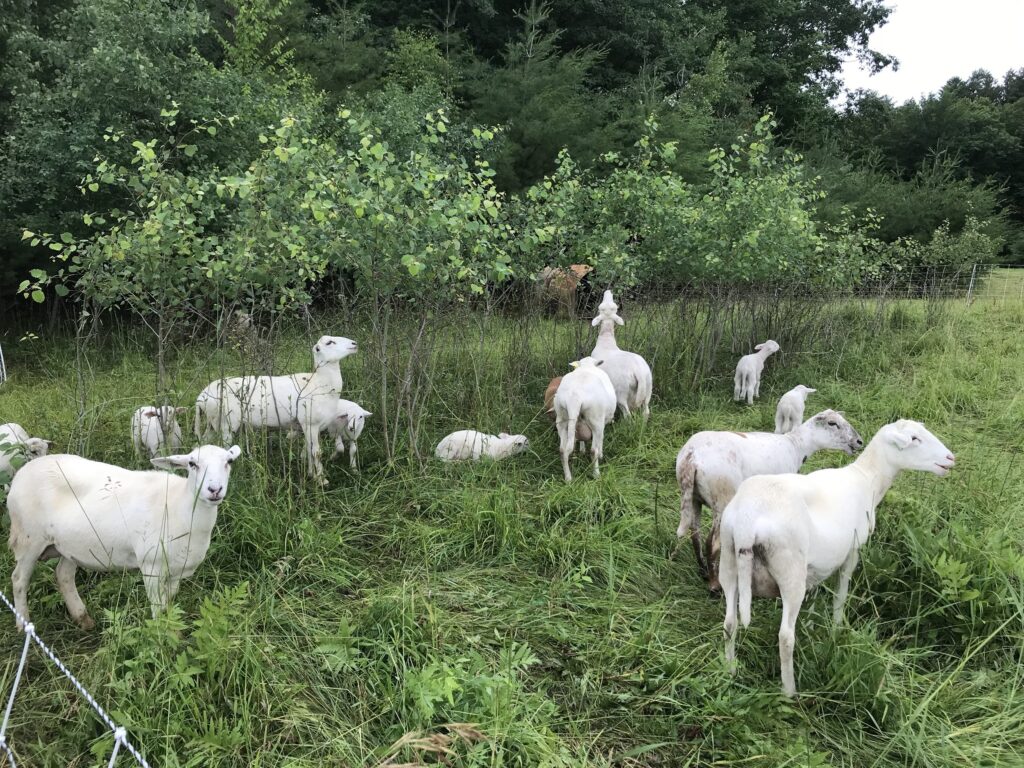
Katahdin sheep graze on silvopasture at Barred Owl Brook Farm

Putting these ideas into practice is Alex Caskey, owner of Barred Owl Brook Farm along Lake Champlain on the Essex-Westport border. The basic principles aren’t new, he said, but were in fact standard procedure before many modern people lost connection with their food supply.

Conservation, biology and a sustainable food system “are all tied together, whether you lean into them or not,” Caskey said. “Agroforestry and silvopasture are new names for ancient practices for animal welfare and growth and tree welfare and growth.”

With careful attention to genetics, Caskey’s flock of Katahdin hair sheep are bred to thrive on a summer diet that encourages the animals to forage on trees and shrubs. “Genetics are a huge missing link,” he said.

More trees and leafy shrubs dotting traditional pastureland also provide shade for the animals, soak up excess water, provide wildlife habitat and sequester carbon. (As Caskey adapts the farm to climate change, he does so with both animals and humans in mind.) Honey locust and mulberry have high-protein leaves, and sheep don’t mind a diet of species like buckthorn and willow. “For silvopasture, trash trees are exactly what you want,” Caskey said.

Along with sheep, Barred Owl Brook sells nursery stock and experiments with trees that, prior to a warming climate, would not have thrived this far north, such as pawpaws  and northern pecans. This part of the Champlain Valley was once 4B, “now we’re solidly 5A,” Caskey said.

And perhaps an underappreciated aspect of climate change is its unpredictability. Rich Redman, a retired soil and water conservationist and author of the upcoming book series “Conservation Conversations,” said it’s not as easy as planting new, more heat-tolerant crops such as wheat, because there’s nothing to say that cool, moist summers and deepfreeze winters are entirely a thing of the past. “You can still get a real soaker that destroys the crop,” he said.

There are still ways farmers are adapting to make their farms and communities more resilient, Redman said, notably through more composting and manure management, increased reliance on cover crops, less tillage and tree planting along streams.

These practices help the farmer, and also the planet, said Cole Trager, Agriculture & Local Food Team Leader for the Cornell Cooperative Extension service in Essex County. “It’s really second grade science,” he said. “We’re capturing less carbon than ever — the whole earth is browning.”

Fields that are wintered over with only the stubble of mown grains and corn stalks are missing the value of carbon sequestering cover crops that stay green and can be grazed in the spring.

While cattle have gotten a bad rap for methane emissions, that misses the point that pastured animals (free of barren feedlots) are doing their part for the planet, as was the case when Texas was grassland and bison grazed the Plains. “Grazing animals are the engine that keeps things growing,” Trager said. “(Cows) are not bad, it’s just the management that’s bad.”

It is through good management that North Country farmers are reducing nutrient runoff, sequestering carbon, experimenting with new species and being mindful of creatures both domestic and wild. And in so doing, the line between farmer and conservationist and environmentalist becomes ever less distinct.

“So much of the way I farm has to do with climate change,” Caskey said.

  • « Go to Previous Page
  • Page 1
  • Page 2
  • Page 3
  • Page 4
  • Interim pages omitted …
  • Page 11
  • Go to Next Page »

Footer

  • Facebook
  • Instagram
  • Twitter
  • YouTube
alt-text

8487 U.S.Route 9, Lewis, NY 12950

Phone: (518) 962-4810

cornell-cooperative-logo

If you have a disability and are having trouble accessing information on this website or need materials in an alternate format, please contact the Cornell Cooperative Extension of Essex County office for assistance (518) 962-4810 or email essex@cornell.edu.

  • Browse
  • Markets
  • Events
  • Festival
  • Blog
  • Trails
  • Login | Join
  • Home
  • About Us
  • Harvest News
  • Local Food Guides
  • Contact Us
  • Get Listed or Renew
  • Make a Donation
  • Friends

Copyright© 2026 · Adirondack Harvest. All images to their original owners. adk-chair