
Rooted in Learning Program Wraps Another Year, and Starts Looking Toward 2027
By Tim Rowland | Contributing Writer
Over the past year, elementary students in three Essex County schools have learned to shop at farmers’ markets, watched syrup producers tap maple trees, and eaten vegetables that they have raised themselves in their classroom.
Some have even learned to like beets.
Educating students about the benefits of healthy, locally-grown foods involves many things, and is at times rewarding and at other times challenging — but it is always interesting.
Cornell Cooperative Extension of Essex County‘s Ellie Hoffman and Kate Graziano spent the past school year visiting classrooms in AuSable Valley, Boquet Valley and Ticonderoga school districts as part of a Harvest NY grant-funded program called Rooted in Learning, which was folded into CCE’s Agriculture in the Classroom initiative.
Food is the most fundamental building block of human life, and proper nutrition is essential to learning. Yet important as it is, food is not typically taught in schools, and too often not in homes, either.
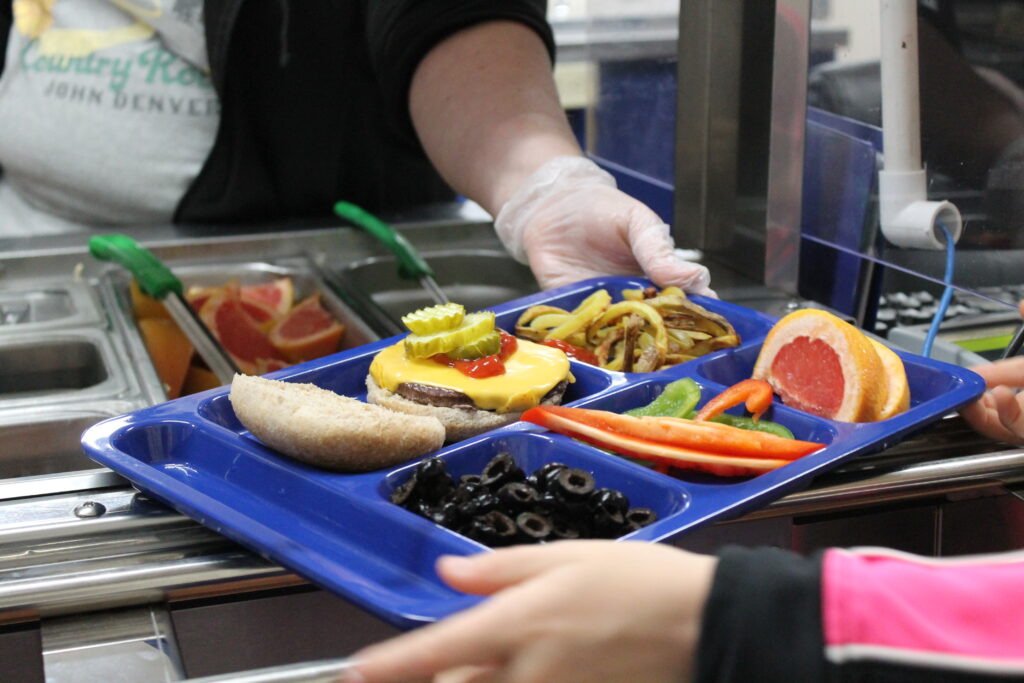
Rooted in Learning educatesd students about where their food comes from via local farms and farmers. Frequently it would be a revelation to children to learn that the food that magically appears on a cafeteria tray might be produced just a few miles from their school.
The goal going in, Hoffman said, was to give kids a different way of looking at something they encounter every day without thinking much about it. “We wanted to really highlight that in a new way for them, to make them think about food and where it comes from and the food that grows in this area and how it’s grown,” she said.
Just as important, Graziano added, was reaching the teachers who would carry those lessons forward long after CCE Essex’s educators had moved on to the next classroom. “Learning about agriculture, learning about local food can be just a regular part of the school day,” she said. “It can be incorporated with math, science, language arts — it goes with really everything.”
The program ran on three legs: monthly Agriculture in the Classroom lessons, farm field trips where students visited working farms, and pop-up farmers’ markets held on school grounds. This latter event was a pilot that Hoffman called “a farm field trip in reverse,” with farmers bringing their tents, tables and products to the kids instead of the other way around.
Boquet Valley saw roughly 100 students through the classroom lessons, AuSable Forks about 45, and Ticonderoga about 90. But the markets, open to every elementary grade rather than just the classrooms CCE Essex visited monthly, pushed the program’s real reach closer to 600 students across the three districts.
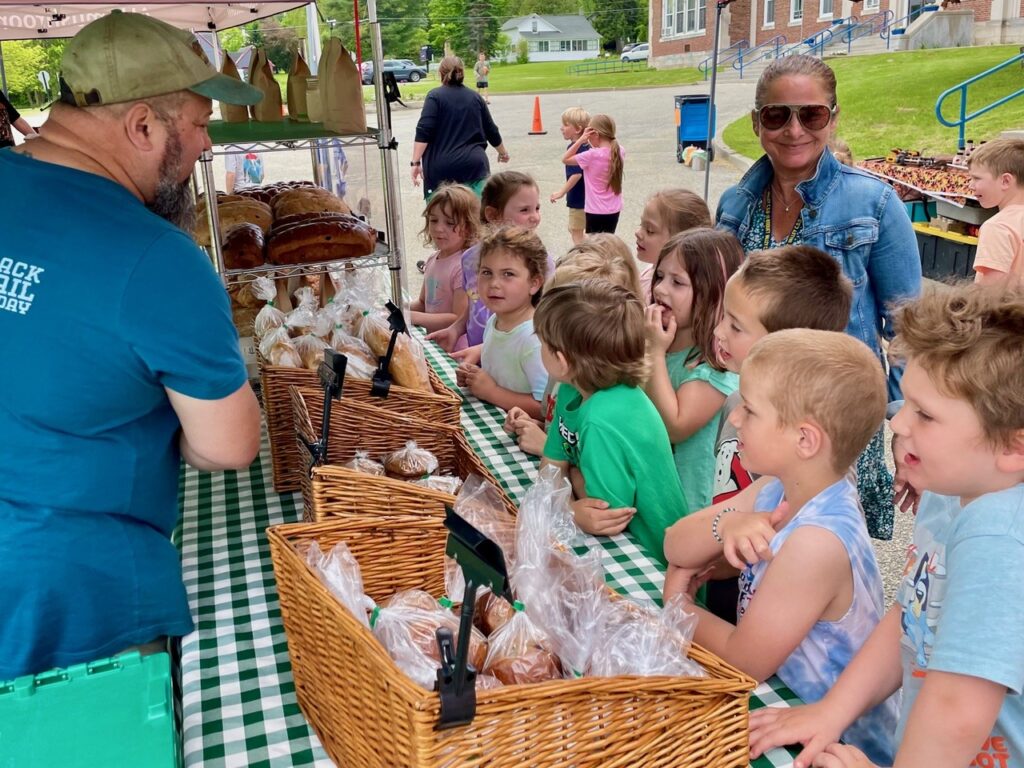
It was the markets that produced the year’s clearest surprise. Graziano recalled a teacher who polled her class before one market and found that nearly all of the students had never been to a farmers market in their lives.
Farmers learned too, as they modified their displays to accommodate a younger audience. It left an impression on kids as well, both by design and by happy coincidence. One market happened to land on the same day as a school field day, meaning farm tables shared space among the bounce houses and relay races. “It created this impression that a market is a fun thing to do alongside the other field day activities,” Hoffman said, “that it was just as exciting and worthwhile.”
Farmers noticed the same thing from the other side of the table. Several returned for a second market after the first, and Hoffman said the format seemed to work because the idea of tabling at a farmers’ market was familiar, even if the audience was unique.
“It was a nice balance between something familiar and something new for the kids, too,” she said, and one that let students meet personable growers like Rachelle Waters of AHA Mushrooms or Dan and Kimmy Rivera of Triple Green Jade Farm on the kids’ own turf.
Other producers found creative ways to become involved. Jenna Mulbury, co-owner of Northern Orchards, supplied multiple varieties of apples for Agriculture in the Classroom lessons, each with different tastes. Kids identified sweet, tart or — picking up on a trend toward more authentic fruit — “applely.”
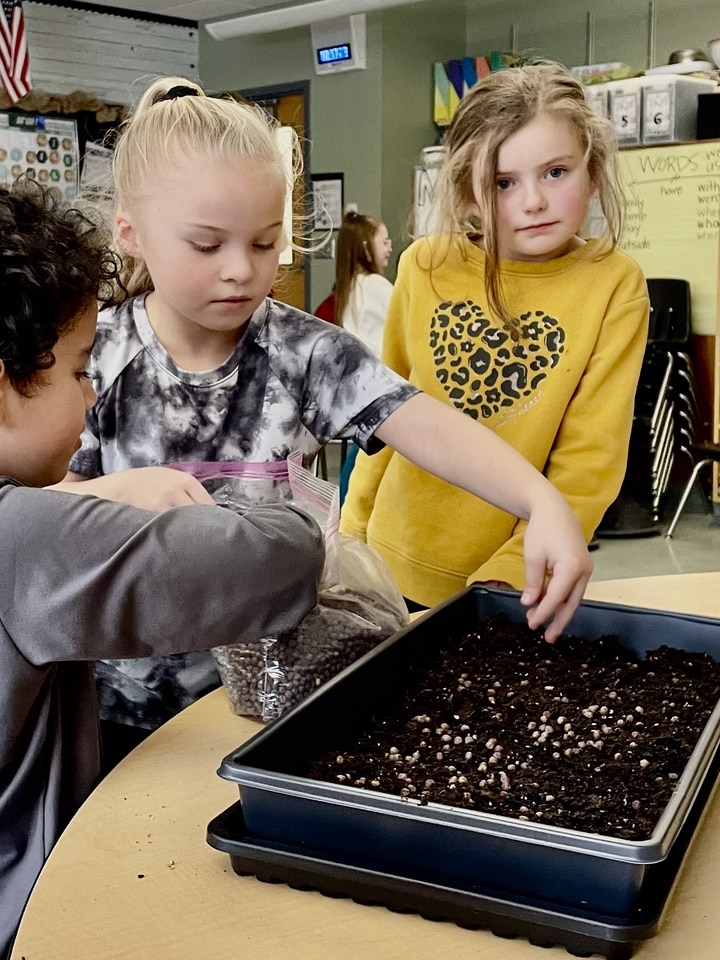
Through Agriculture in the Classroom, young students also learned what it was like to grow a crop of microgreens, watching them mature in classroom windows and tasting the finished product. It wasn’t always a success: Radish microgreens proved a little too peppery for young taste buds. But celery and carrot microgreens were better, and broccoli microgreens turned out to be the surprise hit of the school year.
Butternut squash soup was a “meh,” so educators changed tactics, switching to roasted squash cubes dusted with pumpkin pie spice, which won points on smell alone. And a beet-tasting lesson expanded from raw beets alone to include a batch of homemade “ABC juice” — apple, beet and carrot — a nod to the idea that a vegetable a child rejects in one form might win them over in another.
That lesson, Hoffman said, doubles as the year’s biggest takeaway about what actually stands between kids and a healthy diet. It isn’t simply competition from processed food and its marketing budgets — it’s expectation. “There are expectations, both spoken and unspoken, that kids will or will not like certain things,” she said. “And kids absorb that.”
An adult telling a kid, “you probably won’t like this,” can do more to close a child’s mind than the food itself. The moments both educators found most encouraging were the ones where a student tried something anyway, sometimes precisely because a braver classmate had gone first. “It’s kind of like a positive peer pressure,” Graziano said.
Looking to the coming year, CCE will continue to focus on the three C’s: classroom, cafeteria and community. The first two, Graziano said, got plenty of attention this year, through lessons and cafeteria partnerships on local food procurement. The third — what happens once a lesson leaves the classroom and follows a student home — is the piece both educators want to build out next.
That effort starts this fall with take-home packets that include a short recap of each classroom lesson, discussion questions parents can raise over dinner, a coloring sheet and recipes using whatever produce a particular lesson featured. “We want to keep that lesson and those ideas alive at home,” Graziano said.
In this regard, Farm to School will live on beyond the classroom walls, and broaden the perspectives not just of the kids, but families as well. Students might get their parents to try a healthy recipe, implore them to pull over at a farmers’ market or raise a few vegetables in the backyard. It wouldn’t be the first time adults learned a little something from the kids.


