
Essex County’s Farm to School Program, As Seen From the Principal’s Office
By Tim Rowland | Contributing Writer
Schools aren’t always easy places for new programming to penetrate. Administrators are busy juggling everything from budgets to bus schedules, and much of the classroom material is state-mandated. So one key to teaching kids about healthy foods is to make programming both effective and compatible with existing standards.
Cornell Cooperative Extension of Essex County’s Rooted in Learning initiative has been able to do just that, deftly layering materials, activities, and field trips over regular coursework with the idea that learning about healthy, locally grown foods should become second nature.
With so many other demands on a principal’s day, CCE Essex Community Vitality Resource Educator Ellie Hoffman said that school administrators appreciate programs that can be seamlessly implemented. And from one program like an Agriculture in the Classroom lesson or a farm field trip, schools begin to recognize how Farm to School can be integrated into the rest of the school day.
“Farm to School programming provides students with meaningful, hands-on learning that connects academics, health and our local community,” said Lee Kyler, principal of Boquet Valley – Lake View Elementary School. “In a rural area, agriculture and the natural environment are important parts of our local identity. Farm to School helps us build upon those strengths.”
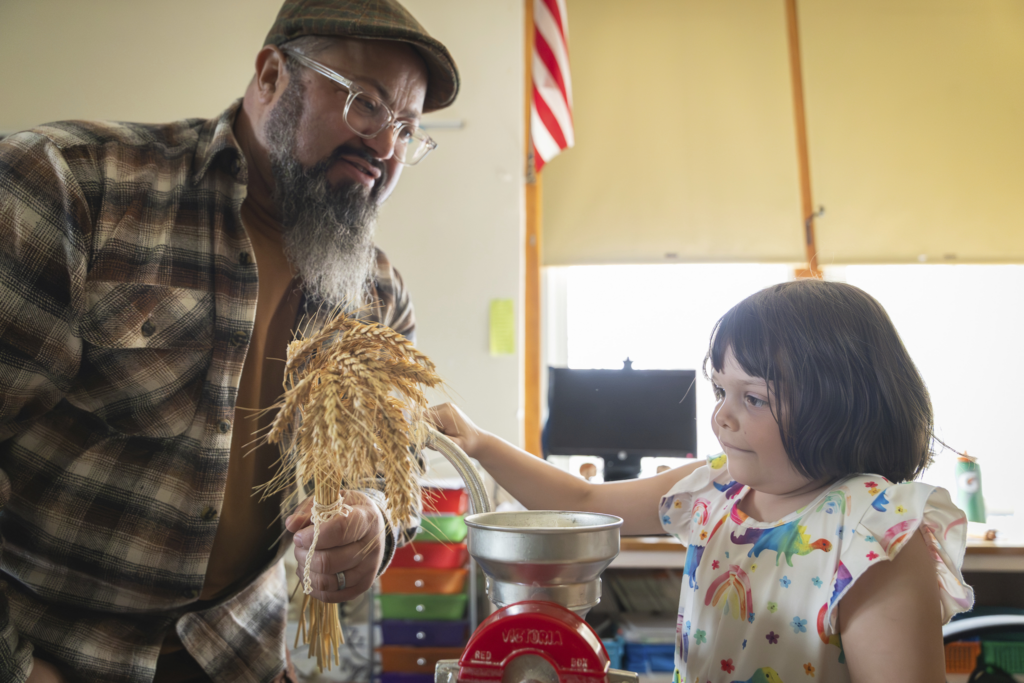
Lake View has leaned further into that identity than most, adding a chicken coop and raised vegetable beds with the help of a $15,000 grant from the Adirondack Community Foundation.
Kyler hopes this awareness will continue to translate into the cafeteria: “We would like students to encounter more local foods, understand where those foods come from, and recognize the cafeteria as another learning environment within the school,” he said.
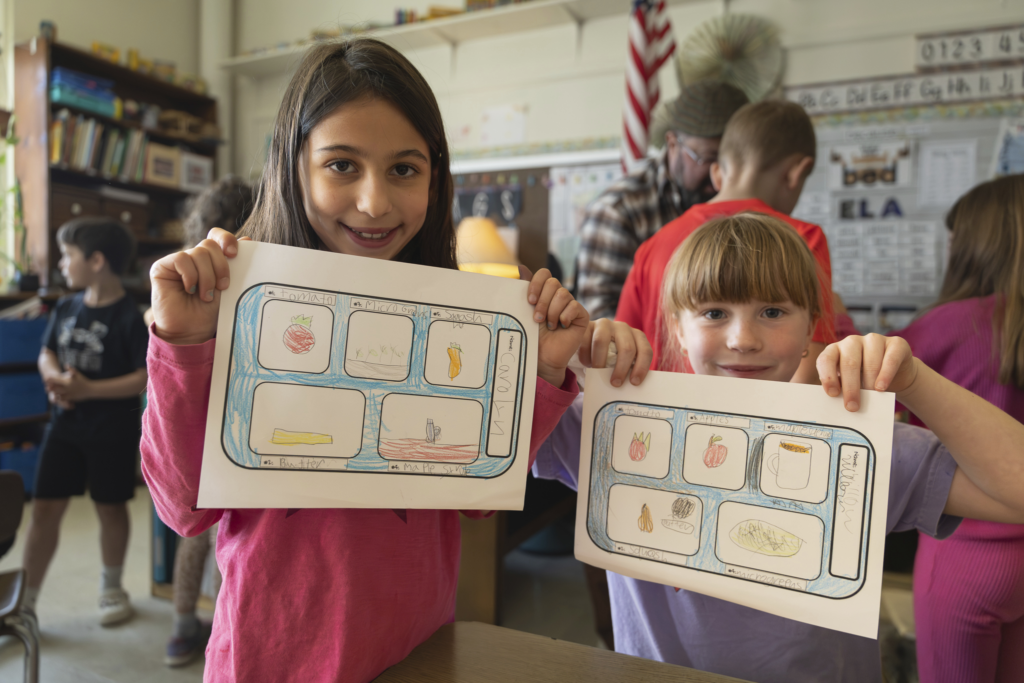
His advice to other schools considering the leap is to resist the urge to do everything at once. “Start small and build around one meaningful, sustainable experience,” he said. “A successful Farm to School program grows through relationships and consistent small steps.”
Those small steps add up over time, and discovering something that excites the kids is likely to excite administrators as well.
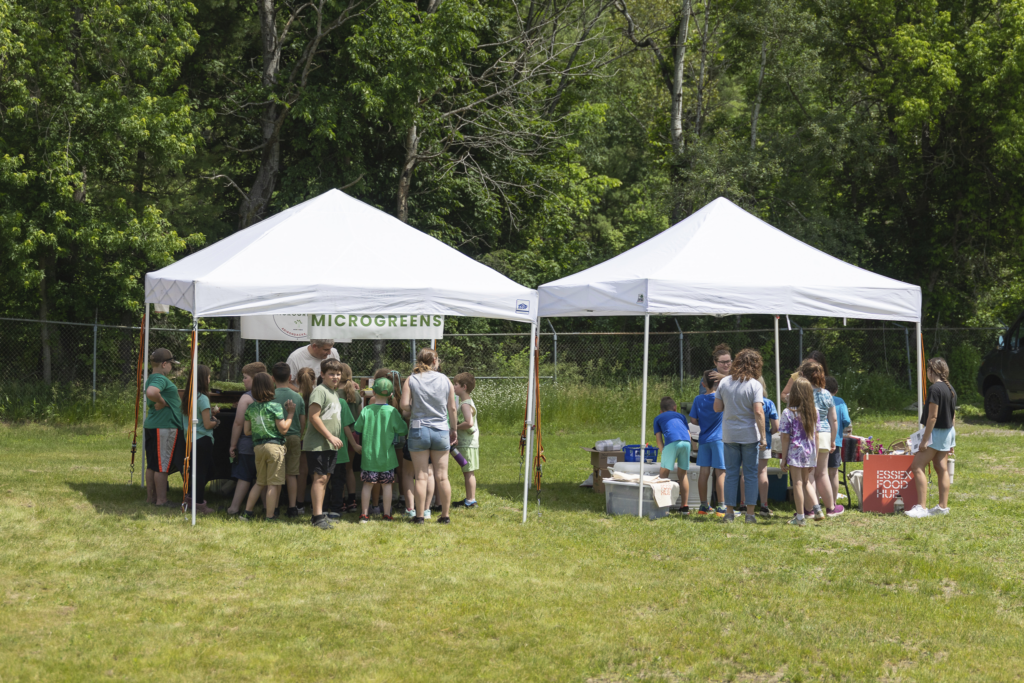
At AuSable Forks Elementary School, Principal Chris Fey credits the school’s field day pop-up farmers’ market, coordinated in collaboration CCE Essex, as its clearest success. “Students learned about the source of local products and got a better understanding of what our community produces,” he said.
He’s also watching potential financial gains take shape as AuSable Forks Elementary moves toward a shared BOCES cafeteria service in Plattsburgh built around scratch cooking. The idea that scratch cooking with local foods can be affordable is something that has surprised a lot of people, precisely because it runs against the assumption that fresher, less processed food has to cost more.
CCE Harvest New York’s Farm to Institution Educator Meghan Dohman has helped walk administrators through the numbers, Hoffman said, to show that the math made sense, particularly on a scale made possible by the regional kitchen.
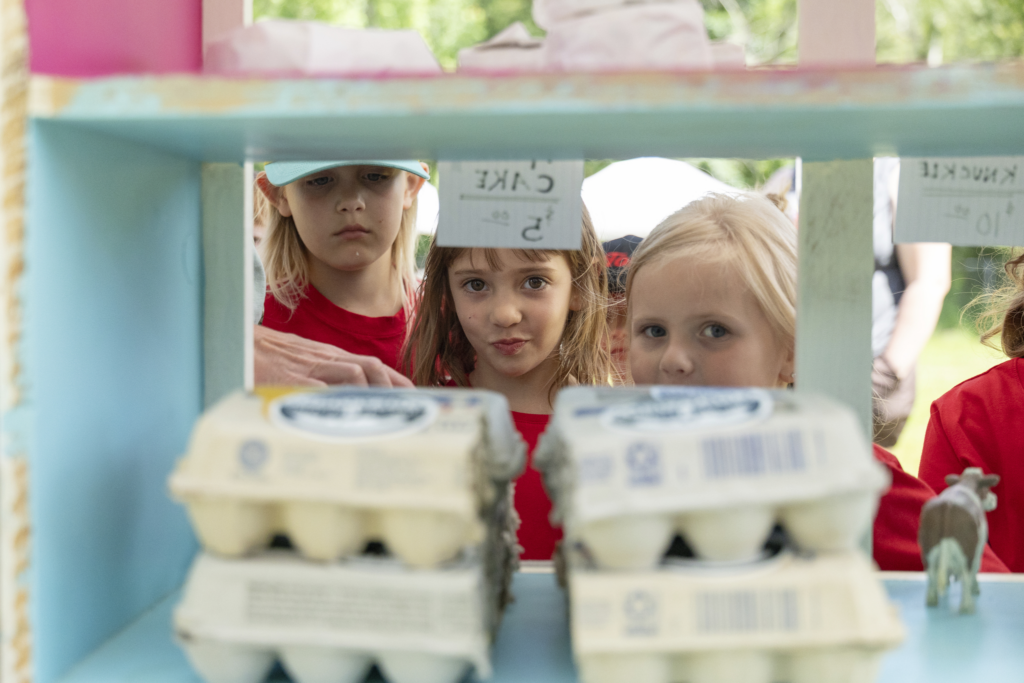
Hoffman said Ticonderoga Elementary, meanwhile, is a good example of the outsized results that one local foods event can have. Principal Kerrie Tierney’s relationship with CCE Essex was built mostly in a single planning call before the school’s pop-up farmers’ market — but from humble beginnings, the programming made an impression.
“Our biggest win was hosting a school farmers’ market where local growers brought fresh samples for the kids to try,” she said. And now, Tierney is excited to help bring back Ticonderoga’s 6th grade garden club, through which older students will take ownership of the school garden and mentor their peers while working together in the soil.
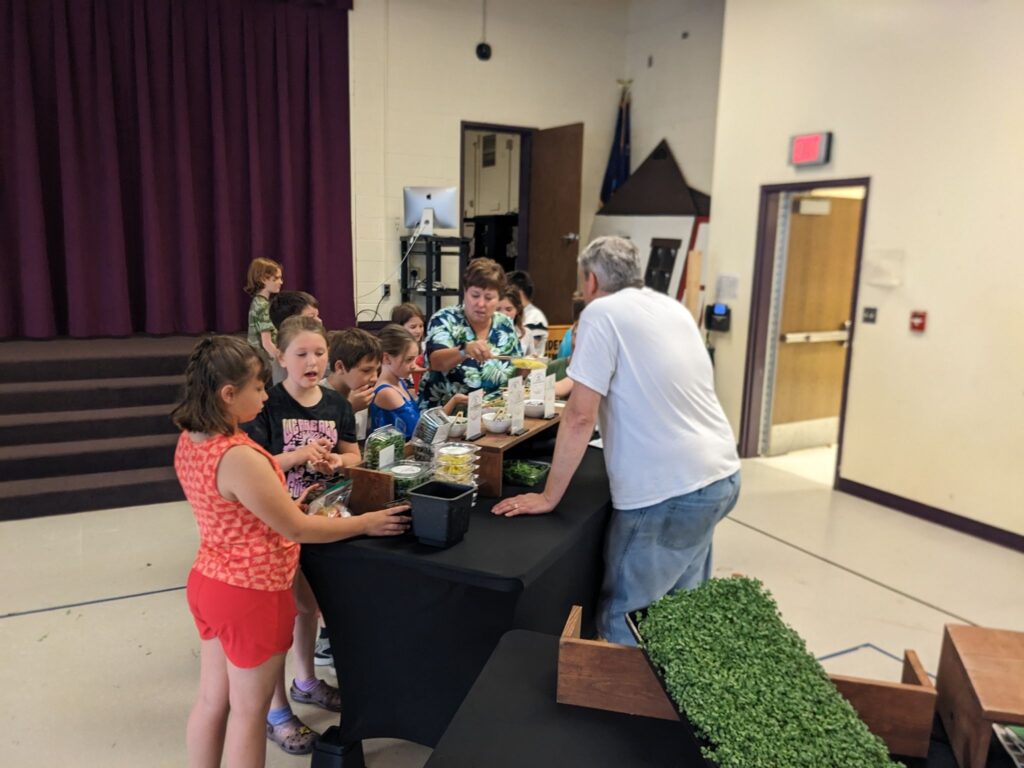
Another positive quality is that the Farm to School program is hands-on in a culture that emphasizes ease over experience.
“So many of our students live in a world dominated by screens, convenience foods and plastic packaging,” Tierney said. “When a child puts a seed in the soil, waters it, waits and eventually harvests something they can actually eat, it triggers a profound shift in their understanding of the world.”
Looking ahead, Tierney wants the program to outgrow its “special lesson” status and become something closer to a fixture. Eventually, she hopes, it might include a student-run farm stand that doubles as a hedge against food insecurity for families during school breaks.
Ideas such as these are virtually limitless, and AuSable Forks’ Fey said CCE Essex’s Farm to School program is a good place to start “They are excellent communicators and professionals,” he said. “(Schools should) get involved in this program.”


