
Agroforestry Continues to Take Root Among Adirondack Farmers
By Tim Rowland | Contributing Writer
“Clearing the land” was once an early American virtue, a heroic story of rolled up sleeves, double-bitted axes and stumps triumphantly wrested from the soil and burned, to make way for the pastures and plows that represented progress.
Today, trees are getting a second look from farmers who consider them not as an enemy but a partner. “Those trees are being seen as an asset in themselves, as well as serving some function within the pasture,” said Daniel Berheide, conservation technician for the Essex County Soil and Water Conservation District. “And there are a number of farms in this area that have been interested in silvopasture, because we live in a very forested community.”
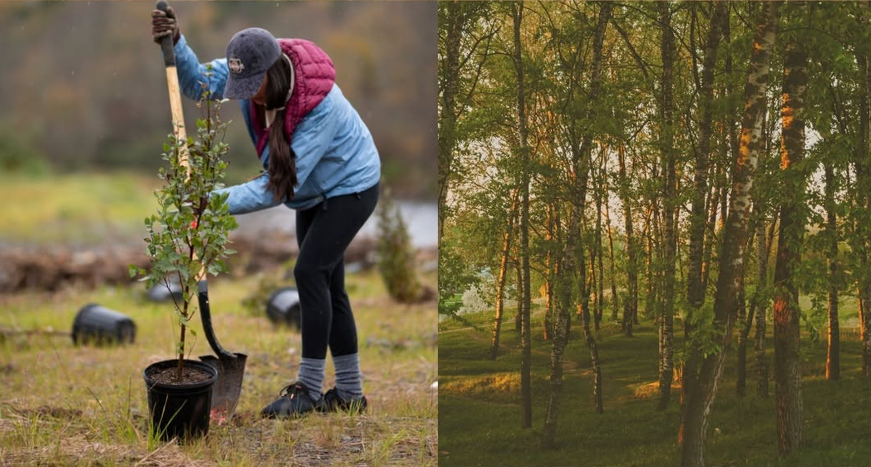
Trees can be incorporated into farming in many ways. They can produce crops themselves, they can be used to grow mushrooms or support adjacent crops such as raspberries. But classically, silvopasture implies a savannah-like framework with a scattering of trees in lush grasslands, a structure with both aesthetic and practical benefits.
The deliberate integration of trees with crops and livestock is among the oldest agricultural practices in human history, predating by millennia the monoculture systems that now dominate industrial farming. Indigenous peoples across Africa, Asia and the Americas cultivated multi-layered food systems that combined canopy trees, understory shrubs and ground-level crops in arrangements that modern researchers have only recently begun to fully appreciate.
Integrated systems improve soil health, sequester more carbon and grow healthier animals. They can even have implications for managing invasive species and benefitting native fish.
“A pasture with a good forest between that pasture and the water, like the Boquet or the Ausable River, helps to buffer against any of the nutrient runoff that comes from having animals on a field,” Berheide said. “So it helps maintain the water quality of the river, the trout habitat and the things we all really value greatly here in the Adirondacks.”
This has been the ongoing goal at Ben Wever Farm in Willsboro, where Pierre-Luc Gélineau said the farm works with conservation-oriented parties to protect the Boquet River. “Trees on a farm are a tool that’s been somewhat forgotten, and it’s kind of coming back as we’re realizing they are a lot more useful than we gave them credit for,” Gélineau said. “A lot of the work that’s been done in the past on the farm and along the Boquet River was using trees as a buffer to manage runoffs and stabilize the soil.”
Ben Wever Farm also uses trees from their property to grow mushrooms, harvesting small hardwood species five to six inches in diameter and inoculating them with spores that will fruit the following year. It’s a tricky but profitable process. “Mushrooms provide all sorts of nutrients and also all sorts of other health benefits, so as people learn more about those, they think it’ll be a good way for farms to manage their forest stands while supplementing their incomes,” Gélineau said.
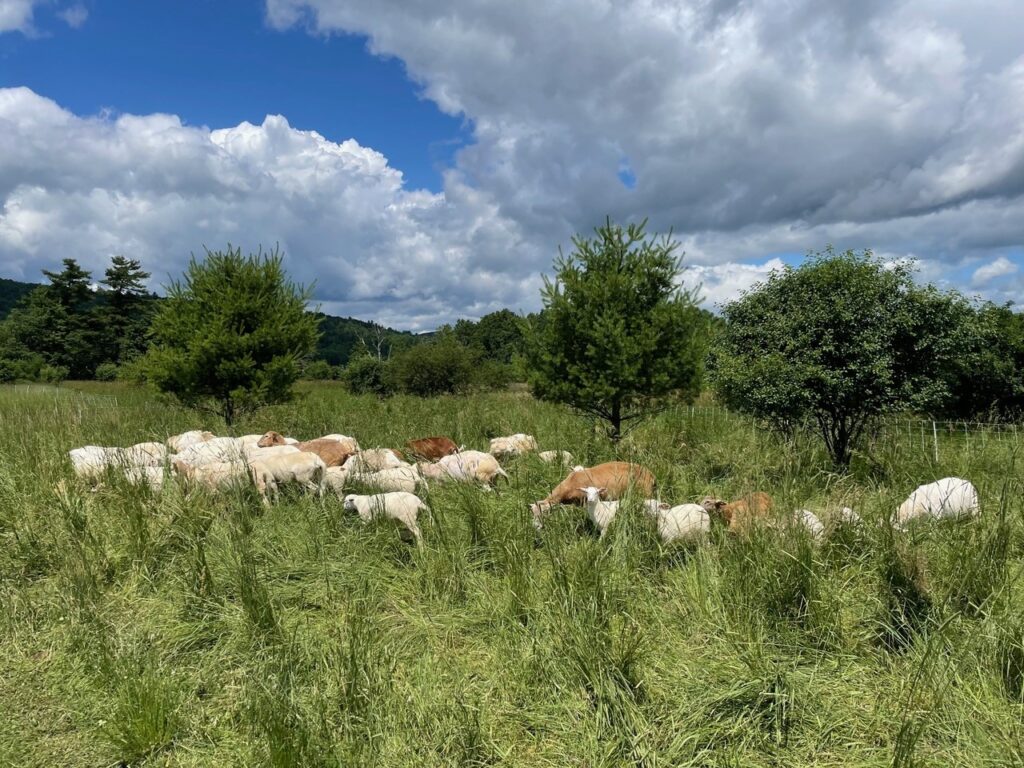
Alex Caskey, owner of Barred Owl Brook Farm in Westport, approached silviculture from a global and scientific perspective, focusing on its long history and harmony with the planet. He also wanted to know what would be profitable and from a more personal standpoint, what would be satisfying.
That led Caskey to Katahdin sheep, which he carefully breeds and turns out on pastures with a woodland component. A pathological and patient observer, he noticed that of all the forage the sheep could access — orchard grass, timothy, clovers — they seemed to prefer European buckthorn, a persistent and much reviled invasive.
“There’s something there that they’re getting and they’re wanting, so as time’s gone by, I realized this is actually a very valuable asset in my system,” Caskey said. “Not only do you get the structural, shade and shelter component, which is really handy in July and August, but you get that forage or fodder value directly from the buckthorn — so it’s become an effort not of eradication, but management.”
Buckthorn is high in protein and potassium, and other woody shrubs, including invasive honeysuckle and noninvasive willow, have some strong nutritional components as well.
“I can spend an immense amount of time, energy and money to rip all this out and replant native shrubs, but, if that all went well, it’d be 10 to 15 years until I have what I have now,” Caskey said.
Plus, woody shrubs grow fast. Planting trees in a pasture might seem like a benevolent act targeted to future generations, but willow and poplar can be beneficial in a matter of a few years.
Caskey also operates a nursery, where he’s experimented with chestnut, mulberry, and paw paws. But for a small farmer, the money is seldom in the high-profile crops like chestnuts, whose blighted backstory makes it a popular crop among more commercial wholesalers.
The implied takeaway is don’t be too profitable or too sexy, else big producers will take the idea, scale up and run the small producers out of business. So Caskey looks for small, preferably boring, niches. One such niche is willow stakes. Rods of the shrub are sold by the bundle and are then individually driven into the soil, where they immediately take hold — something of an “instant” tree.
They are also something of a hedge against weather extremes that can flood or burn up pastures, all while helping mitigate the planetary forces that are causing those extremes.
“Woody trees and shrubs offer farmers better utilization of farmland, high-quality feed sources during drought and excessive rain conditions, and the development of silvopasture systems that are among the best farming systems at increasing carbon storage in soil and woody plant material,” wrote Steve Gabriel in a study of the nutritional value of woody shrubs.
Whether it’s shrubbery or a smattering of trees in a grassy meadow, silvopasture also provides one of the more underappreciated assets in agriculture: shade.The difference between open and judiciously shaded pastures can be 20 degrees on the ground. Shade helps the pasture retain moisture, meaning grasses will grow better, providing better nutrition for animals that will eat more because they are less stressed. The result is improved weight gain, and on a farm weight gain means revenue.
Silviculture is also a means of repairing damaged lands. Craigardan, an agriculture and arts center in Elizabethtown could afford to buy a 320 acre campus in part because it had been “devastatingly logged,” said Craigardan’s Executive Director Michele Drozd. That meant the property had a long way to go before it could be productive again.
Junk was scattered around, rutted skid roads went everywhere, temporary dams and bridges were disrupting water flow, and topsoil had in some cases eroded away to nothing. Craigardan saw this as a challenge, but also an opportunity.
“We said, okay, part of the story here in the Adirondacks is logging, and this is very much a part of what we see all over the place,” Drozd said. “So we’re going to become an active participant in the restoration of this land, and that’s going to be part of our story as well.”
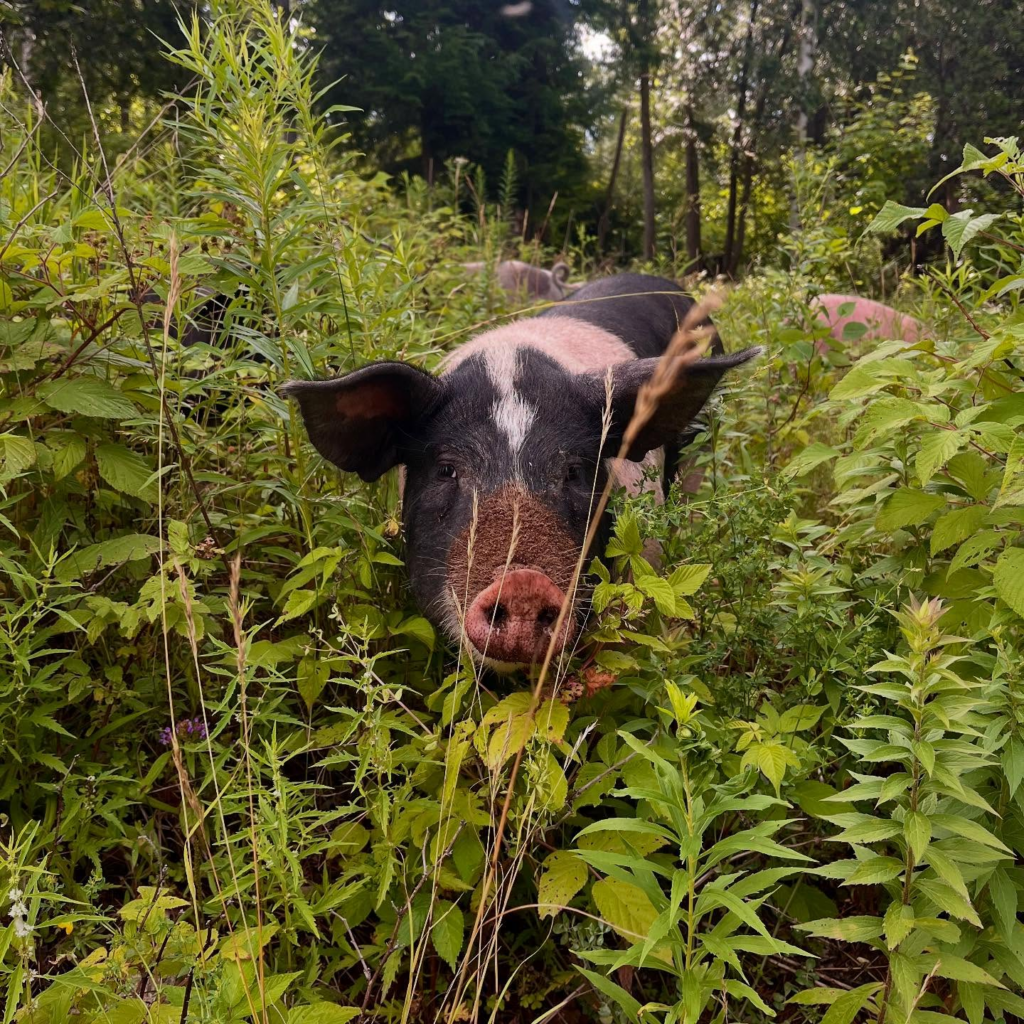
That meant using animals to help restore the land, running pigs to root out underbrush and sheep to build back topsoil. Forest and farm complement each other perfectly in Craigardan’s land management strategy.
“I don’t think of [forest and farm] as different; I think of it all as all the same, and stewardship, agriculture — it’s all a creative process for me,” Drozd said. “In my time working with farmers in the region, the thing that really struck me was how farming is in and of itself a creative process. It’s creative problem solving, and I see that all over the place. We call Craigardan an interdisciplinary art center, and I think of agriculture as an interdisciplinary art.”


