
3 Benefits of Supporting Your Local Tree Nursery
By Allyssa Hardiman of St. Lawrence Nurseries
Do you want to spend more time outside? Grow your own food? Eat healthier? Make memories with your kids? Reduce your carbon footprint? Support small businesses? Connect with Mother Nature? Plant a tree! As the saying goes, the best time to plant an orchard was 10 years ago, so don’t wait any longer! This spring, make a lasting change, and you’ll be reaping the benefits year after year.
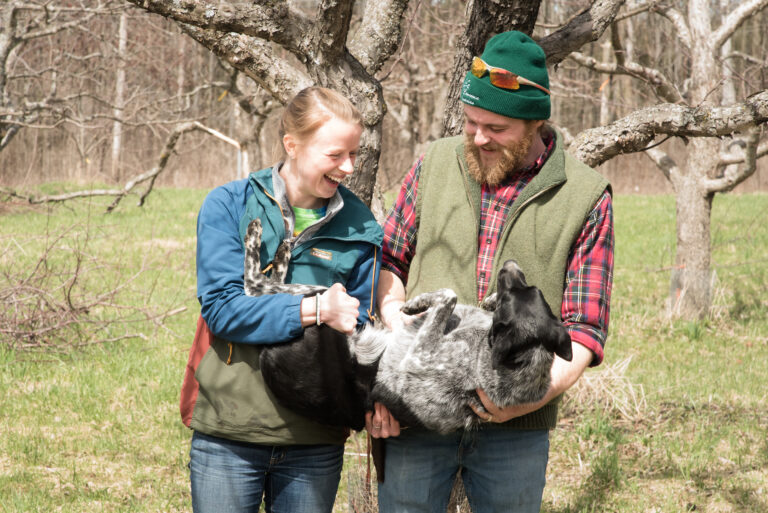
St. Lawrence Nurseries in Potsdam, NY is one of the only nurseries in the region that grows and propagates their own tree stock. They breed extremely cold-hardy fruit and nut trees that are real-life tested in their Zone 3 climate. Most plant nurseries buy and sell trees that are grown offsite, sometimes far from their climate zone, but there are distinct benefits of purchasing from nurseries that grow saplings from grafting or seed themselves.
Allyssa Hardiman of St. Lawrence Nurseries shares why you might consider buying locally-grown tree saplings this spring. Read more from Allyssa below…
Transparency in Growing Practices
When buying from a local nursery it’s likely you will be able to tour the property and get to know the environmental impacts of that nursery’s growing practices.
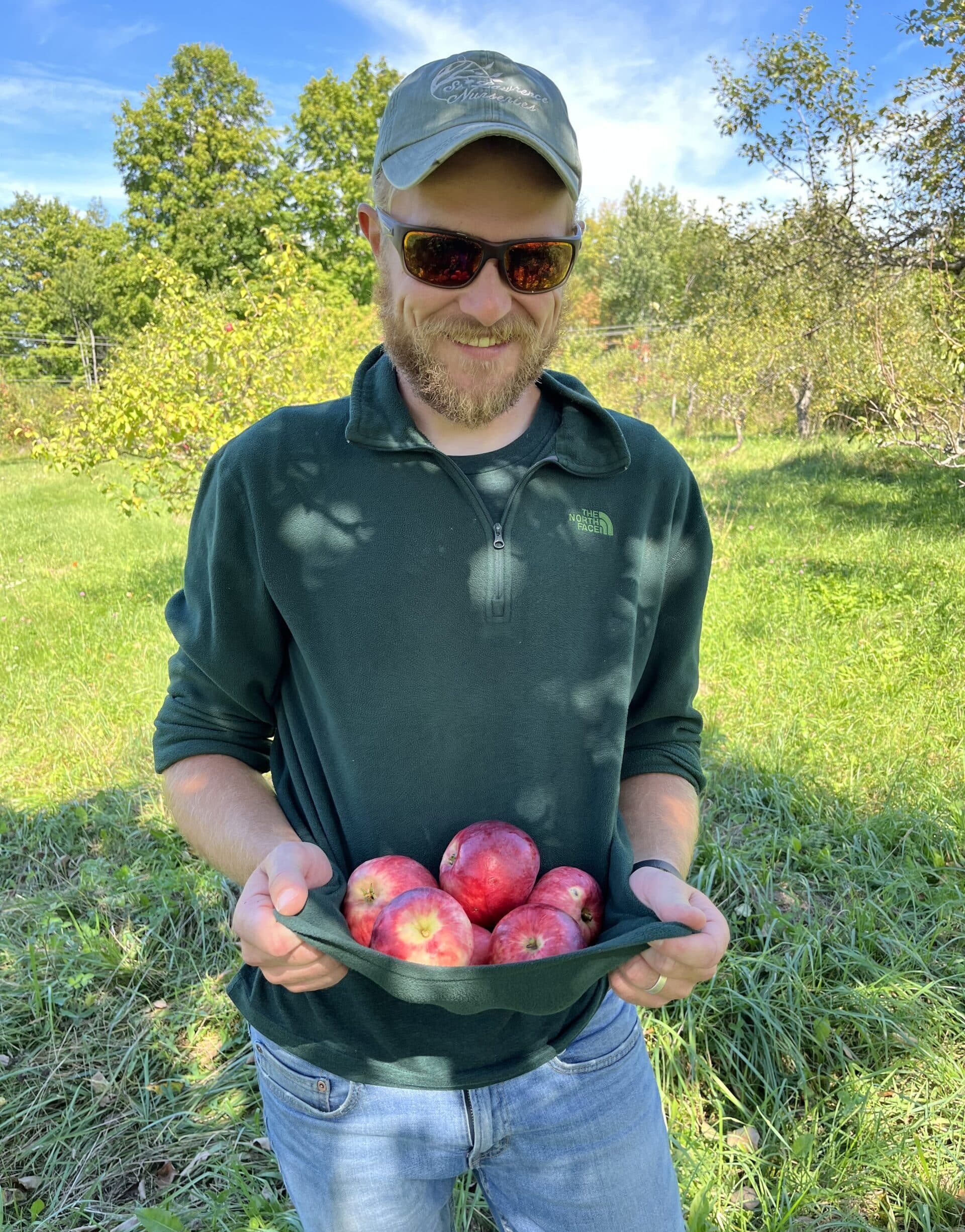
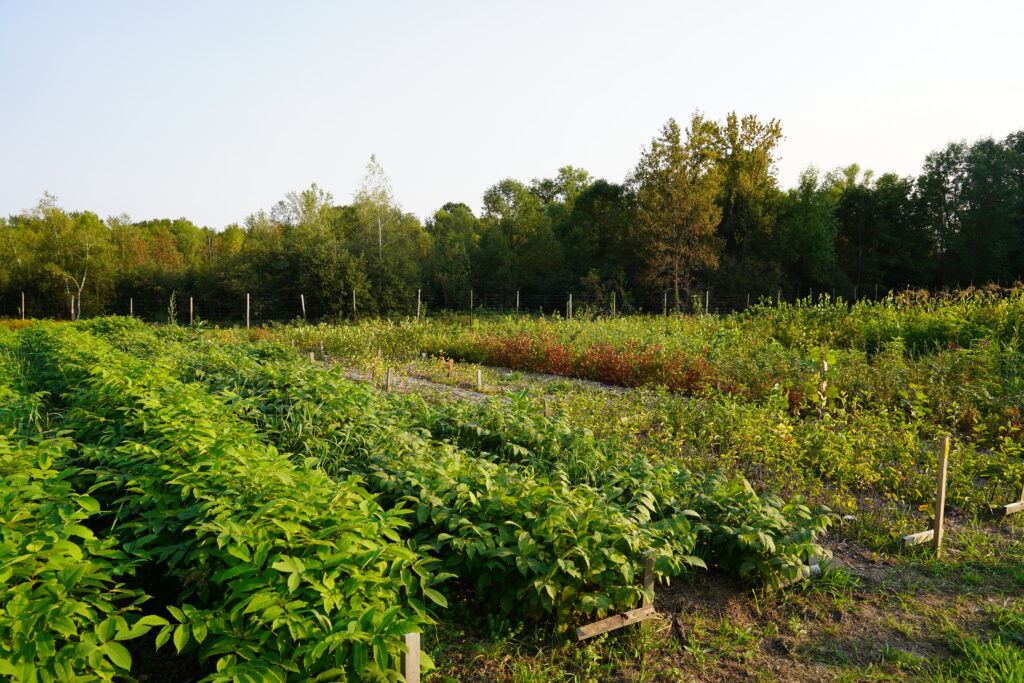
At St. Lawrence Nurseries, transparency in our growing practices is really important to us. Our trees are grown using organic and regenerative practices because we are committed to preserving the health of the air, water, soil, and ourselves. We use no conventional herbicides, fungicides or pesticides. Instead of artificial fertilizers, we rely on mulch, manure, and cover crops to boost soil and plant health. We personally hand-graft, hand-plant, hand-weed and hand-dig all of our stock. We are not certified organic, but the principles are of the utmost importance to us. We are also moving in a regenerative, minimal-till direction as it is clear that this is where agriculture needs to go─ even for the tiniest of farms, like us!
North Country Winter Tested
Most commercial trees sold in the Northeast are grown in regions that only see temperatures down to -10 degrees Fahrenheit, then are shipped to garden centers. These shipped-in trees look large and healthy because they have been pushed to grow quickly with nitrogen fertilizers. Heavy reliance on chemical fertilizers produces a “top-heavy” tree with a disproportionately small root, which is then machine-dug (often cutting or damaging roots in the process) and shipped, first from grower to wholesaler, then from wholesaler to retailer. The root is encased in fertilizer-enhanced media and potted or wrapped in burlap, which the customer is conveniently instructed not to remove, making it impossible to see the root system.
If you live in Northern New York, this is why you may have been disappointed by trees that were proclaimed to be “cold hardy.” They were grown in areas that only see temperatures down to -10 degrees, and you may see temperatures as low as -40 degrees.
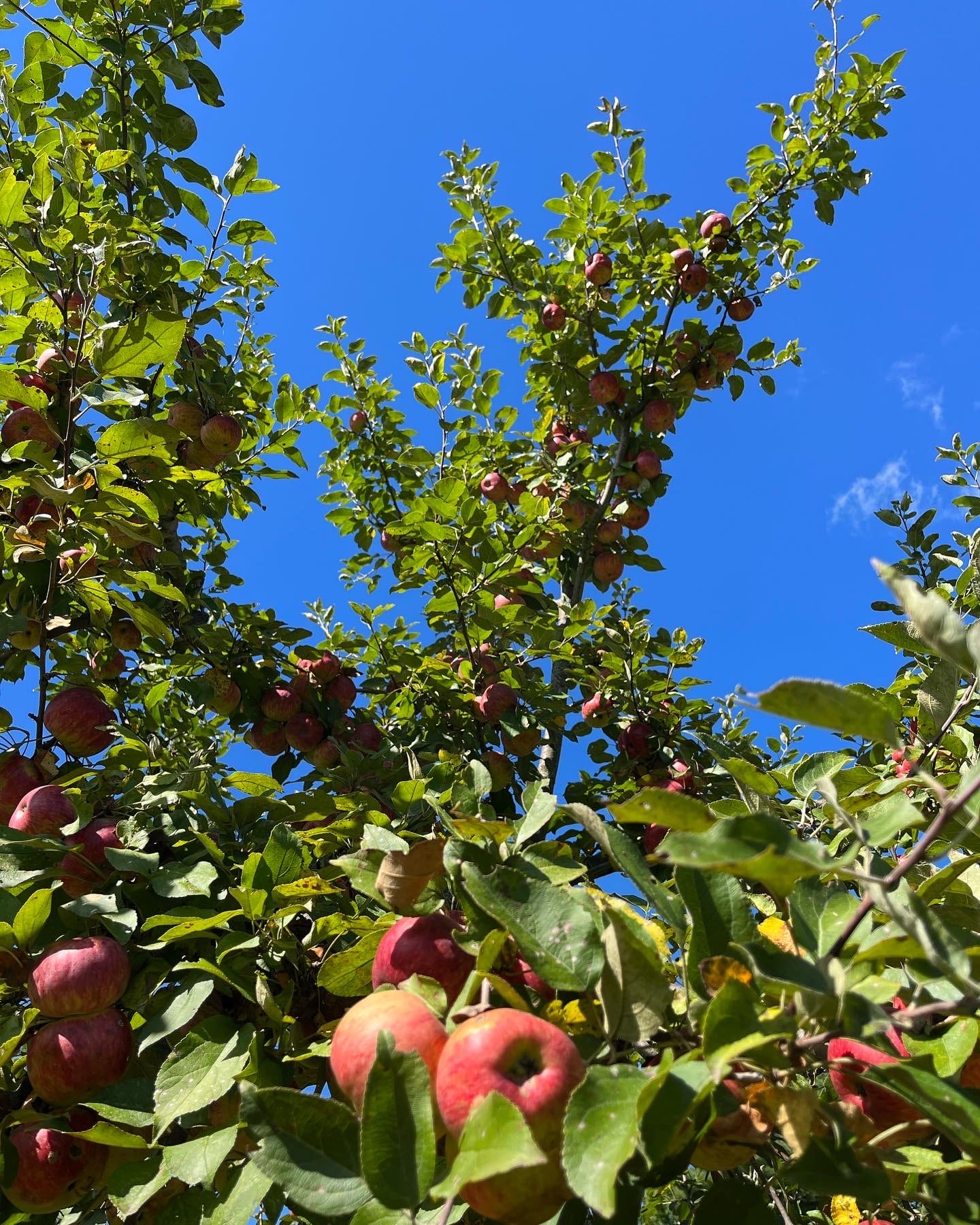
Our trees are grown in a cold, northern climate (USDA Zone 3/4). Trees that are unable to withstand temperatures of -30°F to -40°F will not survive our winters, and if we cannot grow it here, we don’t sell it. However, trees do grow more slowly in cold locations with short growing seasons, and nurseries are not exempt from this law of nature. We do not “push” our trees with artificial fertilizers, but use natural methods to encourage an optimum growth rate. We also graft all of our tried-and-true fruit varieties onto standard rootstock. The result is a smaller, but tougher tree with a more balanced proportion of root to top, which will establish itself well and harden off properly before winter. A tree that has been through -40°F winters has proven itself to be truly cold-hardy. This means that a tree from our nursery will grow for you even if you live in a severely cold climate, whereas a tree from a conventional nursery located in a warmer growing zone may winterkill or simply survive without much growth or fruit.
Resilient Trees Bred for the Region
When customers stop by our farm to pick up their trees, one of the most common phrases we hear is, “oh! That’s it?!” Many of them have driven several hours with an empty truck bed, or even a borrowed trailer, expecting to come home with a full-sized tree, ready to start dropping apples this coming fall. We operate a little bit differently from picking up a 10-foot-tall apple tree at your local Lowe’s, and this can be a difficult thing to explain to people.
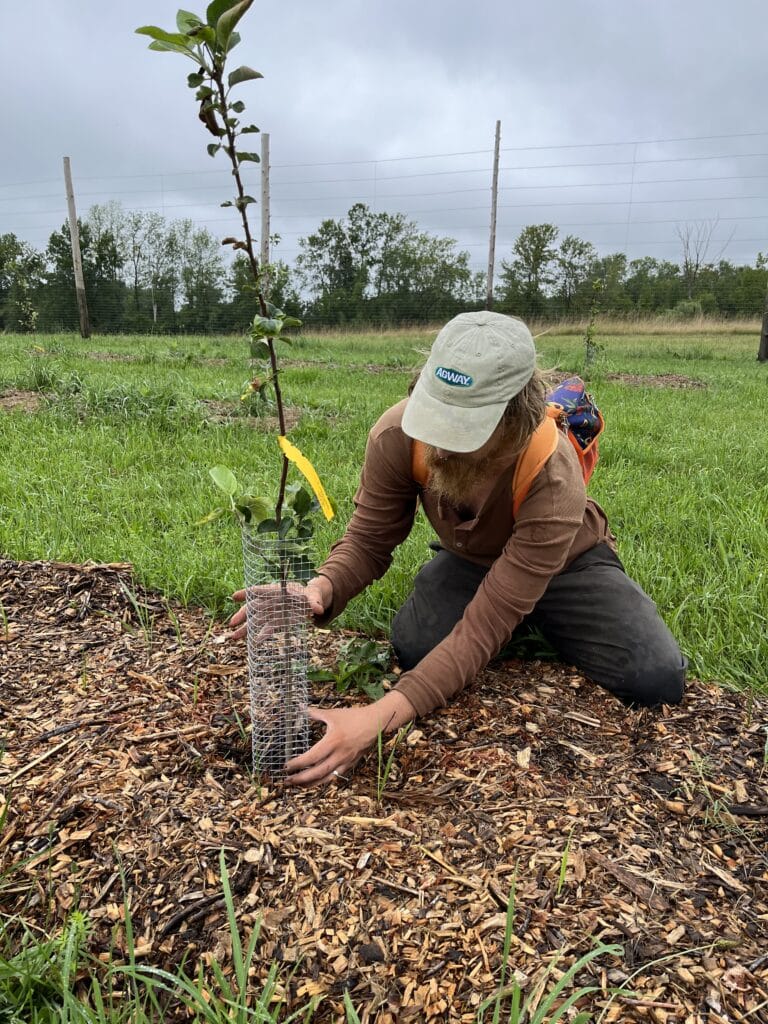
St. Lawrence Nurseries is not a typical garden center, but a nursery. And just like a human nursery, we specialize in baby trees. The ideal thing about selling baby trees, though, is that we can hand over the whole tree, without sacrificing any of the root structure during the digging process.
You may be surprised how quickly these little trees grow, and while you may have to wait an extra year or two to get your fruit harvest, your trees will be better adapted, healthier, and live longer once they are established.
How do you know if the garden center, nursery or retailer you’re buying from grows their own trees? Simply ask them! Most tree nurseries will be happy to tell you about their process. Usually, bare root saplings have to be preordered in the winter and are ready for pick up and planting in the spring. The deadline for ordering bare root trees from St. Lawrence Nurseries is April 15th! Visit our website for more information. Regular updates are also posted on our Facebook and Instagram pages.
Related Reading




Please take our survey: Local Food and COVID-19, Learning Through Experience
Franklin County Farm Tour
Snapshots from the 2019 Adirondack Harvest Festival!
Highlights from the 2019 Power of Produce Club!
Power of Produce Club
It’s a Wrap!


