Our breakfast on the farm events are a celebration of local food, the farmers who produce it, and the land where it is grown. Join us for a buffet style breakfast, served outdoors in a family friendly environment from 9:00 AM to 11:00 AM. There is no cost to attend, but we greatly appreciate donations so that we may continue our work as advocates for the local food movement. Please visit our website for more details: https://cookfarmny.com/breakfast-on-the-farm/
Our breakfast on the farm events are a celebration of local food, the farmers who produce it, and the land where it is grown. Join us for a buffet style breakfast, served outdoors in a family friendly environment from 9:00 AM to 11:00 AM. There is no cost to attend, but we greatly appreciate donations so that we may continue our work as advocates for the local food movement. Please visit our website for more details: https://cookfarmny.com/breakfast-on-the-farm/
Registration is open for the Plan or Improve Your Food Business 4-part series that kicks off February 13th. This includes a session dedicated to getting recipes approved (who, when, where, how) which is a popular topic. Once registered, folks can attend one or more of the 4 online sessions. There’s also an optional in-person meal and tour at the close of the series.
Each webinar focuses on a particular facet of managing a food business. While it’s impossible to cover every unique circumstance, these sessions tackle the most common questions Extension fields from entrepreneurs considering value-added production. Sessions are held online 6:00-7:30 pm and each includes a presentation, activity for the group, plus resources to learn more after each session including recorded conversations with other small NYS food entrepreneurs. The course is led by M. Flip Filippi, who is the Harvest Kitchen Manager and Local Foods Program Leader at Extension. Her focus is offering custom advice to entrepreneurs looking to create value-added products. Flip strives to create a welcoming learning environment while simplifying the multi-layered regulatory and financial planning aspects of food entrepreneurship. She has completed Food Safety Manager’s Training, Better Process Control School for Acidified Products, Holistic Financial Planning, FSMA Regulations for Small Food Producers, Produce Safety Alliance Grower Training, and Master Food Preserver trainings.
The series kicks off on February 13 and finishes March 6. The topics for each session are:
1. Understanding Food Business Types
2. Estimating Costs of Starting a Food Business
3. Recipe Approvals, Record Keeping, and Food Safety
4. Creating Effective and Legal Product Labels.
5. Plus, all participants are invited to an in-person closing event at the Harvest Kitchen at the Extension Learning Farm in Canton on March 13th to enjoy a meal together, connect with other food entrepreneurs, and experience a mock kitchen inspection.
An entrepreneur who took part in last year’s program shared, “The course was well-balanced in terms of presentation, group discussion, and shared resources for further work. I loved getting to meet the different producers and hear their plans. Having real life examples made all of the licensing requirements, etc. make more sense. The class was an appropriate amount of time to get everyone going in the right direction. Also, the interviews with the producers and NYS food authorities were such an awesome resource and really brought all the information down to earth in an easy, understandable way.”
The registration fee is $25 for the entire online course.
Learn more and register here: http://stlawrence.cce.cornell.edu/.
By Mary Godnick, Adirondack Harvest Program Coordinator, CCE Essex |
For centuries, humans across the globe have used plants for food, medicine, and ceremony. Herbs have been used by all cultures since flowering plants and humans co-evolved roughly 6 million years ago before recorded human history. Evidence of Egyptian Schools of Herbalists dates back to 3000 B.C.E. when herbs were primarily used medicinally and in ceremonies.
In the Adirondack region, the Haudenosaunee (Iroquois) people have a rich history of using medicinal herbs such as white pine, cedar, and sweet grass for medicinal, spiritual, and ceremonial purposes. Robin Wall Kimmerer shares in her book Braiding Sweetgrass, that in some indigenous languages, the word for “plant” translates to “those who take care of us.”
Even early European colonists in the area used, harvested, and traded wild plants for their medicinal benefits, sometimes, to the plants’ detriment. During the early 1900s, Wild American Ginseng, a native wild woodland plant known for its adaptogenic properties, was over-harvested to near extinction due to its incredibly high value on international markets, much like the beaver was for their pelts. However, unlike the beaver, ginseng has not yet made its comeback, and it is still very rare and endangered in the Adirondack region.
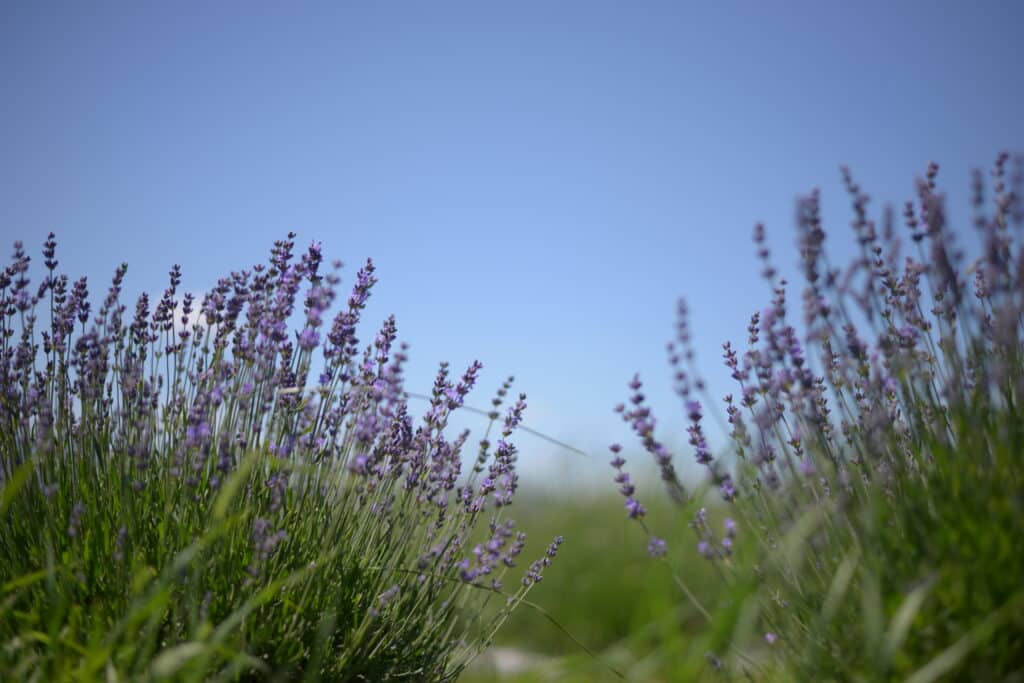
Lavender fields at Adirondack View Lavender, photo by Sam CecilHerbs from Juniper Hill Farm
Medicinal herbs refer to plants that contain substances with some sort of therapeutic properties. However, the FDA sees all herbs as food, not drugs. So it does not research, endorse, or suggest that herbs have medicinal actions. Although there have been thousands of years of applied real-world evidence of the efficacy of herbs, since the FDA does not study their medicinal values, it means that they are not subjected to the same testing, labeling, and regulations that drugs are.
While many factors have pushed medicinal herbs out of mainstream use in the past century, the popularity of medicinal plants seems to be back on the rise. In response, there has been an increase in farms specializing in growing medicinal herbs in the Northeast. In Vermont and the Hudson Valley, the number of small farms growing medicinal herbs for wholesale and retail sale has grown rapidly over the past decade, as have the number of small independent value-added producers and herbalists formulating and selling herbal products. Much like with the local food movement, will the Adirondacks follow suit with an increase in herb farms and producers?
Data on what herb farms currently exist in the US is limited, as they are clumped under “other specialty crops” in past USDA Ag Census reports, which accounted for 1,789 farms in the US in 2017, up from 987 farms in 2007.
Like any food, herbs that are grown using methods that support soil health and clean water, and are shipped a shorter distance, are going to have less of a negative environmental impact.
A few herbalists and herb growers in the Adirondack region weigh in on what growing herbs and making herbal products in the North Country looks like, and why buying local herbs is so important.
Cultivating Agritourism and Herbs in the Adirondacks
Only a handful of growers focus on herbs in the Adirondack region. Some veggie producers also grow culinary herbs for sale like basil, parsley, and sage, and we have a few farms that specialize in medicinal herbs, like Hopenhagen Farm, a farm run by Mary and DeVere Rumble who grow lavender and make value-added products in Copenhagen New York.
As Mary and DeVere neared retirement, they saw many vineyards popping up in the region. They knew they wanted to do something similar with their 13-acre farm in their retirement. As micro-breweries rose in popularity, they turned to growing hops interplanted with lavender. Today, they maintain two rows of hops but primarily grow lavender, make lavender products, and host agritourism offerings on their farm.
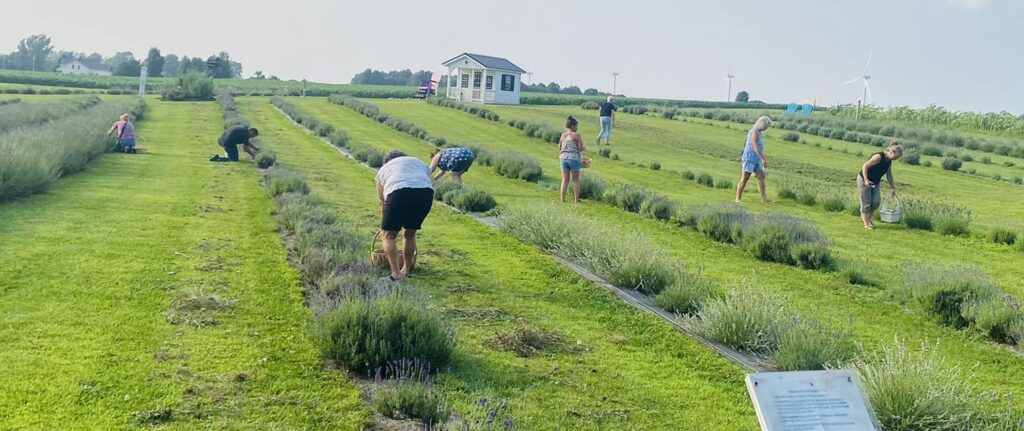
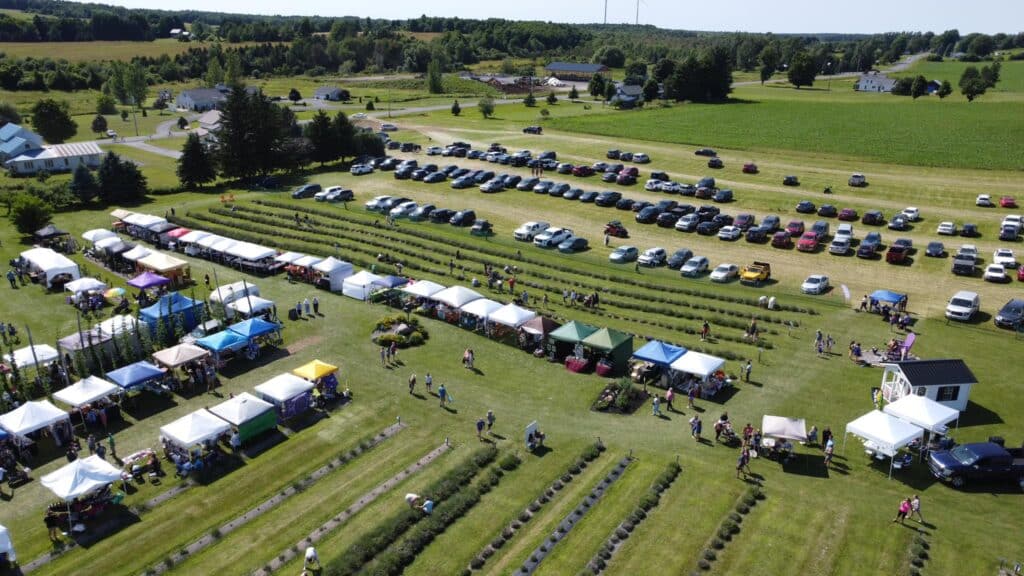
You-cut lavender is available on select dates during the summer at Hopenhagen FarmThe Hopenhagen Lavender Festival
Their product line includes dried lavender bundles, essential oils, culinary lavender, and many culinary and personal care lavender-infused items. They collaborate with Tug Hill Estates, a local winery to make a lavender wine, sell their products in a few TasteNY stores, and have an on-site shop with all of their lavender products open on Friday and Saturday each week from Mother’s Day (when they kick off the season with a lavender plant sale) until Christmas.
Mary says, “Herbs are an incredible support to our lives. Herbs are natural; indigenous people all over the world have used herbs medicinally and in food since time immemorial. We should be cooking with more herbs.”
They also welcome people to their farm on you-cut weekends, special events like yoga in the lavender fields, and private farm and garden tours with a high-tea service. They host a big Lavender Festival each year, featuring local craft vendors, food trucks, live music, and lavender-infused treats, which has become a staple in the community.
Mary underscores the importance of buying local herbs as we do local food. She says, “When you buy local from small shops, you know they grow it. You can understand how they grew it, how it was handled, and how it was processed. You can visit small local farms and see how they are stewarding their land, which may reflect how they take care of their products too. You really don’t know the origin of products bought online, how they are grown, where they were grown, or what has been done to them.”
A Demand for Small Batch Herbal Products Made with Adirondack-Grown Ingredients
Laurie Berube of Vermontville started Berube Botanicals to bring plant medicine from the land of her farm to her community. Laurie is an herbalist of 20 years who was drawn to growing herbs and sharing herbal products with her community after getting to know the benefits of herbal medicine in her own life.
Laurie is a jeweler and was selling some of her homemade herbal products along with her jewelry at craft shows and markets, and she saw the interest in her herbal products growing. Today, she sells her herbal tinctures, soaps, salves and tonics to local retailers like Green Goddess in Lake Placid, and in her self-serve farmstore.
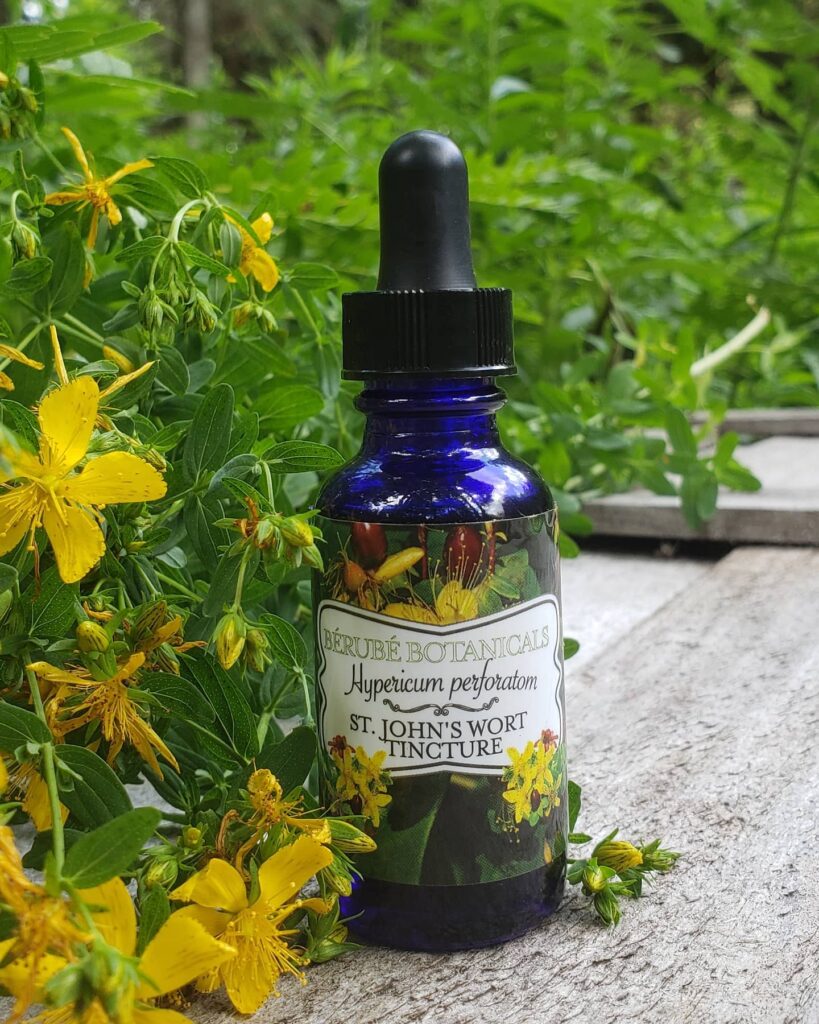
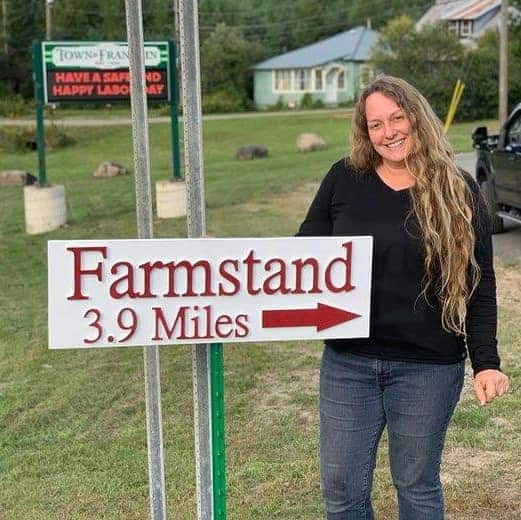
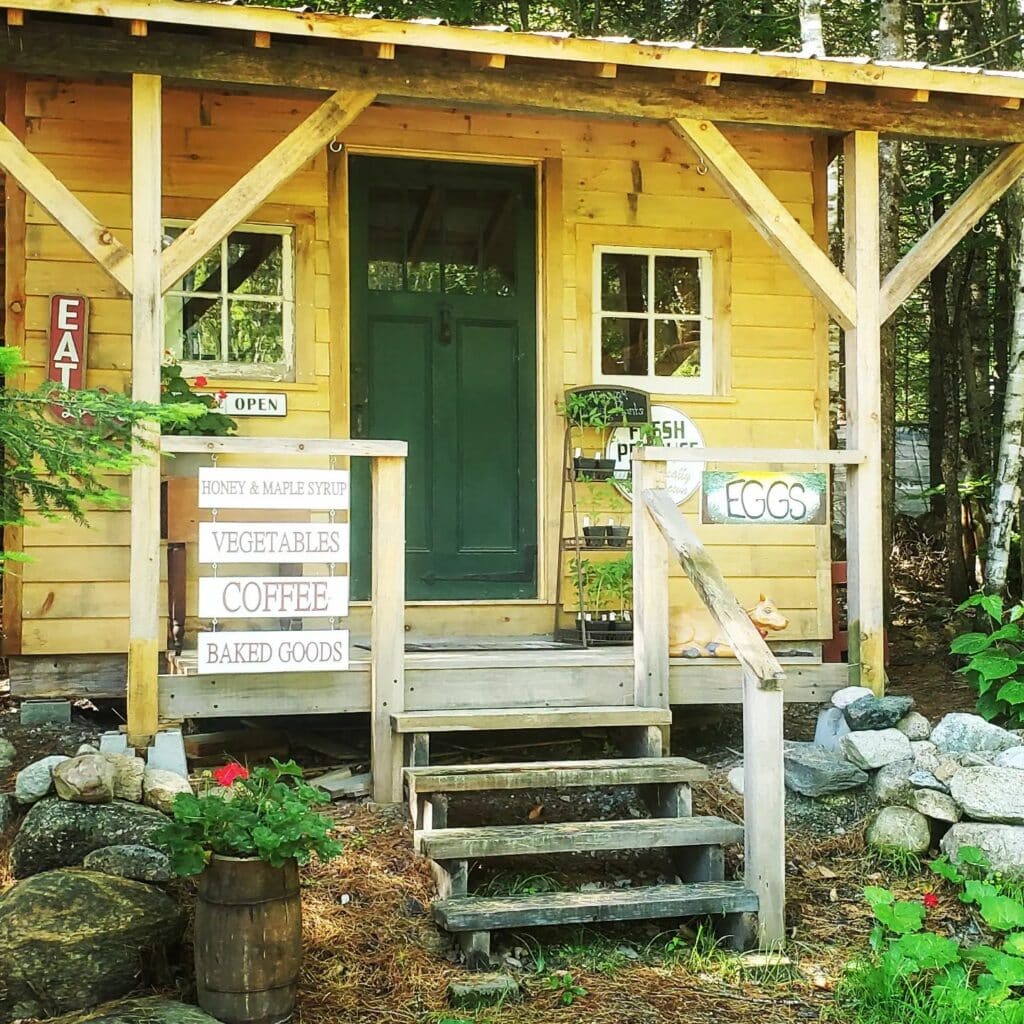
Laurie makes tinctures using cultivated and wild-harvested herbs grown on her farm Laurie Berube with her farmstore sign in Vermontville, NYLaurie’s herbal products are available in her farmstore along with other produce and other local goodies
Laurie says, “What drew me to the herbs was my own path of healing. I was looking for an alternative to pharmaceuticals; looking to nature has always made sense to me. I got a pull from certain plants and followed that feeling. I felt the call to research, learn about, and experiment with them. Most of the plants that jumped out to me were tools for my own healing, which made me want to make it available to other people.”
Laurie says, “An ounce of prevention is worth a pound of cure. You can take care of yourself from head to toe, inside and out, and regulate your moods with plants. They have evolved with us from the beginning of time; we have coexisted and evolved together.”
Laurie grows some herbs but primarily wild-harvests what she uses in her products, foraging for things like nettle, dandelion, clover, self-heal, motherwort, and plantain.
She says that for her, “…care of the land is the utmost important thing. I treat my farm like its own ecosystem. I don’t use any chemical fertilizers, herbicides or pesticides, only compost, some of it generated on the farm from the animals here.”
Laurie shares that locally grown herbs many times are of a higher quality than herbs purchased from an online company.
Laurie says “There are plenty of less than desirable herbs for sale.” Either they are not harvested and dried carefully, mold is present, or pesticides, herbicides, and fungicides are used in how they are grown.
When buying from a local herb grower or maker, it’s more likely they are harvesting, drying, and processing in small batches, and as Laurie says, “someone is doing quality control by hand. They are putting more time and care into it. We (local growers and makers) have a commitment and accountability to our neighbors.
Awareness and Interest of Local Herbs Growing in the Adirondacks
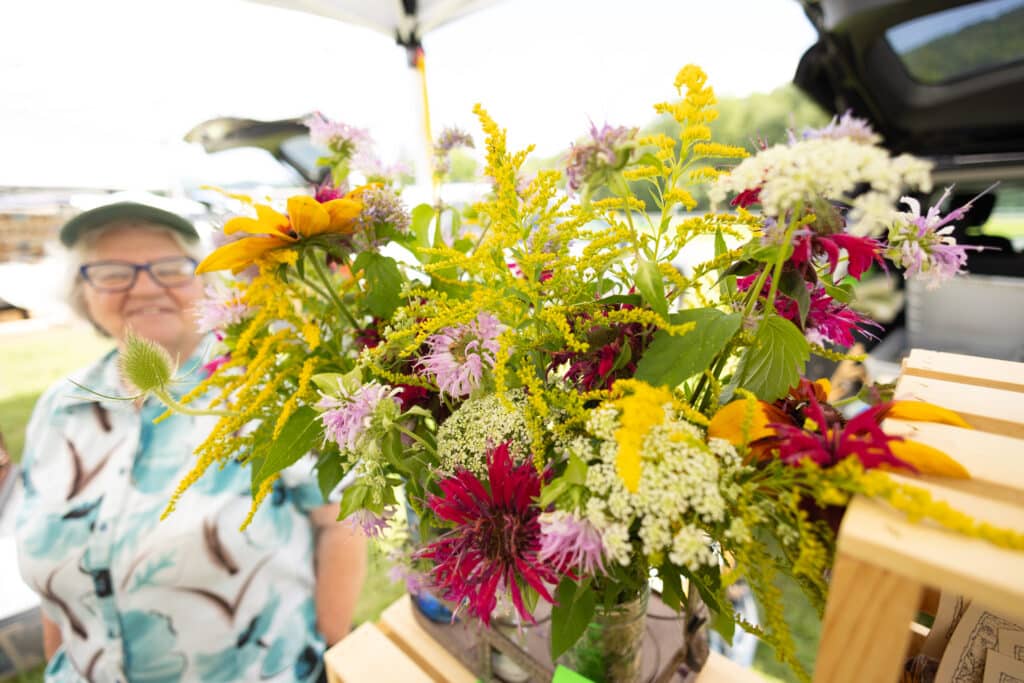
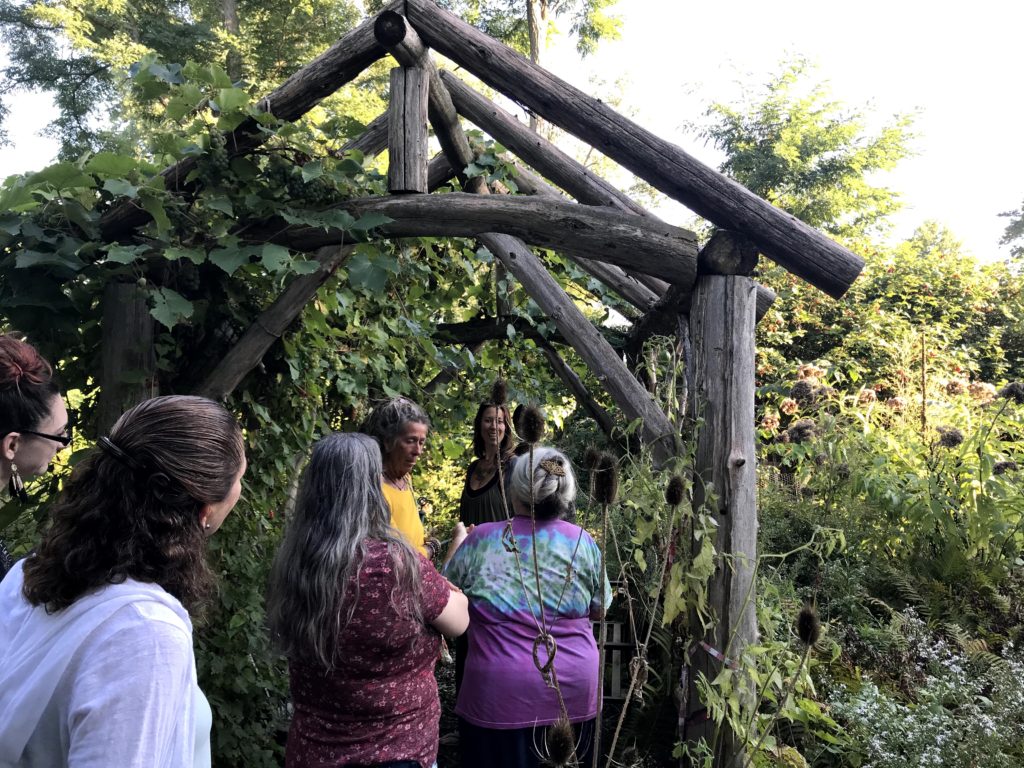
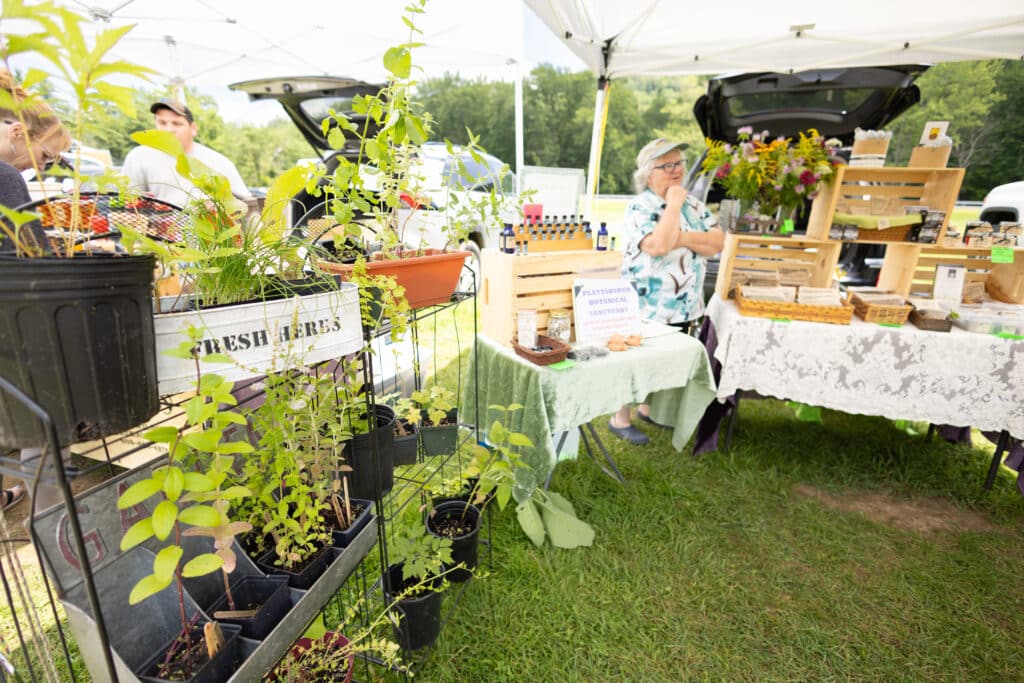
Bouquet of fresh herbs and wild plants in bloom at the Keene Valley Farmers’ Market in JulyWorkshop at the Plattsburgh Botanical Sanctuary/Underwood Herbs with Jane Desotelle
Jane Desotelle began “Underwood Herbs” in 1978, growing and wild-harvesting medicinal plants from the off-the-grid farm she was living on in the “middle of nowhere; all my neighbors were hunting camps that were almost never used.”
Today, Jane is the steward of the Plattsburgh Botanical Sanctuary, where she grows hundreds of different medicinal and edible wild plants in her backyard in Downtown Plattsburgh.
Jane has been selling her herbs, plants, and herbal products at farmers’ markets in the area for decades, and has weathered the fluctuations in popularity of different herbs each year. Echinacea in the 90’s, now chaga and CBD.
Jane says that she is noticing that people are coming to her looking for herbal remedies they can use to try to manage health problems before they start taking lifetime pharmaceuticals.
She says that people are also starting to appreciate the special value of plants. She says, “The value of the plant kingdom has grown a lot; people seem to have a lot more appreciation for the plants. They have a stronger appreciation that they are what gives us food, medicine, and oxygen. People are thinking twice about conserving the plant world. The more aware people are, the less they are doing harmful things like spraying lawns.”
But while demand and interest in medicinal herbs is growing, there are still not many growers selling directly to consumers in the Adirondack region.
For people interested in learning more about integrating medicinal herbs into their lives, Jane underscores the importance of educating yourself before consuming herbs, and looking at reputable herbal books that provide clear warnings about contraindications.
And if you’re going to use herbs, make sure you’re buying them locally for better quality, and to support the growers and makers in your community.
She says it’s “Pure economics. You should be buying everything you can locally. It keeps your dollar in the community. Growing our local agricultural community will help us be more resilient in the face of any new environmental, economic, or social disasters.”
She says, there are even health benefits of eating local food and herbs, “There are studies about the benefits of consuming herbs from your bioregion. If you’re from here and live here, you should be eating what grows here. “
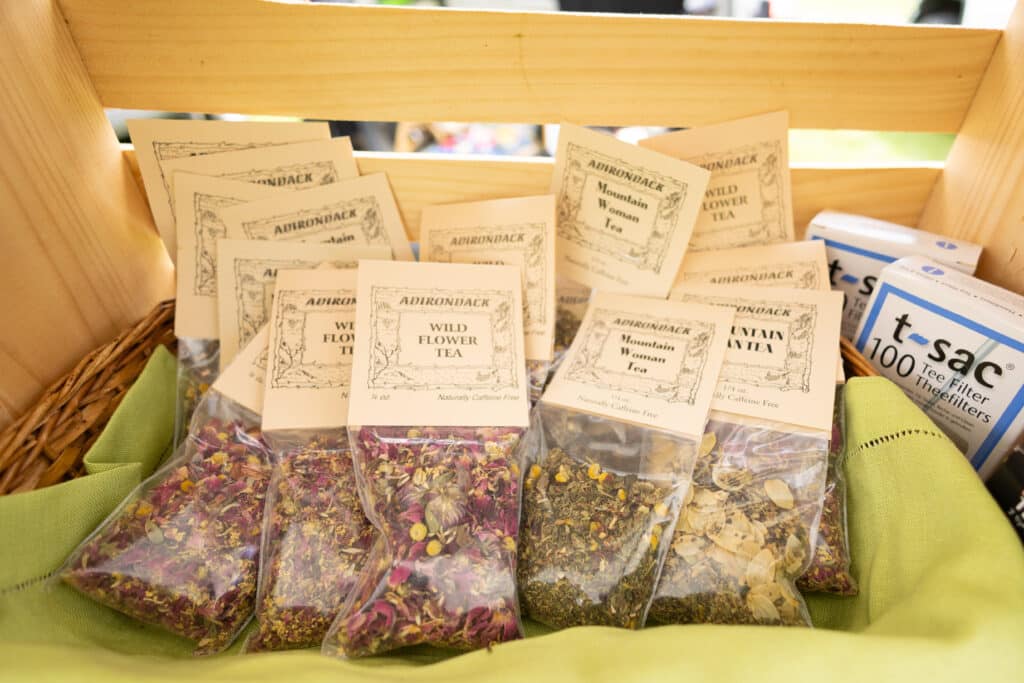
Jane sells her fresh and dried herbs, plants, tinctures, oils, jellies, and other herbal products at the Keene Valley and Plattsburgh farmers’ marketsJane makes a variety of dried tea blends
Today, Jane hosts tours and workshops in her garden at the Plattsburgh Botanical Sanctuary from Earth Day to Indigenous Peoples Day. She also sells her dried teas, plants, tinctures, oils, and other herbal products from her location year-round (just call ahead), and during the summer at the Plattsburgh and Keene Valley farmers’ markets.
Growing Herbs at Home
A very affordable and fun way to start learning about using medicinal herbs is by growing your own! Many herbs thrive on neglect and will self-seed and come back year after year.
Tips for growing your medicinal herbs:
-Since you will be using the herbs medicinally, they must be grown without the use of pesticides, herbicides, or fungicides. So skip the sprays! Additionally, you will want to test your soil to make sure there are no heavy metals like lead or arsenic.
-Most local nurseries have very limited medicinal herb plants for sale; usually, they just carry common plants, like lavender and echinacea. The most affordable way to grow herbs is from seeds that you can purchase online from reputable seed companies.
–Many herbs can be started without a greenhouse or grow lights. Look for instructions for direct-seeding your herb seeds on the seed packet. Some may need cold stratification- or exposure to the cold before they will germinate, so they should be sown in the winter or very early spring.
-Another inexpensive way to get herb plants is to propagate from fresh herbs you’ve purchased. Put some stems of fresh rosemary or mint in a jar of water and they will grow roots. Then you will have several little plants ready to be planted outside.
-Many medicinal herb plants also attract pollinators and are beautiful landscaping plants when in flower, like calendula, chamomile, california poppy, and feverfew. Interplant them with your other flowers and veggies.
–Know your USDA growing zone. Some plants (especially lavender) will not come back every year unless they are in the right growing zone.
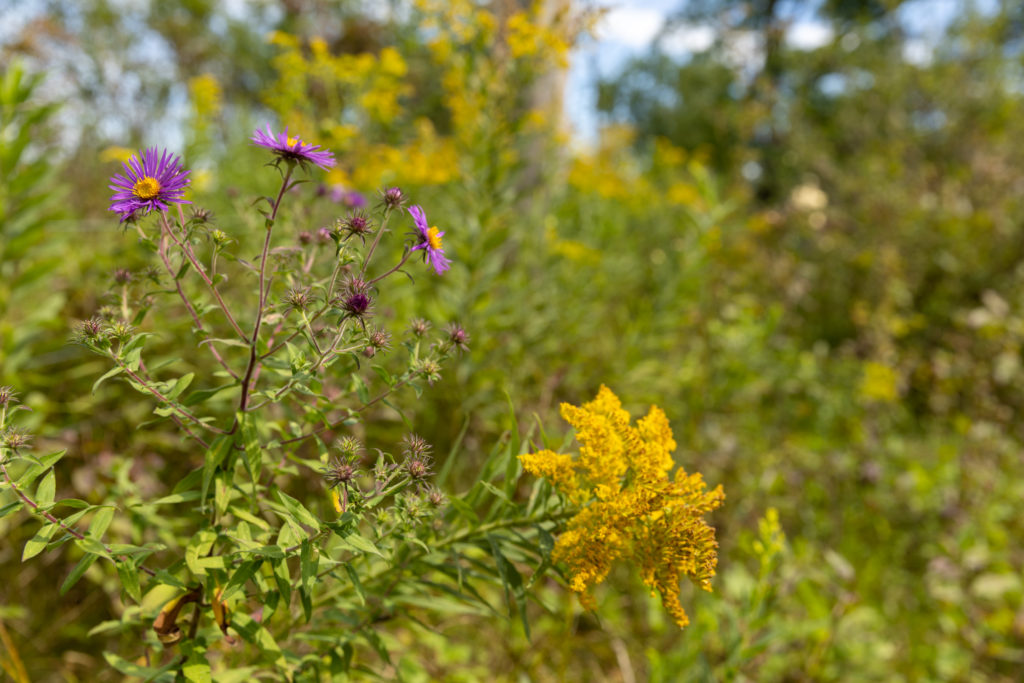
-Many medicinal plants grow wild! Get to know the abundant wild plants near you that can be harvested sustainably, such as dandelion, burdock, and red clover.
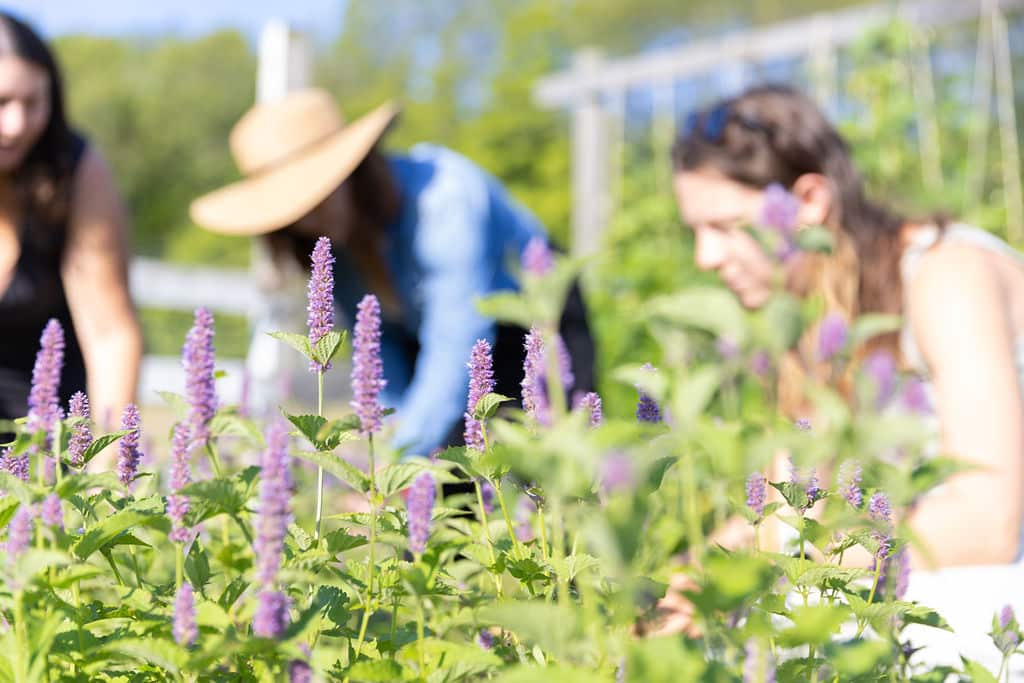
Anise hyssop in bloom at DaCy Meadow FarmWild goldenrod and purple aster (both medicinal) growing at Essex Farm
Where to Buy Local Herbs & Herbal Products
Find local herbs and herbal products by browsing the map of farms and retail locations at adirondackharvest.com/browse
CCE Essex believes fully in the power of plants but does not have the medical authority to endorse the use of medicinal herbs. Consult your healthcare provider before consuming medicinal herbs.
This article originally appeared in the January issue of Northern HGL Magazine
Spring 2023 Lake Placid & Adirondack Culinary Getaway
MAY 5, 6 & 7 2023 | THE MEXICAN EXPERIENCE
The Carriage House Cooking School has once again teamed up with The Mirror Lake Inn to offer select getaway packages celebrating the bounty of the Adirondack Park’s vibrant farm to table landscape.
Getaway registrants will enjoy the comforts and luxury of the Mirror Lake Inn, which is the epitome of Adirondack hospitality, along with multiple demonstration style cooking classes, each designed so that participants can return home, confident to replicate and share their learning experiences.
Chef Curtiss, the former Dean of Culinary Arts at the prestigious New England Culinary Institute, has long considered the Mirror Lake Inn the perfect venue for cooking classes and a focused culinary weekend.
He has been a guest chef and instructor with the Inn’s numerous Food & Wine Festivals and several special events and now serves as The View Restaurant’s Executive Chef and Food & Beverage Director.
This weekend is all about celebrating the comfort and cuisine of the Mexican house table while tasting the terroir of the Adirondacks and surrounding farmland.
Check out the schedule and class menu below.
MAY 5, 2023
Welcome Reception
5:30 to 6:30 PM
Gather for a meet and greet with Chef Curtiss of the Carriage House and the Mirror Lake Inn Culinary team. Hors d’oeuvres are provided and there will be a cash bar available.
SATURDAY MAY 6, 2023
Cooking Demonstration | Tamales
12:30 to 3:30 PM
Mexican food, like others cuisines in equatorial regions, is full flavored, quick to prepare and delicious. It is important for me to identify and expand the home repertoire in ways that are both traditional and contemporary. It is the goal of this class to share the joy for life that Mexico is famous for and to make it’s cuisine accessible, understandable and actionable.
“The simplicity of preparation and the flavors of home style Mexican food make for meals that are more socially engaging, delicious and enjoyable.”
Chef Curtiss
Saturday’s demonstration style class will showcase the simplicity, accessibility, comfort and flavors of Mexican cuisine with the sense and sensibility of seasonal influences on our palates and tastes. In this class chef Curtiss will showcase how you can replicate a Mexican inspired menu at home with the confidence of a chef.
Demonstrated Recipes
Tamales
masa, lard, cheese, onion | masa, lard, chorizo, onion
*chorizo recipe will be demonstrated in class
Pico
tomato, onion, jalapeno, lime juice, olive oil, cumin, salt
Tres Leches Cake
sponge cake, tres leches, whipped cream, cinnamon sugar
While the foods used in this class will be primarily sourced and inspired from the Adirondacks and its surrounding farmland, Chef Curtiss will be discussing how to source products local to you that will yield you the same results.
Registration for the class includes:
printed recipe packet
bottled water
tasting plate
SUNDAY MAY 7, 2023
Cooking Demonstration | A Mexican Inspired Brunch
9:30 AM to 12:00 PM
Chef Curtiss will pull from the Adirondacks and its surrounding farms, rivers and forests to showcase recipes for a delicious Mexican style brunch of sharable platters and plates, typical of a Mexican meal.
“The concept of sharing a table is deeply rooted in traditional and contemporary Mexican culture. When you order food in a restaurant you order it for the table, not yourself. This approach binds those at the table to one another and makes for more memorable experiences.”
While the foods used in this class will be primarily sourced and inspired from the Adirondacks and its surrounding farmland, Chef Curtiss will be discussing how to source products local to you that will yield you the same results.
Registration for the class includes:
printed recipe packet
bottled water
tasting plate
For more information about booking please call one of the Mirror Lake Inn’s reservation specialists at (518)523-2544 or info@mirrorlakeinn.com.
Workshops & Activities include: * What’s Your Food Print? * Seed Starts for Kids * Worm Composting Demo * Local Farms Scavenger Hunt * Flower Starts for Adults * Story Hour & Up-cycling Craft * The Connection Between Food Waste & Climate Change
Sample Food from your Local Farmers: * Lillie Valley Farm * Crown Point Dairy * Crown Point Bakery * Daughters Five * Juniper Hill * North Country Creamery