• Skip to main content
  • Skip to footer

Adirondack Harvest

Farm Fresh Foods and Local Producers

  • Browse
  • Farmers’ Markets
  • Wholesale
    • Buy Wholesale
    • Local Food Wholesale Database
    • Sell Wholesale
    • Join the Wholesale Database
  • Learn More
    • Explore the Adirondack Cuisine Trails
      • About the Adirondack Cuisine Trails
    • Benefits of Buying Local Food
    • What’s in Season When
    • Farming in the Adirondacks
    • Meet the Makers
    • Decoding Food Labels
    • Food Assistance Benefits & Local Food
    • Food Assistance Benefit FAQ
    • Blog
  • Events
    • About the Adirondack Harvest Festival
    • 2025 Adirondack Harvest Festival
    • Event Calendar
  • Email Sign-Up

Harvest Blog

Celebrating International Women’s Day: North Country Women Farmers Share Their Experience in Agriculture

03/08/2026

By Tim Rowland | Contributing Writer

Courtney Grimes-Sutton’s grandfather was quite proud that he had clawed his way out of farming to become a dignified, suit-and-tie insurance salesman. So he was understandably nonplussed when she broke the news that she was desirous of a career in agriculture. “Dirt to dirt in three generations,” he sighed.
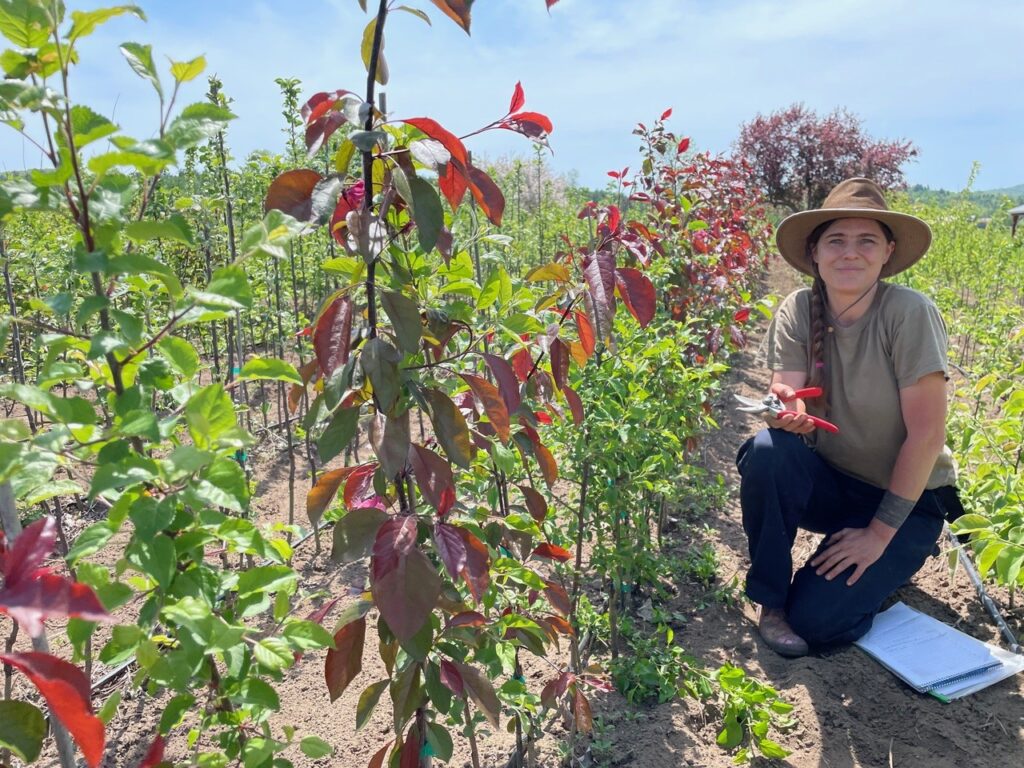
A woman kneeling next to grafted apple trees.
Courtney Grimes-Sutton of Mace Chasm Farm, kneeling next to grafted apple trees. Photo by Adirondack Harvest.

But like many Adirondack women who have chosen a career in agriculture, Grimes-Sutton, co-owner of Mace Chasm Farm, believes it’s people in office cubicles who deserve our pity. “Sitting is the new smoking,” she said.

In this, the UN’s International Year of the Female Farmer, the North Country is a role model. According to the USDA, there are 1.2 million women farmers in the US, representing about a third of producers. 

But in Essex County, that percentage is closer to half. There are 513 producers in Essex, and 229 are women.

“The northeastern small AG scene is quite female,” Grimes-Sutton said. “These are relatively new and smaller scale businesses — maybe they’re socially comfortable workplaces for women in addition to meeting needs for those who like the varied, physical work of agriculture.”

Grimes-Sutton began her career in arts school before learning how to butcher a steer and run a welding rig. She also propagates antique fruit trees, grafting favored roadside wild apples onto hardy root stock so local families could have one of these special trees of their own.
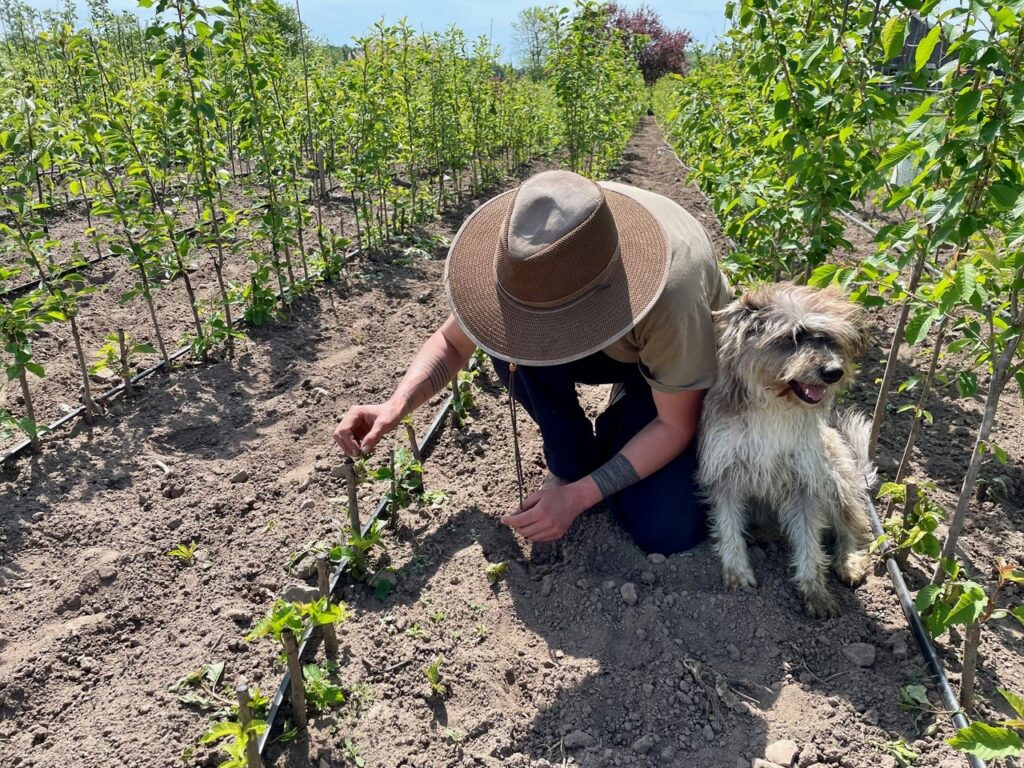
Grimes-Sutton shown grafting apple trees.
Grimes-Sutton shown grafting apple trees. Photo by Adirondack Harvest.

“Women have been socialized to multi-task at a superhuman capacity, and that alone brings a lot to the table in any field,” she said. “We’re also socialized to care and be attuned to the nuances of needs around us. These skills go a long way in managing the life systems and social systems that sustain a farm business.”
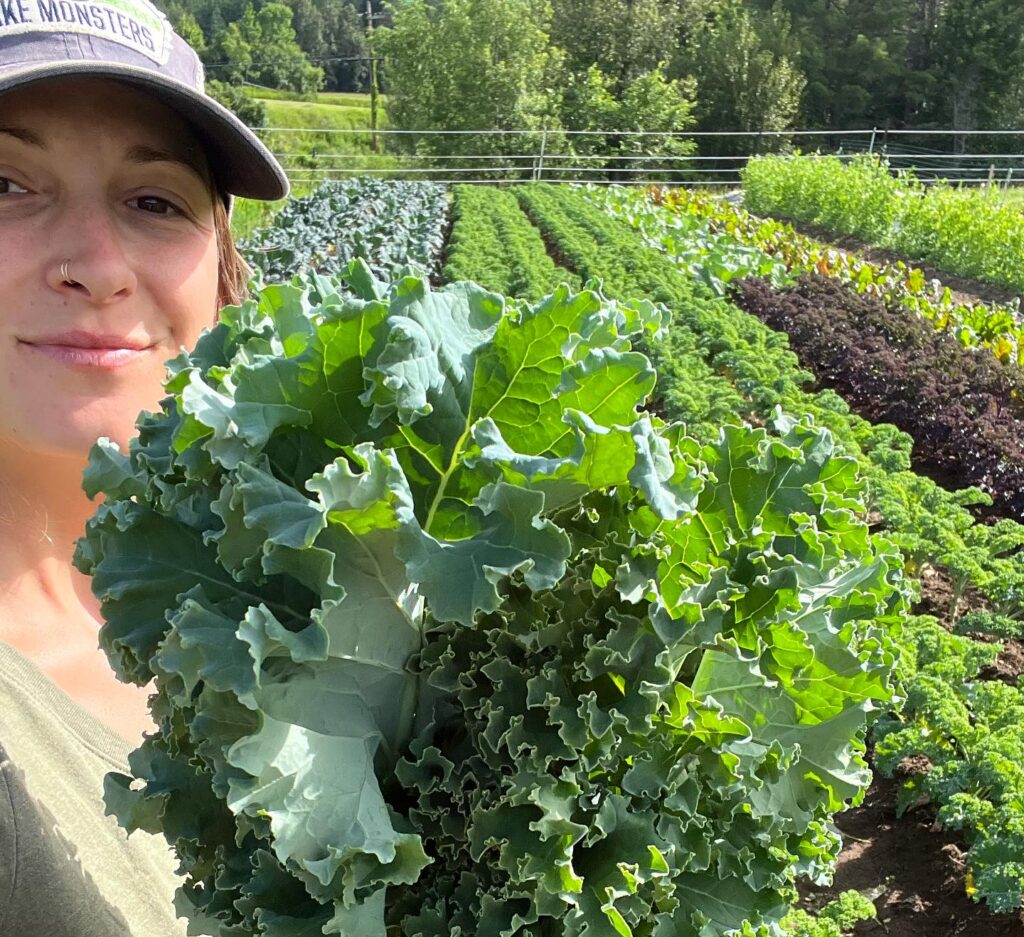
A woman holds a bouquet of curly kale.
Becca Burke, of The Meadow Farmstand, holds a bouquet of curly kale. Photo provided by Becca Burke.

Growing up in the sprawling city of Columbus, Ohio, Becca Burke, owner of The Meadow Farmstead in the town of Jay, did not appear to be a candidate for growing vegetables in the Adirondacks. “There was an aspect of wanting to be healthy and eating a certain way and respecting the Earth, but didn’t really make that connection to farming until later on,” she said.

She caught the bug in 2012, visiting friends on a homestead in Northern California where they were “planting pomegranate trees and digging ponds and growing weird things.” Burke enrolled in Chico State University, which has a strong organic vegetable program, but more typically attracted male scions of big California farmers with commodity-scale olive orchards and dairies. 

“It was pretty evident from the beginning that I was in a small group of people that were focused on a different type of agriculture,” she said. “I was really drawn to the small, diversified farms raising vegetables; I wasn’t really interested in commodities or tree production.”

Burke hadn’t heard of the Adirondacks, but a friend connected her with an internship at North Country School in Lake Placid, which cemented her love of the land. But, after that, as she bounced around from small farms in California to Oregon and then all the way back to Vermont, the same problem kept materializing. These small farms could scarcely pay a living wage, and their owners weren’t going anywhere, so there was no room for advancement. Burke decided she wanted her own farm.

Her path to Jay helps explain why the North Country is such fertile ground for female producers. As opposed to sitting in the cab of a tractor all day, these small, curated farms require a wide arc of activities and problem-solving.

“I would say that women in general tend to be more detail oriented and really great multi-taskers,” she said. “With this type of farming there are a  hundred different things going on at any given time. You have so many things in your head and, especially at the scale I’m at, everything needs to be meticulously organized. And it’s not to say that there are no male farmers that are like that, but I do think that there is more space for men in that more industrial world where they’re getting to use their big machines.”

The ability to multi-task — the term comes up often in discussions with female farmers — has value to the farm, but also to the communities in which they live. When the small Ausable River Valley Business Association needed a grant, it was Burke who knew how to write one. 
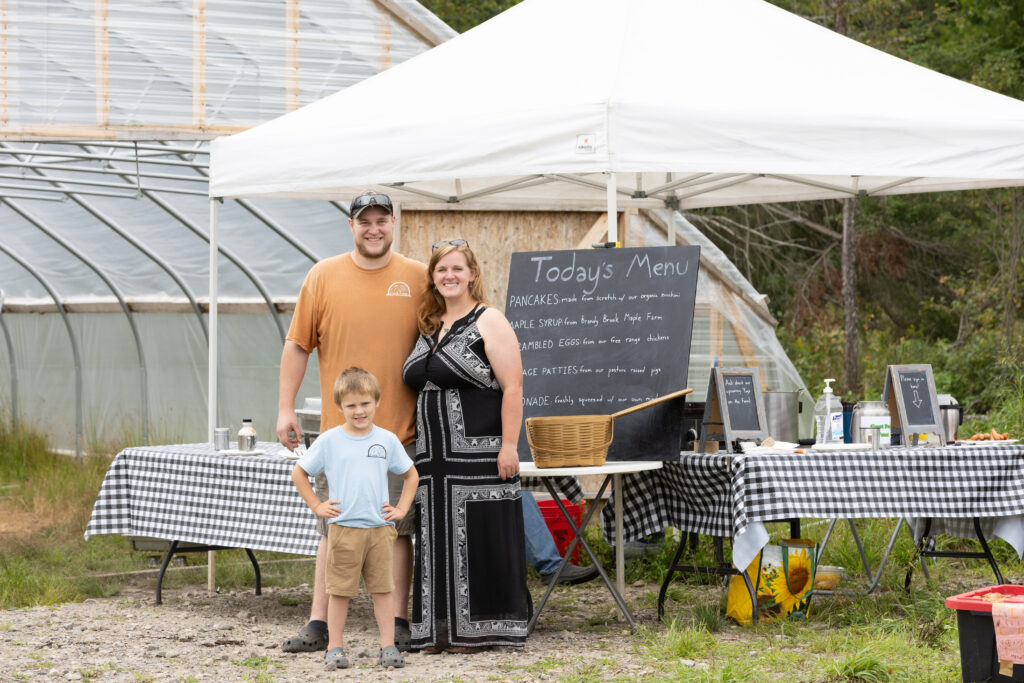
A family stands in front of an outdoor kitchen.
Brandon & Laura Cook, and their son, owners of The Cook Farm. Photo by Katie Kearney, 2024.

Laura Cook, co-owner of The Cook Farm in Franklin County, grew up in one of these small agricultural communities in New Hampshire, but farming was the last thing on her mind when she went to school in Athens, Ga., with an eye on a career in finance in Atlanta. The city and the culture changed her mind in about a week.

“I had a meltdown, and I was like, I’m not cut out for this, and I’m gonna quit school,” she said. “I cried and called all my friends at home, and told them I wanted to move back. And my best friend from home grew up showing through 4-H and she worked on a dairy farm. She said, ‘No, you just need to meet more people like me.’”

So Cook switched her studies from finance to cows. “I joined the Dairy Science Club and the dairy show team and got my first taste of the dairy industry,” she said. “And just immediately it clicked for me, like, this is what I want to do with the rest of my life.”

She went to work on a dairy farm before moving to Owls Head to raise goats, make goat-milk soap and raise just about everything else except, ironically enough, cows. In that time, Cook has seen more women enter the field, particularly in smaller farms.

“When I worked on the dairy farm, there were a lot of days where I was the only woman on the property, and that was on a crew of 20,” Cook said. “I had a mentality of, like, oh well, I’m gonna pick up this 100 pound calf and put it over my shoulder and carry it to the other barn over there, and that’s not a problem, even though there are smarter ways to do it — but when you’re 19 and you’re the only woman, you gotta prove yourself.”
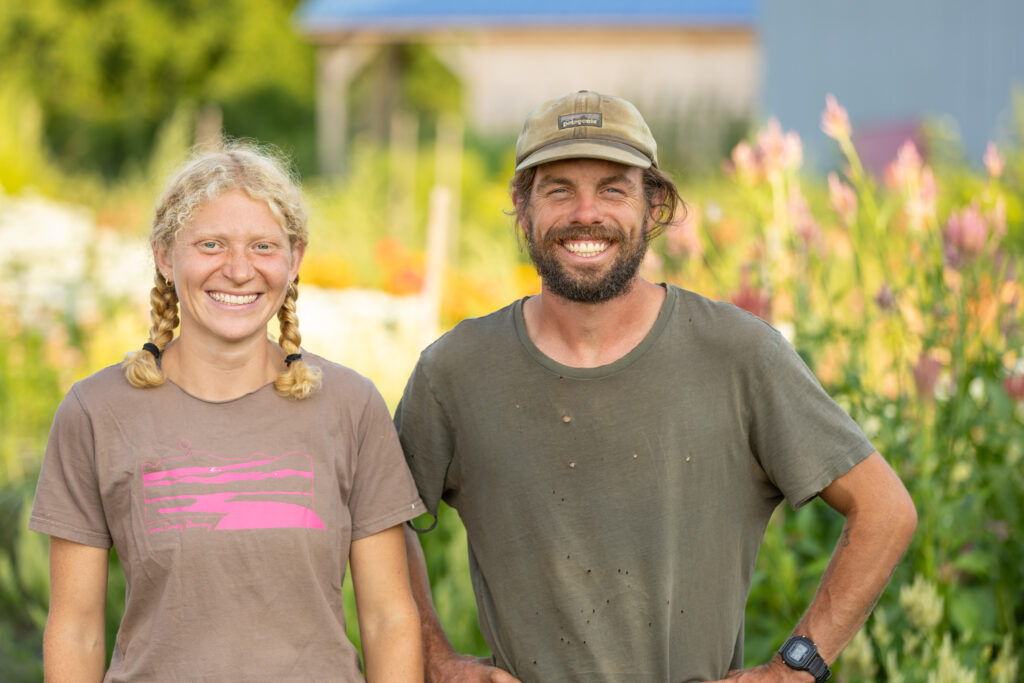
Marisa Lenetsky (left) and Mike Champagne (right), co-owners of
North Point Community Farm.

When Marisa Lenetsky, co-owner of North Point Community Farm in Plattsburgh, walks into the auto parts store now, she’s treated with respect. But it’s taken some time. “The North Country is in some ways a pretty traditional place culturally, so some people aren’t used to, like, seeing a woman drive a tractor,” she says.

She and her business partner, Mike Champagne, prioritize an atmosphere among their employees where it’s assumed that men and women are equally adept at all tasks. Sometimes they still have to explain that they are partners in business, only to those who assume a woman would only farm in support of her husband. “He’s great about being extremely supportive and making it clear to people I actually have more tractor experience than he does,” Lenetsky said.
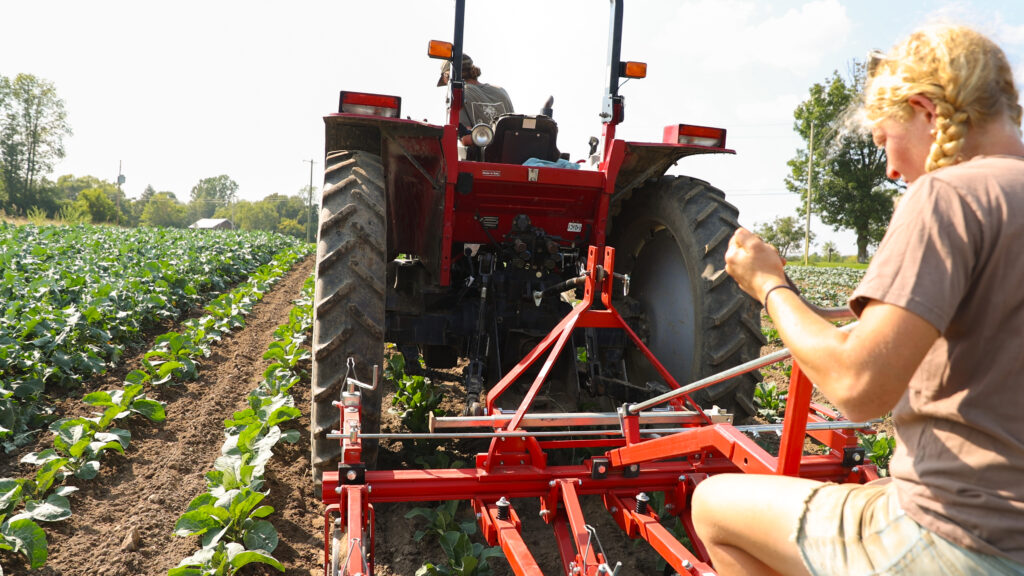
Lanetsky being pulled behind a tractor.
Lanetsky being pulled behind a tractor. Photo by Katie Kearney, 2024.

It helped when they began to farm fields along the busy stretch of Military Turnpike. “So for the first time, people driving by could see us in the field and on the tractor,” she said. “And I think that we definitely have gotten a huge response — people just like watching us work and quietly observe what we’re doing. Around here, respect just needs to be earned, which is legitimate. But four years in, I think people are starting to figure it out.”

If earning the respect of others is important, so is maintaining personal equilibrium. Farming can be socially, emotionally and financially taxing too. Some of the support in more mainstream professions can be lacking. Health care, for example, can be unaffordable, although as Grimes-Sutton notes, good exercise and good food is probably the best health care policy of all. “I like the steady, urgent work, which keeps my mind present,” she said. “In a society with too much clutter, in a mind with too much clutter, I’m grateful for a job that isn’t generating more clutter. The work is inherently hopeful, the crops and seasons successive, and it all adds up to a long game worth thinking about.”

Lifestyles are both rewarding and challenging. “I don’t have to go anywhere, and it’s wonderful, but it’s also extremely isolating,” Burke said. Particularly in-season there is little time to communicate with the outside world, and to talk about perhaps better coordinating production or transportation.

But at the end of the day, long as it might be, the connection between women and the land is embedded from time immemorial. “I think that in many ways, farming is about nurturing the land or the crops or the livestock, and I think that’s just something that comes really naturally to a lot of women,” Burke said. “And really, who wouldn’t want to work outside and have a meaningful job instead of being stuck in an office?”
The Home-Scale Forest Garden: New WPBS Original Show With Adirondack Harvest Member, Dani Baker

03/05/2026

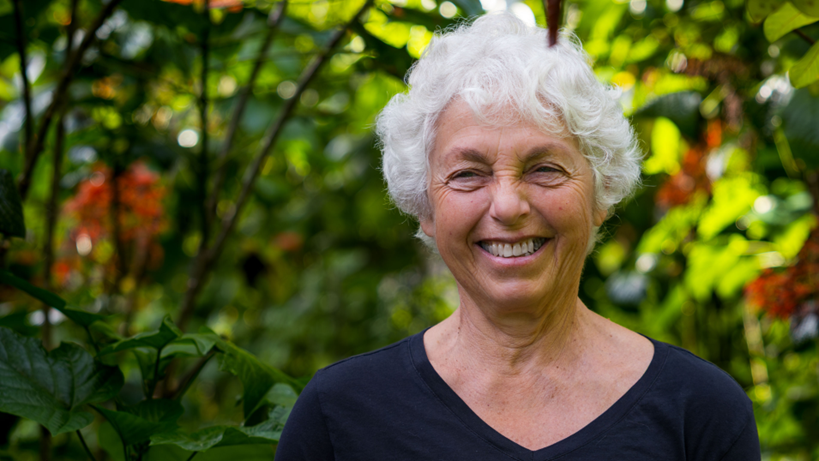
A picture of a woman smiling. Her name is Dani Baker.
Dani Baker, owner of Cross Island Farms and The Enchanted Edible Forest. Photo provided by WPBS.

Since 2023, WPBS has been working in collaboration with Adirondack Harvest member, Dani Baker, to produce a weeknight show based on her book, The Home-Scale Forest Garden. The show will be on Mondays at 7:30 PM, beginning on March 9th. Community members can watch the show on WPBS-TV and can stream it for free on the PBS app.

Gardening programs have been a staple of the WPBS schedule, with shows like From a Country Garden and The Gardener with Ed Lawrence. With almost 25 years since WPBS aired a show produced in-house, the station is very excited to debut the new program, The Home-Scale Forest Garden.

“It’s really been a labor of love,” said Tracy DuFlo, Director of Production and Executive Producer at WPBS. “We filmed eight episodes over the four seasons, and it was very fascinating to see Dani’s garden on Wellesley Island transform with each season. One thing I found really interesting is that there is something to harvest in a home-scale forest garden almost year-round.”

Based on Wellesley Island, NY, in the beautiful Thousand Islands Region, Baker and her partner, David Belding, own Cross Island Farms, where the Enchanted Edible Forest is located. Baker is the author of The Home-Scale Forest Garden, a practical guide to creating a low-maintenance, sustainable, perennial, food-producing garden, and is the original blueprint of the show. On the farm, they grow certified organic fruit and vegetables, and raise chickens, grass-fed beef. Agritourism opportunities for visitors include U-pick fruit, farm and garden tours, rustic camping and volunteer opportunities to gain hands-on experience in sustainable agriculture.

Baker hopes to inspire viewers to create their own beautiful, bountiful, edible landscape at any scale—from a few dozen square feet to an acre or more. “I am very excited and grateful to have had the opportunity to work with WPBS on a TV series about forest gardening,” said Baker. “My lifetime ambition is to inspire as many people as possible to establish this kind of planting, where we work with nature to create abundant healthful harvests, while reducing our labor and helping the environment. A gardening show that is nationally distributed through PBS is the perfect vehicle to inform and inspire a receptive audience.”

Following the premiere of the The Home-Scale Forest Garden series on WPBS, the show will be released for broadcast and streaming on PBS stations nationwide later this spring.

Adirondack Apiary Management: Sustainable Practices for the Future

02/25/2026

By Bruce Kilgore | Contributing Writer

The logo of the Northern Adirondacks Beekeepers Association has a honey bee.

This month we consider our winter losses, formulating a plan to purchase replacements. It’s our annual wash, rinse, repeat cycle that drains wallets and enthusiasm for beekeeping. Package bees may seem like a simple solution; however, they come with challenges. First, a package is not a functioning colony. These are bees shaken into cages from multiple strong colonies and given a caged queen from a different source. Next, weather and long transport distances, plus rough handling, can be very stressful on the bees. Combine that with the fact you have no real contact with the producers.    

I believe, as a beekeeping community, we can do better. The majority of beekeepers in our area are hobbyists with just a few hives. I often hear, “I don’t want to care for more than that.” We need to make a change in our thinking and see ourselves as part of a whole. We need to be looking at, and plan for, the future, not just the upcoming year. We need to redefine success and become sustainable, not only in our apiary, but as a region. Just as farmers save seeds to insure a future harvest, we can create functioning nucleus colonies to support ourselves and each other. Being part of a greater whole multiplies our odds of success. What if you could get your bees from a local and trusted source or be the trusted source?

How do we make these changes? First, lose the “go it alone” mentality. You are not alone. Become an active participant. Open yourself up to ask for or offer help. What might this look like? If you are a beekeeper with a few hives, and that is all you care to manage, you can support other beekeepers. What if you had a great survival rate coming out of winter and do not need to buy bees? Your queens will be primed to swarm this season. You could create and sell a nucleus to someone needing to replace losses. If you need replacements, you can commit to buying local nucleus colonies and queens. Other options you might consider is to offer swarm cells, swarms, splits, graft able larvae, or host mating nucleus colonies. I’m sure the list goes on. In return, you may find a growing community of supporters. This will create a positive feedback loop. Your success becomes community success.

Serving Clinton, Essex and Franklin counties, Northern Adirondack Beekeepers Association (NABA) is committed to a sustainable future for local beekeepers. Being part of our network of beekeepers opens possibilities, and a higher likelihood of success. Beginning in April, NABA will be offering hands-on workshops, such as building nucleus boxes and learning how to populate them.

The next meeting for Northern Adirondack Beekeepers Association (NABA) will be Saturday, March, 14th at the Cornell Cooperative Extension of Clinton County office, 6064 Rte. 22, Plattsburgh, 10:00am – 12:00pm. This month we will be discussing strategies for sustainable beekeeping as an organization. Regular meetings continue the second Saturday of each month. If you would like to be added to our growing email list, please contact me. See information below.   

Bruce Kilgore is a Cornell Certified Master Beekeeper with over fifteen years’ experience, President of Northern Adirondack Beekeepers Association (NABA), and a member of Eastern Apiculture Society (EAS) and Vermont Beekeepers Association (VBA). He lives in Saranac, New York. You may reach him at 518-578-2557 or email bkilgore7064@icloud.com

New Food Hub to Provide Farm-Fresh Food To Rural Adirondackers

02/19/2026

In this region of northern New York, access to local food is often limited by remoteness, transportation costs, a short growing season and other challenges. A new food hub will help bridge that gap between local farms and consumers. The Adirondack North Country Association (ANCA) has been awarded a grant to build a processing and retail facility that will expand local food access.

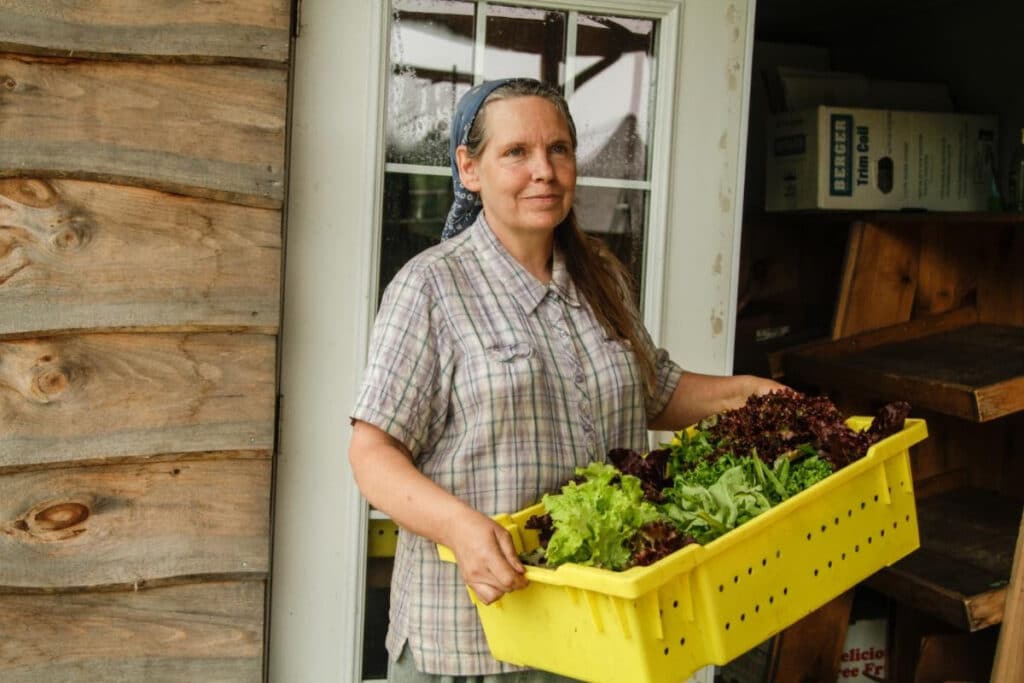
Photo depicts Cherie Whitten holding a yellow crate of fresh vegetables.
Cherie Whitten, owner and operator of Whitten Family Farm and ADK Food Hub, will establish a new food hub in Winthrop. Photo courtesy of ANCA.

Led by Cherie and Dan Whitten of Whitten Family Farm in Winthrop and the ADK Food Hub in Tupper Lake, the project will create a NY 20-C–licensed retail store and processing kitchen in Winthrop, called the Real Food Hub. The $520,640 project is supported by a $468,576 grant from the New York State Department of Agriculture and Markets’ Food Access Expansion Program, with construction slated to begin this spring.

“We are thrilled to be establishing this new food hub with the Whittens, who are an indispensable force in our local food system,” said Jon Ignatowski, ANCA’s Manager of Food Systems Business. “The Real Food Hub is going to catalyze the local food economy in the northwest corner of our region, resulting in more market opportunities for small farms and increased food access for residents in four counties.”

Located close to dozens of small farms and businesses, the new facility will reduce transportation costs and allow producers to process and store large quantities of vegetables that can be sold throughout the year. The Real Food Hub will support a variety of raw and value-added local foods to be sold across the region. The goal is to make it easier for North Country residents, including underserved and disadvantaged households, to purchase fresh local foods at an affordable price. 

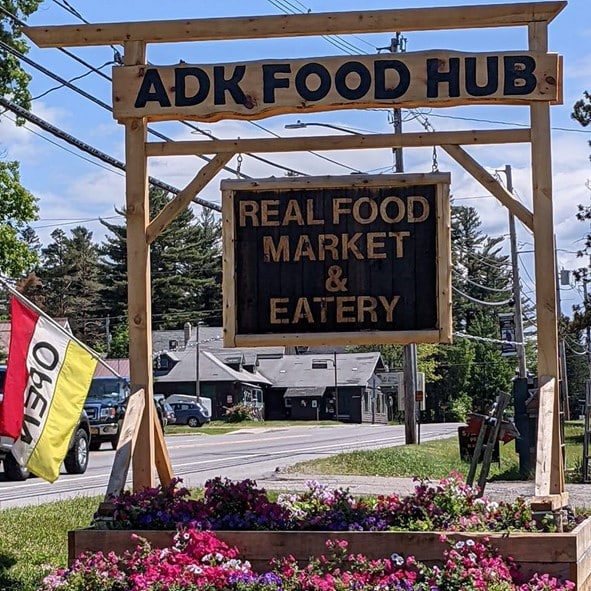
An outdoor sign displaying Adk Food Hub: Real Food Market & Eatery

“By streamlining processing, storage and delivery systems, this facility will expand markets for farmers and increase the availability of local products in stores,” Cherie Whitten said. “It will ultimately make local food more affordable and accessible for all residents, including those who are shopping on a tight budget or through nutrition assistance programs.” 

Founded by the Whittens in 2017, the ADK Food Hub in Tupper Lake is a local food aggregation site, market and eatery that carries products from more than 40 area farms. Whitten Family Farm supplies the Hub and offers vegetable and meat community supported agriculture (CSA) shares that can be picked up at the farm or at locations in Potsdam, Massena, Lake Clear, Saranac Lake, Lake Placid and Tupper Lake. 

Article from the Adirondack Almanack.

Statewide Environmental Stewardship Award Presented to Champlain Valley Farm

02/18/2026

By Isabella Susino | Adirondack Harvest Program Lead

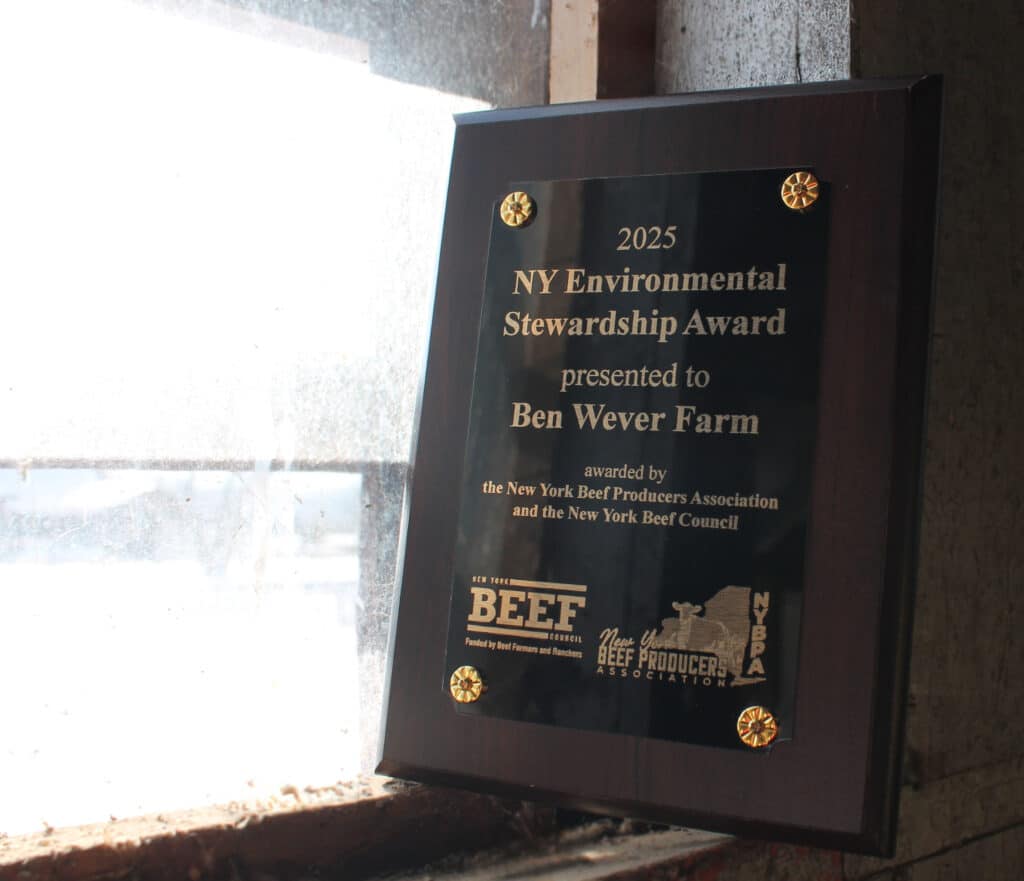
The New York Beef Producers Association and New York Beef Council have awarded the 2025 Environmental Stewardship Award to Ben Wever Farm in Willsboro, New York.

A photo of the Environmental Stewardship Award presented to Ben Wever Farm in 2025 by NY Beef Council and the NY Beef Producers Association.
The Environmental Stewardship Award presented to Ben Wever Farm in 2025 by NY Beef Council and the NY Beef Producers Association. Photo by Isabella Susino.

The award, given annually, recognizes outstanding stewardship practices and conservation achievements of Beef Producers across New York. The hope is to recognize operations with a desire to leave the land better than they found it for the next generation. 

The members of Ben Wever Farm stand in front of their red barn with the award for Environmental Stewardship they were awarded in 2026.
The Ben Wever Farm team from left to right: Chauntel Gilliland, Shaun Gilliland, Linda Gilliland, and Birken.
Not pictured: Pierre-Luc Gélineau. Photo by Isabella Susino.

Ben Wever Farm is a diversified Angus Beef cow-calf operation owned by the Gilliland family and is located within the Adirondack Park — a destination that sees over 12.5 million visitors every year. The 495-acre farm produces beef, lamb, pork, poultry, compost, eggs, mushrooms and honey, all carrying the character of their farmland. Ben Wever Farm believes that truly local food carries the “terroir” (a French winemaking term that essentially conveys character and taste) of the place and the stewards who raised it. 

Essex County Farm Bureau President Shaun Gilliland, a US Navy Veteran and retired Town of Willsboro Supervisor and Chairman of Essex County Board of Supervisors, likes to say that the farm is “grass-based,” with the majority of grazing happening out in their pastures rather than feeding primarily hay.

“We’ve been practicing rotational adaptive grazing since 2005. Based upon a belief that trying to develop a farm that’s regenerative means actually working with natural cycles of the environment. We want to be a full-cycle farm, that’s why we concentrate so much on soil health,” said Gilliland.

Gilliland said Ben Wever Farm always looks to the soil as the basis of their management decisions, which translates to more vibrant grasslands and thriving livestock. 

“Through regenerative grazing, composting materials, and then using a manure and compost mix to place back on the land helps to regenerate after taking things off of it,” said Gilliland. “We’re giving things back to the land after taking from it. Keeping to the water and carbon cycles in the environment is in the vision of what we want to do on the farm.”

Ben Wever’s ancestors had worked the farm since its establishment in 1829, creating a diversified ecosystem throughout each generation and putting their own management style into the craft. The Gilliland family started with the farm under Ben’s instruction. He taught them about the farm, the work, the animals and the love of the vocation. While Ben slowly transitioned out, the Gilliland family took on more and more tasks until they took the reins fully.

Gilliland was honored to receive the award, but said he was stunned.

“It was very much a surprise to me,” said Gilliland. “I was invited to be on the board of directors of the NY Beef Council, and this was my first meeting. The event was in conjunction with the [New York] Beef Producers Association. We were all having dinner, and they suddenly were announcing that Ben Wever Farm had won the award.” 

Ben Wever Farm had previously won the Hugh Hammond Conservation Producer Award from the National Association of Conservation Planning Partnership in 2024. 

The Ben Wever Farm team stands with both awards: Hugh Hammond Bennett Excellence in Conservation Award (2024) and the Environmental Stewardship Award (2026).
The Ben Wever Farm team stands with both awards: Hugh Hammond Bennett Excellence in Conservation Award (2024) and the Environmental Stewardship Award (2025).
Photo by Isabella Susino.

“These [awards] have been really, really just humbling, you know, that people recognize this. We don’t feel that we’re doing anything special. We’re just trying to do the right thing. To be quite truthful, the whole community of farmers in Essex County are all in the same mind and pursuing the same goals. It’s great being in this farming community.”

Being in community with like-minded people is essential for small-scale farms. Gilliland said relationship-building and collaborative efforts with agriculture service providers are key to improving the climate resiliency of farms in the North Country region.

“One thing I want to emphasize is that we’ve partnered with Essex County Soil & Water Conservation District (SWCD) and Natural Resources Conservation Service (NRCS) closely for as many years as we’ve been on the farm. With them, we’ve been participating in conservation programs that work with the farm environment.”

Gilliland said that Essex County SWCD and NRCS have been fantastic partners on projects and initiatives, and have just finished programs on climate resiliency, composting facilities and grazing management.

Ben Wever Farm is increasing its agroforestry initiatives on the farmland. Gilliland said they’re already doing forest regeneration cuttings to encourage new growth. They’re starting to develop silvopastures, the practice of mixing forestry with grazing pastures. NRCS has been assisting them in identifying and eradicating invasive plants, such as barberry, to be able to implement these forested pastures. 

The next step for Ben Wever Farm is giving veterans a second career in farming. Gilliland plans to call the initiative the Corporal Harry Weaver Project in honor of the late World War I veteran who once owned the farm. Their goal is to renovate the original 1800s-era farmhouse on the property to provide housing for participants of the initiative, getting them hands-on farming experience within the region.

Ag in the Classroom Sprouts Success with Microgreens

02/06/2026

By Tim Rowland | Contributing Writer

The second graders in Elizabeth Donahue’s classroom know what it’s like to grow their own food. Granted, they didn’t have to deal with drought, pests, crop failures or commodity prices, but on a chilly January day, they learned how to farm.

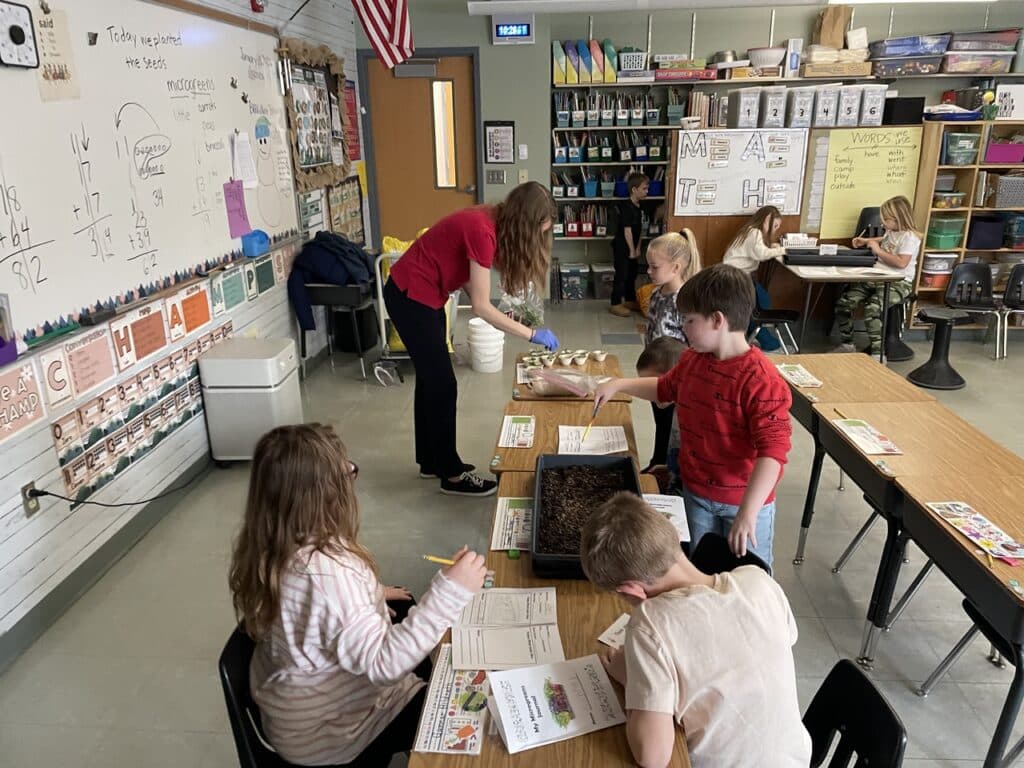
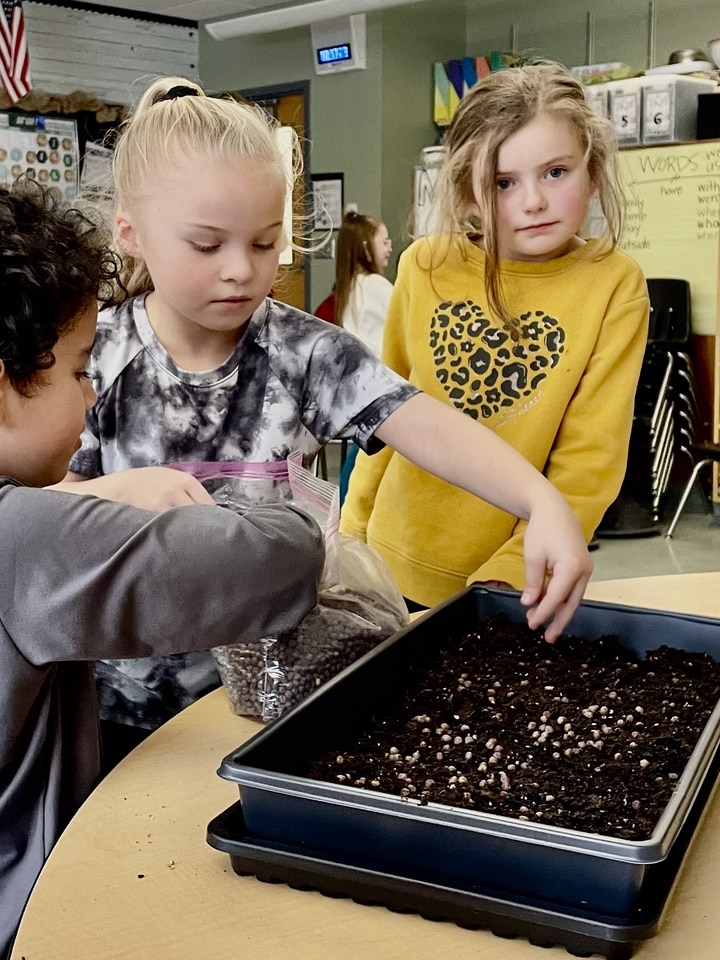
Under the guidance of Ellie Hoffman, Local Food Educator for Cornell Cooperative Extension of Essex County, the kids planted peas, broccoli and carrot microgreen seeds, watered them, and placed them in a sunny window. Within a week, the sprouts were ready to eat.

The photo depicts children sitting at their school table. Ellie Hoffman, local food educater through cornell cooperative extension of essex county, is shown planting seeds in cups.
Ellie Hoffman, Local Food Educator, portions microgreens sprouts for a taste test. Photo by Tim Rowland.

Through Cornell’s Agriculture in the Classroom program, Hoffman brought soil, seeds, trays and plenty of optimism into the AuSable Forks Elementary School classroom. “They’re growing already,” shouted a young man, whose excitement and imagination may have got the better of him. But he was not far off the mark. Sprouts are an effective teaching tool, because they pop out of the soil and are ready to consume within days. 

“Microgreens have been a popular Agriculture in the Classroom activity because they’re so hands-on,” Hoffman said. “Anyone can plant and care for microgreens — and they grow so quickly, every day brings something new to observe. It’s fun for the kids to grow different varieties of microgreens too, and to explore the similarities and differences between microgreens and full-size vegetable plants.”

Young agronomists sometimes need a little extra instruction, but Hoffman was generally successful at harnessing boundless enthusiasm for the project. And while several kids said they had helped their parents plant gardens at home, for others this was a whole new world. 

Hoffman showed them how to nest a porous seed tray inside one that trapped water, so that the soil would remain moist, but not soggy. “Make a little bird beak with your fingers to grab the seeds, and then sprinkle the seeds like cheese on a pizza,” she instructed. Too late in one case, where an overzealous planter had dumped the entire handful of seed into the middle of the tray – a fixable problem. 

The students learned lessons that even some long-time gardeners have trouble remembering. “Don’t pack the soil down, we want it to be loosey goosey,” Hoffman instructed. Also unlike many adults, these second graders have already come to learn the correct spelling of “broccoli.”

Agriculture in the Classroom lessons like these connect kids with food through classroom visits, demonstrations and farm tours. Food, they learn, is more than just a frozen brown thing put in the microwave. They also learn that there are a lot of edible goods being produced by farmers right in their own backyards, and that these foods are healthier and more efficiently brought to the table than boxes of highly processed products from the supermarket shelf.

The image depicts children planting seeds in a tray.
Children planting microgreens in trays. Photo by Tim Rowland.

For some, it’s a bit of a novel concept. “We’re going to eat a plant for no reason?” a child asked Hoffman before — without waiting for an answer — quickly transitioning to “Why are your gloves purple?” 

During the lesson, the kids are also encouraged to find some of their own answers through observation. They receive gardening journals, and record what they see each day.

Hoffman also brought some samplings of the sprouts that would soon be popping up for the students to taste. There is only one rule: Don’t use the “E-word” (Eww).

The results were cautiously, if not universally, positive. Young palates have been trained by the commercial food industry to be sated with sugar and fats, so appreciation of food in its natural state is something that must be learned as well. Hoffman does this by introducing them to pea shoots, a gateway sprout that is naturally sweet and will hopefully encourage kids to experiment with other microgreens. And they do.

“A lot of students discovered that they enjoyed the micro versions of larger vegetables they didn’t normally eat, like broccoli,” Hoffman said. “Next to apples, microgreens inspired the most requests for second helpings!”

This article is part of a series about activities supported by Harvest NY’s Rooted In Learning Grant. Harvest NY, a program of Cornell Cooperative Extension, champions the state’s farm and food economy through assistance with local food and supply chain management, urban agriculture, community gardens, emerging crops, and agriculture climate resiliency.

Essex County Communities, Organizations Meet Direct Food Assistance Needs Amid SNAP Benefits Pause

02/06/2026

By Tim Rowland | Contributing Writer

Three weeks before Thanksgiving, a traditional time of bounty, food was a big topic of discussion in Essex County for all the wrong reasons. 

Instead of turkey size or the relative efficacy of adding marshmallows to the sweet potato casserole, nonprofits and government agencies were worried that there wouldn’t be enough food to go around to families that were already stretched to the brink.

Image depicts a woman and a man at a food pantry looking at a box of shelf-stable food.
Photo provided by the USDA’s Food and Nutrition Service (FNS), Supplemental Nutrition Assistance Program.

Food banks had been affected by cuts of $420 million in Local Food Purchase Assistance, and $500 million from the Emergency Food Assistance Program. Then came the government shutdown, which interrupted direct payments to low-income individuals, who buy food with a debit card under the Supplemental Nutrition Assistance Program (SNAP). 

Less commented upon, but equally impactful was interruption in the Home Energy Assistance Program. “We were worried that people would have to choose between food and heat,” said Kim Trombly, Director of Community Impact for the Adirondack Community Foundation.

But the near-crisis demonstrated the Adirondacks’ flexibility and giving nature, as special nonprofit programs kicked in and individuals, communities and governments recognized and responded to the challenge.

“When we were hearing from our partners that there was increased need because of cuts or pauses with the government shutdown, we recognized there was a need for urgent response in our community,” Trombly said.

So the foundation activated its Special and Urgent Needs (SUN) Fund, a fast-response granting program for community crises. A call went out to donors alerting them to the need, and the result was a flow of funds that could quickly and efficiently be distributed to community pressure points.

The foundation wound up sending an average of $1,500 apiece to 36 organizations, Trombley said. The money was used in a variety of ways, including direct purchases of food by food pantries, school backpack programs, community meals and filling grocery carts. 

For those who were hearing about cuts to food programs through the news, SUN offered an opportunity to respond. “We heard from our donors that they were pleased we had opened this up, that they were looking for ways to direct their philanthropic dollars out to the community quickly,” Trombly said.

If there was a silver lining to the SNAP pause, it was that it sharply drew attention to an issue that had been building. “In a strange way the SNAP pause increased the visibility of the need for food in our community,” Trombley said. “Yes, the SNAP pause was an acute need, but they’d been seeing increased need for months.” 

That’s because food wasn’t the only problem on their minds — struggling families were also facing cuts or threats of cuts to housing and energy programs at a time when costs were compounding. As a result, the foundation was hearing from food organizations that were worried their money wouldn’t hold out through the end of the year. “This catalyzed extra giving which met the needs of the community,” Tromply said.

Essex Food Hub Opens Community Coolers

Lindsay Willemain, Executive Director of the Essex Food Hub, which connects farms, foods and consumers, said the holidays are a traditional time of giving, so that helped ease the pressure. 

The Hub also opened a community cooler and freezer that people could access, no questions asked, and without even having to interact with a staff member.

The community fridge outside of Essex Food Hub in Westport. There are arrows pointing to where people can access the food inside of it.
The community fridge outside of Essex Food Hub in Westport. Photo provided by Essex Food Hub.
The community fridge at Essex Food Hub in Westport.
The community fridge at Essex Food Hub in Westport. Photo provided by Essex Food Hub.

“There are a lot of singular efforts that people make to support people in need over the holidays, which are great,” Willemain said. “And I think that might, for some pantries, actually lead to less demand from them. Also, the Regional Food Bank launched a great program this year that got Thanksgiving meals to a lot of Adirondackers, and people are gathering a little bit more, which helps with food insecurity during the season. So since the holidays have finished, actually, our community cooler is a lot more active.”

Like Trombly, Willemain said demand had been growing toward the end of the year, a problem that was somewhat masked by holiday giving. To avoid discomfort, consumers don’t have to sign in to receive food, so the Hub measures community needs by the poundage of food it delivers. “Things were really, really high in November, and then they slowed down quite a bit around Thanksgiving and through Christmas,” she said.

UPDATE:
As of February 10, 2026, Essex Food Hub is currently finding more long-term funding for the initiative as the resource has proved valuable to the community. Anyone looking to stop by the community fridge/freezer should check with them before visiting. February 16, 2026, will be the last stocking date until further notice.

Essex County Food Access Assistance

Essex County Supervisors urgently responded to the pause by directing a $20,000 appropriation from its hotel-motel tax fund to Cornell Cooperative Extension of Essex County. The funds were immediately distributed to food pantries across the county.

Cornell Cooperative Extension of Essex County (CCE Essex County) also launched a portal on their website to facilitate giving and allow donors to send money to a food pantry of their choosing. Among those food pantries and organizations were Essex Food Hub, Adirondack Community Action Programs, Inc., Craigardan, and township food pantries and shelves. 

In part, these systems fell seamlessly into place due to lessons learned during the Covid pandemic, said Elizabeth Lee, Executive Director of CCE Essex County.

“We have many of these collaboratives and partnerships that have been building as scaffolding for moments like this,” Lee said. “We’ve been meeting regularly and we engage in projects together — and it’s moments like these that you realize how important maintaining those ties are. In our case, it allowed us to mobilize to get food to all 18 towns in Essex County and move over $24,700 to food pantries and shelves who were able to feed their neighbors. Everybody could be a part of the effort, enhancing existing ties between our partnerships.”

Local farmers play a role through such agencies as CCE and ADKAction which, through its Farms to Families program, gets locally grown food to local families in need, including Thanksgiving bounty for 125 families in Indian Lake. 

The challenge, Lee said, is keeping up the momentum as the holidays fade. “People feel very generous in the month of December, but hunger is a day to day experience that doesn’t go away,” she said. “And it is a challenge for everybody in the food system to realize that somebody is hungry today.”

Neighbors Stepping Up

Cheryl Gill, Director of the Jay Wilmington Food Pantry, said regional food inventories were lower over the holidays, but have since bounced back. In the meantime, the community stepped up to take advantage of a strong food infrastructure that was already in place. 

In many cases, donors weren’t looking for thanks, they just wanted to help — a volunteer had to keep an eye on the food pantry’s doorstep, so anonymous donations could be moved inside out of the weather.

“We truly saw neighbors helping neighbors,” Gill said. “People were calling us up saying, ‘what can I do to help?’ You know, there is so much negativity about people today, so it was really gratifying to see so many people stepping up to help. They all came together and we managed to make it through.”

Accessible Information for All

In addition to donations to food pantries, the SNAP pause increased the importance of ensuring that community members had access to information about where and how to get food. The Well Fed Essex County Collaborative is a group of organizations serving Essex County, including the Essex County Health Department, Cornell Cooperative Extension of Essex County, AdkAction and the Essex Food Hub. The Collaborative’s mission is to increase access to healthy food for all Essex County residents through mutually reinforcing partnerships. 

The Well Fed Collaborative responded to the delays in SNAP by updating the map feature on their website to include food pantries, Office for the Aging congregate meal sites, community organizations offering free or low-cost meals, and businesses accepting benefits similar to SNAP that could help households fill in some of the gaps left by the SNAP pause. The updated map serves as a resource for anyone looking to get food or food assistance in Essex County.

Community Resources

Those interested in helping can find more information about the agencies that are addressing food insecurity throughout the county at the Well Fed Essex County Collaborative. 

AdkAction maintains a broad number of food-security projects, from debit cards for farm fresh products to community gardens; learn more here. 

Donations to specific food pantries can be made through Cornell Cooperative Extension of Essex County.

Parker Family Maple Farm Recipient of 2026 New York State Agricultural Society Business of the Year Award

01/30/2026

By Isabella Susino | Adirondack Harvest Program Lead

The Parker Family with their award from the NYS Ag Society
Photo provided by NYS Agricultural Society

Adirondack Harvest member Parker Family Maple Farm is the New York State Agricultural Society’s 2026 Business of the Year. The maple farm is now in its fifth generation of ownership, with over 1,500 acres, 100,000 taps and 60,000 gallons of maple syrup.

Henry (Paquet) Parker emigrated to the Champlain Valley from Quebec in 1840, and established a homestead on one acre in West Chazy. By 1889, Adolphus and Amelia Parker purchased an additional 60 acres to establish a dairy and maple sugaring operation; growing in 1930 to 1,200 taps and constructing a new sugarhouse under Pearlie Parker’s management, son of Adolphus & Amelia and grandson of Henry Parker. By 1961 the farm grew yet again to add 200 more acres to their land under Pearlie, his wife, Anna, and their son, Earl. The family constructed a roadside, retail sugarhouse to sell maple products year-round, while also constructing a new 45-cow dairy barn. Earl’s wife, Pat, opened a new farm store, enabling the family to ship maple products across the United States.

Earl became a maple equipment dealer, assisting other producers in procuring the equipment they needed to grow their maple production. That willingness to aid other producers showed in Earl’s crucial involvement in the founding of the Northeastern New York Maple Producers Association. Earl was inducted into the North American Maple Hall of Fame in 2011, participated in maple research, and grew the farm by 700 acres and 12,000 taps.

The image shows the Parker Family Maple Farm's sugarhouse. There is snow on the ground, creating a serene winter scene.
Photo provided by Parker Family Maple Farm

Earl’s son, Michael, stepped into co-ownership, rebranding the farm as we know it today: Parker Family Maple Farm. In 2008, the father and son duo sold the dairy operation to focus on the maple production.

Adolphus & Amelia’s great-grandson and Earl’s son, Michael Parker and his wife Laura, now own and operate the farm with 1,500 acres. They lease an additional 1,000 acres, built a more spacious sugarhouse, and produce 60,000 gallons of syrup from 100,000 taps, working alongside ten full-time employees, four seasonal employees, and additional family members. The maple equipment business continues as a key part of their operation. They are a CDL dealer with an on-site store, offering advice in best-practices and efficiency.

“We’ve been here since 1889. I’m the fourth generation, and our children are the fifth generation coming in. They’re stepping back into the business as well,” said Michael Parker, co-owner of Parker Family Maple Farms, to NBC5. “It’s just an honor to receive this award and for all the generations before us.”

With maple season quickly approaching, the Parker family is almost done readying their trees. In a Facebook post, they said: “We are still basking in the glow of this amazing honor and today’s bright sun on the white snow outside seemed to make this beautiful award shine extra bright in the sugarhouse. While, out in the woods, our maple trees are around 80% complete for being tapped and ready for the 2026 maple season!”

Adirondack Harvest called to congratulate Parker Family Maple Farm about the award and spoke to Laura Parker, co-owner of the maple production business.

“We are so grateful for the award and were very surprised. We had no idea about it, but were nominated by our community. We’re proud to have such an impact on our area that it’s getting attention,” said Parker. “It’s so exciting that we’re a family run farm business to have won this award.”


Brought to you by Parker Family Maple Farm, The New York Agricultural Society’s Business of the Year Award and NBC5.

Beekeeping in Deep Winter: Bees Sensing Change Amidst the Frost

01/28/2026

By Bruce Kilgore | Contributing Writer

As a beekeeper, February always makes me feel like I’m sitting on go. Normally, we get a few days where our bees get out to fly. Snow-stained yellow snow and covered with dead bees is a good sign. However, we still have some of the hardest times ahead. More colonies will die between now and the end of March than in the previous months.

Why? Bees can’t read a calendar, but they do sense longer days and warming temperatures. Bees respond to stimulus and these are telling them spring is on the way. Bees also understand how long it takes to make a bee. It takes twenty-one days from egg to fully emerged adult, then another twenty-one days for that bee to be ready to forage. Forty-two days total. The bees also know they will need thousands of workers to take advantage of the coming nectar and pollen flows. What else do they know? It takes a lot of bees to make one bee. Studies have found a single bee larva is visited up to 1,300 times before the cell is capped. Plus, they know the colony is at its smallest this time of year.

In our area, dandelion bloom is the kick-off to the bee year. Our bees will have been preparing since roughly the first of February; sooner, if we have a warm-up. This is where danger of losses comes in. Daily temperatures are rising, but nights are still very cold. Bees can only successfully raise the brood they can keep warm. In a loose cluster, one bee covers three cells. To generate the heat needed, workers flex their wing muscles. This requires them to consume more honey stores for fuel. This is on top of all the food being produced and delivered to the new brood. Unfortunately, as temperatures fall, the cluster tightens and brood on the outside is lost. It gets worse. It has been discovered, to some extent, a bee’s biological age is determined by how much it uses its wing muscles. So, the more it generates heat, the faster it ages. The colony will keep trying until it is successful or dies. The good news is your bees have the advantage of you! You can read a calendar and a thermometer. You watch weather forecasts. You can provide what bees need.

You are going to need to complete an assessment of the state of your hive. Not an inspection!

On a nice day, you can open the top and look in, or tilt the box up from the bottom. How large is the cluster, and can you see food stores? Remember, you are not here to pull frames out. Quickly close them back up. If you saw four plus frames of bees and honey, and a warm weather trend is coming, you are probably good. If the forecast is for cold weather, be prepared to feed your hive dry sugar or fondant. Spring pollen patties are very tricky this time of year. If your bees have had several flying days to cleanse, then yes, feed pollen. If not, do not feed; wait. If you saw four or less frames of bees, be prepared to feed, regardless of forecasted temperatures. You still need to consider flying days to add pollen patties. With these small cluster hives, check your insulation and wrapping. Do you need to add more? Are there air leaks? Can the hive be moved to a sunnier location?

February is a good month to work on your equipment and fine-tune your plans. You can also catch up on reading bee journals and binge on YouTube videos.

The next meeting for Northern Adirondack Beekeepers Association (NABA) will be Saturday, February, 14th, Cornell Cooperative Extension, Clinton Country, 6064 Rte. 22, Plattsburgh,10:00am – 12:00pm. We will be examining dead out hives to determine why they died. Very useful for planning the next season.

Regular meetings continue the 2nd Saturday of each month. Serving Clinton, Essex and Franklin counties. If you would like to be added to our growing email list, please contact Bruce. See information below.    

Bruce Kilgore is a Cornell Certified Master Beekeeper with over fifteen years’ experience, President of Northern Adirondack Beekeepers Association (NABA), and a member of Eastern Apiculture Society (EAS) and Vermont Beekeepers Association (VBA). He lives in Saranac, New York. You may reach him at 518-578-2557 or email bkilgore7064@icloud.com

Educators Reflect on the Impact of Agriculture in the Classroom

01/12/2026

By Tim Rowland | Contributing Writer

Reading, writing and rutabagas aren’t part of the classic curriculum that most educators signed up for, but teachers who have added food to their coursework have seen results that are both surprising and rewarding. And sometimes more than a little eye-opening.

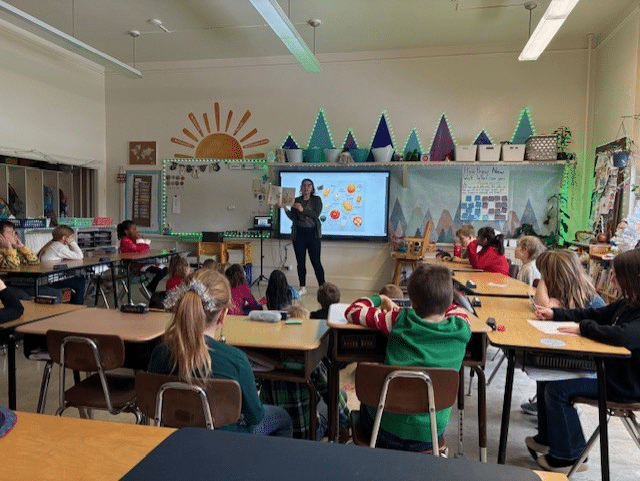
A teacher stands in front of her 2nd grade class. Behind her is a diagram showing different types of winter squash.
An Agriculture in the Classroom lesson focused on winter squash with Melissa Niquette’s class. Photo provided by Melissa Niquette.

Melissa Niquette is a 2nd grade teacher at Boquet Valley Central School’s Lakeview Campus whose students participate in the Rooted in Learning Farm to School program. She noticed that children tend to be familiar with locally grown apples and pumpkins due to parents’ autumnal traditions. But beyond that, there is scant knowledge of where food comes from, or what goes into a healthy diet.

And that matters, for both their short and long-term health.

“Most children are not exposed to whole foods, or foods their parents dislike, and that leaves an imprint on them,” Niquette said. “As an adult I tend to go to the foods I had as a child. Giving kids healthy, locally grown foods now will hopefully help them make better choices later.”

Local Roots, Lifelong Habits

Cornell Cooperative Extension of Essex County helps teachers introduce a world of fresh foods to kids through the “Rooted in Learning” Farm to School program that promotes food-related activities throughout the 2025-2026 school year. Rooted in Learning is funded through a Cornell Cooperative Extension Harvest NY grant, and is being taught in elementary schools in AuSable Forks, Boquet Valley and Ticonderoga.

Changing the Taste of a Generation

While children are famously pegged as vegetable-haters, intolerant of any unprocessed whole food that wasn’t raised in the supermarket freezer aisle, teachers say this may be less an issue of taste than it is an issue of exposure.

Kids eat what their parents eat, and processed foods have become generational, having exploded in popularity in the 1970s and ’80s. Massive advertising campaigns focused on children, and parents — often tired from a hard day at work — found it easy to oblige with microwave-ready fish sticks and Tater tots.

These processed foods are, as Niquette says, being imprinted on young palates with health implications both today and down the road. But that pattern can be changed with education.

Rooted in Learning provides classroom instruction and facilitates farm visits where kids see foods in their natural state. That makes them curious and more likely to try fresh foods that were previously unfamiliar to them.

From Reluctant Eaters to Food Adventurers

Michelle Eggleston, a 4th grade teacher at Ticonderoga Elementary School, said she’s noticed a change in children’s eating behavior since agricultural instruction has entered the classroom. She’s noticed kids are not only (voluntarily) eating more vegetables, but having a better understanding of whole foods and nutrition in general.

“I see them get excited when they are learning about and preparing new foods,” she said.

Along with nourishment, Eggleston said children are, at a young age, receptive to the message that wholesome foods will make you grow stronger, think more clearly and have (parents, avert your eyes) more energy.

“I enjoy teaching food because it helps to shape lifelong eating habits in my students,” she said. “I’m helping to influence how students feel about their bodies, whether they fear or enjoy trying new foods, and how confident they feel making food choices later in life.”

Lessons that Nourish the Whole Child

Teachers have also discovered that bringing agriculture into the classroom can impart lessons that go beyond nutrition and health. There are few parts of daily and academic life that can’t in some way be linked to food production. 

Food is a natural for, say, teaching science. “We use food in STEM activities when we can fit it into the schedule,” Niquette said. “I bring enough to use for the lesson and then to eat fresh.”

Growing Connections Between Food, Culture, and Community

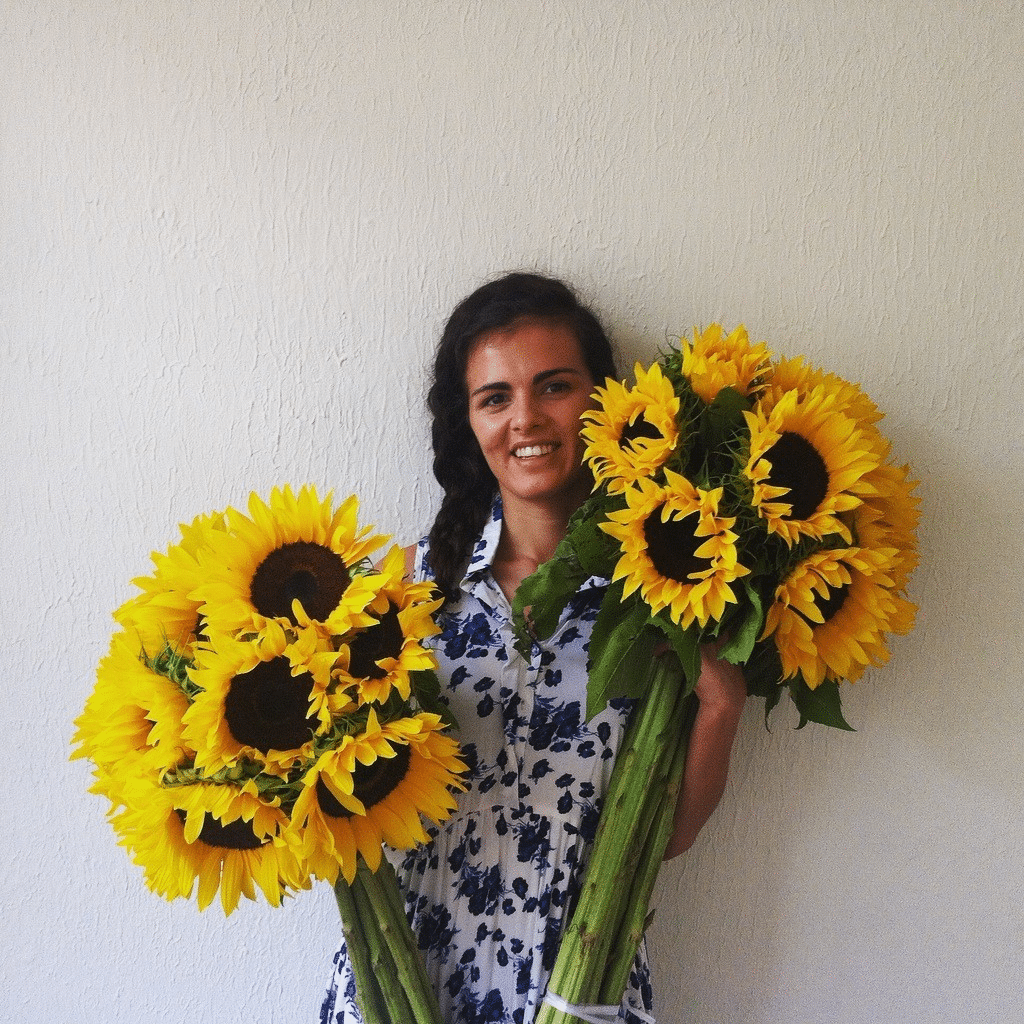
Ines Chapela stands against a wall, smiling and holding two enormous bouquets of yellow sunflowers.
Photo provided by Ines Chapela.

“I’m always looking for ways to connect our learning to our community,” said Ines Chapela, a 3rd grade teacher at Boquet Valley Central School’s Lakeview campus. “I love that the AITC lessons teach students about local food and use maps to show the students where the food is being grown. It’s important for kids to feel connected to their food systems and for them to understand the bigger picture of agriculture.”

Chapela believes food is a natural way to teach about other cultures as well, and plans to add those lessons in as time allows.

Food can be exciting for children, particularly when it’s something new — and what gets children excited gets teachers excited too. “Agriculture in the Classroom has been an empowering and rewarding experience for the students and the teachers,” Niquette said.

  • Page 1
  • Page 2
  • Page 3
  • Interim pages omitted …
  • Page 11
  • Go to Next Page »

Footer

  • Facebook
  • Instagram
  • Twitter
  • YouTube
alt-text

8487 U.S.Route 9, Lewis, NY 12950

Phone: (518) 962-4810

cornell-cooperative-logo

If you have a disability and are having trouble accessing information on this website or need materials in an alternate format, please contact the Cornell Cooperative Extension of Essex County office for assistance (518) 962-4810 or email essex@cornell.edu.

  • Browse
  • Markets
  • Events
  • Festival
  • Blog
  • Trails
  • Login | Join
  • Home
  • About Us
  • Harvest News
  • Local Food Guides
  • Contact Us
  • Get Listed or Renew
  • Make a Donation
  • Friends

Copyright© 2026 · Adirondack Harvest. All images to their original owners. adk-chair