
Christmas Tree Farms Adjust to Changing Consumer Demand by Focusing on Authentic Experiences
By Tim Rowland | Contributing Writer
Almost invariably, the story of a North Country Christmas tree farm is the story of family.
With thin profit margins and a crop that takes eight to 12 years to mature, it’s not a business anyone today is clamoring to enter. Most trace their lineage back 50 years or more, and while trees may still be their stock in trade, most have annexed other businesses into their operations. Some Christmas-related, some not.
At Moody’s Tree Farm in Gabriels, there are fewer acres in trees than when Wes Moody purchased the farm in the 1960s. But Moody’s is about as close to a “Santa’s workshop” operation as you can get. By early August, employees in a cavernous barn are making decorations for the farm’s ample gift shop, which is months away from becoming its annual hub of holiday activity.
“We also do embroidered pillows and balsam candles — all summer long they’re doing this,” said Jackie Moody, who grew up working in the family business. Jackie also manages her personal landscaping business, Uncommon Earthworks and also helps school children plant seedlings and track the carbon they sequester.
“I’ve been doing this tree seedling donation program with our local schools,” Jackie said. “I teach them how to plant the trees, and they love it. Climate change is super scary, especially to a little kid. This actually makes them feel empowered because they can help save the environment.”
As might be apparent, the business of Christmas is a year-round endeavor. At the first of the year Wes’s wife Debbie inventories what’s been sold and what’s needed for the coming season. Work ramps up through the year and in early fall the Christmas crunch begins.
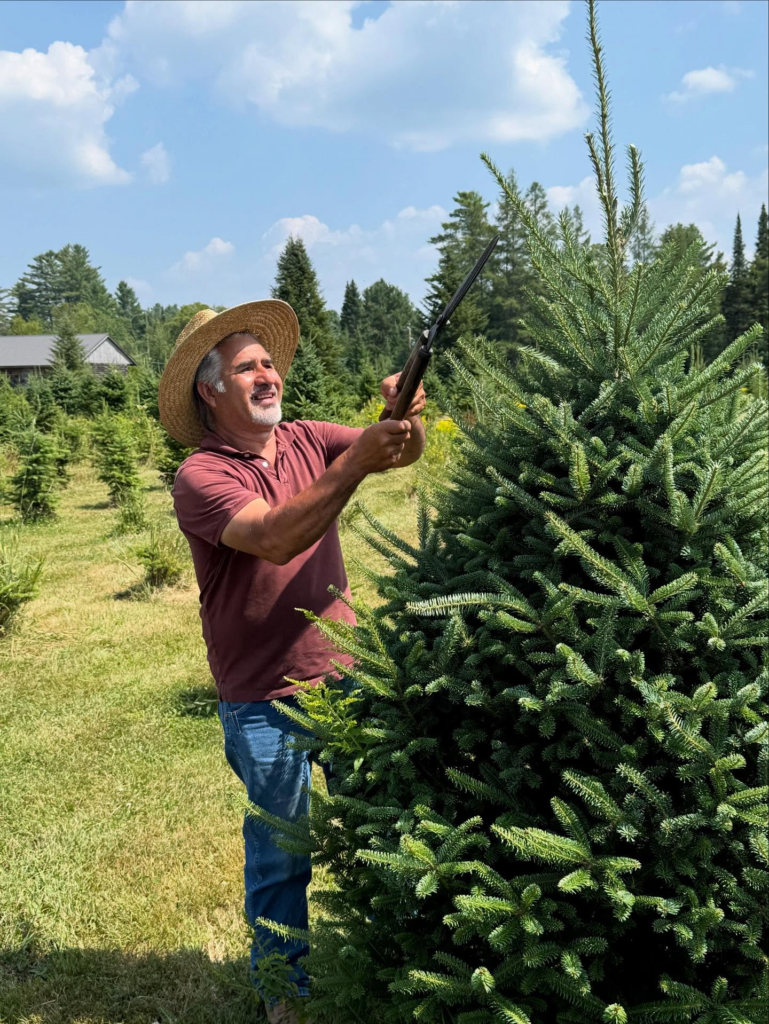
“It starts at the end of September,” Jackie said. “We’ll start getting balsam bows in, and we’ll go cut extra balsam or pine or cedar. We start stockpiling it and keeping it cool and just start pumping stuff out.”
Along with replacing inventory, Moody’s has 25 employees that also decorate great camps for the holidays, an echo of the farm’s history when it grew the food for various lodges and tuberculosis sanitariums. Its creations can be found from secluded Adirondack vacation retreats down to the concrete canyons of New York City.
The Christmas tree business has evolved since then, mainly in terms of tree type and genetic improvements.
Sixty years ago, when many Adirondack Christmas tree farms were established, Scotch pine was the tree of choice. They grew fast, but had an open habit and tended to drop their needles.
“Scotch pine grows really fast — you could start selling those in five or six years, but they’re ugly, and they don’t grow straight,” said Jim Thew, owner of Spruce Mill Brook Christmas Tree Farm in Lewis.
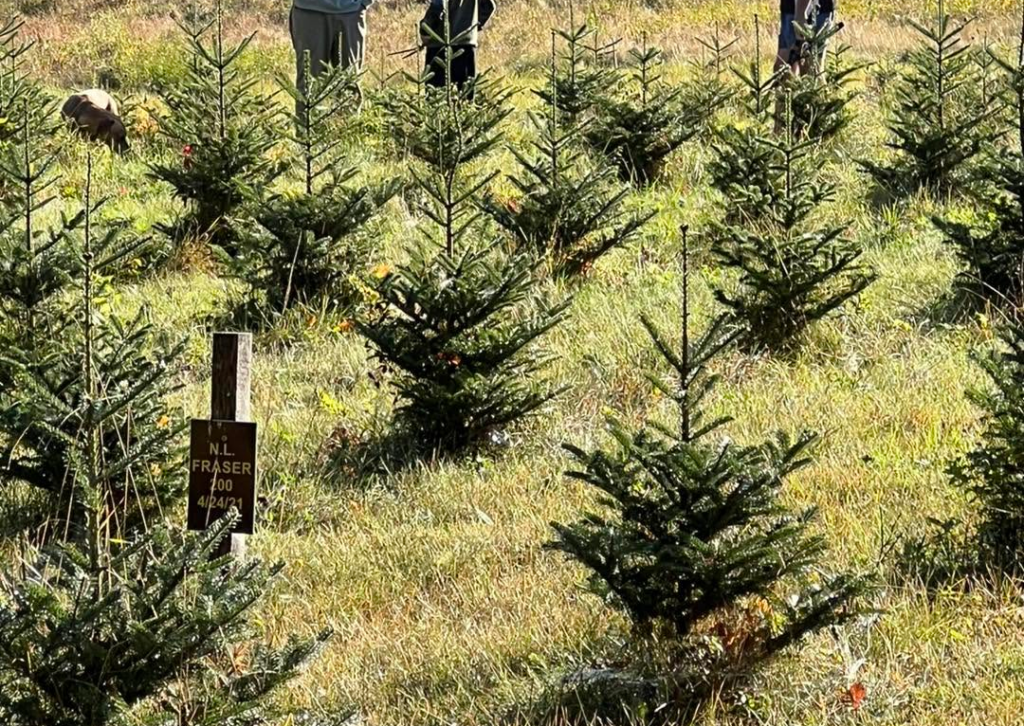
Thew’s grandparents started the farm, along with a campground, as part of a retirement plan: camping in the summer, Christmas trees in the winter. Today, Thew plants up to 800 trees a year, including balsam seedlings he collects from another Adirondack property he owns.
Along with transitioning from Scotch pine to lush balsam and Fraser fir, farms that began by wholesaling their trees — cutting them all at once and shipping them out by tractor trailer — also began to change, moving to a model where the customer would come to the farm to choose their own tree. That allowed them to capture value-added income from wreaths, garlands and gifts that could be as elaborate as the owners wanted to make them.
“My dad and my grandfather started growing Christmas trees when they found out that I was going to be born,” said Jim Carpenter, owner of River Bend Christmas Tree Farm in Lake Luzerne. “They had some property in Corinth that they wanted to put to use in some way and they thought Christmas trees would be a great investment to pay for my college.”
His dad then bought a working Christmas Tree farm in Lake Luzern, River Bend’s current location, and the family took a class to learn how to make wreaths. Carpenter was the only one who caught on. He was 10 years old. As it turned out, it was the wreaths, not the trees that funded his college education.
It was also a good skill to have, because the business was changing. At first, all the trees would be cut on Thanksgiving or the day before. On Friday, the retailers would show up and haul them away and the season would be over. Now, it’s the end-users who show up at the farm, and the season lasts into December.
Evergreens in the North go dormant in mid-September, so after the weather turns cool they can be cut and will remain fresh as long as they’re kept outdoors. When brought into a warm house, however, the clock begins to tick. The most important tip is to make a fresh cut at the base before putting it in water.
Trees will easily last a month with a fresh cut, which is a good thing because people begin thinking about Christmas almost as soon as the last Thanksgiving turkey leg has been gnawed.
“We have tons of customers from Lake George and Saratoga so we have a lot of people that are headed back to New Jersey and Long Island and New York City from their summer house on Lake George,” Carpenter said. “They’ll celebrate Thanksgiving and then they’ll swing into our farm, and they’re looking for big and tall for some of these houses. We sell those by the foot when they get over nine feet.”
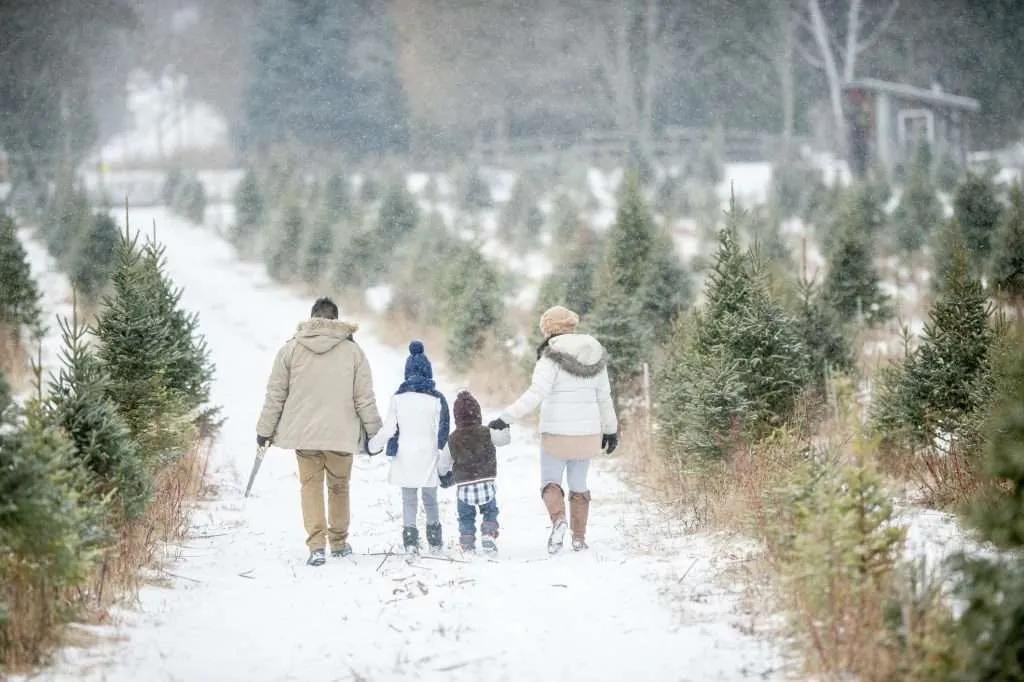
Photo by River Bend Christmas Tree Farm.
Sometimes they stretch their ability to carry them home, trying to strap an 18 foot tree to a 16 foot car and reckoning they can cut the tree in two before reassembling it at home.
Those who buy live trees are in the minority, as artificial trees grace the majority of homes in the holiday season. A 2025 survey commissioned by the American Christmas Tree Association, an artificial tree-industry trade group) found 83% of households displaying a tree in that year planned to use an artificial one. Artificial trees bear the brunt of the responsibility for the decline in natural tree farms, which according to the American Farm Bureau have lost about a third of their numbers and acreage since 2002.
With soaring costs of land, seedlings and supplies combined with a crop that won’t earn its first dollar for a decade or more, it’s a business few people are willing to start from scratch.
“Christmas tree farms are kind of like any other farm,” said Don Covel, owner of Covel’s Tree Farm & Nursery and the Frosty Springs Bottling Co. ”There have to be other businesses going on to make a nice package. Could someone make it just growing trees? Not if they had to buy the land.”
When Covel began in 1968, seedlings cost $40 per thousand — today it’s $2 to $3 each. Finding the help to get them in the ground is always a struggle, and the stock needs year-round attention including planting, trimming, fertilizing and mowing. Then there is a constant battle with the deer, who have a particular taste for Fraser fir.
Still, there are reasons for optimism. A bounce in business occurred during Covid, and some of those gains have lasted as consumer taste for authenticity and traditional family experiences have strengthened.
“We have people that, since they were children, their parents brought them here, and now they’re bringing their children and actually even their grandchildren are coming,” Thew said. “That’s the fun part, talking to people who are coming here.”
At Moody’s, Wes Moody said an annual joy is seeing families come to select their tree. “We love seeing the kids come in here with a big grin on their face,” he said. “That’s what it’s all about.”


