
The Pandemic Caused Some Farms to Pivot, Now What?
An overriding theme of the 2020-21 Covid-19 pandemic is that it might not by itself have created permanent change, but it speeded up trends that were already in motion.
In the years leading up to Covid, Nathan and Racey Henderson, owners of Reber Rock Farm in Willsboro, had been poring over the numbers looking for a path to financial viability. On hearing the news that the coronavirus had landed on American shores, Nathan remembers asking, “Is this going to be a big deal?”
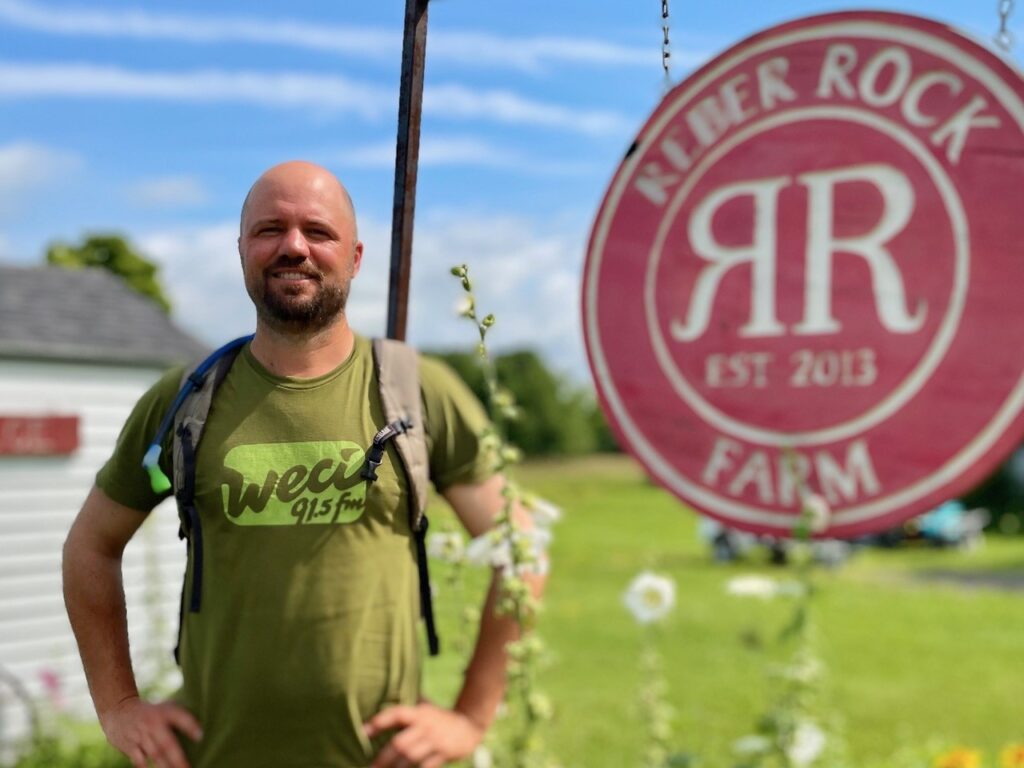
Of course it did turn out to be a big deal, and the effects on local farms would be profound. Much of the effect was positive, as people reconnected with their food sources. But the big processing houses would reopen, food items would return to supermarket shelves and there was always the fear that a Covid bump to small agriculture would melt away.
To some degree it has, but it has also brought about lasting, structural changes that have brought positive results to the local agricultural scene.
The Hendersons, known for their unvarnished assessments of farm finances, had, pre-Covid, determined that their model wasn’t working. They had dabbled in e-commerce, but mainly sold whole or sides of beef, pork and the chickens to a local market.
“It just felt unsustainable,” Nathan said. “The revenue was just not covering overhead.”
So, Reber Rock was leaning toward change when the pandemic forced its hand. Farm stores and markets had loyal but limited followings, so Reber Rock was looking at a model that began with Omaha Steaks and was expanded by Amazon: shipping.
The pandemic’s role was that it “totally changed customers’ perception of ordering food online,” Nathan said. As consumers shied away from crowded stores, they became accustomed to food arriving on their doorstep, and no longer worried that perishable foods might not hold up. “We don’t get any of those questions anymore,” Nathan said.
The benefits were obvious. FedEx and UPS became their delivery system, and from a county with fewer than 35,000 people, Reber now has access to 50 million potential customers who live within a one-day delivery radius of their farm.
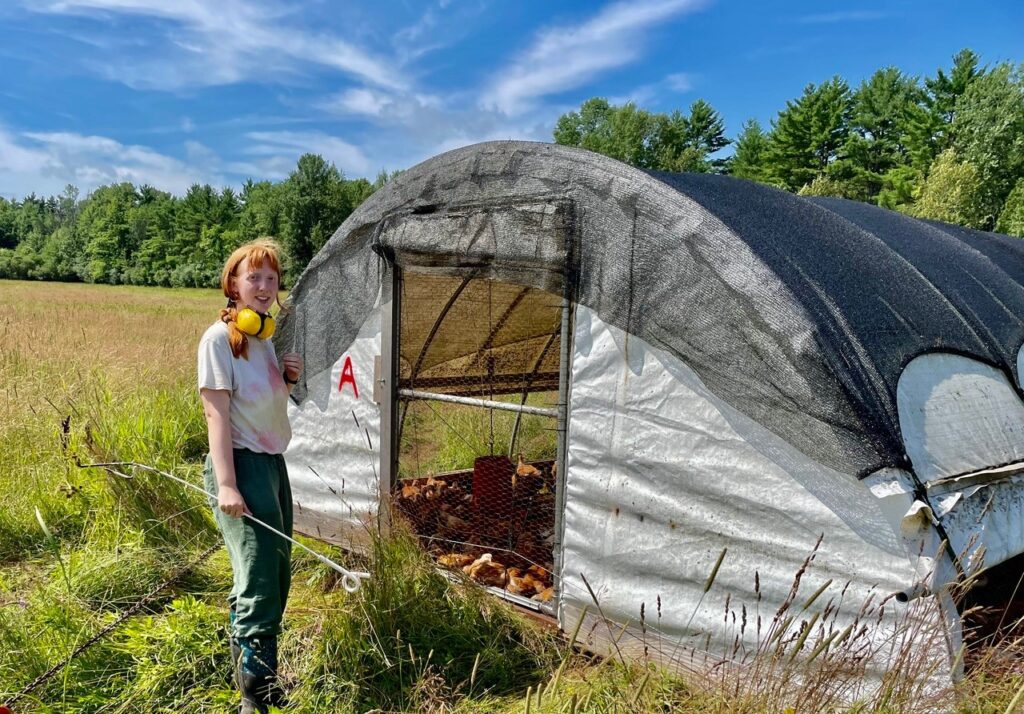
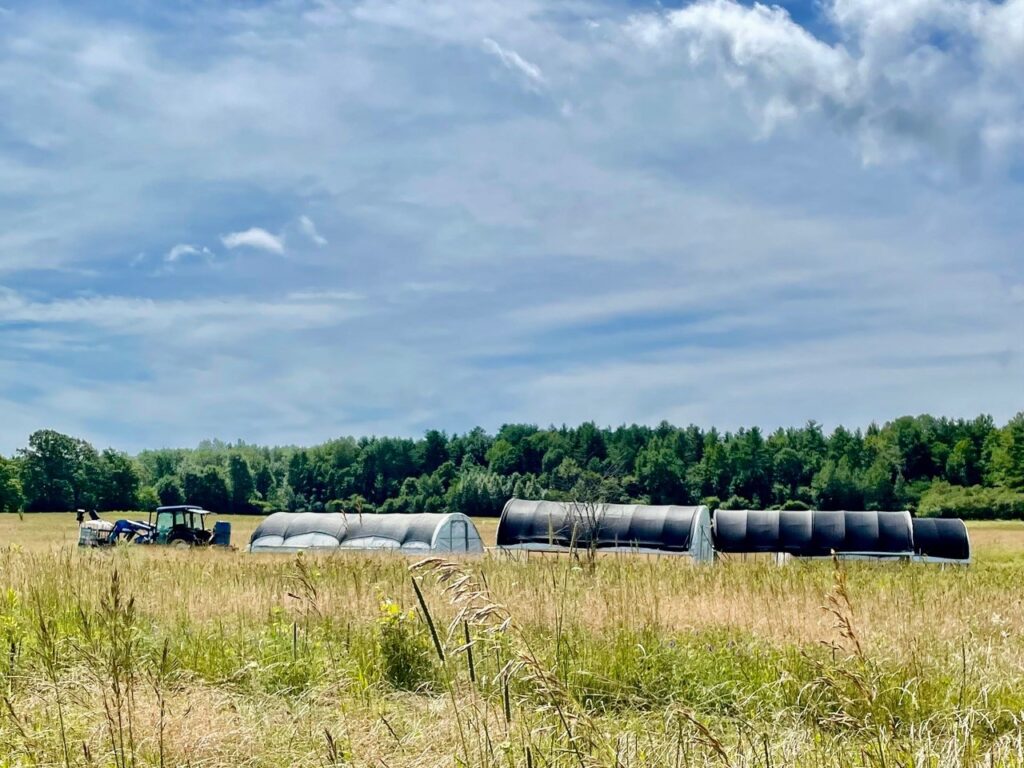
With a bigger market came the demand for more products. Whole beefs being impossible to ship, Reber Rock focused instead on pasture-raised organic chickens and small cuts of beef and pork. Nathan built larger coops to move around the pastures, and bought a 40-foot freezer to handle production, which went from 1,000 birds pre-pandemic to 8,000 today.
Mail-order chicken is shipped to adjoining states and also to adjoining towns. While Reber Rock still attends farmers markets, the numbers are stark. The farm might make $3,000 spending 12 hours driving to, and sitting at, a market, but packing chicken for mail order can bring in $15,000 in four hours.
Reber Rock has added employees as it has scaled up, but even so, Nathan said that factoring out capital costs, the cash flow has taken a turn in a positive direction. And the model helps make their core values more sustainable. “Racey and I are both committed to the production of local food,” Nathan said.
The online delivery system appears to have legs, and includes organizations such as Farm to People, an online distributor that sells fresh farm products in and around New York City. It draws from 150 farms selling 800 products with same-day delivery.
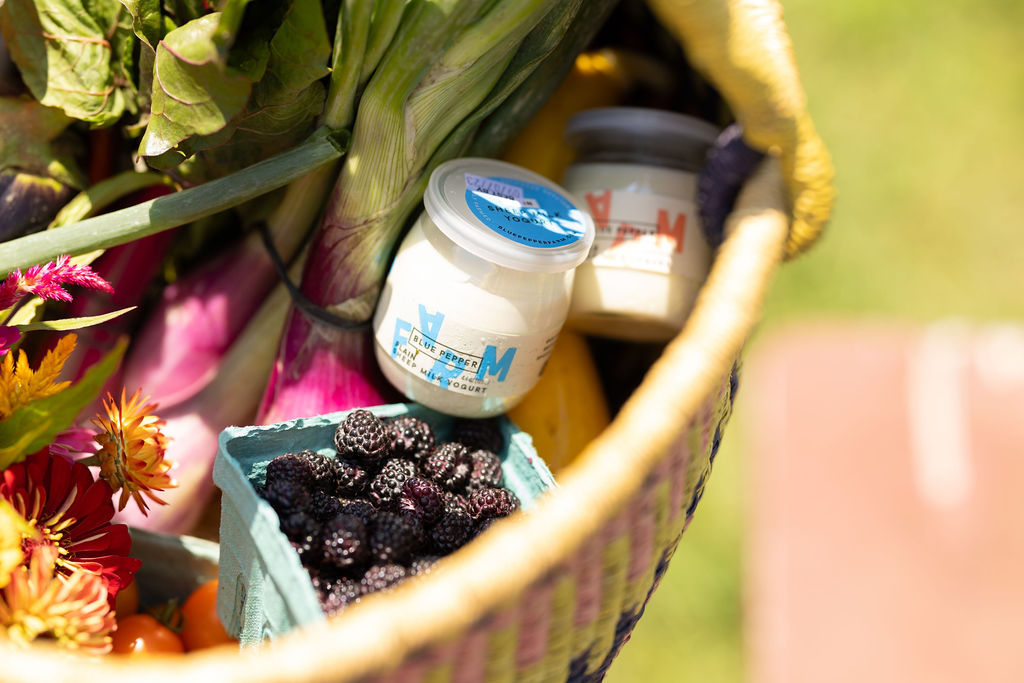
“They have a lot of customers and they’ve been buying a lot of our yogurt,” said Tyler Eaton, who with his wife Shannon raises sheep in Jay at Blue Pepper Farm.
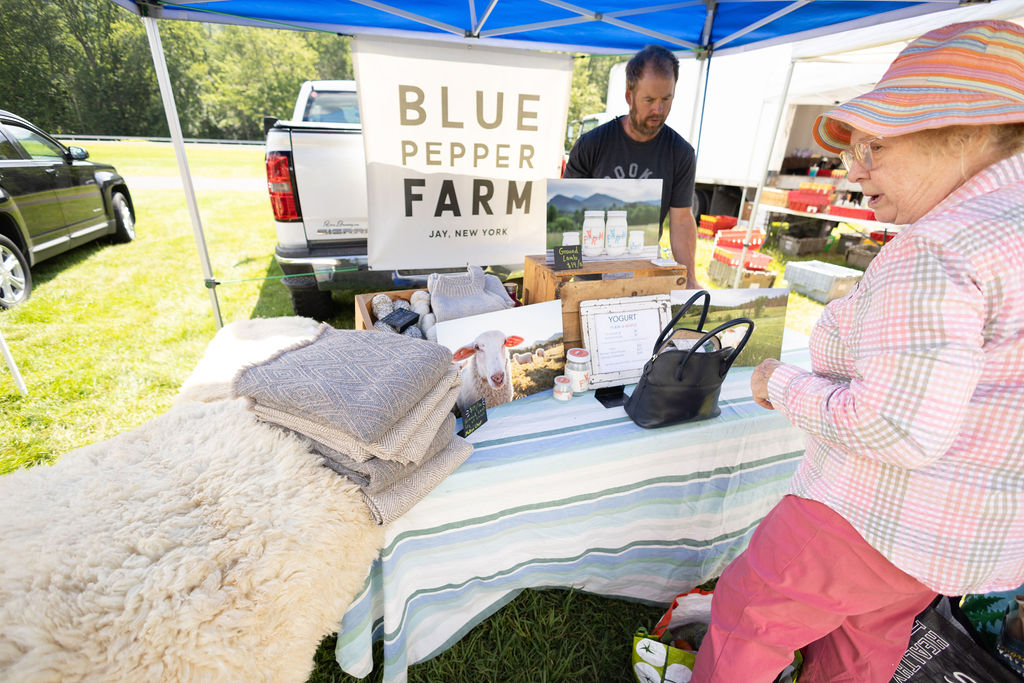
The pandemic has left other lasting changes as well. Online ordering and curbside pickup became so popular at what was called the Saranac Lake Farmers Park-It that the program was continued. In Keene Valley, Eaton said the “distanced” farm stands gave the Marcy Field market a more open and less congested feel. He added that WiFi became critical after the public made a noticeable switch from cash to cards during Covid — making card-reading technology an essential tool, while the fees charged by card companies are a down side.
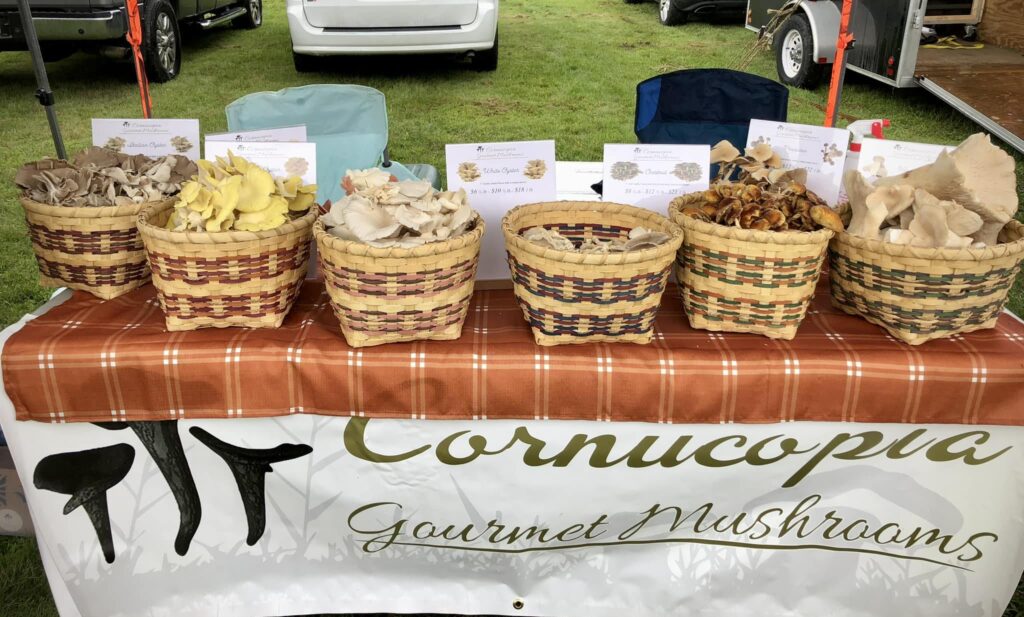
Covid even nudged some producers into the business. Greg Rowe was substitute teaching when Covid hit, and having a long-standing affinity for microorganisms from his bread-baking days, he founded Cornucopia Gourmet Mushrooms in the basement of the Keeseville Community Center.
With health on everyone’s mind — and mushrooms having newly discovered health properties — his product was a hit among chefs and retail customers alike. At a farmers market in late July, Rowe dutifully manned his mushroom and honey booth, even though the mushrooms had long since sold out. “Good thing I have this honey, or I wouldn’t have anything else to sell,” he said.
The post Covid markets demonstrate the importance of patronizing local producers. When consumers pay attention to what they’re eating, the playing field tips in favor of conscientious farmers who are dedicated to producing good food. And with online ordering, buying that high-quality, healthy food is just a click away. To find local farms, farmers’ markets, CSA programs, and local food retailers, visit adirondackharvest.com/browse.


