
Science-Based Art Project Seeks Adirondack Fiber Producers and Artists
By Michale Glennon, Adirondack Watershed Institute
Do you like science? Art? Water? Wool? You can join a unique project showcasing scientific data and local fiber arts with the Paul Smith’s College Adirondack Watershed Institute.
Wool and Water is a data art project in which we are using knitting, crochet, weaving and other fiber arts to illustrate concepts and trends related to our waterways. This effort blends fiber art with scientific data to create visual representations of changing water quality conditions in the Adirondacks and Lake Champlain Basin.
The project is a celebration of the 50th anniversary of the Clean Water Act and is supported by the Champlain Valley National Heritage Partnership. As the project continues to grow, we are hoping to connect with fiber farmers and artists in the Adirondacks, to demonstrate the interconnection between water and agriculture.
How Do You Represent Science With Knitting?
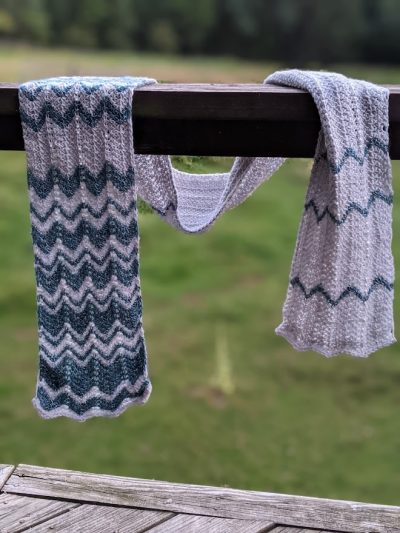
The Champlain Ice Scarf
This is a representation of lake ice history on Lake Champlain, which has one of the longest records of documented ice-in and ice-out dates. In recent years, the lake has frozen less frequently as a result of a warming climate. This scarf depicts every year since 1816; each year is one row and blue years are those years in which the lake did not freeze completely. The white rows indicate years when the lake did freeze, and there are beads (hard to see) in one of three columns to indicate a freeze date in January (left column), February (middle), or March (right column). Freeze dates have shifted slightly later over time, and years without a complete freeze have increased in frequency.
The HAB Bag
This felted bag depicts the occurrences of Harmful Algal Blooms (HABs) reported to the New York State Department of Environmental Conservation in Adirondack lakes between 2012 and 2020. HABs result from the rapid growth of algae or cyanobacteria that can cause harm to people, animals, and our ecosystems. HABs occur naturally but factors such as increased nutrient loading and pollution, alteration of food webs, introduced species, modifications of water flow, and climate change may all contribute to their increasing frequency and intensity.
How Can I Get Involved?
This project is collaborative and we would love to have you!
If you are a knitter, crocheter, weaver, or another fiber artist and you would like to create something for the project, you can find inspiration, patterns, and a contact form at the bottom of our Wool and Water webpage.
We are also looking to work with Adirondack fiber producers to showcase their products and highlight the cultural heritage of the region. If you raise fiber animals, please email me.
Visit the Display
The existing and continually growing collection is currently on display at the Paul Smith’s College Visitor Interpretive Center. It has visited other locations and we hope to continue to showcase it throughout the Basin and to host events to bring people together over fiber, art, science, and craftivism. We will have some large celebrations next August during Adirondack Water Week, but in the meantime are happy to host workshops or zoom meetings with anyone interested.
Take a look at our recent blog post to read more about the project and join us in celebrating clean water with fiber arts!
Wool & Water was funded by an agreement P21AC11821-00 awarded by the United States National Park Service (NPS) to NEIWPCC in partnership with the Champlain Valley National Heritage Partnership.
Learn more about the data and process behind “Wool and Water” in the webinar below:
Related Reading

Farmland Access and Affordable Housing – Feeding Two Birds With One Scone

Egg Price Volatility Makes a Strong Case for Local Food

The Quest for Food Justice in the Adirondacks

Farm to Festivity: Buy Local This Holiday Season

Thank You For A Successful 2024 Adirondack Harvest Festival!

Where to Pre-Order A Local Thanksgiving Turkey

What Do Certifications Mean For Small Farms & Consumers in the Adirondacks?

Noris Village Market a Cornerstone for Local Farmers & Locavores

The Pandemic Caused Some Farms to Pivot, Now What?

2024 FMNP Coupons Now Available to Seniors

Adirondack Region Farmers Working in Harmony with Wildlife

Farmers’ Markets Are a Labor of Love

Grafting Heritage Fruit Trees at Mace Chasm Farm

Spring is an Egg-cellent Time to Buy Local

This Spring, Landscape and Garden Local

Time to Sign Up for CSA Shares

Seasonal Harvest: Medicinal Herbs & Herbal Products in the Adirondacks

Local Farm Stores are a Great Spot for Holiday Shopping

Seasonal Harvest: Embracing the Autumn Bounty of Pumpkins & Winter Squash

Celebrating Another Successful Year for the Power of Produce Club!

Blue Pepper Farm Offers a Glimpse into Adirondack Farm Life at Farmstay

Warrensburgh Riverfront Farmers’ Market Celebrates 25 Years of Bringing Local Food to Warren County

The Future of Farm to School in the Adirondack Region

Better Quality Food is Key for Helping Students Thrive

Local Food Saves Area Schools Money

Schools Purchasing Local Food Helps Local Farmers

Local Gift Ideas for Mother’s Day

Farm to School Movement Gains Ground in the Adirondack Region

In Schroon Lake, Pine Cone Mercantile Has All the Comforts of Home

Seeking Paid VISTA Volunteers for Summer 2023!

3 Benefits of Supporting Your Local Tree Nursery

Another Successful Season for the Power of Produce Club!

New Focus on Cooking From Scratch & Local Ingredients at Plattsburgh City Schools

Why Has the Price of Eggs Increased So Much?🥚

Upcoming Agritourism Workshops for Farmers

Do You Think Beets Taste Like Dirt?

2022 Adirondack Harvest Festival a Success

A Look at Open Farm Weekend 2022

Power of Produce Club at Saranac Lake and Elizabethtown Markets This Summer

A Sweet Family Tradition of Maple in the Adirondacks for Whitney’s Maple Spring Farm

Have a Pint for the Planet | All About Mead

What Wild Edibles are in Your Backyard?

Meet the Maker: Meier’s Artisan Cheese

How the Sausage is Made at Mace Chasm Farm

5 Ways to Advocate for Local Food & Farms

Spotlight On Local Food at the Adirondack Medical Center

D&D Meats Earns Competitive USDA Grant to Reduce Pressures on Local Producers

Generous Acts Grant and CCE Essex Paying the Bill so Schools Can Serve More Local Food Through Pandemic Challenges

Shady Hill Farm Steps Forward, and Backward, in Time

Third Year of the Power of Produce Club a Success

Bringing High-Quality Farm-to-Table Dining to Malone, NY

A Look at Farming in the Southern Adirondacks at the Thurman Fall Farm Tour

Recap from the 2021 Adirondack Harvest Festival Open Farm Week

Adirondack’s Small Town Cultures Provides a Fresh Take on Fermented Foods

New Creamery in the Works at Meier’s Artisan Cheese
5 Recipes to Keep Enjoying Zucchini All Summer

A Quick Guide on Local Tomatoes

Have You Heard the Buzz About the Power of Produce Club?

Four Ways to Enjoy Fresh Herbs This Summer

The Village Meat Market: Boon for a Small Community

How Farms and Fine Dining Grow Together

What Makes Eggs Different Colors?

5 Spring Asparagus Recipes to Try

Is Corned Beef and Cabbage Actually Irish?

Four Maples Vineyard Takes Advantage in Changing Climate, Tastes

Love Local this Valentine’s Day

Books to Inspire You to Shop Local

Community Coming Together in Essex, NY

That $25 Locally Raised Chicken is More Economical Than you Think

Meet the Makers

Adirondack Harvest Challenge Accepted! Meet the Winners

Churning up Gold in the Adirondacks

FREE RANGE Adirondack Harvest Festival 2020

During Pandemic, North Country Food Co-op Offers Both Comfort and Food

DIY Projects Keep ADK Saws Humming

Survey Results: Local Food & COVID-19

Farmers Adapt Quickly to the New Normal

Saranac Lake transitions from Farmers’ Market to Farmers’ Park-It
Please take our survey: Local Food and COVID-19, Learning Through Experience
Franklin County Farm Tour
Snapshots from the 2019 Adirondack Harvest Festival!
Highlights from the 2019 Power of Produce Club!
Power of Produce Club
It’s a Wrap!


