
These Adirondack Mushroom Producers Make A Diversified Income Crop Their Identity
By Tim Rowland | Contributing Writer
In the waning hours of North Country farmers’ markets, most tables remain heaped with produce and products, assuring latecomers an ample selection. But don’t show up at the last minute hoping to score some locally grown North Country mushrooms.
“I have never stayed to the end of a farmers market,” said Sandy Bureau, owner of High Peaks Shiitake in Newcomb. “I always sell out.”
This is not an unusual sentiment in the North Country. At the Keene Valley Farmers’ Market in the scenic Marcy Field, mushroom growers are often cleaned out within the first hour of the market being open. “I can’t grow enough shiitake,” said Rachelle Waters, owner of AHA Mushrooms in Vermontville. Everyone loves them, because they are so delicious — they have this lovely, nutty flavor.”
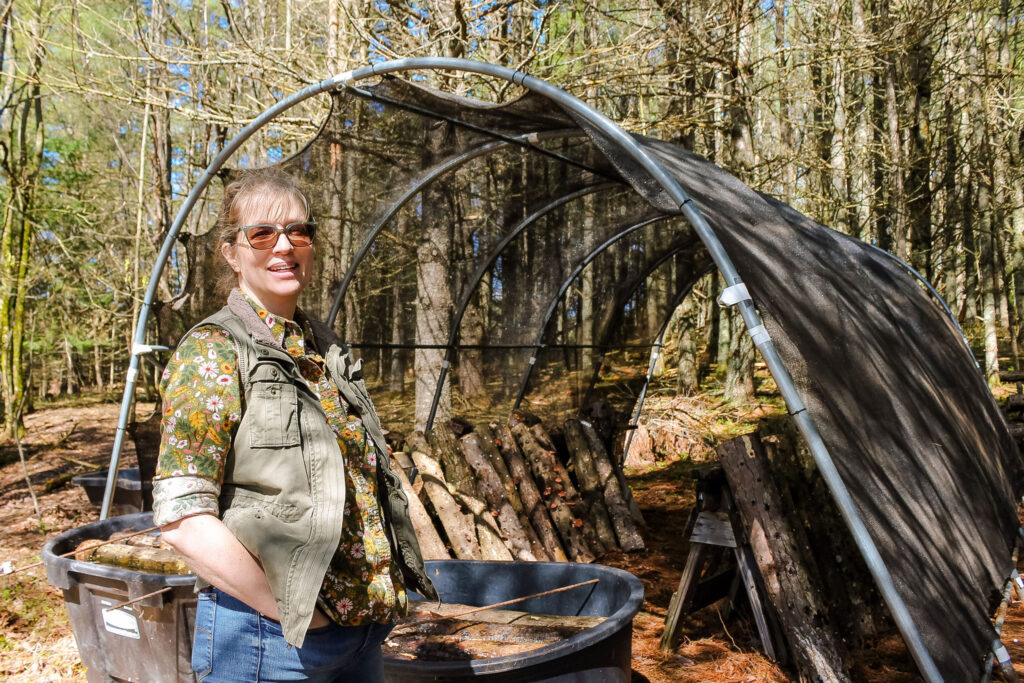
Mushrooms are a good fit in the Adirondacks, because they are a good combination of farm and forest. Perhaps because of that, the Adirondack mushroom growers appear to be insulated from national trends, which are headed in the wrong direction. The U.S. Department of Agriculture’s annual mushroom report, released in August, found that specialty-mushroom sales fell 21% in the 2025-2026 season, to $75 million. Growers were also paid less for them, about 85 cents a pound less.
For once, small scale may be working to the advantage of local growers who do not have to rely on headwinds that are buffeting the national economy.
“Lack of reliable farm labor and workforce shortages are an ongoing challenge,” American Mushroom Institute President Rachel Roberts told Vertical Farm Daily in August. “Along with seasonal threats of weather and crop disease impacts, inputs shortages, and lasting inflation pressures affecting most producers. Shortages of any kind or increased pricing in the supply chain impact mushroom growing exponentially.”
For local growers who do the work themselves, chipmunks are more likely to be a greater threat than the current status of the H2A visa program.
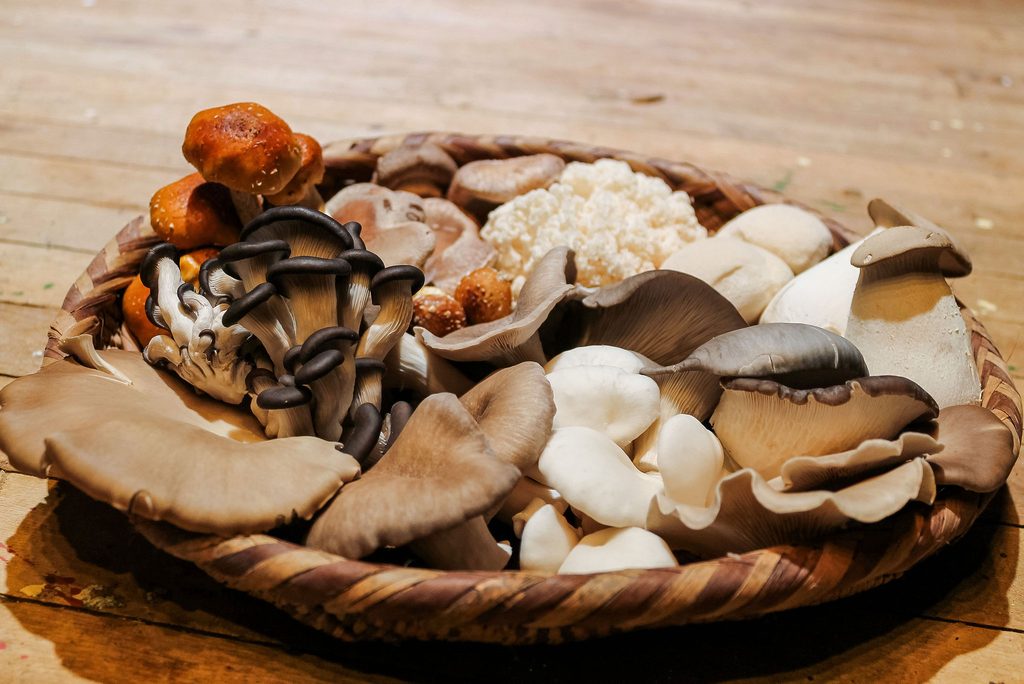
Mushrooms are different from traditional crops in many ways, which can be both good and bad. The delicate fungi are tricky to transport and impossible to export. But a specialty mushroom like lion’s main is always just one social media influencer away from catching fire, due to a new recipe or perceived health benefit.
These trends are not always durable, though. Some retailers reported sales of mushroom coffees and other medicinal or supplemental mushroom products down 30 to 40 percent, according to Elizabeth Crawford, a writer for Food Navigator. That’s likely due to inflation, which is squeezing consumers and causing them to cut back on nonessentials.
Greg Rowe of Cornucopia Gourmet Mushrooms in Keeseville, who sells mostly to restaurants, expects the coffee craze to fade, but that demand for local mushrooms people actually cook remains strong.
The North Country’s advantage may come down to quality that comes from growing mushrooms in their natural environment. Rowe said escalating utility costs are making it less feasible to grow mushrooms indoors, which, nationally, is how it’s done.
“It’s very hard to find log-grown shiitake,” Waters said. The specialty mushrooms in most supermarkets, she noted, were “most likely grown in a warehouse nearby. That’s just how they’re grown.”
Local growers also tend to be small, sell direct and harvest the day before market. National state trends are in the opposite direction, as mushrooms become more corporate. New York as a whole is moving the other way. The 2022 Census of Agriculture counted 85 mushroom farms in the state, down from 117 five years earlier, even as total growing space rose 84%. At the retail level, mergers and acquisitions are also reshaping the industry much in the way they have with other agricultural products. All this, of course, is a long way from Adirondack woodlots, where hunting wild mushrooms is a popular pursuit, and growers take a more personal approach to the farmed variety.
Bureau is a retired science teacher, naturalist and admitted science nerd, so mushrooms were an easy sell.
“Obviously biology has always been a real interest of mine,” she said. “Cornell Cooperative Extension’s Small Farms Program was promoting cultivation of mushrooms — outdoor cultivation like shiitake mushrooms — for small farmers to diversify their crops, because most small farms have a woodlot on them. Well, all I have is wood. There’s nothing to diversify. So I went to their workshop and I’m like, ‘Oh my gosh, I can do this.'”
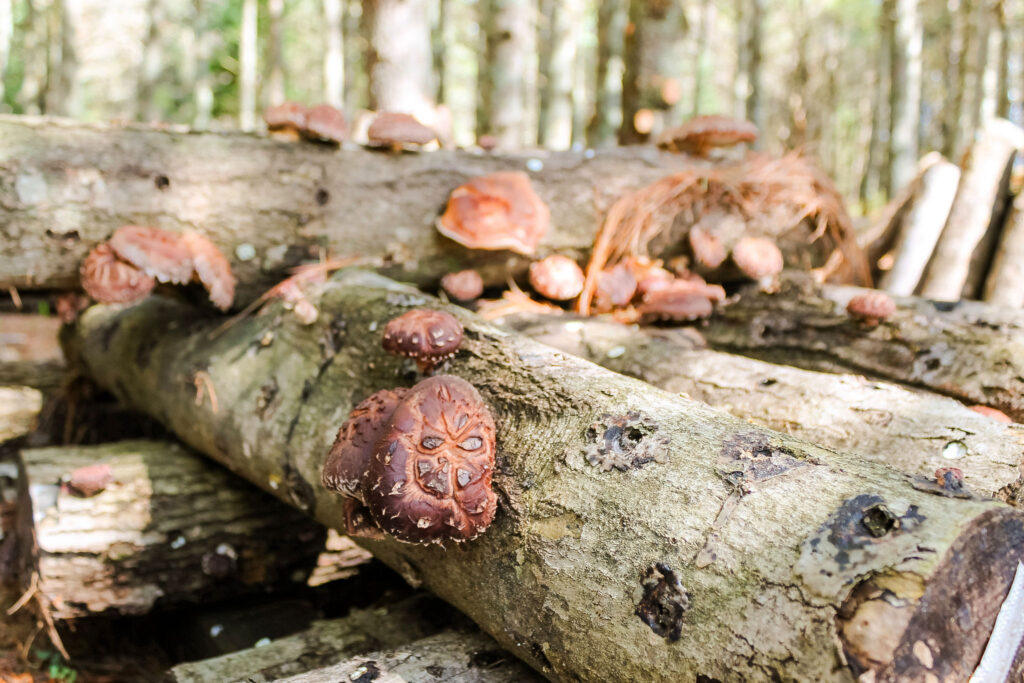
Growing shiitake outdoors on logs is simple in theory, but more complex in practice. Producers cut hardwood, usually maple or oak, and drill it with rows of holes. “Then we pack those holes with this sawdust that has the shiitake mushroom mycelium growing through it,” Bureau said. “Then you cover that hole up with some food-grade wax, and then you let the logs sit until the following spring.”
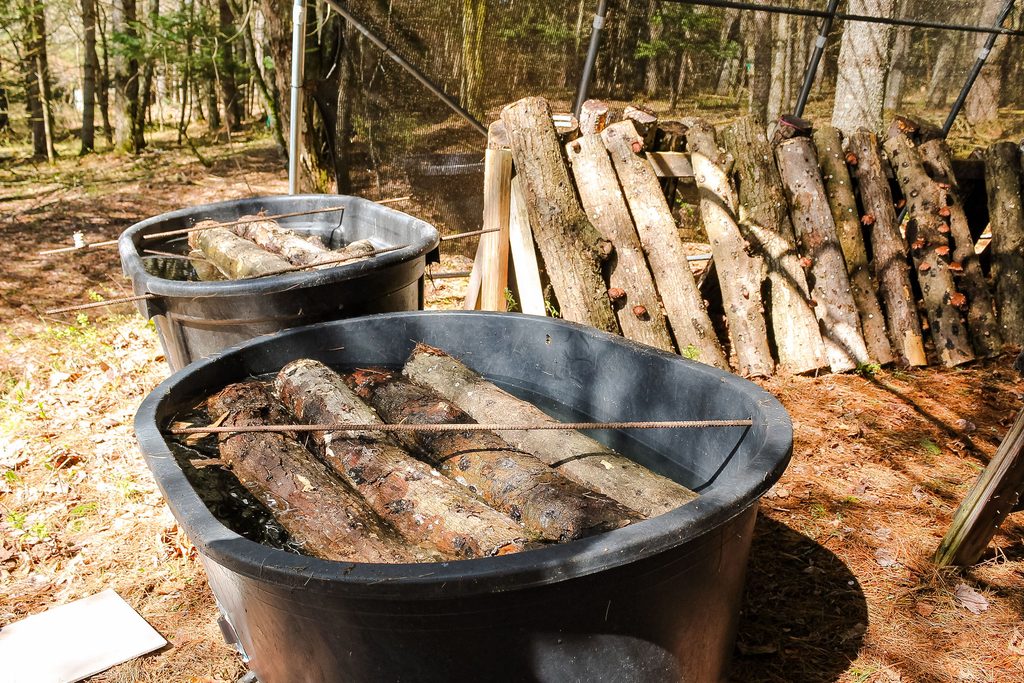
After the mycelium has spent a year colonizing the wood, shiitake can be made to fruit on command. “You soak the logs for 24 hours, and then within three to five days they produce mushrooms,” Bureau said. She soaks her logs in batches of 20 for a weekly harvest from June to mid-September, and she gets about a pound of mushrooms per log over a season. Logs last three to five years, so she inoculates 40 to 50 new ones each spring.
Shiitakes are the backbone of most any mushroom farm, because they can be timed to coincide with farmers markets throughout the season. More exotic mushrooms like oyster and lion’s mane fruit naturally, so their availability can be limited.
Mushrooms have another advantage in their Adirondacks because of their hardiness. Waters’ logs start fruiting on their own in late April, well before the last frost, and keep going until Halloween. One cold-weather strain, snow cap, has fruited for her “literally when there’s snow on the ground,” she said.
Bureau sees mushrooms as a good fit for an existing farm. The inoculation “happens in the spring, before you’re doing anything else on your farm,” she said, and the logs can then sit in the shade until they’re ready.
The prices are appealing. In a Cornell survey of specialty growers, shiitake brought about $15 a pound sold direct. There’s room for value-added products, too. Waters is developing freeze-dried mushroom soups for hikers and campers who can’t carry fresh mushrooms into the woods.
The spent mushroom medium is composted and fed to worms, whose manure is known as castings, is a particularly potent soil amendment.
Before giving mushrooms a try, Waters advised some serious study to get the best results. “It really takes a specialized set of knowledge,” she said. “It’s not something that your average farm manager is going to have any expertise in. It’s really truly a separate enterprise and not just a crop you can add to your mix.”
It also takes patience. The first flush can take nine to 18 months, which is why Waters added indoor production to help with volume and cash flow. Beginners at her workshops sometimes complain that nothing is happening. “Well, one, you’ve got a year,” she tells them. And add that the Adirondack woods are full of competitors. Chipmunks recently ate Waters’ entire wine cap crop and gnawed the bark off her logs. Squirrels and slugs drove Bureau to wrap an old gazebo in hardware cloth, which she calls the mushroom coop.
Climate change, with drier and hotter weather can be a challenge too, as it’s important to keep the logs from drying out. With her science background, Bureau keeps a data sheet on each log, tracking its performance. It sounds like work, but to her it’s not – this is her lifestyle.


