
Find Authentic Adirondack Experiences Through Fall Agritourism
By Tim Rowland | Contributing Writer
Nothing says autumn quite like potatoes. But if spuds aren’t your thing, Tucker Farms in Gabriels — which has been specializing in potatoes for more than a century — also celebrates the season with squash, pumpkins, sunflowers and the Great Adirondack Corn Maze.
It’s been a great fit, and also a necessary one.
“We don’t make money during the summer, usually, because we’re a seed farm and we don’t start shipping potatoes till late December,” said Tom Tucker, whose family’s arrival in the area pre-dated Paul Smith. “There’s a long span of no income, so my mother said, ‘Because school taxes come every September, and that’s an expensive problem, you guys need to come up with some revenue.’”
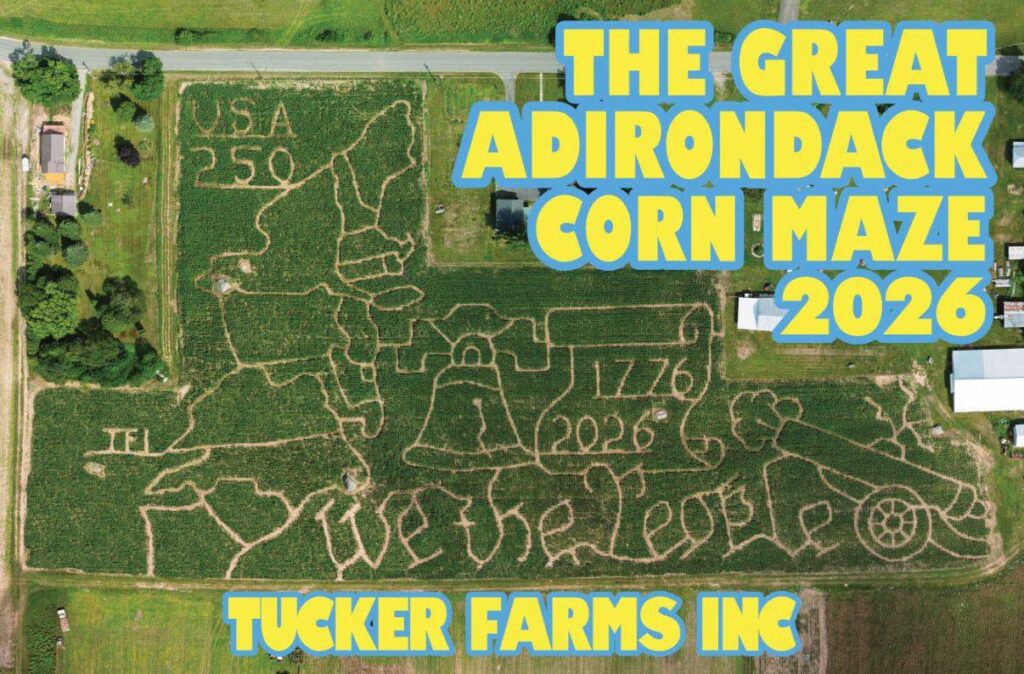
The Tucker brothers talked it over, and since a couple of them had engineering degrees from Clarkson, they figured a corn maze would be easy enough. That was 22 years ago, and Tucker Farms has been celebrating fall ever since.
Fall is big business in the Adirondacks, and, as a season, it’s passed winter in terms of visitation and is gaining on summer. This past September 19, Cornell Cooperative Extension of Essex County and its flagship Adirondack Harvest Program hosted its 10th Adirondack Harvest festival, an event that’s been gaining traction along with autumn visitation.
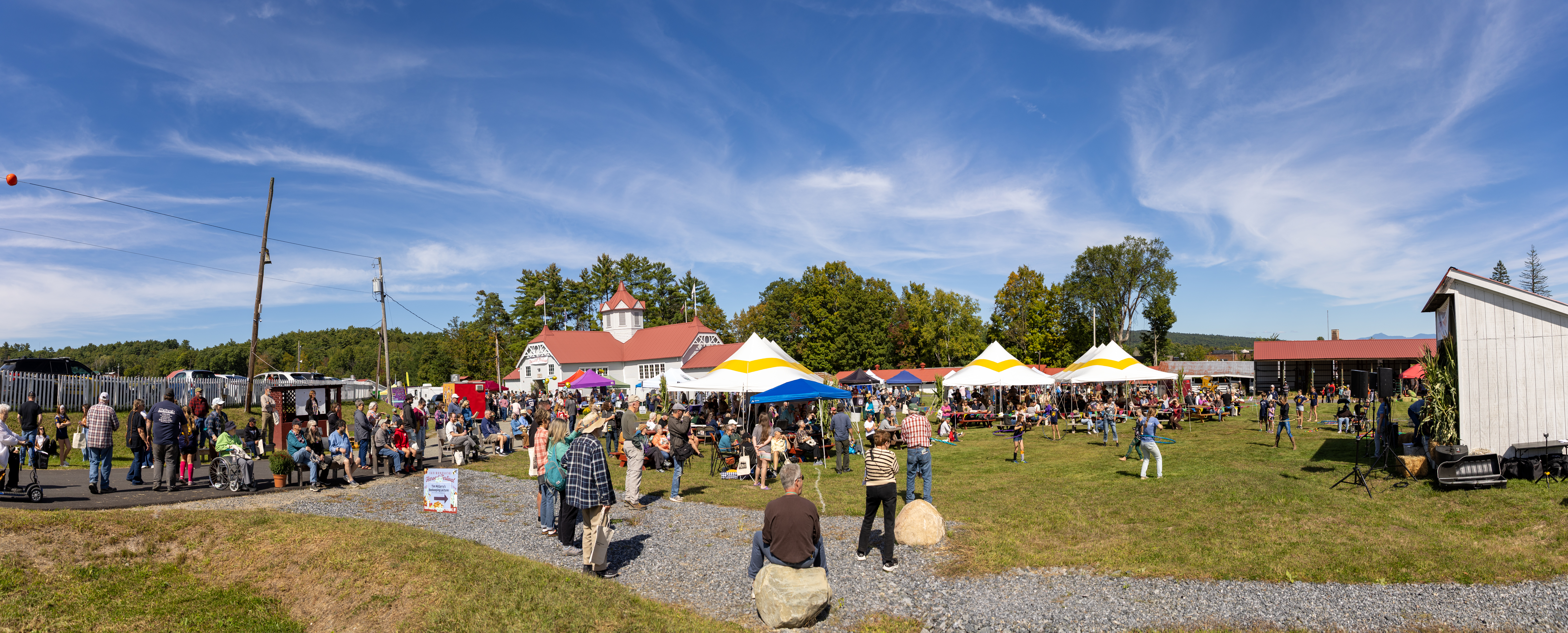
“I think the really great thing is that raising people’s awareness of where their food comes from is happening,” said CCE executive Director Elizabeth Lee. “Adirondack Harvest is really a leader in that — a thought leader, as well as actually making businesses more viable by providing people with the education and resources they need and connecting them through our wholesale database to restaurant owners who buy local food. Those restaurant owners end up being ambassadors for tourism, too.”
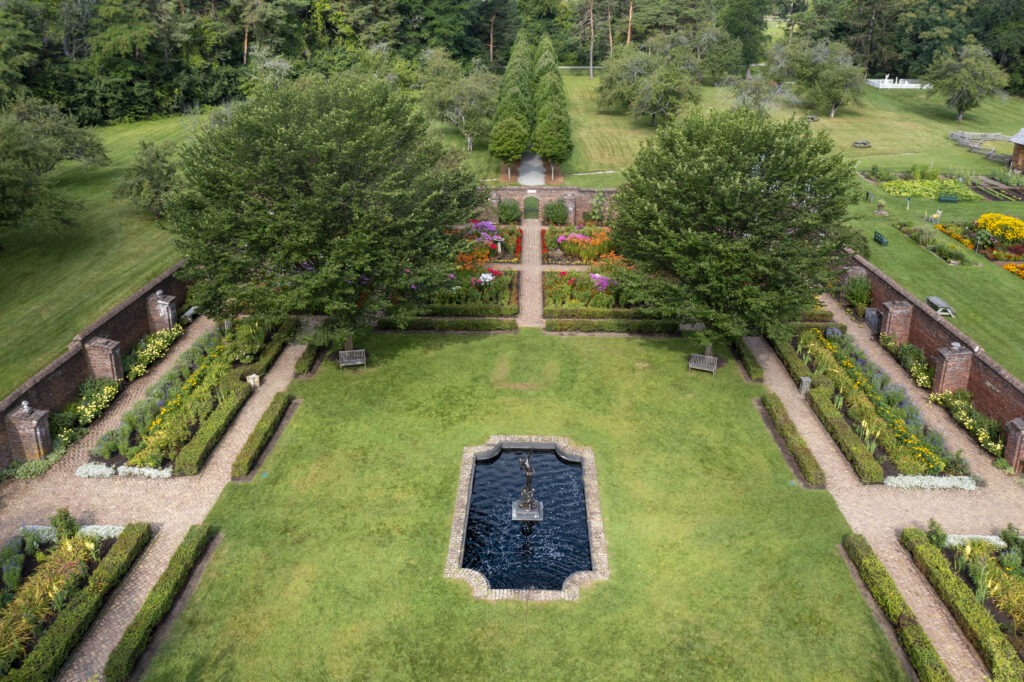
And they can show up in unexpected places. Fort Ticonderoga on Lake Champlain has been drawing crowds this year commemorating America’s 250th anniversary, but diners have also been treated to America’s Fort Cafe’s “Fort to Fork” menu, featuring vegetables grown on-site.
Agriculture and history, it turns out, are intertwined.
“The landscape and the use of land has been so critical throughout the history of the Champlain Valley,” said Beth Hill, Fort Ticonderoga president and CEO. “Empires fighting for it, nations vying for it, our country coming out of it. As far as our programming goes, we have 2,000 acres, and about 40% of our land is sublet to a farmer.”
Along with gardens demonstrating how soldiers at a remote outpost would have fed themselves, the fort keeps horses, two teams of oxen, antique apple trees and the Heroic Corn Maze, now in its 13th year.
“A long time ago we looked at the land and thought we could do something interesting here — develop a new design every year inspired by the fort’s history, and enhance the visitor experience at the end of summer,” Hill said.
Visitors wanter through the maze, answering history clues to help them make their way through. This year it’s been voted by USA Today readers as one of the Top 10 in the country.
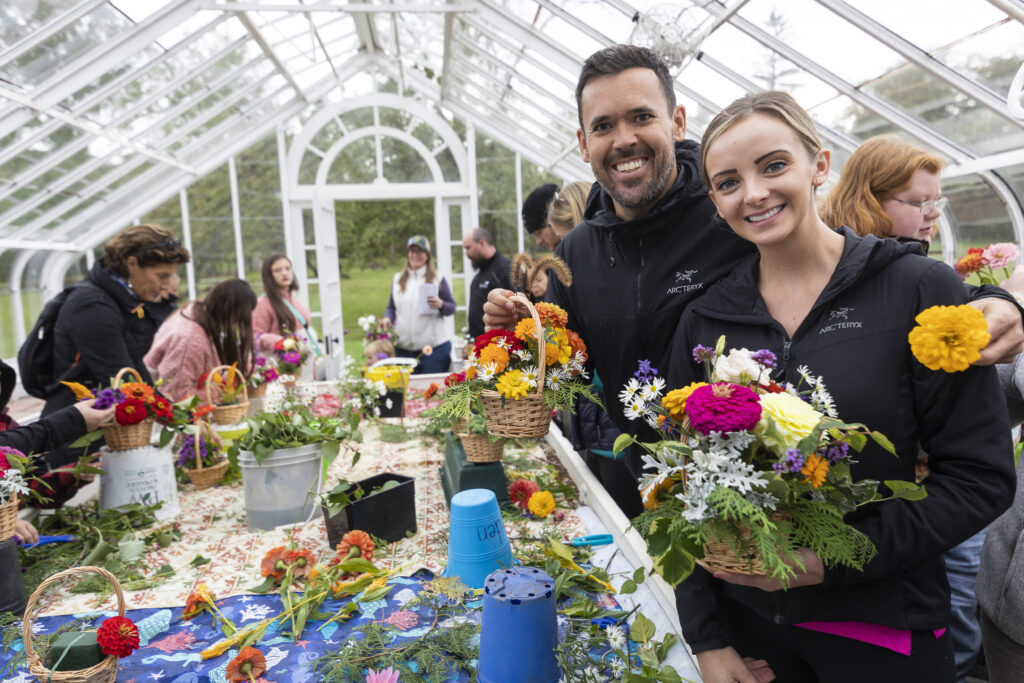
The maze is a centerpiece of the fort’s Heritage Harvest and Horse Festival, which is one of the most popular events of the year, attracting well over 1,000 people. It includes a farmers market, local arts, produce, and product, in the historic King’s Garden, telling the story of animals, agriculture, and heritage through history.
The fort’s bet on fall has paid off.
“Over the past seven to ten years we’ve seen more than a 10% increase in fall tourism — group tours, tour operators bringing curated groups and high-end specialty groups wanting an immersive experience, from collections access to personalized garden tours to cocktails on the boat,” Hill said.
Helping drive the autumn traffic is greater publicity and recognition of the Adirondacks as some of the best fall foliage in the country. Agriculture plays a supporting role here too, but it’s an important role.
“Our main thing is our 18th-century military history, but working the land and growing products to support the people and the armies at the fort was a big part of our story, so we don’t have to stretch for it; it’s central,” Hill said. “This fertile land was a really important piece of that. You have layers of agriculture and horticulture history running through the 20th century, and that attracts a broader audience. I’d say the majority of visitors find it a “satisfier” — something that makes them stay longer because of the beauty, the orchards, the flowers and the corn maze.”
This supporting role is easy to intuit, but difficult to quantify.
“I don’t think we have the data yet, and it’s a really hard piece of data to get — translating people driving by and thinking, ‘what a beautiful farm,’ into actual commerce,” Lee said. “Anecdotally, yes — there are more inquiries, more people coming to this area, more people asking about food. But whether that interest is converting into commerce, we don’t know yet.”
But as technology improves, the answers as to the importance of agriculture will become clearer. The Regional Office of Sustainable Tourism (ROOST) already has a sense of visitor patterns by tracing cell phone pings. Raw numbers suggest increased interest in fall travel, of which cider, pumpkins and corn stalks are part of the tapestry.
Jane Hooper, ROOST’s communications manager, said fall travel is growing, part of the organization’s focus on attracting visitors during “shoulder seasons” in spring and late fall when Adirondack businesses typically struggle for customers. With Adirondack Harvest’s partnership with ROOST on the Adirondack Cuisine Trails, agriculture is being made part of that push.
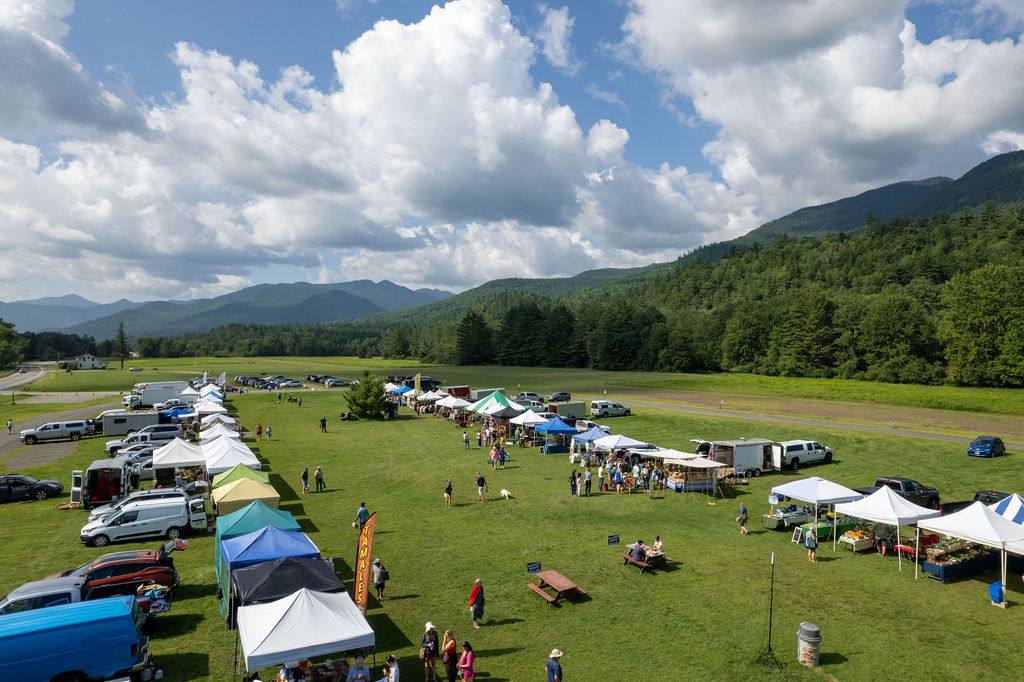
“Who doesn’t love a good farmers market on a Sunday morning when the air is cool and the vegetables are plentiful?,” Hooper said. “Once you realize you can go to these farmers markets, harvest festivals, farm-to-table restaurants, music events, breweries, there’s a whole feeling of abundance — people, food, products, and the artisans at these events too,” Hooper said.
Visitors may come for the hiking and the paddling, but with the added experiences represented by agriculture they tend to stay longer so they can take it all in.
ROOST’s figures show that visitors are staying longer as they find more to do. The average stay over five years has increased from 3.5 nights per visit to 4.3. Spending on food and events is also up significantly.
So in a sense, Hooper said, agriculture and recreation are two sides to the same coin. “When you hike in the Champlain Valley on the [network of] Champlain Area Trails (CATS), you’re going right through some of the properties that produce the food you’ll find at the farmers market two days later,” she said. “With farms also offering pop-up pizza nights or dinners, you can really learn about an area — not just the mountains and rivers, but the people, the producers, the artisans, the bread makers, the brewers. It all adds another layer of interest for visitors.”
Tucker Farms is a good example of this layering. Hoping to boost honey production, Tucker planted a couple of acres of sunflowers. “We planted them for the bees, and made about 50 pounds of honey last year, which was great,” he said.
What was greater was the number of people showing up to photograph the field and asking if they could pick some. “So we decided, well, we’ll double it,” Tucker said. “We planted four acres of sunflowers. three different plantings of them. And then we opened it up to the public for taking photos and you-pick sunflowers, and holy cow, did it take off.”
At season’s end, the seeds are ground up for the cattle — a seamless blend of honey, blossoms, photos and livestock feed, balancing agricultural products with autumn tourism. Along with the pretty leaves, it’s something to celebrate.


