
Increased North Country Land Values Necessitate a Creative Approach for Farmland Ownership
By Tim Rowland | Contributing Writer
When the North Country dairy industry began to consolidate in the 1990s, open land coming on the market could be had for a few hundred dollars an acre. Land values took another pummeling in the real estate crash of 2009, and another 241 dairies shut down in New York in 2018 in the wake of a severe national milk glut.
What was bad news for a number of traditional dairies was good news for a wave of younger farmers, many of whom were interested in organic systems and clean, locally produced foods. Without a lot of cash, they could put their ideas into practice.
Ten years later everything has changed. Land prices soared during the pandemic as urban dwellers suddenly realized the appeal of open spaces and an uncrowded lifestyle. At the same time, solar arrays began to pop up on fallow farmland across the state and a growing population of Amish have added to the upward pressure on land prices in historically agricultural regions of New York.
What’s next for the Adirondack-Champlain Region farmers?
That doesn’t necessarily mean that young people will be shut out of farming, but the face of it will look different going forward. As smaller farms and specialty producers continue establishing themselves, a wider range of unconventional approaches are attracting new interest, such as agriculture easements, creative succession plans, co-ops and solar grazing.
But the traditional Americana portrait of great herds of cattle and sun-splashed farmers tilling lands that spread into the horizon are quite possibly a thing of the past for our region. Because where Champlain Valley land prices are concerned, what goes up does not necessarily come down.
“The real estate market for farmland is very dynamic as you can imagine, and the average price in New York has increased by about a third in the last five years,” said Chris Laughton, Director of Knowledge Exchange at Farm Credit East. “There’s significant variation, but it’s gone from an average of about $3,000 an acre in 2020 to about over $4,000 an acre in 2025, and that’s for farmland in larger parcels that’s purely ag-value driven.”
That means smaller parcels will be more expensive per acre too, and so will open land that’s near amenities such as recreational opportunities or power lines capable of absorbing solar generation.
“So yes, there are a lot of challenges for a beginning farmer, which is not necessarily a young farmer,” Laughton said. “There are a lot of beginning farmers who are actually career changers, but, if you’re young or beginning, coming up with the capital to invest is a big big barrier for sure.”
Champlain Valley farmland remains cheaper than state averages, but it too has seen a corresponding increase in cost.
Realtor Lauren Murphy, founder of Heritage Properties of the Adirondacks in Essex, said she’s seen big-acreage farmland selling for more that $3,000 an acre, something that would have been unheard of prior to the pandemic. “There was a certain time when all those dairies were going out of business that land was available,” she said “But it’s never going to be like it used to be.”
When the herds were sold off, the agricultural landscape changed in another way; there was no longer the need for the expansive fields of the hay, corn and silage it took to keep the animals fed during the winter. Without that demand, once-productive farmland is growing up in scrub.
“The last 15 years no one’s been cutting anything and it’s just turning into forest again,” Murphy said. “It’s going to be hard to bring it back into hayfields.”
A Small Farm Perspective
Yet even as it’s become less productive, it’s become more valuable, at least in relative terms. To a solar developer seeking raw land or a city dweller looking for elbow room, Champlain Valley land is cheap. Traditional farming kept broad swaths of land open, but that hasn’t necessarily benefitted agriculture, said Dillon Klepetar, owner of Echo Farm in Essex.
Klepetar agreed that the Champlain Valley landscape still reflects a form of agriculture that is no more, and that its future is up in the air.
“The land we have was shaped by a form of agriculture that we lost,” he said. “And so we’re still sort of dealing with this identity crisis on big open pastures — what do we do with it now? Do we need it for livestock? Do we still need it as hay ground? Do we still need it as farmland?”
If prospective farmers can’t afford the land, others can. Klepetar said he’s seen land sold to what might be called gentlemen farmers interested in a country-estate lifestyle and to Instagram farmers who delight in posting to social media and might send some products to market, but not enough to help the North Country from the standpoint of food security.
The appeal of gentleman farming or country estates has fed land speculation. Much like housing during the pandemic, raw land can be purchased by those with means and flipped at a considerable profit.
This exposes another rift in North Country agriculture. Very few small farms support “livelihood farming,” that is to say farmers who can make farming pay without second sources of income, side hustles or independent wealth. These alternative sources of income or money can effectively subsidize farming operations, allowing farms to sell their product at little, if any, profit. That’s good for the consumer and the agricultural aesthetic of the region, but bad for people with average resources who want to farm full time.
“I think it’s harder than ever for livelihood farmers to extract enough, whether it’s one acre or 200 to make a living,” Klepetar said. “For farmers, the numbers just don’t add up right now, whether the land is cheap or expensive.”
Housing Availability: The Elephant in the Room
For those who want to get into the business of farming, land is only half the battle; farmers need a place to live, and housing costs have escalated even more than land. To address this, Dan Rivera at Triple Green Jade farm in Willsboro is investigating the possibility of structuring the farm as a co-op, where young, or even old, people with an interest in agriculture could build on land that remained with the farm.
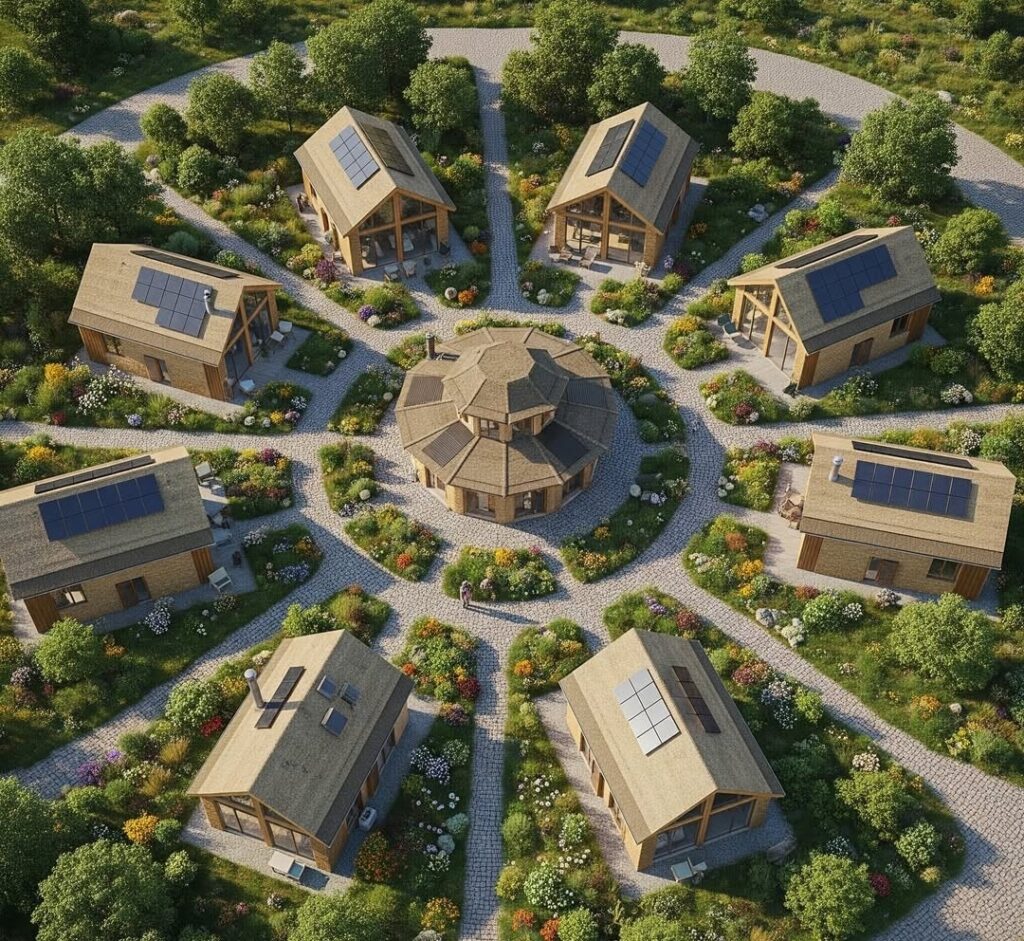
That’s consistent with Adirondack Park Agency regulations, as long as the residents work on some aspect of the farm. “Housing can be a roadblock, for sure,” Rivera said. “When we put out a call last year, a lot of people were interested.”
But as with all new ideas, there’s a learning curve. Some wanted to see actual housing in place, and others wanted to more or less retire to a pastoral setting. “We’ve had some very interesting discussions, but to work this still needs to be a business, it still needs to be a farm.”
David Brunner, owner of Asgaard Farm in Jay, said he believes there is strong interest in farming, which wasn’t the case when he arrived in 1988, just as conventional dairies were starting to disappear.
But in the early 21st century, interest rekindled and founding farms such as Asgaard and Essex Farms attracted a steady flow of interns. A shocking number of these employees have stayed or returned and put down roots of their own.
While farming may not look like it used to going forward, Brunner is optimistic there are still ways to make it work. But aside from the land, Champlain Valley agriculture will depend on having enough people who are interested in agriculture.
“I think the issue in farming is not the cost of farmland, it’s having farmers who farm,” he said. “Because a good farmer can do a lot with not a lot of land. So smaller acreage is an option, and I think another solution is value-added products, like cheese.”
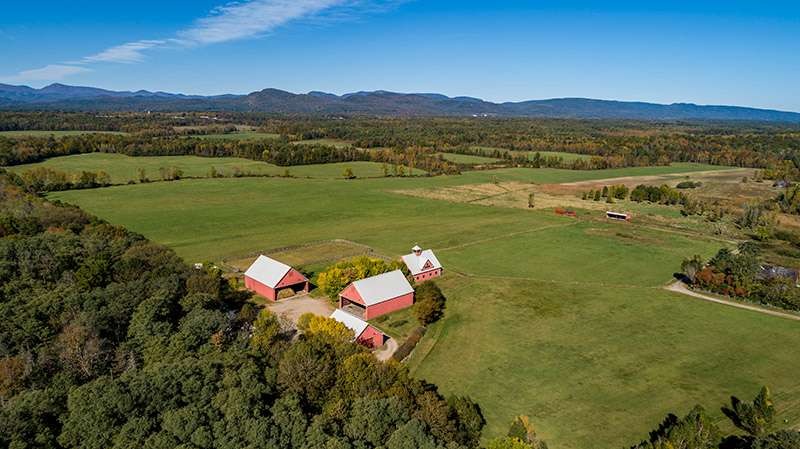
Agricultural easements help as well, he said. Retiring farmers can sell an easement that will keep the land in agriculture, which allows them to sell at a lower price to prospective farmers.
One thing everyone can do in the face of escalating land values, Klepetar said, is to buy locally grown foods.
“When you buy locally, it’s like a bond,” he said. “It’s like a futures market in terms of how we use land. If people don’t like that march towards howitzers and data centers and those types of investments, I think they’ve got to get themselves to the farmers market.”


