
Agritourism: The Value-Added Product of the Authentic Adirondack Visitor Experience
The cows of Vermont, the grapes of Sonoma and the shoofly pie of the Pennsylvania Dutch have all been parlayed into popular agritourism destinations that add value and viability to regional farms.
By contrast, vacationers flock to the Adirondacks for other reasons, such as paddling, hiking and skiing the great wilds of a six million acre park where conventional wisdom holds that too many rocks and too few days above freezing drove away most settlers who dared take a stab at farming.
The truth was otherwise, and today the eastern side of the park in particular is a robust farming region that in some ways has yet to be discovered for what it is — an attraction in and of itself.
“There’s a huge story to be told here,” said Curtiss Hemm, Chef at the AAA Four Diamond restaurant The View at Mirror Lake Inn in Lake Placid.
Local foods are not always the specific reason people come to the Adirondacks, but Hemm said a strong farm component adds value to the travelers’ overall experience. Among others, he buys beef from Asgaard Farm, lettuce from The Meadow Farmstead, cheese from Sugarhouse Creamery and sausages from Harmony Hill. He backdrops these ingredients with digital displays that let diners know that foods have been locally sourced.
“I’m very big on imagery, and we highlight our farm country,” he said. “People care about where the food comes from.” Those images have been used to great effect in other regions and nations where the farming aesthetic is enough to draw travelers and elevate the quality of local life. Britain and Switzerland actually pay farmers for maintaining an agricultural landscape, the view in their estimation having as much value as the crops.
That would certainly seem to be the case in the Adirondacks as well, where great tracts of farmland at Uihlein, Norman Ridge and Lewis Family Farm attract bicyclists, photographers and plein air artists.
Sugar House Creamery, located in Upper Jay, is a farm of indescribable beauty, set off by the craggy Ebenezer Mountain where riverside pastures are populated with doe-eyed Brown Swiss dairy cattle.
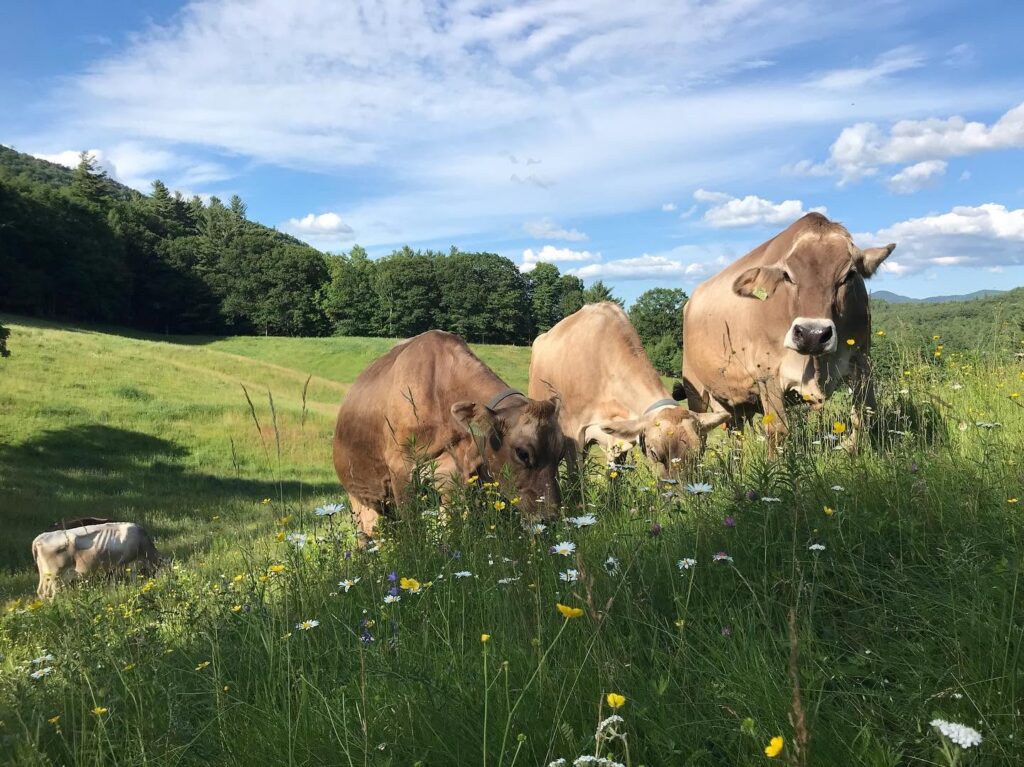
Home to a popular farm store open weekends and Wednesdays, Sugar House also features Airbnb accommodations. Although owner Alex Eaton said most people who stay there don’t come for the farm, they come to hike. That’s not particularly bad, since Eaton is more farmer than innkeeper.
Eaton runs his Airbnbs somewhat passively, hiring out cleaning services and not spending much time on social media hype. “I kind of have this sense that we’re not playing the Airbnb game as well as the moment demands, in terms of advertising and incentivizing and doing stuff like that,” he said. “If people want to come here and stay here, that’s awesome, but we’re not going to make Instagram accounts and do that whole thing, and maybe that will be our undoing.”
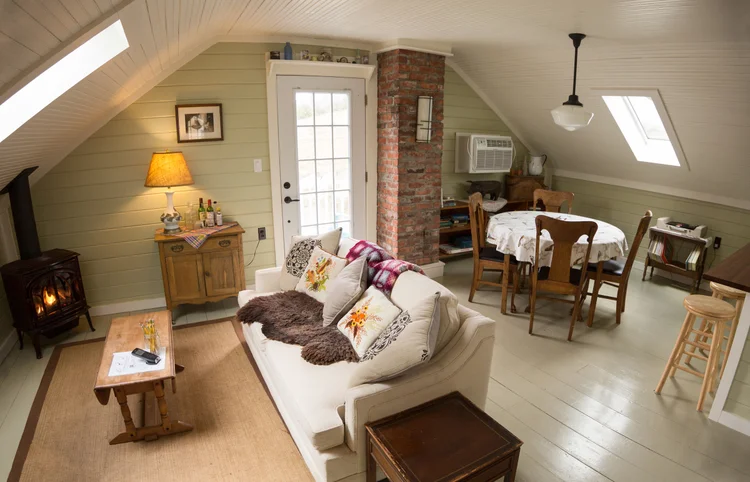
At the same time, the added revenue is supportive of the farming operation, and Eaton believes farm stays can serve a higher purpose by sharing the experience of the land and the production of food.
“Dairy farms are dying, and people don’t have access to dairy farms or dairy cows, so people come here and they learn about dairy farming and hopefully walk away valuing dairy farming in a different way,” he said. “But we also honestly feel we shouldn’t be the only ones with access to this place, so we want to share it with other families.”
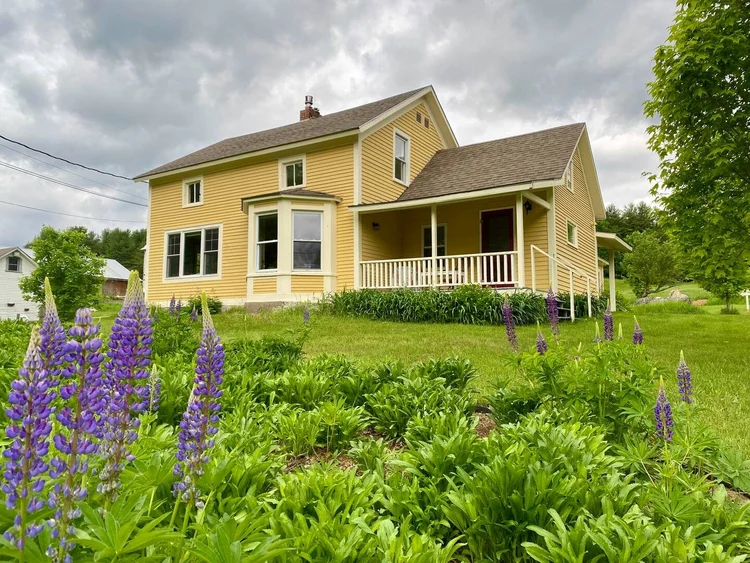
By contrast, Dave and Cynthia Johnston, owners of DaCy Meadows Farm in Westport, have leaned into the accommodations side, with housing for vacationers, nonprofit interns and people transitioning to the area and waiting for a permanent home. Cynthia recounts that they’ve counted 20 people living in Westport who once stayed at the farm.
The Johnstons see farm stays as a symbiotic relationship among farmers, vacationers and the community. This is represented by flex housing that can target the accommodations that are needed most at any particular time.
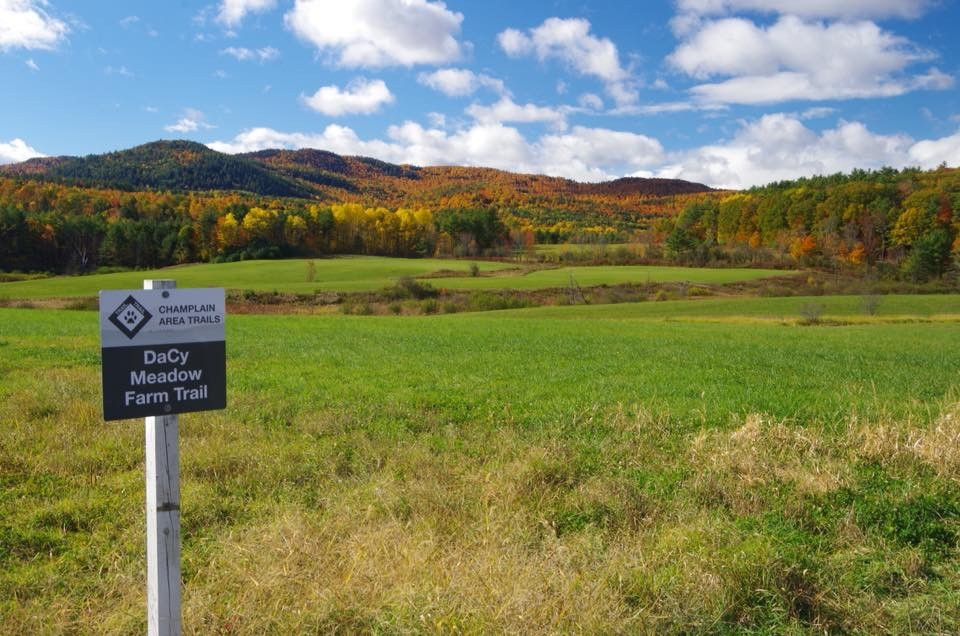
This summer, DaCy Meadow is hosting three interns for Champlain Area Trails, and it’s not much of a reach to say that without housing there would be no summer intern program. These young people learn about the farm, engage with the community and maybe one day they’ll be back, injecting much-needed young blood into an aging Adirondack demographic.
Balancing agriculture with hospitality can be tricky for the farms, but farmstays can play a key role in financial viability in a vocation with historically tight margins.
“You can sell a product directly into the marketplace, and you can turn some of it into a value-added product,” Dave said. “Then if you can also combine that with lodging, you might have a viable business now.”
DaCy Meadows maintains enough of a working farm to be authentic, while encouraging guests — many of whom have never been on a farm before — to get some hands-on experience. They can do some trail maintenance while their kids feed the chickens and gather eggs.
It’s important in the listings to accurately describe the farm environment, flies and all, and be prepared to interact with guests. “People are coming for an experience, not a cot — so they need some attention,” Dave said.
For farmers considering a hospitality component, those with experience have a couple of recommendations. One, don’t oversell the experience with nothing but beautiful farm scenes. Be up-front about the manure and the flies and the noise of the machinery and suggest if that’s an issue, families might want to look elsewhere.
Second, check with liability insurers and regulatory agencies beforehand, because there are a number of potential quirks. For example, Johnston said that scratching the ears of a cow in a barn and scratching the ears of a cow in a designated petting area are two different things involving different agencies and different rules.
“The clipboard people show up a lot,” he said. But for guests who understand what they involve, farm stays mean they get to celebrate all aspects of the rural scene, whether field or forest.
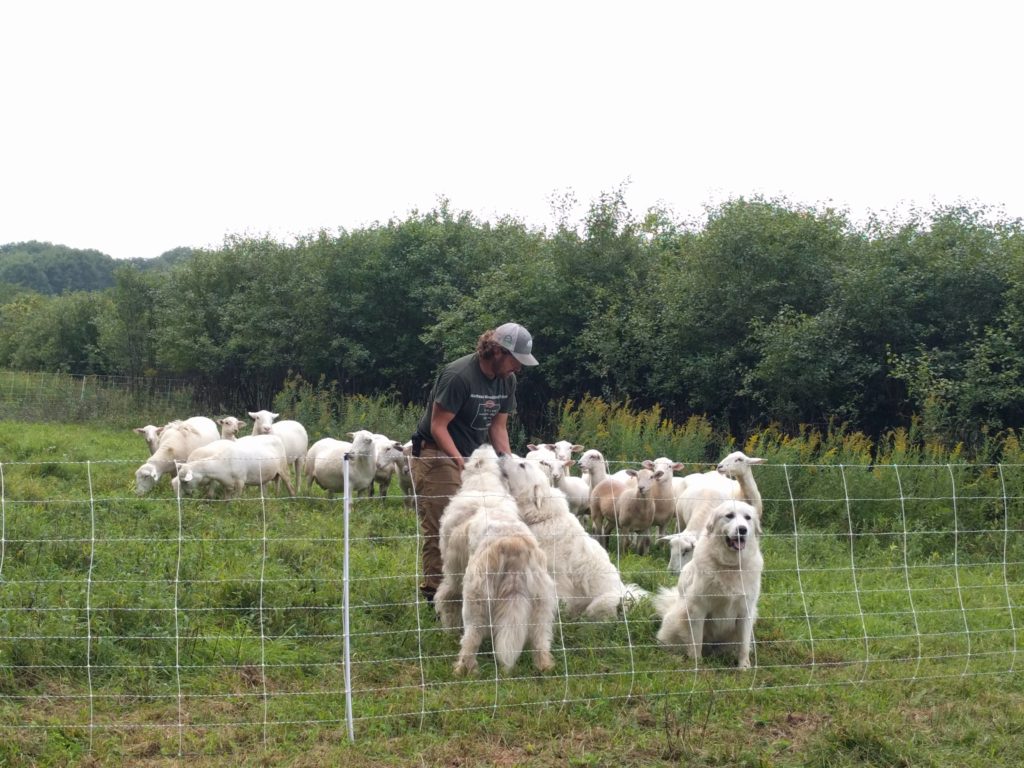
“People come to the Adirondacks to appreciate and to experience outdoor opportunities, whether they’re recreation based or not, and we see that visitors are looking for other authentic experiences. Agritourism is a great way to create a strong or durable connection to the landscape,” said Adam DeSantis, economic development director for the Regional Office of Sustainable tourism. “So in many instances, agritourism is an opportunity to create something else for the visitors to do while they’re already in our region.”
ROOST, working closely with Cornell Cooperative Extension, is active in encouraging these interactions and helping tourists understand the full range of outdoor activities.
After a hike, vacationers can visit a farm store. They can interspace a ski with a visit to a sugar shack, or take their kids on a paddle and then to a pumpkin patch. Breweries and vineyards in particular can really bridge the gap between agriculture and recreation.
“Anything that we can do to help create that durable connection to the Adirondacks, and encourage repeat visitation is a great opportunity,” DeSantis said. “I think it’s, you know, a wide variety of outdoor recreation opportunities, and agricultural offerings help reinforce that.”


