
D&D Meats Earns Competitive USDA Grant to Reduce Pressures on Local Producers

D&D Meats Earns Competitive USDA Grant to Reduce Pressures on Local Producers

01/12/2022 Uncategorized

By Tim Rowland

At the quiet intersection that marks the hamlet of Sciota, where the Adirondack mountains give way to the Canadian plains, Shane Dutil is armed with a knife. It’s a good way to cut meat, but little defense against the forces that have rocked his industry, that thin but crucial band of sinew that stands between pastured animals and the region’s supper tables.

When the pandemic hit and the nation’s four major packing houses went dark, all the North Country, it seemed, flocked to the doors of D&D Meats, a small, community slaughterhouse and market, which was not burdened with supply chains and other complexities that come with the mass processing of animals.

“More people started raising animals, and more people started coming to local markets,” Dutil said. “We were maxed out.” 
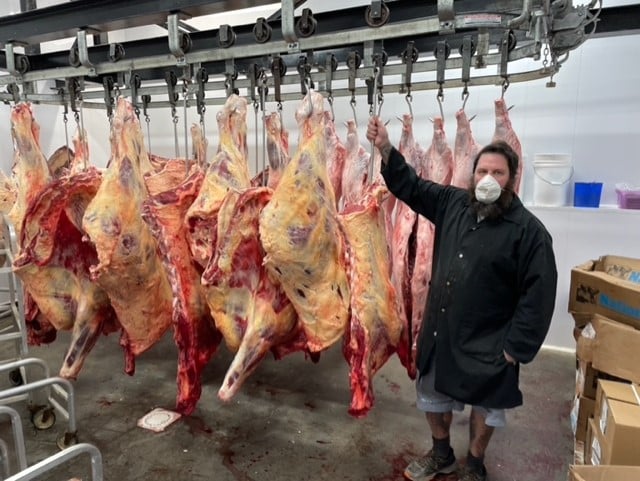
Shane Dutil, Owner of D & D Meats, a small community slaughterhouse and market in West Chazy

That wave of local awareness and community connectivity faded as meat returned to supermarket shelves and shoppers returned to supermarket shopping. Still, some of those customers remained. “We retained maybe 5%,” Dutil said. “That sounds like a small number, but 5% is still good.”

What’s not good is the state of small slaughterhouses in general. “I called a slaughterhouse in Connecticut because I was looking for some equipment,” Dutil said. “I told the guy who answered the phone, ‘You can’t be the owner; you sound too happy.’ He said ‘I am the owner, and I’m happy because I’m closing my doors.’”

North Country farmers limp along on a scant patchwork of slaughter facilities, often driving hours to take their cattle and pigs to a USDA-approved processor, allowing them to sell their meat to stores and restaurants. Processing appointments, or “slots” are treated like a commodity in their own right — bought, sold and traded among producers who must reserve slaughterhouse time sometimes more than a year in advance.
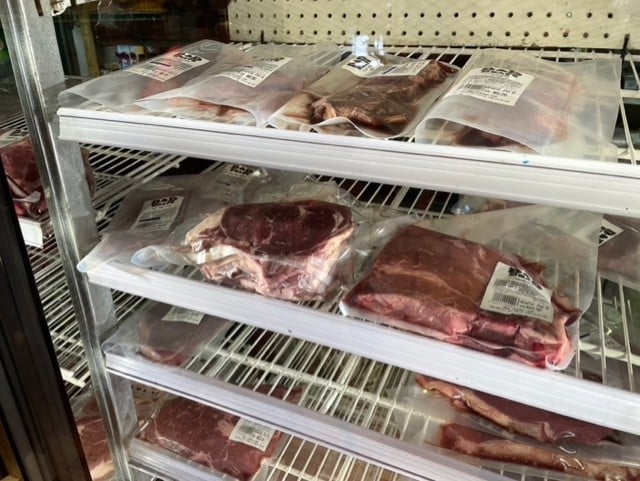
Locally raised meat slaughtered and processed at D&D meats for sale in their market

With demand so high, it might seem there would be more potential business owners angling to open a slaughterhouse. The reason why there are not rests on those supermarket shelves, where the big four processors’ great economies of scale mean they can process a carcass for a fraction of the 82 cents a pound it costs D&D.

Forget that there’s no help to be found for local processors, and even if there were, the pandemic has wreaked havoc on schedules and put everyone on edge. If people get sick on a construction site the work can wait, but “if you have a cooler full of meat, what are you going to do,” Dutil said. And forget that without a USDA certificate, D&D and its customers are limited in where their products can be sold.

The family business, started in 1981, used to be a labor of love; today Dutil just hopes to make it through the day without some other unexpected impediment to his business.

Still, with the effort of one rolling a boiler up a mountain, Dutil is pushing ahead. With the help of the North Country Chamber of Commerce, he recently wrote and won a $200,000 grant to help achieve USDA certification for his own products, and, perhaps, become a USDA slaughterhouse available to local farmers as well, although that is not assured.

That would be significant because it would allow D&D to even out its workload through the year, supplementing income and giving a break to a crew that Dutil said has been dedicated and long-serving — including family members who basically volunteer their time. 
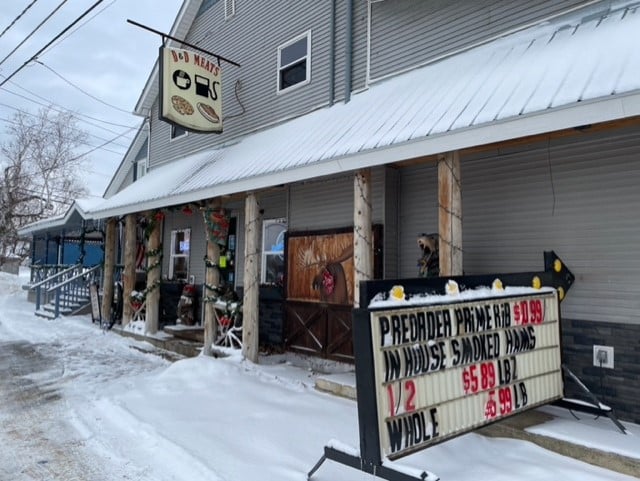
D & D Meats have a small market and grocery store

But even here, the pandemic has slowed the awarding of grant money, and while Dutil is waiting for the check to arrive, the price of equipment is going up by the day. The grant specs say he has three years to spend it — Dutil, with only the slightest of smiles, says he’s afraid it might take three years to get it. “They say the money will come, but they keep pushing back the date,” he said.

The machines would automatically slice bacon and package burger, as well as vacuum seal meat packaging and inject brines. This would take significant pressure off his people and, of course, saving time is saving money.

Dutil is also carefully following President Biden’s plan to dedicate $1 billion of CARES Act money to independent meat packers. It remains to be seen how that will play out, but Dutil said that the pandemic proved that the food Americans count on being able to put on the table is threatened in times of high stress. “Four big packers shouldn’t control everything in the U.S.,” he said.

But until that dynamic changes, there is one thing that average consumers can control: They can make the effort to buy local.
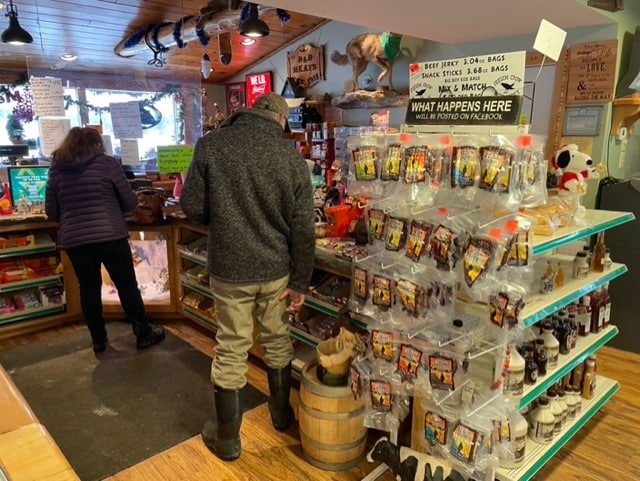
Inside the market at D & D Meats, where their small-batch made Jeezum Crow Meat Products, like beef jerky pictured, are available for purchase

D & D Meats is a local meat processor, small grocery, and convenience store open 7 days a week where you can find their small-batch-made Jeezum Crow Beef Products year-round.

You can learn more about D&D Meats here.

Like this story? Sign up for our email newsletter to receive future feature stories.

Related Reading

Farmland Access and Affordable Housing – Feeding Two Birds With One Scone

Egg Price Volatility Makes a Strong Case for Local Food

The Quest for Food Justice in the Adirondacks

Farm to Festivity: Buy Local This Holiday Season

Thank You For A Successful 2024 Adirondack Harvest Festival!

Where to Pre-Order A Local Thanksgiving Turkey

What Do Certifications Mean For Small Farms & Consumers in the Adirondacks?

Noris Village Market a Cornerstone for Local Farmers & Locavores

The Pandemic Caused Some Farms to Pivot, Now What?

2024 FMNP Coupons Now Available to Seniors

Adirondack Region Farmers Working in Harmony with Wildlife

Farmers’ Markets Are a Labor of Love

Grafting Heritage Fruit Trees at Mace Chasm Farm

Spring is an Egg-cellent Time to Buy Local 

This Spring, Landscape and Garden Local

Time to Sign Up for CSA Shares

Seasonal Harvest: Medicinal Herbs & Herbal Products in the Adirondacks

Local Farm Stores are a Great Spot for Holiday Shopping

Seasonal Harvest: Embracing the Autumn Bounty of Pumpkins & Winter Squash

Celebrating Another Successful Year for the Power of Produce Club! 

Blue Pepper Farm Offers a Glimpse into Adirondack Farm Life at Farmstay

Warrensburgh Riverfront Farmers’ Market Celebrates 25 Years of Bringing Local Food to Warren County

The Future of Farm to School in the Adirondack Region

Better Quality Food is Key for Helping Students Thrive

Local Food Saves Area Schools Money

Schools Purchasing Local Food Helps Local Farmers

Local Gift Ideas for Mother’s Day

Farm to School Movement Gains Ground in the Adirondack Region

In Schroon Lake, Pine Cone Mercantile Has All the Comforts of Home

Seeking Paid VISTA Volunteers for Summer 2023!

3 Benefits of Supporting Your Local Tree Nursery 

Another Successful Season for the Power of Produce Club!

New Focus on Cooking From Scratch & Local Ingredients at Plattsburgh City Schools

Why Has the Price of Eggs Increased So Much?🥚

Upcoming Agritourism Workshops for Farmers

Do You Think Beets Taste Like Dirt? 

2022 Adirondack Harvest Festival a Success

A Look at Open Farm Weekend 2022

Power of Produce Club at Saranac Lake and Elizabethtown Markets This Summer

A Sweet Family Tradition of Maple in the Adirondacks for Whitney’s Maple Spring Farm 

Have a Pint for the Planet | All About Mead

What Wild Edibles are in Your Backyard?

Meet the Maker: Meier’s Artisan Cheese

How the Sausage is Made at Mace Chasm Farm

5 Ways to Advocate for Local Food & Farms

Science-Based Art Project Seeks Adirondack Fiber Producers and Artists

Spotlight On Local Food at the Adirondack Medical Center

Generous Acts Grant and CCE Essex Paying the Bill so Schools Can Serve More Local Food Through Pandemic Challenges

Shady Hill Farm Steps Forward, and Backward, in Time

Third Year of the Power of Produce Club a Success

Bringing High-Quality Farm-to-Table Dining to Malone, NY

A Look at Farming in the Southern Adirondacks at the Thurman Fall Farm Tour

Recap from the 2021 Adirondack Harvest Festival Open Farm Week

Adirondack’s Small Town Cultures Provides a Fresh Take on Fermented Foods

New Creamery in the Works at Meier’s Artisan Cheese

5 Recipes to Keep Enjoying Zucchini All Summer

A Quick Guide on Local Tomatoes

Have You Heard the Buzz About the Power of Produce Club?

Four Ways to Enjoy Fresh Herbs This Summer

The Village Meat Market: Boon for a Small Community

How Farms and Fine Dining Grow Together

What Makes Eggs Different Colors?

5 Spring Asparagus Recipes to Try

Is Corned Beef and Cabbage Actually Irish?

Four Maples Vineyard Takes Advantage in Changing Climate, Tastes

Love Local this Valentine’s Day

Books to Inspire You to Shop Local

Community Coming Together in Essex, NY

That $25 Locally Raised Chicken is More Economical Than you Think

Meet the Makers

Adirondack Harvest Challenge Accepted! Meet the Winners

Churning up Gold in the Adirondacks

FREE RANGE Adirondack Harvest Festival 2020

During Pandemic, North Country Food Co-op Offers Both Comfort and Food

DIY Projects Keep ADK Saws Humming

Survey Results: Local Food & COVID-19

Farmers Adapt Quickly to the New Normal

Saranac Lake transitions from Farmers’ Market to Farmers’ Park-It

Please take our survey: Local Food and COVID-19, Learning Through Experience

Franklin County Farm Tour

Snapshots from the 2019 Adirondack Harvest Festival!

Highlights from the 2019 Power of Produce Club!

Power of Produce Club

It’s a Wrap!

Farm to Chef Meet and Greet