Local farms, speciality vendors and agricultural organizations will be joining the Plattsburgh Farmers and Crafters Market Farm Day on August 29th.
The market is inviting a variety of local farms, nonprofits and vendors to join us and organizing not only a fun educational experience but a great event for local farmers to showcase their farms. This special event market will be held at the PFCM regular location at 26 Green Street Saturday August 29th from 9-2.
Call for Farms and Vendors: The market has multiple ways to take part in this event. Become a new market member and get a free event day with the benefit to join PFCM at other markets or apply for a one day event vendor. Nonprofits and local businesses welcome to join! Applications are handled by the PFCM market manager, Sue Carusone, sachipster4@gmail.com.
Logo of the Northern Adirondack Beekeepers Association. Celebrating the Apibus Milliferis Dedicati spirit.
This month we consider our winter losses, formulating a plan to purchase replacements. It’s our annual wash, rinse, repeat cycle that drains wallets and enthusiasm for beekeeping. Package bees may seem like a simple solution; however, they come with challenges. First, a package is not a functioning colony. These are bees shaken into cages from multiple strong colonies and given a caged queen from a different source. Next, weather and long transport distances, plus rough handling, can be very stressful on the bees. Combine that with the fact you have no real contact with the producers.
I believe, as a beekeeping community, we can do better. The majority of beekeepers in our area are hobbyists with just a few hives. I often hear, “I don’t want to care for more than that.” We need to make a change in our thinking and see ourselves as part of a whole. We need to be looking at, and plan for, the future, not just the upcoming year. We need to redefine success and become sustainable, not only in our apiary, but as a region. Just as farmers save seeds to insure a future harvest, we can create functioning nucleus colonies to support ourselves and each other. Being part of a greater whole multiplies our odds of success. What if you could get your bees from a local and trusted source or be the trusted source?
How do we make these changes? First, lose the “go it alone” mentality. You are not alone. Become an active participant. Open yourself up to ask for or offer help. What might this look like? If you are a beekeeper with a few hives, and that is all you care to manage, you can support other beekeepers. What if you had a great survival rate coming out of winter and do not need to buy bees? Your queens will be primed to swarm this season. You could create and sell a nucleus to someone needing to replace losses. If you need replacements, you can commit to buying local nucleus colonies and queens. Other options you might consider is to offer swarm cells, swarms, splits, graft able larvae, or host mating nucleus colonies. I’m sure the list goes on. In return, you may find a growing community of supporters. This will create a positive feedback loop. Your success becomes community success.
Serving Clinton, Essex and Franklin counties, Northern Adirondack Beekeepers Association (NABA) is committed to a sustainable future for local beekeepers. Being part of our network of beekeepers opens possibilities, and a higher likelihood of success. Beginning in April, NABA will be offering hands-on workshops, such as building nucleus boxes and learning how to populate them.
The next meeting for Northern Adirondack Beekeepers Association (NABA) will be Saturday, March, 14th at the Cornell Cooperative Extension of Clinton County office, 6064 Rte. 22, Plattsburgh, 10:00am – 12:00pm. This month we will be discussing strategies for sustainable beekeeping as an organization. Regular meetings continue the second Saturday of each month. If you would like to be added to our growing email list, please contact me. See information below.
By Ricky the Meadmaker, Co-Founder ofGroennfell Meadery
Honey is amazing stuff. If you’re reading this blog, I obviously don’t need to tell you, but I’m going to anyway.
Honey, in its raw form, lasts essentially forever. Archeologists admit to eating honey found in ancient tombs. It’s naturally antimicrobial and it’s a supersaturated, supercooled solution that functions like a solid and a liquid at the same time, and some honey will stay in that form for centuries without crystalizing! It also makes baked goods taste sweeter than white sugar does.
While I could extol the benefits of honey (or more accurately, strange facts about honey) for hours, we’re here to talk about one of its greatest skills: becoming alcohol.
Most folks have heard of mead, even if they haven’t tried it personally. Whether it’s The Hobbit, Chaucer, Harry Potter, Game of Thrones, Vikings, Beowulf, or Marvel comics, you’ve almost certainly stumbled across the word.
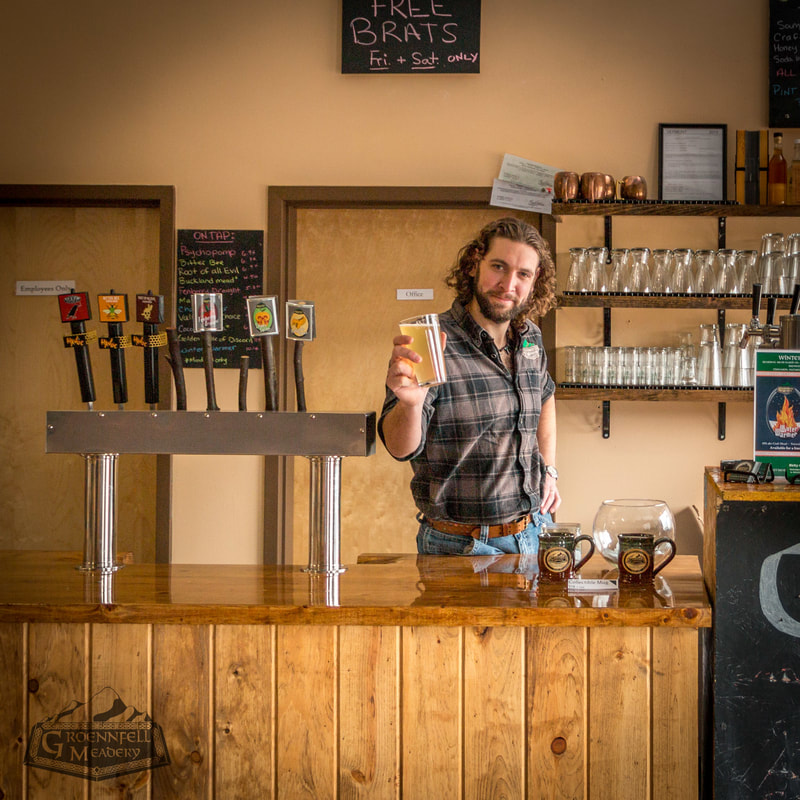
Rick the MeadmakerMead from Groennfell Meadery
What is Mead?
At its simplest, mead is an alcoholic beverage fermented primarily from honey. Beer comes from grain, wine comes from grapes, cider comes from apples, and mead comes from honey.
A lot of people worry that mead will be sweet because, well, honey is sweet. Never fear! The sugar is all (or nearly all) converted to alcohol, so what you end up with is an almost champagne-like, craft beverage with a backbone of honey.
If you wanted to make mead at home, you could simply mix water and raw honey together then wait. Since raw honey has wild yeast in it, the honey – which has now been watered down below the yeast’s sugar saturation tolerance – will start making that sugar available to the yeast to turn into alcohol.
If you want good mead, however, you may want to take a few more steps and probably sanitize everything pretty well.
Or, of course, you could just buy it from us at Groennfell.com, which would be appreciated, but isn’t necessary.
Over here at Groennfell Meadery, we’re an open-source company, so all of our recipes and brewing techniques are free online!
If you’re already an avid homebrewer, go ahead and jump right over to our Recipe Section on our blog. You should have all the equipment you need if you’ve ever made beer or wine at home before. A place to start is with Valkyrie’s Choice.
If you’re completely new to homebrewing, we have a whole article called Your First Batch of Mead and a handy follow-up called How We Brew Everything We Brew.
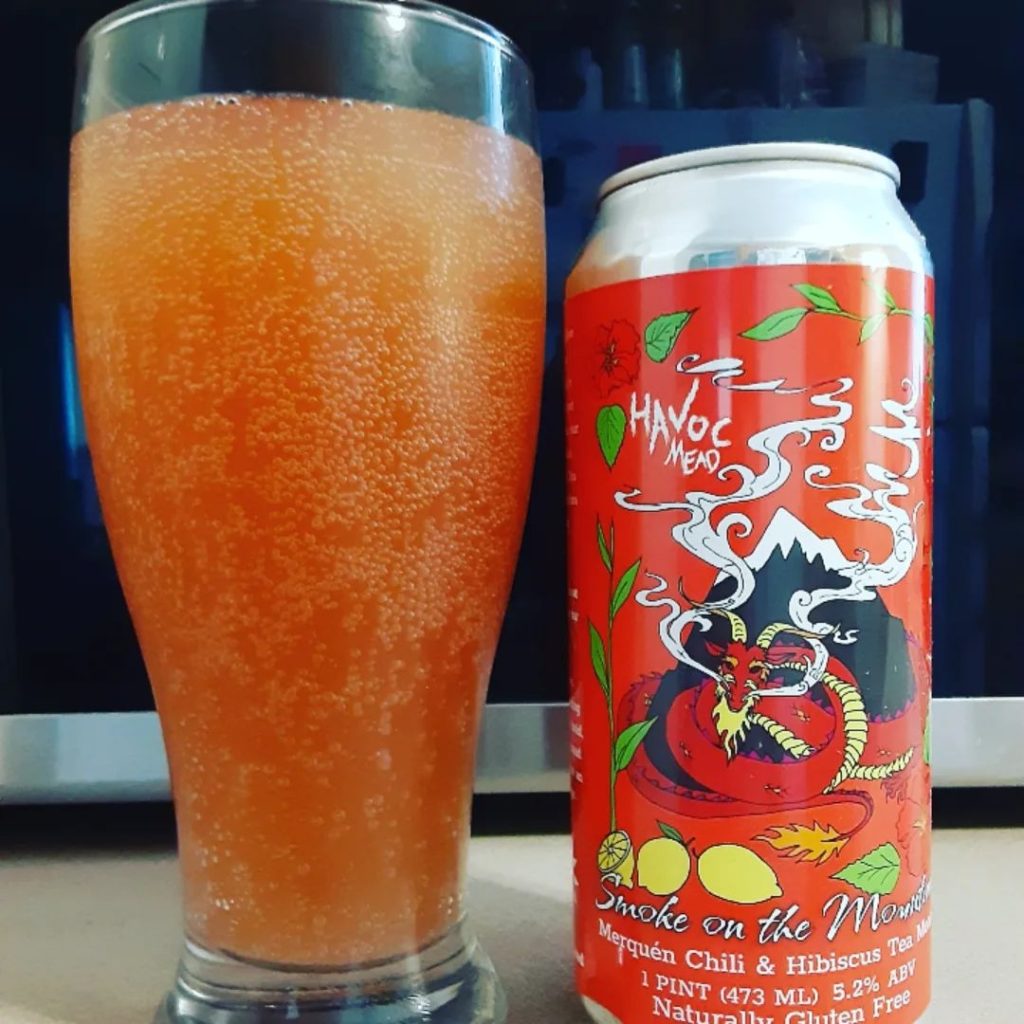
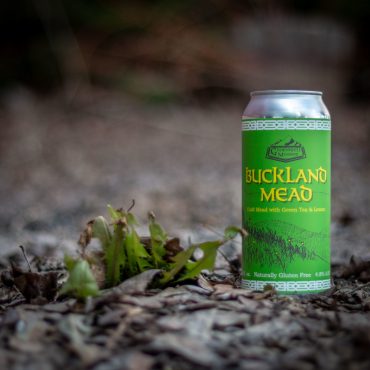
Honeybee on a dandelion, the start of making mead!A favorite Groennfell Mead
Why Mead?
We’ve gotten this far without answering a really important question: Why would you want to brew your own mead? (Or buy someone else’s, for that matter?)
One of the primary reasons is the environmental impact of brewing, but that’s such a big topic that it will be getting its own article in a few weeks here on the blog. So, we’ll skip over that for now.
The reason you’d want to make and drink mead is that it’s delightful! It’s a fizzy, gluten-free, easy to love alcoholic beverage. It’s so incredibly flexible that it can range from bright cranberry tartness, like Nordic Farmhouse to dark and oaky like Old Wayfarer.
Heck, it even works in cocktails!
Mead also lasts a long time if brewed and packaged properly. Craft meads will last for years in the keg, can, or bottle. Strong meads will last for decades.
Another reason to have mead at your next lunch, cocktail hour, or feast is that, although mead has been brewed for approximately ten thousand years, it’s taken a step out of the spotlight for the last century or so. The reasons for this are primarily driven by large agronomic forces. Grain is easy to cultivate on massive farms, thus beer and large farms with large transportation networks work very well together.
Mead, on the other hand, has most often been made at home. In fact, Jane Austen even brewed her own!
We hear now that there is to be no honey this year. Bad news for us. We must husband our present stock of mead, and I am sorry to perceive that our twenty gallons is very nearly out. I cannot comprehend how the fourteen gallons could last so long.Jane Austen to Cassandra Austen, September 8, 1816
While there is certainly a large international honey market – estimated to be around eight billion dollars in 2020 – that is absolutely insignificant compared to the world grain market which is well into the trillions. This means that you’re simultaneously drinking something that has millennia of history to tap into while also being deeply connected to this year’s harvest.
So whether you jump into homebrewing with both feet or just pick up a few cans or bottles to see if it’s your thing, I hope this got you excited about mead and meadmaking!
This article is part one of a two-part series. Stay tuned for part two, which dives into the environmental impacts of different locally brewed beverages.