
Is Corned Beef and Cabbage Actually Irish?
Americans with Irish roots have been celebrating Saint Patrick’s Day for hundreds of years. For many Americans, it is a day to gather with friends and family and celebrate their Irish heritage.
What are the origins of Corned Beef?
Historically in Ireland, cows were utilized primarily for their milk than beef. Only the wealthy ate beef around times of celebration. As seen in the traditional, Irish Stew, which is similar to beef stew, but is thickened with mashed potatoes instead of a roux. Traditional Irish stew includes mutton or lamb, potatoes, carrots, and onions. England popularized the consumption of beef and outsourced its production to Ireland and Scotland, where it was raised, processed, and preserved. Beef was preserved in salt in crystals the size of a grain, which was referred to as corn- thus Corned Beef. Due to its preservation qualities, it was sold to feed armies across the world, especially to the British, French, and Americans. The Irish rarely could afford the corned beef they were exporting as famine swept through the region.
A Tradition is Born
During the late 19th Century and early 20th Century, millions of Irish immigrants settled in communities in the US, mostly near New York City and Boston. Irish-Americans could finally afford corned beef. It was a different corned beef, made with brisket, popularized by Jewish communities that had also recently immigrated from Eastern and Central Europe. This corned beef was more flavorful and tender than the Irish corned beef. To celebrate Saint Patricks’ Day, and their Irish heritage, Irish-American immigrants would splurge on a cut of corned beef from their Jewish neighbors, potatoes, and the cheapest available vegetable, cabbage. The tradition spread across the US and has remained since.
So, is corned beef and cabbage a traditional Irish dish?
Not really. But it is Irish-American and represents the communal sharing of culinary traditions that can happen between neighbors. Consider celebrating your Irish heritage as your ancestors did, by selecting ingredients from farms in your community.
Find locally grown meat, cabbage, carrots, onions and more at co-ops, retail locations and farm stores: adirondackharvest.com/browse
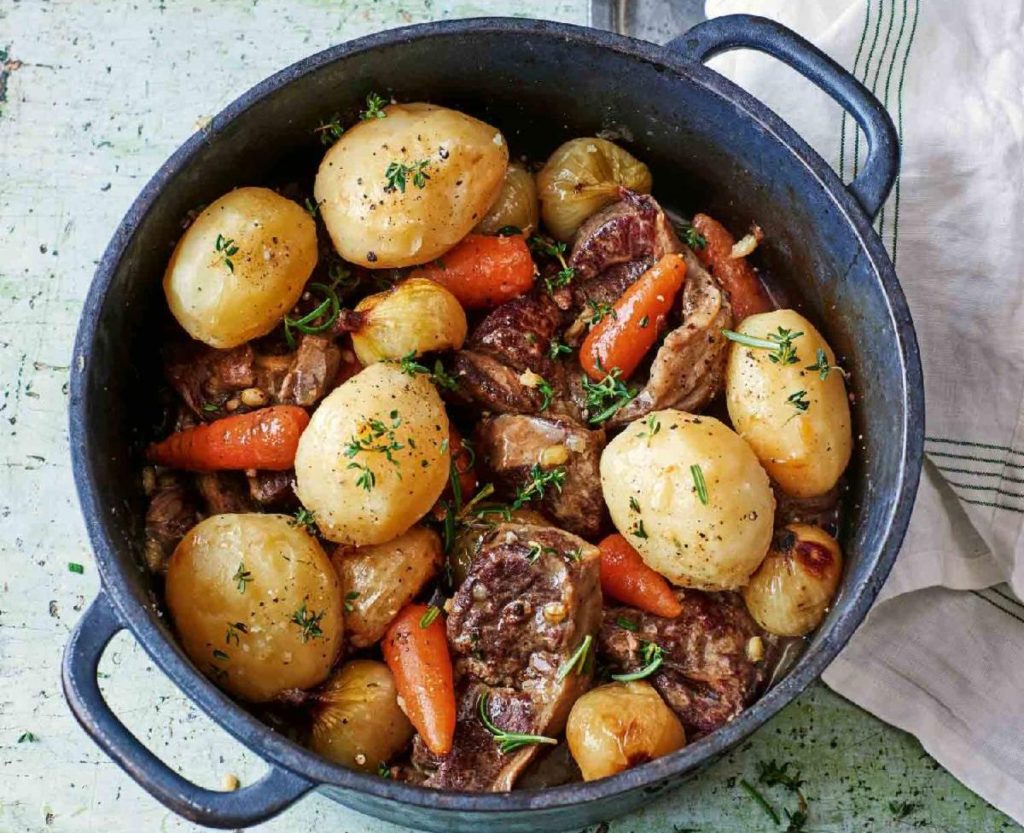
For more inspiration, see this Irish Stew recipe from chef Darina Allen on gallwaynow.co


